
Close Menu
    Facebook X (Twitter) Instagram
    SciTechDaily
    • Biology
    • Chemistry
    • Earth
    • Health
    • Physics
    • Science
    • Space
    • Technology
    Facebook X (Twitter) Pinterest YouTube RSS
    SciTechDaily
    Home»Biology»Blocking Ephrin-A5 May Improve Stroke Recovery
    Biology

    Blocking Ephrin-A5 May Improve Stroke Recovery

    By Mark Wheeler, University of California - Los AngelesAugust 10, 2012No Comments3 Mins Read
    Facebook Twitter Pinterest Telegram LinkedIn WhatsApp Email Reddit
    Share
    Facebook Twitter LinkedIn Pinterest Telegram Email Reddit
    Neurons Neuroscience
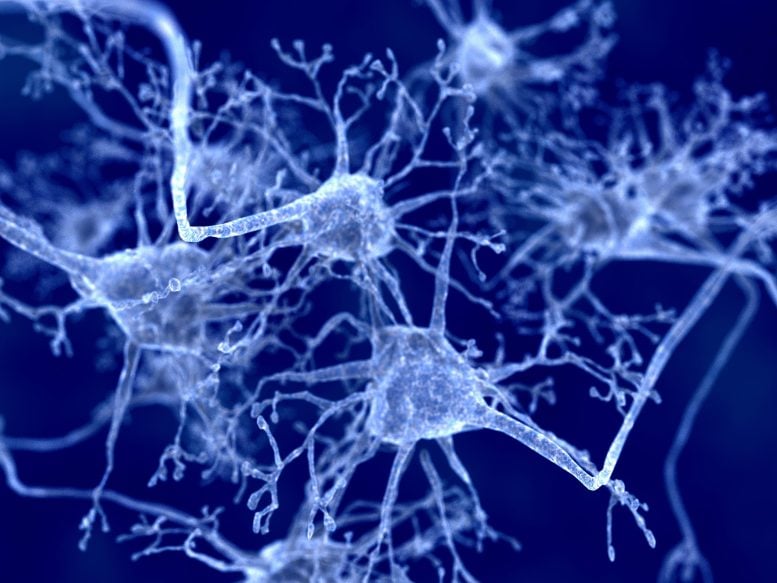
    Researchers found that blocking the molecule ephrin-A5 after a stroke may promote the growth of new connections between brain neurons and functional recovery.

    In a mouse model, researchers at UCLA showed that growth of new connections between the brain’s neurons and functional recovery may be achieved by blocking the molecule ephrin-A5 from forming after a stroke.

    Findings

    Researchers at the University of California, Los Angeles (UCLA) have identified a novel molecule in the brain that, after stroke, blocks the formation of new connections between neurons. As a result, it limits the brain’s recovery. In a mouse model, the researchers showed that blocking this molecule—called ephrin-A5—induces axonal sprouting, that is, the growth of new connections between the brain’s neurons, or cells, and as a result promotes functional recovery.

    Impact

    If duplicated in humans, the identification of this molecule could pave the way for a more rapid recovery from stroke and may allow a synergy with existing treatments, such as physical therapy.

    More

    Stroke is the leading cause of adult disability because of the brain’s limited capacity for repair. An important process in recovery after stroke may be in the formation of new connections, termed axonal sprouting. The adult brain inhibits axonal sprouting and the formation of these connections. In previous work, the researchers found, paradoxically, that the brain sends mixed signals after a stroke—activating molecules that both stimulate and inhibit axonal sprouting. In this present work, the researchers have identified the effect of one molecule that inhibits axonal sprouting and determined the new connections in the brain that are necessary to form for recovery.

    The researchers also developed a new tissue bioengineering approach for delivering drugs to the brain after stroke. This approach uses a biopolymer hydrogel, or a gel of naturally occurring brain proteins, to release neural repair molecules directly to the target region for recovery in stroke—the tissue adjacent to the center of the stroke.

    Last, the paper also shows that the more behavioral activity after stroke, such as the amount an impaired limb is used, the more new connections are directly stimulated to form in the injured brain. This direct link between movement patterns, like those that occur in neurorehabilitation, and the formation of new brain connections, provides a biological mechanism for the effects of some forms of physical therapy after stroke.

    Reference: “A role for ephrin-A5 in axonal sprouting, recovery, and activity-dependent plasticity after stroke” by Justine J. Overman, Andrew N. Clarkson, Ina B. Wanner, William T. Overman, Ilya Eckstein, Jaime L. Maguire, Ivo D. Dinov, Arthur W. Toga and S. Thomas Carmichael, 25 July 2012, Proceedings of the National Academy of Sciences.
    DOI: 10.1073/pnas.1204386109

    This research was funded by National Institutes of Health Grants NS045729, NS061530-02 NS049041, National Science Foundation Division of Undergraduate Education 0716055, K99-NR010797, and RR021813; Neilsen Foundation Grant 20080654: 59240; the Larry L. Hillblom Foundation; and the Dr. Miriam and Sheldon G. Adelson Medical Research Foundation.

    Never miss a breakthrough: Join the SciTechDaily newsletter.
    Follow us on Google and Google News.

    Neurology Neuroscience Stroke UCLA
    Share. Facebook Twitter Pinterest LinkedIn Email Reddit

    Related Articles

    GDF10 Promotes Brain Cells’ Ability to Form New Connections

    “Grid Cells” Allow the Brain to Keep Track of Navigational Cues

    Researchers Link Behavioral Abnormalities and Abnormal Structure of Synapses in Fragile X Syndrome

    Study Reveals That the Brain Rewires Itself After Injury

    A Better Understanding of “Muscle Synergies” Could Lead to Improved Stroke Rehabilitation

    New Research Reveals Damaged Connections in Phineas Gage’s Brain

    Measuring Motor Neuron Communication May Shed Light on Neurodegenerative Diseases

    Researchers Use FDDNP–PET Scanning to Predict Cognitive Decline

    Stimulating the Entorhinal Cortex of the Brain Boosts Memory

    Leave A Reply Cancel Reply

    • Facebook
    • Twitter
    • Pinterest
    • YouTube

    Don't Miss a Discovery

    Subscribe for the Latest in Science & Tech!

    Trending News

    Collapsing Plasma May Hold the Key to Cosmic Magnetism

    This Breakthrough Solar Panel Generates Power From Both Sunlight and Raindrops

    Scientists Uncover New Metabolic Effects Beyond Weight Loss of Mounjaro

    Scientists Discover Cancer Tumors Are “Addicted” to This Common Antioxidant

    1,800 Miles Down: Scientists Uncover Mysterious Movements at the Edge of Earth’s Core

    Scientists Discover Hidden “Good Fats” in Green Rice That Could Transform Nutrition

    Your Child’s Clothes Could Contain Toxic Lead, Study Finds

    Researchers Break a 150-Year-Old Math Law With a Surprising Donut Discovery

    Follow SciTechDaily
    • Facebook
    • Twitter
    • YouTube
    • Pinterest
    • Newsletter
    • RSS
    SciTech News
    • Biology News
    • Chemistry News
    • Earth News
    • Health News
    • Physics News
    • Science News
    • Space News
    • Technology News
    Recent Posts
    • Natural Oils vs. Antibiotics: The Swine Study That Could Change Farming
    • The Biggest Volcanic Event in Earth’s History Transformed an Entire Oceanic Plate
    • Scientists Warn: Humanity Has Pushed the Planet Past Its Limits
    • Stronger Flu Shot Linked to Nearly 55% Lower Alzheimer’s Risk, Study Finds
    • Researchers Say That Eating Mango With Avocado Offers Surprising Heart Benefits
    Copyright © 1998 - 2026 SciTechDaily. All Rights Reserved.
    • Science News
    • About
    • Contact
    • Editorial Board
    • Privacy Policy
    • Terms of Use

    Type above and press Enter to search. Press Esc to cancel.