
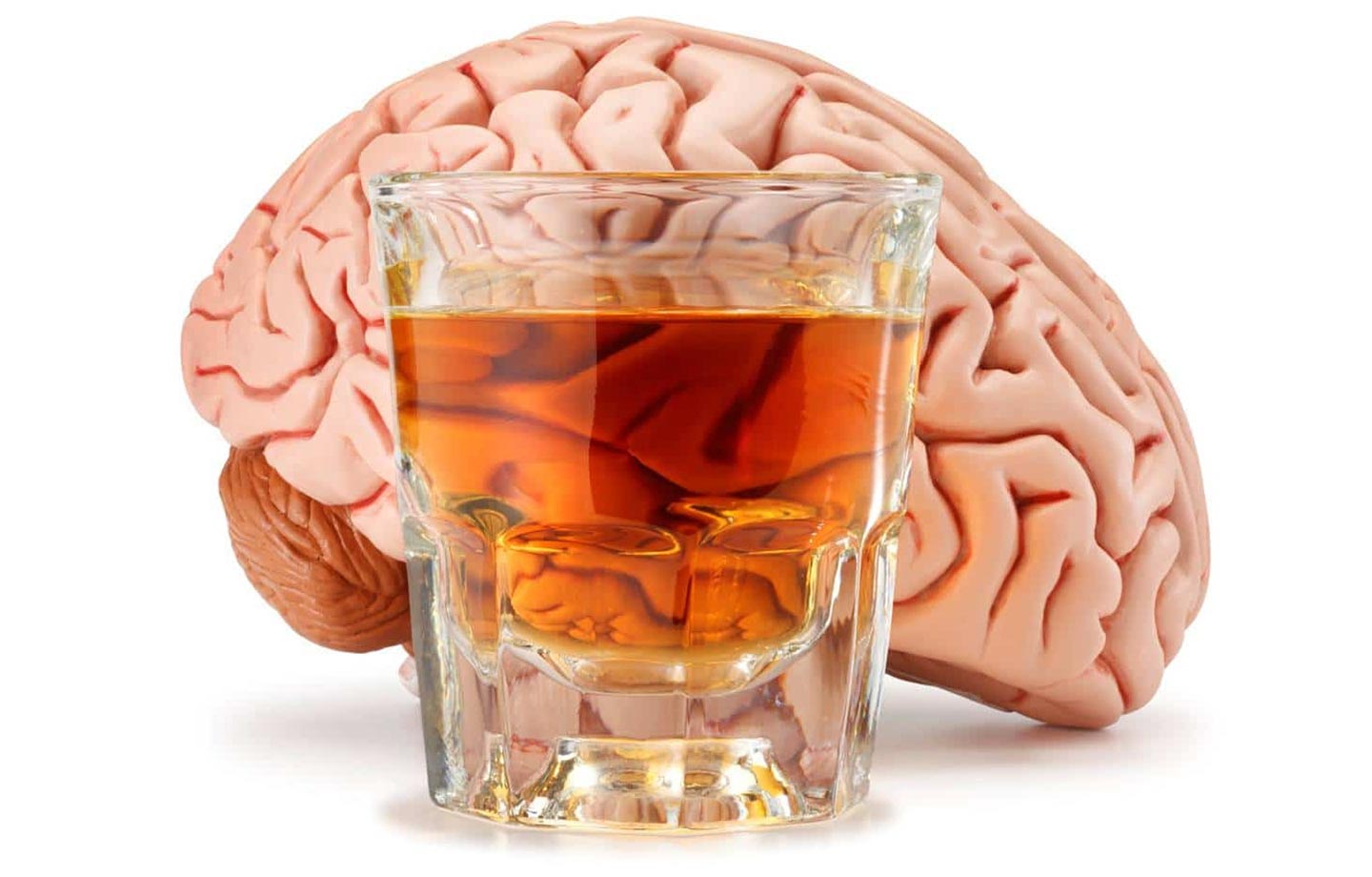
Heavy alcohol use can cause lasting damage to brain circuits that control decision-making, as shown in a new study using rats.
Even after months of withdrawal, alcohol-exposed rats performed worse in complex tasks compared to sober rats, revealing persistent cognitive deficits. The brain region responsible for adapting behavior, the dorsomedial striatum, showed significant dysfunction, potentially explaining why many recovering alcoholics relapse. These findings open a new window into how alcohol reshapes the brain and why its effects can linger long after drinking stops.
How Alcohol Alters the Brain
For the first time, researchers have shown in an animal model how heavy alcohol use can cause long-lasting behavioral problems by damaging brain circuits involved in decision-making.
Rats given high levels of alcohol performed poorly on a complex decision-making task, even after several months of sobriety. Brain scans revealed major functional changes in key areas linked to evaluating choices and adapting behavior, compared to rats that hadn’t been exposed to alcohol.
Published on April 2 in Science Advances, the study offers new insight into how alcohol can cause enduring cognitive effects.
Johns Hopkins Team Seeks Deeper Insight
“We now have a new model for the unfortunate cognitive changes that humans with alcohol use disorder show,” said author Patricia Janak, a Johns Hopkins University neuroscientist who studies the biology of addiction. “We know that humans who are addicted to alcohol can show deficits in learning and decision-making that may contribute to their poor decisions related to alcohol use. We needed an animal model to better understand how chronic alcohol abuse affects the brain. Knowing what is happening in the brain of an animal when they are having these decision-making difficulties will tell us what is happening in humans.”
Complex Test Reveals Cognitive Damage
In experiments led by first author Yifeng Cheng, a research scientist in Janak’s lab who studies alcohol’s effects on the brain, rats recieved very high alcohol exposure for a month. Then after a withdrawal period of nearly three months, the rats were given a reward-based decision-making test along with a control group of rats that had not been exposed to alcohol.
To get a reward, rats were given a choice of two levers. Pressing one lever led to a higher likelihood of reward than pressing the other lever. Rats easily learn which lever results in the most reward, so the researchers complicated things by every few minutes switching which lever had the highest reward likelihood. To get the most reward, a rat should rapidly change its behavior every time it figures out that the reward likelihood has changed.
Alcohol-Exposed Rats Struggled
It was a difficult task that required memory and strategy. The alcohol-exposed rats performed considerably worse.
Previous experiments in animals weren’t comparable to humans with alcohol use disorder because the animals didn’t demonstrate deficits in rapid decision-making. The team believes this was because tasks in earlier experiments were too easy.
“Our experiment was quite challenging and the alcohol-exposed rats just couldn’t do it as well,” Janak said. “When the right answer was constantly changing, the control rats made the best decisions faster. They were more strategic. And when we looked at their brains, the control rats’ decision-related neural signals were stronger.”
Brain Damage Pinpointed in Decision Center
The team linked the behavioral difficulties to dramatic functional transformations in the dorsomedial striatum, a part of the brain critical for decision-making. The alcohol had damaged neural circuits causing alcohol-exposed rats to process information less effectively.
One surprise was how long alcohol dependence impairs cognition and neural function, even after withdrawal.
“This may give us insight into why relapse rates for people addicted to alcohol are so high,” Janak said. “Alcohol-induced neural deficits may contribute to decisions to drink even after going to rehab. We can clearly demonstrate these deficits can be long-lasting.”
Sex Differences Emerge in Findings
The team only found the behavioral and neural impairments only in male rats. The team does not believe this suggests female rats are immune from the effects of alcohol, but that there could be sex-related sensitivities in long-term alcohol effects on brain function.
What’s Next in Alcohol Research
The researchers next hope to explore how alcoholism affects other areas of the brain that interact with the dorsomedial striatum, and what might be causing the differences between males and females.
Reference: “Chronic ethanol exposure produces sex-dependent impairments in value computations in the striatum” by Yifeng Cheng, Robin Magnard, Angela J. Langdon, Daeyeol Lee and Patricia H. Janak, 2 April 2025, Science Advances.
DOI: 10.1126/sciadv.adt0200
Additional authors include Robin Magnard, a postdoctoral fellow at Johns Hopkins; Angela J. Langdon of the National Institutes of Health; and Daeyeol Lee, a Bloomberg Distinguished Professor of Neuroscience and Psychological and Brain Sciences at Johns Hopkins.
Never miss a breakthrough: Join the SciTechDaily newsletter.
Follow us on Google and Google News.
4 Comments
thank you for this
Sad that people who use large amounts of alcohol do not read
The missing science is…what happens with long-term sobriety. Do these effects improve at 5-years? 10-years?
Should put near top of article that female rats seemed to do much better.