
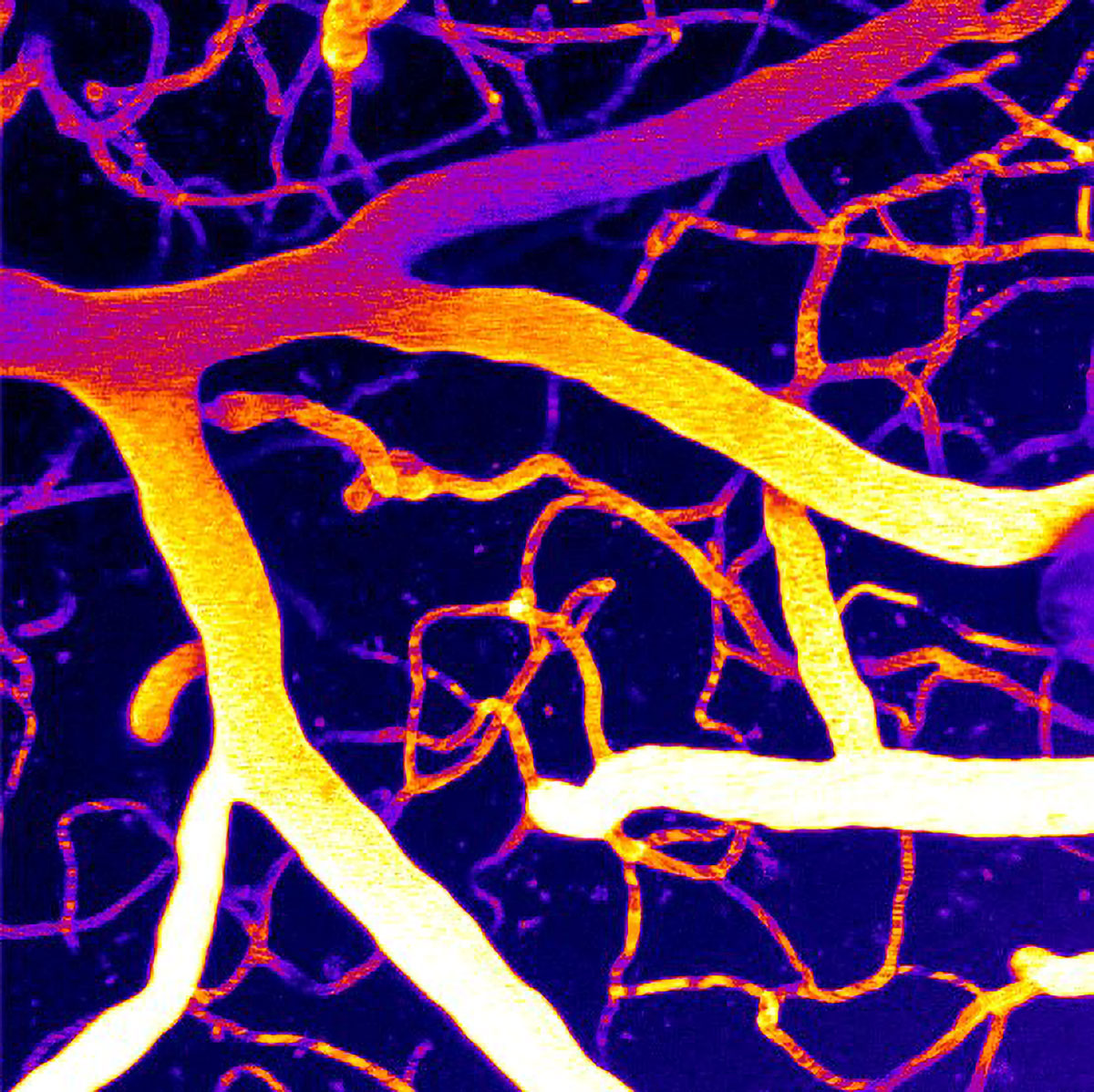
Increasing the levels of a particular phospholipid in the membranes of brain cells may offer a promising new way to improve blood circulation in the brain and support healthier brain activity.
A potential new approach to treating reduced blood flow in the brain and related forms of dementia is beginning to emerge. Scientists at the University of Vermont Robert Larner, M.D. College of Medicine have uncovered new details about how blood flow in the brain is regulated, pointing to a possible way to repair problems in the brain’s vascular system.
In preclinical experiments reported in Proceedings of the National Academy of Sciences, the researchers found that restoring a missing phospholipid in the bloodstream may help normalize blood flow in the brain. Their results suggest this strategy could also lessen symptoms associated with dementia.
“This discovery is a huge step forward in our efforts to prevent dementia and neurovascular diseases,” says principal investigator Osama Harraz, Ph.D., assistant professor of pharmacology at Larner College of Medicine. “We are uncovering the complex mechanisms of these devastating conditions, and now we can begin to think about how to translate this biology into therapies.”
Alzheimer’s disease and related dementias affect an estimated 50 million people worldwide, and that number continues to grow. As cases increase, families and health care systems face mounting challenges. To better understand these disorders, scientists have been investigating how factors such as proteins, inflammation, neural signaling, and malfunctioning brain cells contribute to disease progression.
A Pressure-Sensing Protein in Brain Blood Vessels
The Harraz laboratory studies how blood flow in the brain is controlled, with a focus on vascular signaling and a pressure-sensing protein called Piezo1 found in blood vessel cells.
Named after the Greek word for “pressure,” Piezo1 detects mechanical forces created by flowing blood, and its activity can vary in people with certain genetic differences. Previous studies showed that Piezo1 activity is altered in carriers of Piezo1 gene variations.
The new findings show that Piezo1 plays a significant role in regulating cerebral blood flow and that diseases such as Alzheimer’s are associated with abnormally high Piezo1 activity in brain blood vessels.
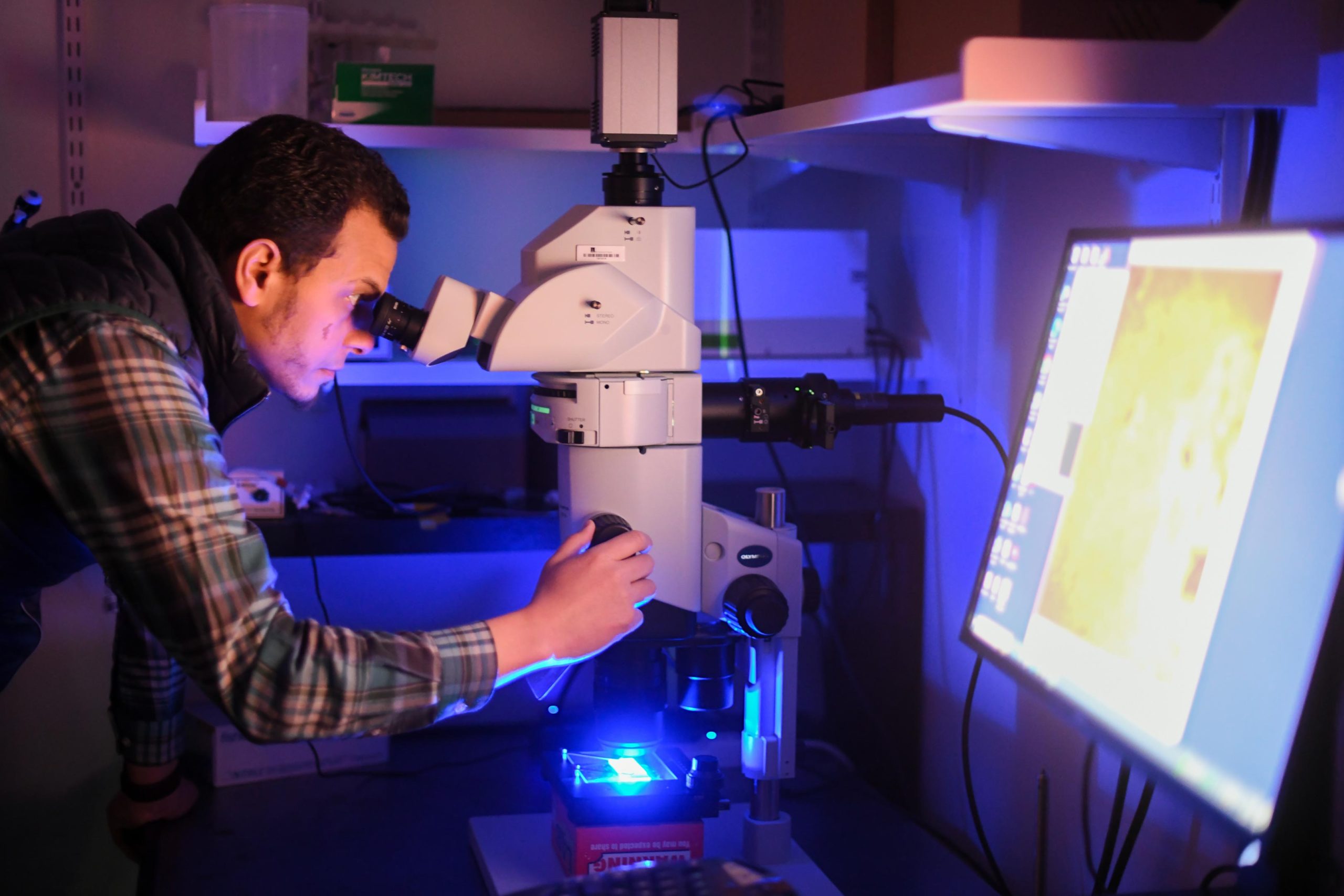
Harraz’s team investigated a phospholipid in brain cell membranes called PIP2. This phospholipid is vital for cell signaling and ion channel regulation—a complex process where cells control the opening and closing of protein pores. The researchers found that PIP2 is a natural inhibitor of Piezo1; when PIP2 levels drop, Piezo1 becomes overactive, which disturbs the brain’s blood flow.
They tested adding PIP2 back into the system, which suppressed Piezo1 and restored normal blood flow. The study suggests that boosting PIP2 could become a new treatment strategy to restore normal blood flow and enhance brain function.
Toward Future Therapies
Further investigation will focus on defining how PIP2 interacts with Piezo1, including whether it directly binds specific protein regions or alters the surrounding membrane environment to restrain pore opening.
Future studies will also examine how disease-associated reductions in PIP2 disrupt this regulatory brake, leading to sustained Piezo1 overactivity and impaired cerebral blood flow. Clarifying these mechanisms will be essential for refining PIP2-based or Piezo1-targeted therapeutic strategies to restore healthy neurovascular function in dementia and related vascular disorders.
Reference: “PIP2 corrects an endothelial Piezo1 channelopathy” by Ahmed M. Hashad, Mohammad M. Abd-Alhaseeb, Xin Rui Lim, Natalia M. Mathieu and Osama F. Harraz, 23 December 2025, Proceedings of the National Academy of Sciences.
DOI: 10.1073/pnas.2522750122
Never miss a breakthrough: Join the SciTechDaily newsletter.
Follow us on Google and Google News.