
Low Bone Density Correlates With a Higher Risk of Dementia, Suggesting It Could Serve as an Early Warning Indicator.
According to a study recently published in the online issue of Neurology – the medical journal of the American Academy of Neurology – individuals with low bone density may face a greater risk of developing dementia in comparison to those with high bone density. It’s important to note that the study only establishes a correlation and does not prove that low bone density is a direct cause of dementia.
“Low bone density and dementia are two conditions that commonly affect older people simultaneously, especially as bone loss often increases due to physical inactivity and poor nutrition during dementia,” said study author Mohammad Arfan Ikram, MD, Ph.D., of the Erasmus University Medical Center in Rotterdam, Netherlands. “However, little is known about bone loss that occurs in the period leading up to dementia. Our study found that bone loss indeed already occurs before dementia and thus is linked to a higher risk of dementia.”
The study involved 3,651 participants with an average age of 72, residing in the Netherlands, who did not have dementia at the beginning of the study.
Over an average of 11 years, 688 people or 19% developed dementia.
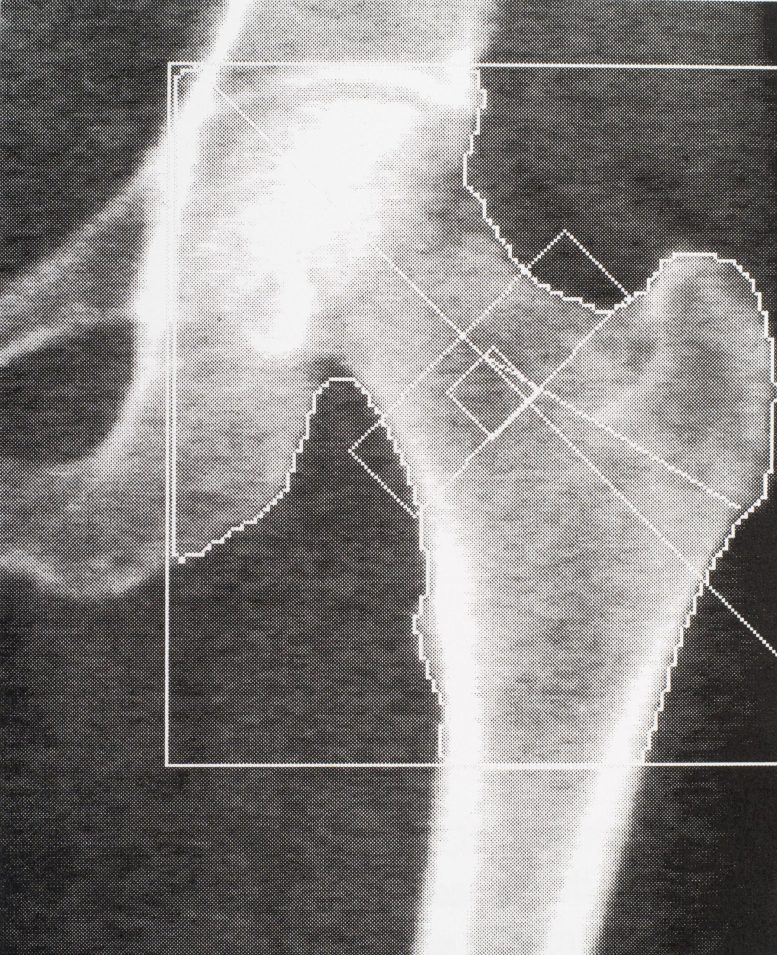
Researchers looked at X-rays to identify bone density. Participants were interviewed every four to five years and completed physical tests such as bone scans and tests for dementia.
Of the 1,211 people with the lowest total body bone density, 90 people developed dementia within 10 years, compared to 57 of the 1,211 people with the highest bone density.
After adjusting for factors such as age, sex, education, other illnesses and medication use, and a family history of dementia, researchers found that within 10 years, people with the lowest total body bone density were 42% more likely to develop dementia than people in the highest group.
Diet, Exercise, and Early Detection
“Previous research has found factors like diet and exercise may impact bones differently as well as the risk of dementia,” Ikram added. “Our research has found a link between bone loss and dementia, but further studies are needed to better understand this connection between bone density and memory loss. It’s possible that bone loss may occur already in the earliest phases of dementia, years before any clinical symptoms manifest themselves. If that were the case, bone loss could be an indicator of risk for dementia and people with bone loss could be targeted for screening and improved care.”
A limitation of the study is that participants were primarily of European origin and aged 70 or older at the start of the study, so these findings may vary in different races, ethnicities, and younger age groups.
Reference: “Association of Bone Mineral Density and Dementia: The Rotterdam Study” by Tian Xiao, Samuel Ghatan, Sanne S. Mooldijk, Katerina Trajanoska, Ling Oei, M. Medina Gomez, M. Kamran Ikram, Fernando Rivadeneira and M. Arfan Ikram, 22 March 2023, Neurology.
DOI: 10.1212/WNL.0000000000207220
The study was funded by Erasmus Medical Center and Erasmus University Rotterdam, The Netherlands Organization for Scientific Research, The Netherlands Organization for Health Research and Development, the Research Institute for Diseases in the Elderly, The Netherlands Genomics Initiative, the Ministry of Education, Culture, and Science, the Ministry of Health, Welfare, and Sports, the European Commission and the Municipality of Rotterdam.
Never miss a breakthrough: Join the SciTechDaily newsletter.
Follow us on Google and Google News.
1 Comment
Allergy (of a kind not yet recognized by mainstream medicine as true [e.g., “IgE mediated]) related, I first wrote the Journal of Allergy and Clinical Immunology (JACI) and The Lancet of my then recent findings of personal calcium deficiency and standard blood serum testing for calcium being unreliable in 2011. My six page ‘letter’ to JACI was rejected as being only “a one subject study” and my one page ‘correspondence’ to The Lancet was also rejected. Amazing how something that’s only a one subject finding can turn up a decade later as a rather common condition, as if all healthcare professionals don’t get the same allergy ignorant and incompetent medical training and all patients and subjects don’t get the same allergy ignorant and incompetent care and reviews, respectively.