
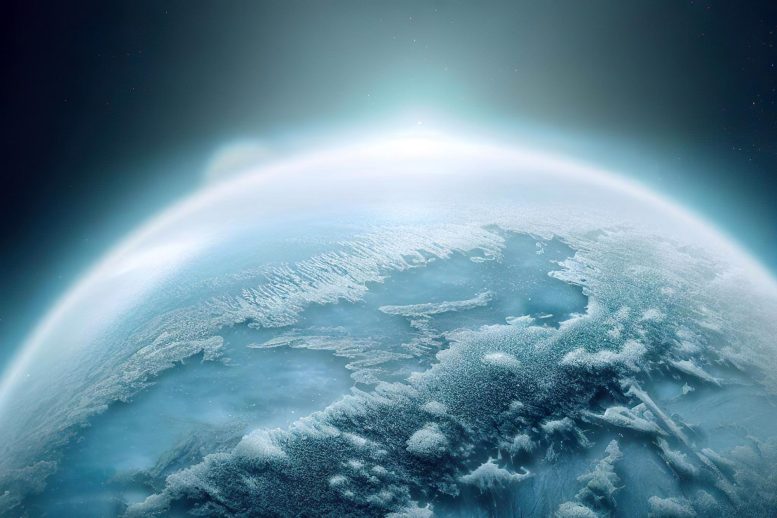
Geologists have uncovered evidence suggesting that the planet did not experience complete glaciation during the ice age that occurred 635 million years ago.
Earth has undergone at least five ice ages, one of which occurred 635 million years ago, resulting in glaciers spanning from one pole to the other. This specific Ice Age, known as the Marinoan Ice Age, derived its name from the region in Australia where the first geological evidence was discovered during the 1970s.
The Marinoan Ice Age is regarded by scientists as one of the most severe in Earth’s history, leading to the formation of glacial ice that persisted for a staggering period of 15 million years.
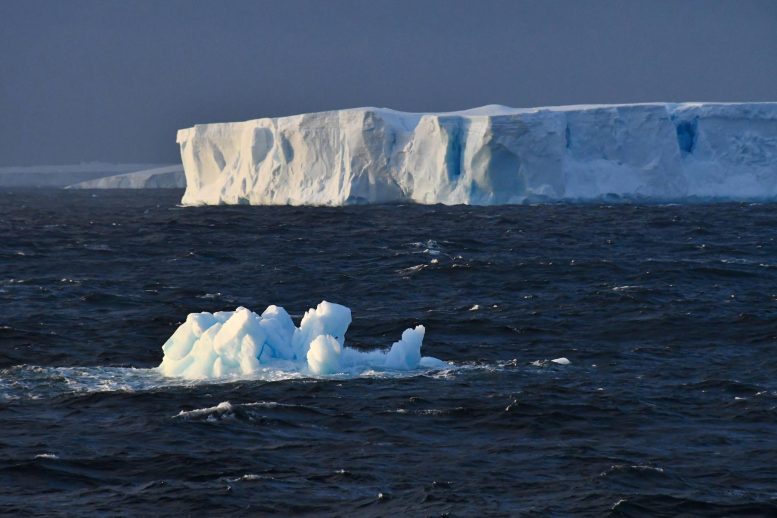
But new evidence collected in the eastern Shennongjia Forestry District of China’s Hubei Province suggests the Earth was not completely frozen — at least not toward the end of the ice age. Instead, there were patches of open water in some of the shallow mid-latitude seas, based on geologic samples dating back to that period.
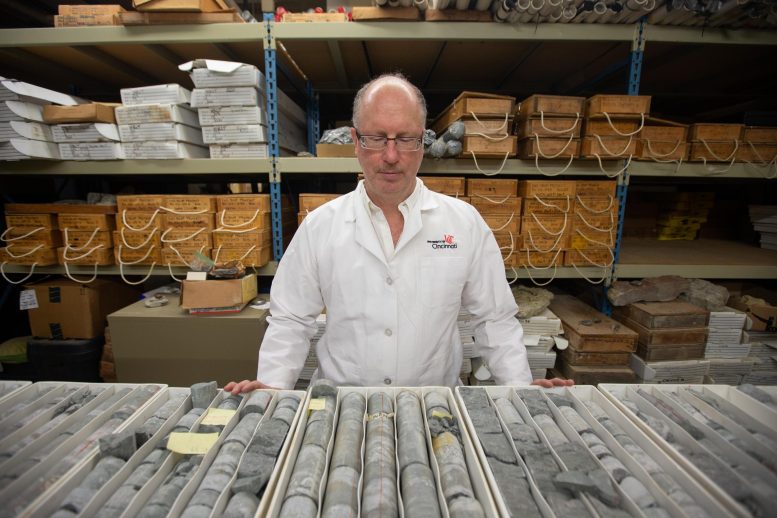
“We called this ice age ‘Snowball Earth,’” said Thomas Algeo, a professor of geosciences at the University of Cincinnati’s College of Arts and Sciences. “We believed that Earth had frozen over entirely during this long ice age. But maybe it was more of a ‘Slushball Earth.’”
The study was published in the journal Nature Communications.
Scientists found benthic phototrophic macroalgae in black shale dating back more than 600 million years. This algae lives at the bottom of the sea and needs light from the sun to convert water and carbon dioxide into energy through photosynthesis.
A team of geoscientists from China, the United Kingdom, and the United States conducted an isotopic analysis and found that habitable open-ocean conditions were more extensive than previously thought, extending into oceans that fall between the tropics and the polar regions and providing refuge for single-celled and multi-celled organisms during the waning stages of the Marinoan ice age.

Lead author Huyue Song from the China University of Geosciences said while deep water likely did not contain oxygen to support life during this period, the shallow seas did.
“We present a new Snowball Earth model in which open waters existed in both low- and mid-latitude oceans,” Song said.
A Dynamic Glaciation Period
Song said the ice age likely saw many intervals of freezing and melting over the span of 15 million years. And under these conditions, life could have persisted, Song said.
“We found that the Marinoan glaciation was dynamic. There may have existed potential open-water conditions in the low and middle latitudes several times,” Song said. “In addition, these conditions in surface waters may have been more widespread and more sustainable than previously thought and may have allowed a rapid rebound of the biosphere after the Marinoan Snowball Earth.”
Algae Helped End the Marinoan Glaciation
Paradoxically, UC’s Algeo said, these refuges of life likely helped to warm the planet, ending the Marinoan ice age. The algae in the water released carbon dioxide into the atmosphere over time, gradually thawing the glaciers.
“One of the general take-home messages is how much the biosphere can influence the carbon cycle and climate,” he said. “We know that carbon dioxide is one of the most important greenhouse gases. So we see how changes in the carbon cycle have an impact on the global climate.”
Algeo said the study raises tantalizing questions about other ice ages, particularly the second one during the Cryogenian Period that scientists also believe created near-total glaciation of the planet.
“We don’t know for sure what triggered these ice ages, but my suspicion is it was related to multicellular organisms that removed carbon from the atmosphere, leading to carbon burial and the cooling of the Earth,” Algeo said. “Today, we’re releasing carbon quickly in huge amounts and it is having a big impact on global climate.”
Reference: “Mid-latitudinal habitable environment for marine eukaryotes during the waning stage of the Marinoan snowball glaciation” by Huyue Song, Zhihui An, Qin Ye, Eva E. Stüeken, Jing Li, Jun Hu, Thomas J. Algeo, Li Tian, Daoliang Chu, Haijun Song, Shuhai Xiao and Jinnan Tong, 4 April 2023, Nature Communications.
DOI: 10.1038/s41467-023-37172-x
The study was funded by the National Natural Science Foundation of China and the China Geological Survey.
Never miss a breakthrough: Join the SciTechDaily newsletter.
Follow us on Google and Google News.
3 Comments
“The algae in the water released carbon dioxide into the atmosphere over time, gradually thawing the glaciers.”
Wouldn’t one expect that the phototropic macroalgae would have a net effect of converting CO2 to oxygen and body mass of the algae, and if it were sequestered in deep water devoid of oxygen, and fossilized, it would have little opportunity to decompose and release CO2?
“Today, we’re releasing carbon quickly in HUGE amounts and it is having a big impact on global climate.”
Actually, the anthropogenic flux of CO2 emissions is about 4% of the total annual flux of the Carbon Cycle (Which I wouldn’t call “huge.”), and the annual anthropogenic flux is of the same order of magnitude as the uncertainty in the total flux.
https://wattsupwiththat.com/2021/06/07/carbon-cycle/
Furthermore, “… the net seasonal CO2 range is more than 57 times greater than the range of the anthropogenic CO2. That is, the annual range of the anthropogenic emissions in 2020 is 1.8% of the net global seasonal range.”
https://wattsupwiththat.com/2022/03/22/anthropogenic-co2-and-the-expected-results-from-eliminating-it/
Again, there is no support for saying that “… we’re releasing carbon quickly in HUGE amounts …”
cancel now
I have had a chance to read the linked, peer-reviewed article, which this press release(?) by the University of Cincinnati summarizes. The peer-reviewed article, published in Nature Communications, reads like a typical, sanitized, objective report on the geochemical study, without the editorializing I objected to in my initial comment above. I find it a little disconcerting that what I’m assuming are press releases, contain opinions that apparently wouldn’t survive peer review and only find their way into press releases [This isn’t the first time!]. What is doubly troubling is how easy it is to criticize the editorializing, based on the work of others. That may explain why it didn’t make it into the published, peer reviewed work. I would suggest that good science reporting only ‘translates’ the work, removing jargon so that the lay reader better understands, without adding subjective opinions, even if the opinion(s) is/are by one of the authors. What has happened to the ideal of a scientist being a ‘disinterested observer’ who only reports the facts?