
Study finds amygdala region is linked to persistent loss of breathing after seizure.
New findings may take scientists a step closer to understanding what causes SUDEP—Sudden Unexpected Death in Epilepsy—a rare but fatal complication of epilepsy.
There are about 3,000 deaths from SUDEP each year in the U.S. The biggest risk factor is epilepsy that is not well controlled with medication or surgery, but the exact cause of SUDEP is not known. However, increasing evidence suggests that loss of breathing, or apnea, that persists after a seizure is a major cause of SUDEP.
Breakthrough Findings
In the new study, University of Iowa neuroscientists found that stimulating a specific area of the amygdala brain region provokes prolonged loss of breathing that continues even after a seizure has ended.
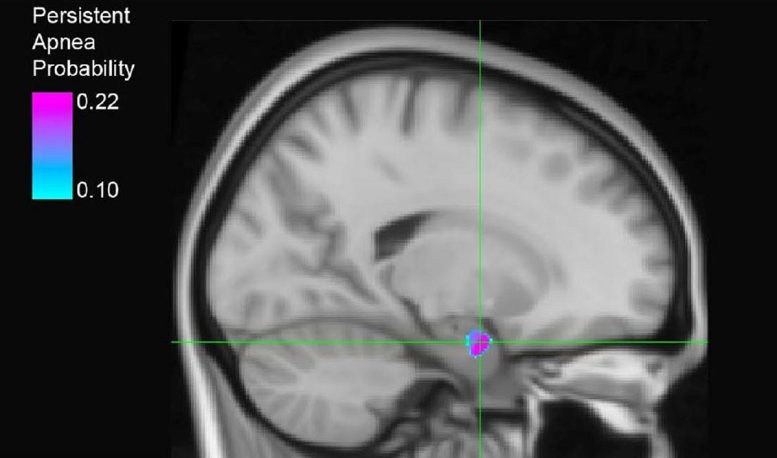
“This is the first study to identify a site in the brain that can cause persistent apnea after the seizure ends,” says Brian Dlouhy, MD, UI associate professor of neurosurgery and pediatrics, and senior author on the new study published online on Octoctober 3 in JCI Insight. “We think this closely resembles the apnea that occurs and has been monitored in SUDEP cases reported in the literature, suggesting that this focal area of the amygdala underlies persistent apnea that can lead to death.”
The study offers new insight into the mechanisms that underlie this probable cause of SUDEP.
“These new findings are a critical step in developing our understanding of what causes SUDEP and in the development of ways in which to identify those individuals at highest risk and ways to prevent SUDEP,” says Vicky Whittemore, PhD, program director at the National Institute of Neurological Disorders and Stroke, part of the National Institutes of Health, which contributed funding for the study.
A Deeper Look Into Brain Mechanisms
The UI research team, including lead authors Gail Harmata, PhD, a postdoctoral research fellow, and Ariane Rhone, PhD, a research scientist, used multiple techniques to study the brain mechanisms linked to this loss of breathing. Specifically, they studied 20 patients, both children and adults, who were preparing for epilepsy surgery. The patients who participated in the study had intracranial electroencephalography (iEEG) electrodes implanted in their brain to help plan their surgeries.
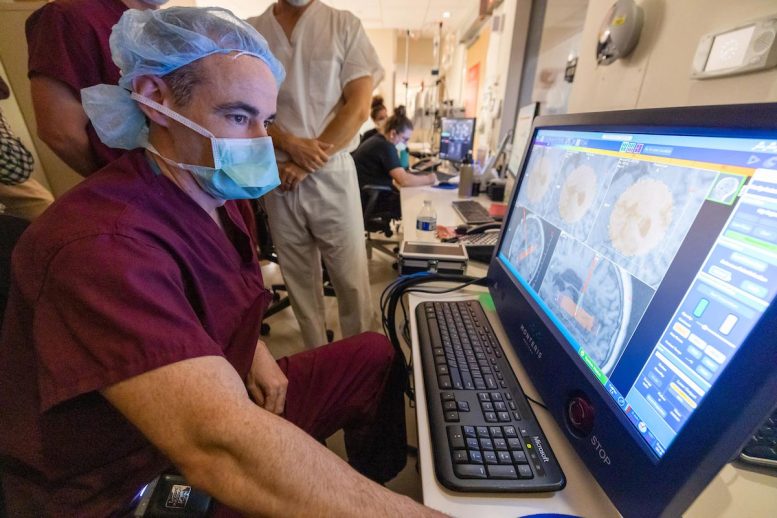
Combining intracranial recordings from these electrodes with functional MRI brain imaging allowed the researchers to map the effect of stimulation at many amygdala sites, leading to the identification of the new focal site in the amygdala.
The study suggests that not every patient is at risk for this phenomenon; only five of the patients developed prolonged apnea following amygdala stimulation. In addition, the exact location within the amygdala was also important. Even within the same patient, stimulating one part of the amygdala caused only temporary loss of breathing while stimulating a different area led to persistent apnea after the stimulation stopped.
Revelations From New Brain Imaging Technique
The team also used a new technique, called electrical stimulation concurrent with functional MRI, to trace the brain networks involved in the persistent post-seizure apnea.
Remarkably, during the experiment the patients were completely unaware that they had stopped breathing. They did not experience the normal sensations of breathlessness or “air hunger” that should have triggered deep breaths.
“Not only did the stimulation of these specific amygdala sites persistently inhibit breathing, it also persistently inhibited the normal alarm that you would get from not breathing and the typical air hunger that you should experience from elevated carbon dioxide levels,” explains Dlouhy, who also is a member of the Iowa Neuroscience Institute.
“This novel technique allows us to look at causal effects from stimulating one site in the brain to see what else it is doing at other sites. It allows us to look at circuitry,” he adds.
The brain circuitry revealed through the experiments showed that stimulation of the amygdala reduced the activity of sites in the brainstem, a key area for controlling breathing and sensing carbon dioxide levels. Elevated levels of carbon dioxide that accumulate when breathing stops usually prompt deep breathing. The fact that the focal amygdala stimulation blocked this normal response suggests that chemo-sensing is disrupted in these patients. The studies also showed altered activity in another brain region called the insula, which is involved in air hunger.
“These new findings are a critical step in developing our understanding of what causes SUDEP and in the development of ways in which to identify those individuals at highest risk and ways to prevent SUDEP.”
Vicky Whittemore, PhD, program director at the National Institute of Neurological Disorders and Stroke
Dlouhy is excited by the new findings and hopes that they will lead to an increased understanding of SUDEP that may eventually allow physicians to identify patients who are at risk and even lead to clinical trials of treatments to prevent SUDEP from occurring.
“We’re homing in on more of a focused target in the amygdala, which is key if we want to translate this to a therapeutic or preventative strategy,” he says.
Reference: “Failure to breathe persists without air hunger or alarm following amygdala seizures” by Gail I.S. Harmata, Ariane E. Rhone, Christopher K. Kovach, Sukhbinder Kumar, Md Rakibul Mowla, Rup K. Sainju, Yasunori Nagahama, Hiroyuki Oya, Brian K. Gehlbach, Michael A. Ciliberto, Rashmi N. Mueller, Hiroto Kawasaki, Kyle T.S. Pattinson, Kristina Simonyan, Paul W. Davenport, Matthew A. Howard III, Mitchell Steinschneider, Aubrey C. Chan, George B. Richerson, John A. Wemmie and Brian J. Dlouhy, 3 October 2023, JCI Insight.
DOI: 10.1172/jci.insight.172423
In addition to Dlouhy, Rhone, and Harmata, the research team included UI scientists Christopher Kovach; Sukhbinder Kumar; Md Rakibul Mowla; Rup Sainju; Yasunori Nagahama; Hiroyuki Oya; Brian Gehlbach; Michael Ciliberto; Rashmi Mueller; Hiroto Kawasaki; Matthew Howard III; Aubrey Chan; George Richerson; and John Wemmie. Researchers at University of Oxford, Harvard Medical School, University of Florida, and Albert Einstein College of Medicine in New York were also part of the team.
Never miss a breakthrough: Join the SciTechDaily newsletter.
Follow us on Google and Google News.
1 Comment
So, that’s what killed my cats; hugging animals will take them out of a seizure just as it does to humans, but you can’t always be there; so, it’s a lack of oxygen that kills them and not an overwhelmed synaptic failure; I had epilepsy as a child, but taught myself how to diffuse the thought stream onto other networks, pretty hard to teach animals that, but they understand love and are even better at it than us; they taught me a lot about life.