
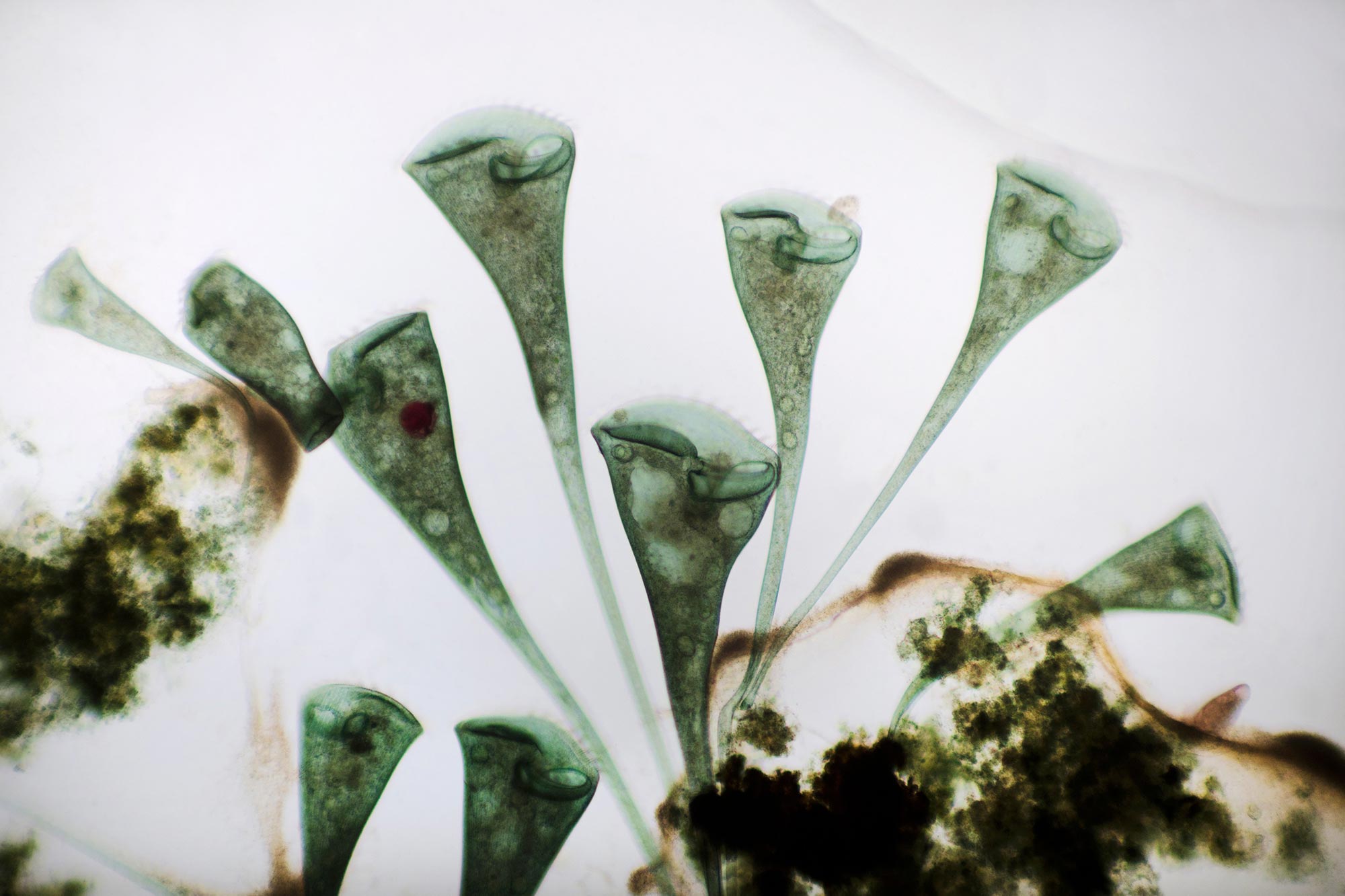
A new study demonstrates that even simple single-cell organisms, such as ciliates and amoebae, exhibit habituation, a basic form of learning previously thought to be exclusive to more complex beings.
This revelation not only changes our understanding of cellular capabilities but also opens up possibilities for applications in cancer immunology, suggesting that our immune cells might be reprogrammed to better recognize and attack cancer cells.
A dog learns to sit on command. A person tunes out the steady hum of a washing machine while engrossed in a book. The ability to learn and adapt is a cornerstone of evolution and survival.
Habituation, a more modest cousin of adaptation, involves a reduced response to a stimulus after repeated exposure. Imagine needing a third espresso to achieve the same alertness that a single shot once provided.
Discovering Habituation in Simple Organisms
Until recently, habituation — a basic form of learning — was thought to be limited to complex organisms with brains and nervous systems, such as insects, birds, mammals, and worms.
However, new research published today (November 19) in Current Biology reveals compelling evidence that even single-celled organisms like ciliates and amoebae—and even the cells within our own bodies—can exhibit habituation similar to that seen in brain-equipped creatures.
The work, led by scientists at Harvard Medical School and the Centre for Genomic Regulation (CRG) in Barcelona, suggests that single cells are capable of behaviors more complex than currently appreciated.
“This finding opens up an exciting new mystery for us: How do cells without brains manage something so complex?” said study senior author Jeremy Gunawardena, associate professor of systems biology in the Blavatnik Institute at HMS. He co-led the study with Rosa Martinez Corral, a former post-doctoral researcher in his lab who now leads a research group in systems and synthetic biology at CRG.
The results add to a small but growing body of work on this subject. Earlier work led by Gunawardena found that a single-cell ciliate showed avoidance behavior, not unlike the actions observed in animals that encounter unpleasant stimuli.
In this video, a single-cell pond dweller called Stentor roeselii exhibits markers of avoidance behavior, as reported in earlier research led by Gunawardena. The new study suggests this organism is also capable of habituation.
Advanced Models Reveal Cellular Memory
Instead of studying cells in a lab dish, the scientists used advanced computer modeling to analyze how molecular networks inside ciliate and mammalian cells respond to different patterns of stimulation. They found four networks that exhibit hallmarks of habituation present in animal brains.
These networks shared a common feature: Each molecular network had two forms of “memory” storage that captured information learned from the environment. One memory decayed much faster than the other — a form of memory loss necessary for habituation, the researchers noted. This finding suggests that single cells process and remember information over different time spans.
Implications for Understanding Learning and Cancer
Studying habituation in single cells could help propel understanding of how learning in general works, the researchers said. The findings also cast the humble single-cell creatures in a new, more tantalizing light: They are not merely molecular machines packed in microscopic bodies, but they are also agents that can learn.
But what about more practical applications?
The researchers caution that these remain purely speculative for now. Yet one daring idea would be to apply the concept of habituation to the relationship between cancer and immunity.
Tumors are notoriously good evaders of immune surveillance because they trick immune cells into viewing them as innocent bystanders. In other words, the immune cells responsible for recognizing cancer may get somehow habituated to the presence of a cancer cell — the immune cell gets used to the stimulus and no longer responds to it.
“It’s akin to delusion. If we knew how these false perceptions get encoded in immune cells, we may be able to re-engineer them so that immune cells begin to perceive their environments correctly, the tumor becomes visible as malign, and they get to work,” Gunawardena said.
“It is a fantasy right now, but it is a direction I would love to explore down the road.”
Reference: “Biochemically plausible models of habituation for single-cell learning” by Lina Eckert, Maria Sol Vidal-Saez, Ziyuan Zhao, Jordi Garcia-Ojalvo, Rosa Martinez-Corral and Jeremy Gunawardena, 19 November 2024, Current Biology.
DOI: 10.1016/j.cub.2024.10.041
Additional authors included Lina Eckert, Maria Sol Vidal-Saez, Ziyuan Zhao, and Jordi Garcia-Ojalvo.
The research was supported by a doctoral fellowship 2021-FI-B-00408 from the Agència de Gestió d’Ajuts Universitaris i de Recerca from the Generalitat de Catalunya; a Harvard University Program for Research in Science and Engineering Award; the Spanish State Research Agency and FEDER Project PID2021-127311NB-I00; Spanish Ministry of Science and Innovation and the Generalitat de Catalunya; EMBO Fellowship ALTF683–2019, RYC2021-033860-I funded by MCIN/AEI/10.13039/501100011033 and by European Union NextGenerationEU/PRTR; with additional support from the Spanish Ministry of Science and Innovation through the Centro de Excelencia Severo Ochoa (CEX2020-001049-S, MCIN/AEI/10.13039/ 501100011033) and the Generalitat de Catalunya through the CERCA program; and with funding from AFOSR Grant FA9550-22-1-0345.
Never miss a breakthrough: Join the SciTechDaily newsletter.
Follow us on Google and Google News.
1 Comment
Well, that beats one argument out of vegetarians’ hands.