
Close Menu
    Facebook X (Twitter) Instagram
    SciTechDaily
    • Biology
    • Chemistry
    • Earth
    • Health
    • Physics
    • Science
    • Space
    • Technology
    Facebook X (Twitter) Pinterest YouTube RSS
    SciTechDaily
    Home»Health»Brazilian Bikini Waxes Aid the Decline of Pubic Lice
    Health

    Brazilian Bikini Waxes Aid the Decline of Pubic Lice

    By SciTechDailyJanuary 14, 20132 Comments2 Mins Read
    Facebook Twitter Pinterest Telegram LinkedIn WhatsApp Email Reddit
    Share
    Facebook Twitter LinkedIn Pinterest Telegram Email Reddit


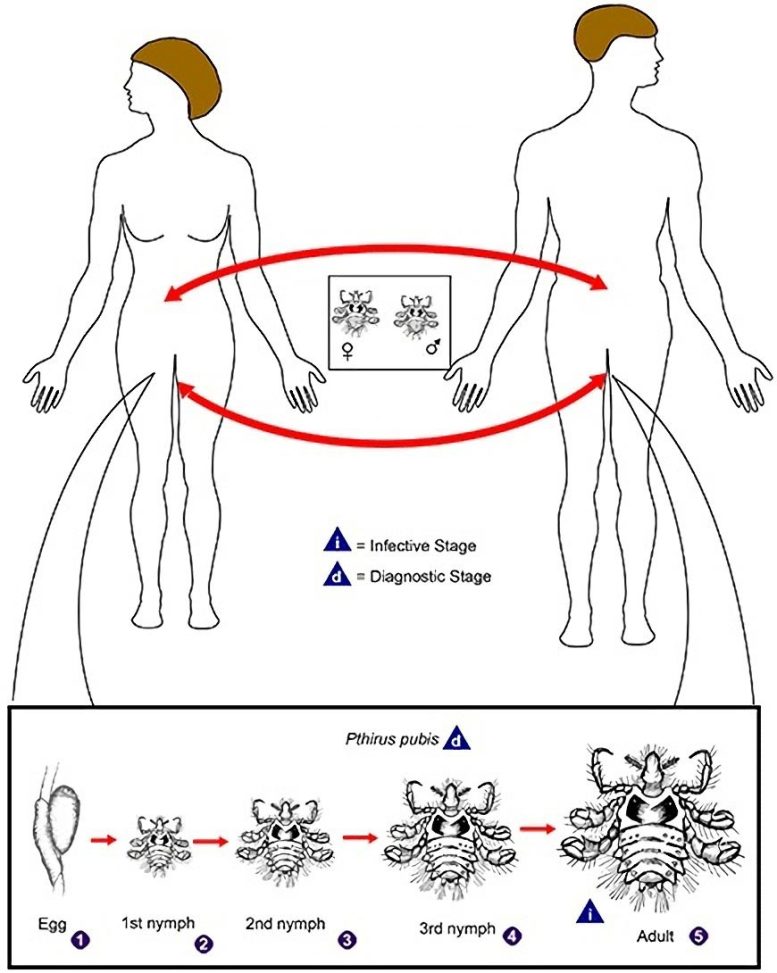
    Pubic lice (Pthirus pubis)
    Pubic lice (Pthirus pubis) have three stages: egg, nymph, and adult. Eggs (nits) are laid on a hair shaft The number 1. Females will lay approximately 30 eggs during their 3-4 week life span. Eggs hatch after about a week and become nymphs, which look like smaller versions of the adults. The nymphs undergo three molts (The number 2, The number 3, The number 4) before becoming adults The number 5. Adults are 1.5-2.0 mm long and flattened. They are much broader in comparison to head and body lice. Adults are found only on the human host and require human blood to survive. If adults are forced off the host, they will die within 24-48 hours without a blood feeding. Pubic lice are transmitted from person to person most commonly via sexual contact, although fomites (bedding, clothing) may play a minor role in their transmission. Credit: CDC

    It appears that college students, and the general public, have one less sexually transmitted health issue to worry about. Recent reports indicate that pubic lice, the crab-shaped insects that dwell in the human groin area, are on the decline. Scientists have noted that the recent trend in pubic hair removal, such as Brazilian bikini waxing, may play a major role in this decline.

    Citing surveys and research by other scholars, scientists at Kenyon College in Gambier, Ohio, reported in a 2011 study that a majority of college men and women in the U.S. and Australia remove all or part of their pubic hair. Other research from the U.K. shows that 99 percent of women older than 16 years remove some hair from the underarms, legs, and pubic area. And Sydney Australia’s main sexual health clinic hasn’t seen a woman with pubic lice since 2008 and male cases have fallen 80 percent from about 100 a decade ago.

    Reference: “Gender, Self-Objectification and Pubic Hair Removal” by Linda Smolak and Sarah K. Murnen, 8 January 2011, Sex Roles.
    DOI: 10.1007/s11199-010-9922-z

    Never miss a breakthrough: Join the SciTechDaily newsletter.
    Follow us on Google and Google News.

    Behavioral Science Disease
    Share. Facebook Twitter Pinterest LinkedIn Email Reddit

    Related Articles

    Yale Study Links Depression During Pregnancy to Risky Postpartum Sexual Behavior

    Yale Research Shows People with a Mental Illness are More Likely to Smoke

    ‘Healthy Neuroticism’ Lowers Risk of Chronic Disease

    Ketamine Produces Rapid Antidepressant Responses

    Meditation Reduces Loneliness and Expression of Inflammatory Genes

    Ticks, Lyme Disease and Public Health

    Researchers Find Possible Link Between Diet Soda and Vascular Risks

    Worldwide Rise in Type 1 Diabetes Could Be Linked to Obesity

    Prion Diseases Hidden in Spleens Could Mean Thousands of Infected

    2 Comments

    1. Pete on January 15, 2013 11:55 am

      Thanks for the article. I’ll be traveling next week to Rio and I’ll keep a keen eye on the groin of my partners. Only totally bald girls admitted.

      Reply
    2. Dame Streeter on June 10, 2013 2:50 pm

      great post

      Reply
    Leave A Reply Cancel Reply

    • Facebook
    • Twitter
    • Pinterest
    • YouTube

    Don't Miss a Discovery

    Subscribe for the Latest in Science & Tech!

    Trending News

    Monster Storms on Jupiter Unleash Lightning Beyond Anything on Earth

    Scientists Create “Liquid Gears” That Spin Without Touching

    The Simple Habit That Could Help Prevent Cancer

    Millions Take These IBS Drugs, But a New Study Finds Serious Risks

    Scientists Unlock Hidden Secrets of 2,300-Year-Old Mummies Using Cutting-Edge CT Scanner

    Bread Might Be Making You Gain Weight Even Without Eating More Calories

    Scientists Discover Massive Magma Reservoir Beneath Tuscany

    Europe’s Most Active Volcano Just Got Stranger – Here’s Why Scientists Are Rethinking It

    Follow SciTechDaily
    • Facebook
    • Twitter
    • YouTube
    • Pinterest
    • Newsletter
    • RSS
    SciTech News
    • Biology News
    • Chemistry News
    • Earth News
    • Health News
    • Physics News
    • Science News
    • Space News
    • Technology News
    Recent Posts
    • Scientists Were Wrong About This Strange “Rule-Breaking” Particle
    • Webb Space Telescope Uncovers Unexpected Ice Clouds on a Jupiter-Like World
    • 289-Million-Year-Old Reptile Mummy Reveals Origin of Human Breathing System
    • New Brain Discovery Challenges Long-Held Theory of Teenage Brain Development
    • Sharks Are Overheating as Warming Oceans Push Them to the Edge
    Copyright © 1998 - 2026 SciTechDaily. All Rights Reserved.
    • Science News
    • About
    • Contact
    • Editorial Board
    • Privacy Policy
    • Terms of Use

    Type above and press Enter to search. Press Esc to cancel.