
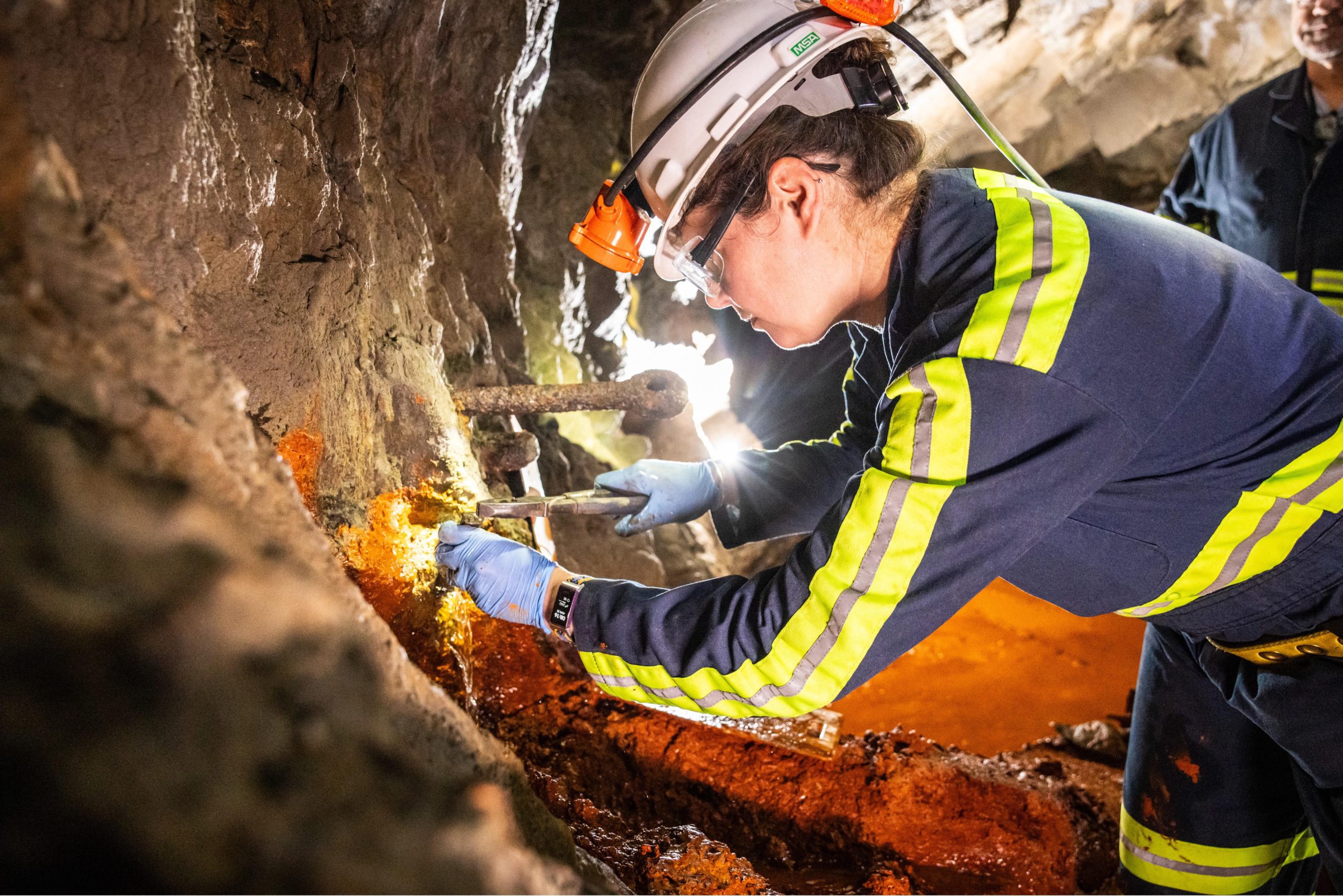
A former goldmine serves as a gateway to explore microbial life deep within the Earth’s crust.
If you totaled the mass of all microbes dwelling beneath the Earth’s surface, their combined biomass would surpass that of all life in our oceans.
However, due to the challenge of accessing these depths, this teeming underground life remains largely unexplored and poorly understood. Utilizing a repurposed goldmine in South Dakota’s Black Hills as a laboratory, researchers from Northwestern University have crafted the most comprehensive map yet of these elusive and unusual microbes beneath our feet.
In total, the researchers characterized nearly 600 microbial genomes — some of which are new to science. Out of this batch, Northwestern geoscientist Magdalena Osburn, who led the study, says most microbes fit into one of two categories: “minimalists,” which have streamlined their lives by eating the same thing all day, every day; and “maximalists,” which are ready and prepared to greedily grab any resource that might come their way.
The study was recently published in the journal Environmental Microbiology.
Not only does the new study expand our knowledge of the microbes living deep within the subsurface, it also hints at potential life we someday might find on Mars. Because the microbes live on resources found within rocks and water that are physically separate from the surface, these organisms also potentially could survive buried within Mars’ dusty red depths.
“The deep subsurface biosphere is enormous; it’s just a vast amount of space,” said Osburn, an associate professor of Earth and planetary science at Northwestern’s Weinberg College of Arts and Sciences. “We used the mine as a conduit to access that biosphere, which is difficult to reach no matter how you approach it. The power of our study is that we ended up with a lot of genomes, and many from understudied groups. From that DNA, we can understand which organisms live underground and learn what they could be doing. These are organisms that we often can’t grow in the lab or study in more traditional contexts. They are often called ‘microbial dark matter’ because we know so little about them.”
A portal into the Earth’s crust
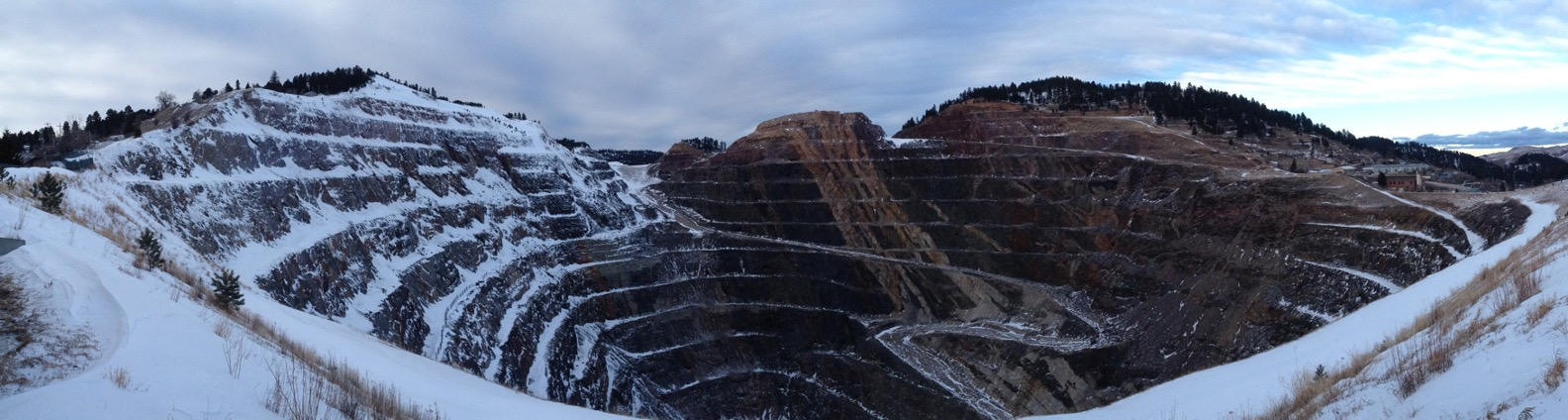
For the past 10 years, Osburn and her students have regularly visited the former Homestake Mine in Lead, South Dakota, to collect geochemical and microbial samples. Now called the Sanford Underground Research Facility (SURF), the deep underground laboratory hosts a number of research experiments across a range of disciplines. In 2015, Osburn established six experimental sites, collectively called the Deep Mine Microbial Observatory, throughout SURF.
“The mine is now a facility dedicated to underground science,” Osburn said. “Researchers mostly perform high-energy particle physics experiments. But they also let us study the deep biospheres that live within the rocks. We can set up experiments in a controlled, dedicated site and check on them months later, which we would not be able to do in an active mine.”
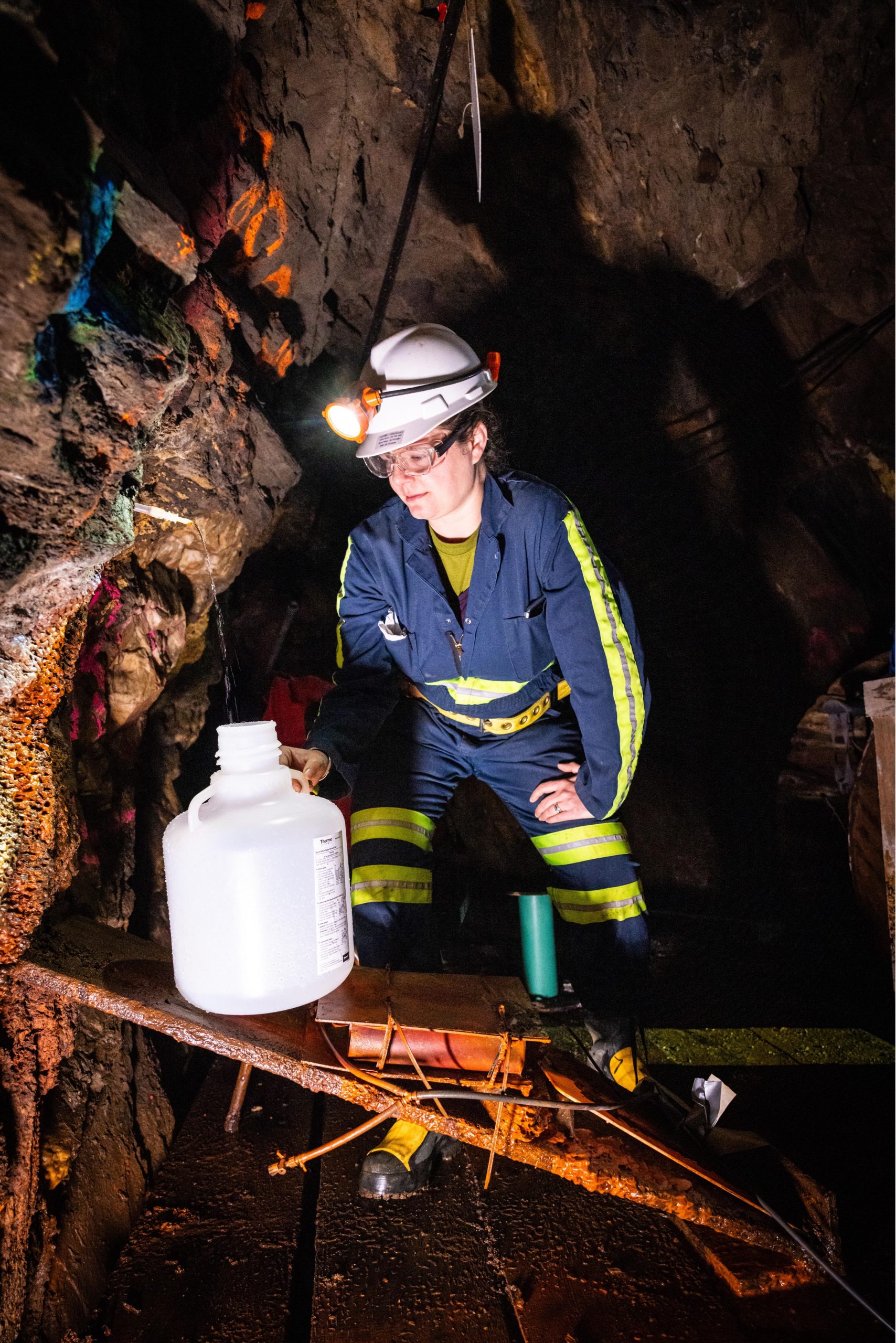
By boring holes into rocks inside the mine, Osburn and her team capture fracture fluids, composed of water and dissolved gases. Some of these fluids are up to 10,000 years old and are teeming with microbial life that is otherwise isolated and ignored.
In the new study, Osburn and her team collected eight fluid samples, gathered at various points throughout the mine — spanning depths from the surface all the way to about 1.5 kilometers deep. The range of samples provides a window into a gradient of microbial life with depth.
Minimalists v. maximalists
Back in Osburn’s lab at Northwestern, she and her team sequenced the microbial DNA held within the samples. Of the nearly 600 genomes characterized, microbes represented 50 distinct phyla and 18 candidate phyla.
Out of this diverse community of microbes, Osburn discovered that, at some point, each lineage gravitates to a life-defining trajectory: become a minimalist or a maximalist.
“Man of the microbes we found were either minimalists: ultra-streamlined with one job that it does very well alongside a close consortium of collaborators, or it can do a little bit of everything,” Osburn said. “These maximalists are ready for every resource that comes along. If there is an opportunity to make some energy or transform a biomolecule, it is prepared. By looking at its genome, we can tell it has many options. If nutrients are scarce, it can just make its own.”
The minimalists, Osburn explained, typically share resources with friends, which also have specialized jobs.
“Some of these lineages don’t even have genes to make their own lipids, which blows my mind,” Osburn said. “Because how can you make a cell without lipids? It’s sort of like how humans can’t make every amino acid, so we eat protein to get the amino acids that we cannot make on our own. But this is on a more extreme scale. The minimalists are extreme specialists, and all together, they make it work. It’s a lot of sharing and no duplication of effort.”
Insights on Earth and beyond
As we imagine life beyond our Earth, Osburn said these underground microbes might provide clues for what potentially could be living elsewhere.
“I get really excited when I see evidence of microbial life, doing its thing without us, without plants, without oxygen, without surface atmosphere,” she said. “These kinds of life very well could exist deep within Mars or in the oceans of icy moons right now. The forms of life tell us about what might live elsewhere in the solar system.”
And, they have implications for our own planet. As the industry looks for locations for long-term carbon storage, for example, many companies are exploring the possibilities for injecting carbon dioxide deep into the ground.
As we explore those options, Osburn reminds us not to forget the microbes.
“We need to be cognizant of life in the deep subsurface and how human activity, like mining and carbon storage, could affect it,” she said. “If we store carbon dioxide underground, there are microbes that could metabolize it to make methane, for example. There is a biosphere underground that, depending on how it’s perturbed, has the potential to affect the surface.”
Reference: “A metagenomic view of novel microbial and metabolic diversity found within the deep terrestrial biosphere at DeMMO: A microbial observatory in South Dakota, USA” by Lily Momper, Caitlin P. Casar and Magdalena R. Osburn, 14 November 2023, Environmental Microbiology.
DOI: 10.1111/1462-2920.16543
The study was supported by NASA Exobiology (grant numbers NNH14ZDA001N, NNX15AM086), the David and Lucile Packard Foundation and the Canadian Institute for the Advancement of Research — Earth 4D.
Never miss a breakthrough: Join the SciTechDaily newsletter.
Follow us on Google and Google News.
1 Comment
It is essential to hurry up to produce inexpensive, abundant energy. Right now we are covering up corpses with tombs. But, this is leaving the bodies at the mercy of microbes, worms and ants. Human body is highly precious, whether alive or dead. Just a few millimeters of scraping of the skin will provide a lot of information for scientists now a days. So, it is essential to freeze corpses ASAP at Absolute temperature and also find ways to save each and every human corpse underground. I certainly do not mean for bringing them back alive.