
Close Menu
    Facebook X (Twitter) Instagram
    SciTechDaily
    • Biology
    • Chemistry
    • Earth
    • Health
    • Physics
    • Science
    • Space
    • Technology
    Facebook X (Twitter) Pinterest YouTube RSS
    SciTechDaily
    Home»Science»Bridging Time and Space: Researchers Decipher Ancient Mystery of Maya Calendar
    Science

    Bridging Time and Space: Researchers Decipher Ancient Mystery of Maya Calendar

    By Tulane UniversityApril 30, 20234 Comments4 Mins Read
    Facebook Twitter Pinterest Telegram LinkedIn WhatsApp Email Reddit
    Share
    Facebook Twitter LinkedIn Pinterest Telegram Email Reddit
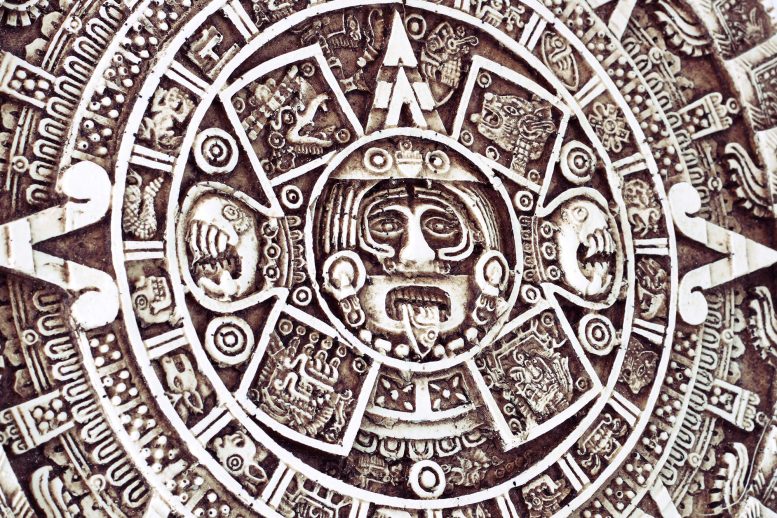
    Maya Calendar Close
    The long-standing mystery of the ancient Mayan 819-day calendar has been potentially deciphered by anthropologists from Tulane University, who found the calendar to be in sync with the synodic periods of all visible planets from Earth. Earlier, it was thought that the calendar referred to four cycles of 819 days, but this didn’t align with the synodic periods of Mercury, Venus, Mars, Jupiter, and Saturn. Instead, the researchers found that 20 cycles of 819 days, equating to about 45 years, align with the synodic periods of all these planets.

    Anthropologists from Tulane University have potentially cracked the ancient Mayan 819-day calendar mystery. They discovered it aligns with the synodic periods of all visible planets over 20 cycles (about 45 years), not the previously thought four cycles. This insight reveals the ancient Maya’s profound understanding of astronomy and the complexity of their calendar systems.

    The 819-day calendar used by ancient Mayans has long stumped researchers, but anthropologists from Tulane University may have finally deciphered its secrets.

    Researchers long suspected the calendar followed astronomical events, specifically how long it takes a planet to appear in the same place in the night sky as seen from Earth, known as the synodic periods of planets. But, according to the study published in the journal Ancient Mesoamerica, the cycles in the Maya calendar cover a much larger timeframe than scholars previously thought.

    “Although prior research has sought to show planetary connections for the 819-day count, its four-part, color-directional scheme is too short to fit well with the synodic periods of the visible planets,” wrote anthropologists John Linden, a Tulane alumnus, and Victoria Bricker, PhD, professor emerita at Tulane University School of Liberal Arts. “By increasing the calendar length to 20 periods of 819 days, a pattern emerges in which the synodic periods of all the visible planets commensurate with station points in the larger 819-day calendar.”

    Previously, researchers thought the calendar referred to four cycles of 819, but that time span didn’t sync neatly with the synodic periods of all the planets that can be seen with the naked eye: Mercury, Venus, Mars, Jupiter, and Saturn. The researchers discovered it takes 20 cycles of 819 days, which is about 45 years, to align with the synodic periods of all visible planets.
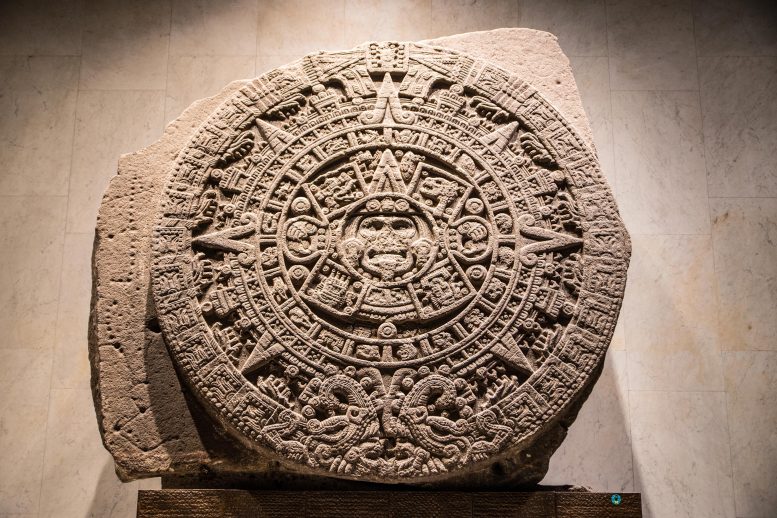
    Maya Calendar
    The Mayan calendar not only tracks the planets’ position in the night sky but is also linked to key dates and celebrations. This breakthrough research sheds light on the sophisticated astronomical knowledge of the ancient Maya and helps to decode the complex Mayan calendars.

    Planetary Alignment Across 45-Year Timeframes

    Within 20 cycles, each planet goes through some number of synodic periods a whole number of times: Mercury every cycle, Venus every 5 cycles, Saturn every 6 cycles, Jupiter every 19 cycles, and Mars every 20 cycles.

    Each synodic period is less than 819 days, but only Mercury has one that happens a whole number of times within a single cycle. Combining the cycles allows for prediction of the placement of the planets, which Linden and Bricker say is also connected to important dates and celebrations.

    “Rather than limit their focus to any one planet, the Maya astronomers who created the 819-day count envisioned it as a larger calendar system that could be used for predictions of all the visible planet’s synodic periods,” the authors wrote.

    This research is a key part of understanding how the ancient Maya studied astronomy and is part of a decades-long quest to understand the complexity of ancient Maya calendars.

    Reference: “The Maya 819-Day Count and Planetary Astronomy” by John H. Linden and Victoria R. Bricker, 18 April 2023, Ancient Mesoamerica.
    DOI: 10.1017/S0956536122000323

    Never miss a breakthrough: Join the SciTechDaily newsletter.
    Follow us on Google and Google News.

    Anthropology Astronomy Popular Tulane University
    Share. Facebook Twitter Pinterest LinkedIn Email Reddit

    Related Articles

    Scientists Have Discovered a “Lost” Mayan Megacity, Complete With Hidden Pyramids

    2014 – A look Back on a Significant Year for NASA

    NASA Supercomputer Simulation Shows Neutron Stars Ripping Each Other Apart to Form a Black Hole

    CfA Astronomers Create First Realistic Virtual Universe

    Scientists Believe Humans Will One Day Colonize the Universe

    Jaw Structures of Fossils Seems to Suggest That Three Homo Species Roamed Africa Concurrently

    Ancient Murals in Guatemala Offer Glimpse of Mayan Astronomy

    Million-Year-Old Ash in South African Cave Yields Evidence of Cooking

    Humans Implicated in Africa’s Deforestation 3,000 Years Ago

    4 Comments

    1. Patrick on May 1, 2023 10:34 am

      Your probably wrong, Zachariah stitches was wrong too so is Graham Hancock. Archaix.com the man who is Jason from archaix.com will school all you!

      Reply
    2. Miguel on May 3, 2023 3:39 am

      If you cannot tell the difference between Maya and Aztec, then you shouldn’t be writing things like this because that shows your true level of ignorance.

      Reply
    3. Luis M. on May 7, 2023 8:44 pm

      SciTechDaily: Home of the best science and technology news since 1998. ???????
      How hard is for you guys to find a picture of the real Mayan calendar?

      Reply
    4. Tom on May 18, 2023 3:12 pm

      The math doesn’t work. 819 days/cycle * 20 cycles = 16,380 days.

      when you divide the synodic periods into 16380, you do not get the results claimed.
      Mercury: 141.2 synodic periods per 16,380 days. We expected 20.
      Venus: 28.04 (almost a whole number!) but not the 100 we were promised.
      Mars: 21 (! a whole number), but not the 20 we were promised.
      Jupiter: 41.05 (almost a whole number!) but not the 19 we were promised.
      Saturn: 43.33 which is not the 6 we were promised.

      The scholarship is highly suspect when I can disprove it with Excel and Google in half an hour!

      Assume all 5 planets are perfectly aligned. How long til they are perfectly aligned again?

      Prime analysis gives a very different result: not 16,380 days, but almost 21 billion years.

      What could motivate this kind of fallacious “research?”

      Reply
    Leave A Reply Cancel Reply

    • Facebook
    • Twitter
    • Pinterest
    • YouTube

    Don't Miss a Discovery

    Subscribe for the Latest in Science & Tech!

    Trending News

    Millions of People Have Osteopenia Without Realizing It – Here’s What You Need To Know

    Researchers Discover Boosting a Single Protein Helps the Brain Fight Alzheimer’s

    World-First Study Reveals Human Hearts Can Regenerate After a Heart Attack

    Why Your Dreams Feel So Real Sometimes and So Strange Other Times

    This Simple Home Device May Boost Brain Power in Adults Over 40

    Enormous Prehistoric Insects Puzzle Scientists

    Scientists Develop Bioengineered Chewing Gum That Could Help Fight Oral Cancer

    After 37 Years, the World’s Longest-Running Soil Warming Experiment Uncovers a Startling Climate Secret

    Follow SciTechDaily
    • Facebook
    • Twitter
    • YouTube
    • Pinterest
    • Newsletter
    • RSS
    SciTech News
    • Biology News
    • Chemistry News
    • Earth News
    • Health News
    • Physics News
    • Science News
    • Space News
    • Technology News
    Recent Posts
    • After 100 Years, Scientists Uncover Hidden Rule Governing Cosmic Rays
    • The Milky Way Has a Hidden Edge and Scientists Finally Mapped It
    • Scientists Stunned by New Organic Molecules Found on Mars
    • Scientists Discover Evolution’s 120-Million-Year-Old “Cheat Sheet”
    • This New “Sound Laser” Could Measure Gravity With Stunning Precision
    Copyright © 1998 - 2026 SciTechDaily. All Rights Reserved.
    • Science News
    • About
    • Contact
    • Editorial Board
    • Privacy Policy
    • Terms of Use

    Type above and press Enter to search. Press Esc to cancel.