
Close Menu
    Facebook X (Twitter) Instagram
    SciTechDaily
    • Biology
    • Chemistry
    • Earth
    • Health
    • Physics
    • Science
    • Space
    • Technology
    Facebook X (Twitter) Pinterest YouTube RSS
    SciTechDaily
    Home»Science»British Team Fails to Reach Lake Ellsworth
    Science

    British Team Fails to Reach Lake Ellsworth

    By SciTechDailyDecember 28, 2012No Comments2 Mins Read
    Facebook Twitter Pinterest Telegram LinkedIn WhatsApp Email Reddit
    Share
    Facebook Twitter LinkedIn Pinterest Telegram Email Reddit
    British Team Fails to Reach Lake Ellsworth
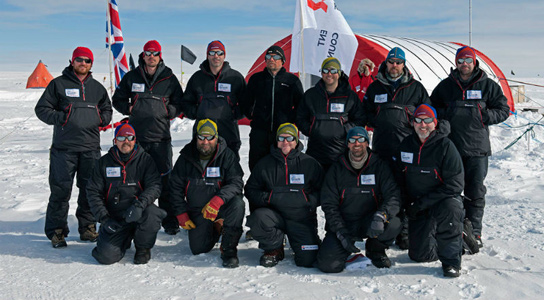
    The Lake Ellsworth team earlier this month, in happier times. Credit: Courtesy of the British Antarctic Survey

    The British Antarctic Survey (BAS) arrived in western Antarctica earlier in December, preparing for their anticipated mission to drill into Lake Ellsworth, a subglacial lake. After days of hard work, the team announced that it was stopping its efforts, stymied by a technical problem.

    The team was one of three groups in Antarctica attempting to penetrate one of the continent’s 360 subglacial lakes. All hoped to find them teeming with exotic microbial life, untouched by surface air for millennia. The team planned on using hot-water drilling to get through 3 kilometers (1.9 miles) of ice to minimize contamination of the lake. This technique has been used before, but never to drill so deeply.

    The technology required vast amounts of water and after 10 hours, the team managed to get 300 meters deep. There, they created a reservoir of water. A second borehole would be drilled into this reservoir. Then, the team would continue down the original borehole, completing a looped system. The reservoir at 300 m (984 feet) would replenish water at the surface that’s used to drill, and would help the team equilibrate the pressure between the lake and the borehole.

    When the team tried to connect the second borehole to the reservoir, they failed to locate the reservoir. They used up too much fuel, and when calculations were made, they realized that they could no longer make a viable attempt to reach Lake Ellsworth.

    It will most likely take 4 to 5 years before the BAS team is able to return to Lake Ellsworth to attempt it once again. It may actually take a couple of years to retrieve all of the equipment and return it to the UK to figure out what exactly went wrong.

    Never miss a breakthrough: Join the SciTechDaily newsletter.
    Follow us on Google and Google News.

    Antarctica Glaciology Lake Ellsworth Subglacial Lakes
    Share. Facebook Twitter Pinterest LinkedIn Email Reddit

    Related Articles

    The Safety Net Is Snapping: Satellites Reveal Accelerating Decay of “Doomsday Glacier”

    Antarctica’s Astonishing Rebound: Ice Sheet Grows for the First Time in Decades

    Stanford Scientists Just Found a Missing Piece in Antarctica’s Ice Puzzle

    “Death by a Thousand Cuts” – New Research Reveals That Antarctica’s Ice Shelves Are Dying

    Can an Ingenious Ice Curtain Stop Antarctica From Melting?

    Scientists Have Discovered Evidence of Giant Clawed Dinosaurs Roaming Australia’s Southern Coast

    Fundamentally Altering Earth’s Glacial Cycles: Antarctic Ice Sheet Growth Triggers Mid-Pleistocene Climate Shift

    British and American Teams Hunt for Life Under Antarctic Ice

    Russians Celebrate Drilling into Lake Vostok, Biggest Antarctic Subglacial Lake

    Leave A Reply Cancel Reply

    • Facebook
    • Twitter
    • Pinterest
    • YouTube

    Don't Miss a Discovery

    Subscribe for the Latest in Science & Tech!

    Trending News

    Scientists Say This Natural Hormone Reverses Obesity by Targeting the Brain

    35-Million-Year-Old Mystery: Strange Arachnid Discovered Preserved in Amber

    Is AI Really Just a Tool? It Could Be Altering How You See Reality

    JWST Reveals a “Forbidden” Planet With a Baffling Composition

    The Protein “Sabotaging” Aging Muscle Recovery Could Be Key to Surviving Aging

    This Diet–Gut Interaction Could Transform Fat Into a Calorie-Burning Machine

    Scientists Discover Hidden Virus Linked to Colorectal Cancer

    Scientists Discover 132-Million-Year-Old Dinosaur Tracks on South Africa’s Coast

    Follow SciTechDaily
    • Facebook
    • Twitter
    • YouTube
    • Pinterest
    • Newsletter
    • RSS
    SciTech News
    • Biology News
    • Chemistry News
    • Earth News
    • Health News
    • Physics News
    • Science News
    • Space News
    • Technology News
    Recent Posts
    • 500 Million Years Ago, Life Changed Forever: Scientists Reveal the DNA Changes That Helped Animals Move Onto Land
    • Surprise RNA Discovery Challenges Long-Held Beliefs About How Genes Work
    • Your IQ at 23 Could Predict Your Wealth at 27, Study Finds
    • 320 Light-Years Away, a Planet Confirms a Fundamental Cosmic Assumption
    • Astronomers Solve Decades-Long Mystery About Saturn’s Spin – “Something Strange Was Happening”
    Copyright © 1998 - 2026 SciTechDaily. All Rights Reserved.
    • Science News
    • About
    • Contact
    • Editorial Board
    • Privacy Policy
    • Terms of Use

    Type above and press Enter to search. Press Esc to cancel.