
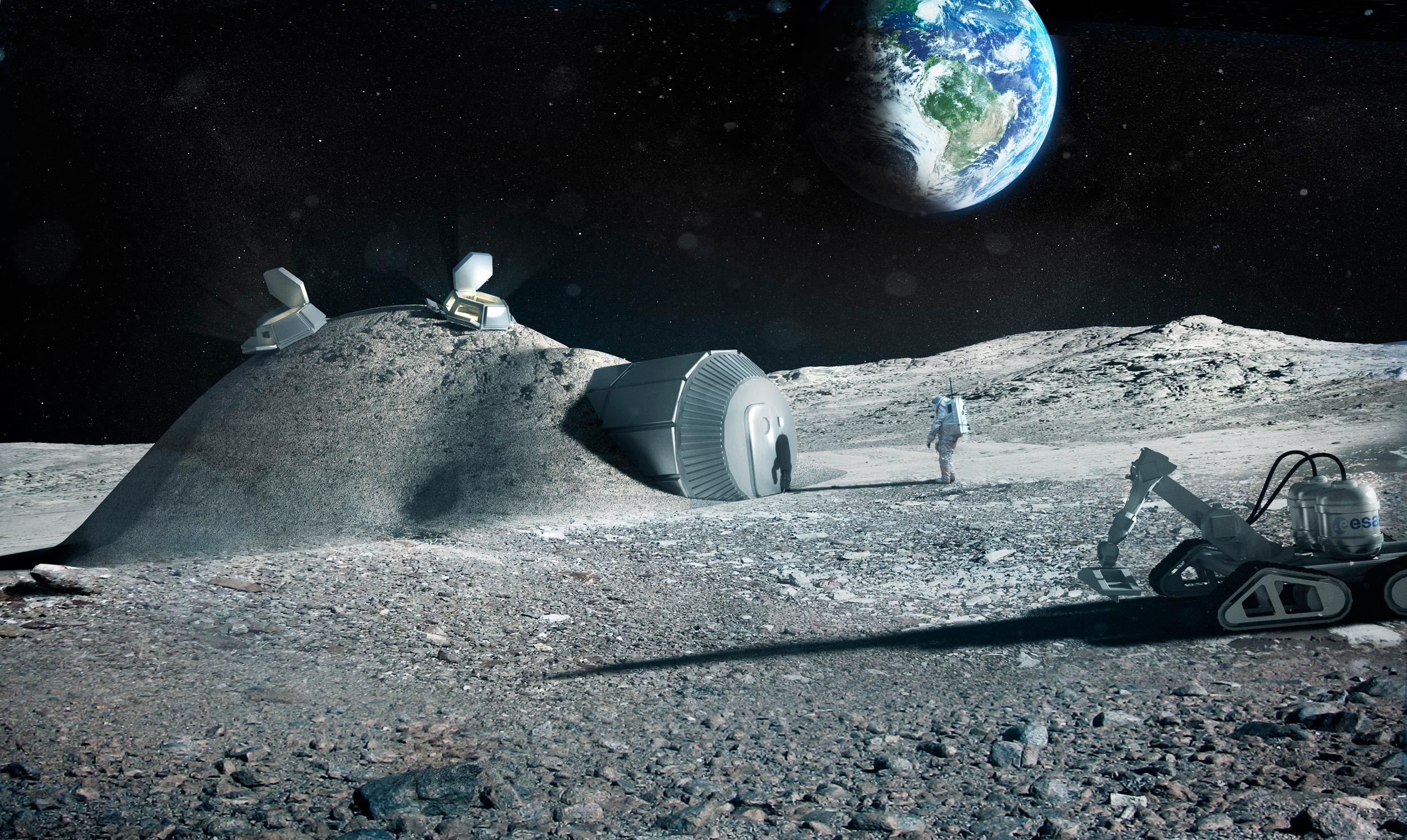
ESA/Foster + Partners
From human waste to superplasticizer, astronaut urine could become a useful resource for making a robust type of concrete on the Moon.
A recent ESA research showed that urea, the main organic compound found in our urine, would make the mixture for lunar concrete more malleable before hardening into a final, sturdy shape for future lunar habitats.

Researchers found that adding urea to the lunar geopolymer mixture, a construction material similar to concrete, worked better than other common plasticizers, such as naphthalene or polycarboxylate to reduce the need for water.
The mix coming out of a 3D printer proved to be stronger and retained a good workability – a fresh sample could be easily molded and retained its shape with weights up to 10 times its own on top of it.
“The science community is particularly impressed by the high strength of this new recipe compared to other materials, but also attracted by the fact that we could use what’s already on the Moon,” says Marlies Arnhof, initiator and co-author of the study from ESA’s Advanced Concepts Team.

Using only materials available on site – an approach known in the space arena as In-Situ Resource Utilisation, or ISRU – will reduce the need of launching huge volumes of supplies from Earth to build on the Moon.
The main ingredient would be a powdery soil found everywhere on the surface of the Moon, known as lunar regolith. The superplasticizer urea limits the amount of water necessary in the recipe.
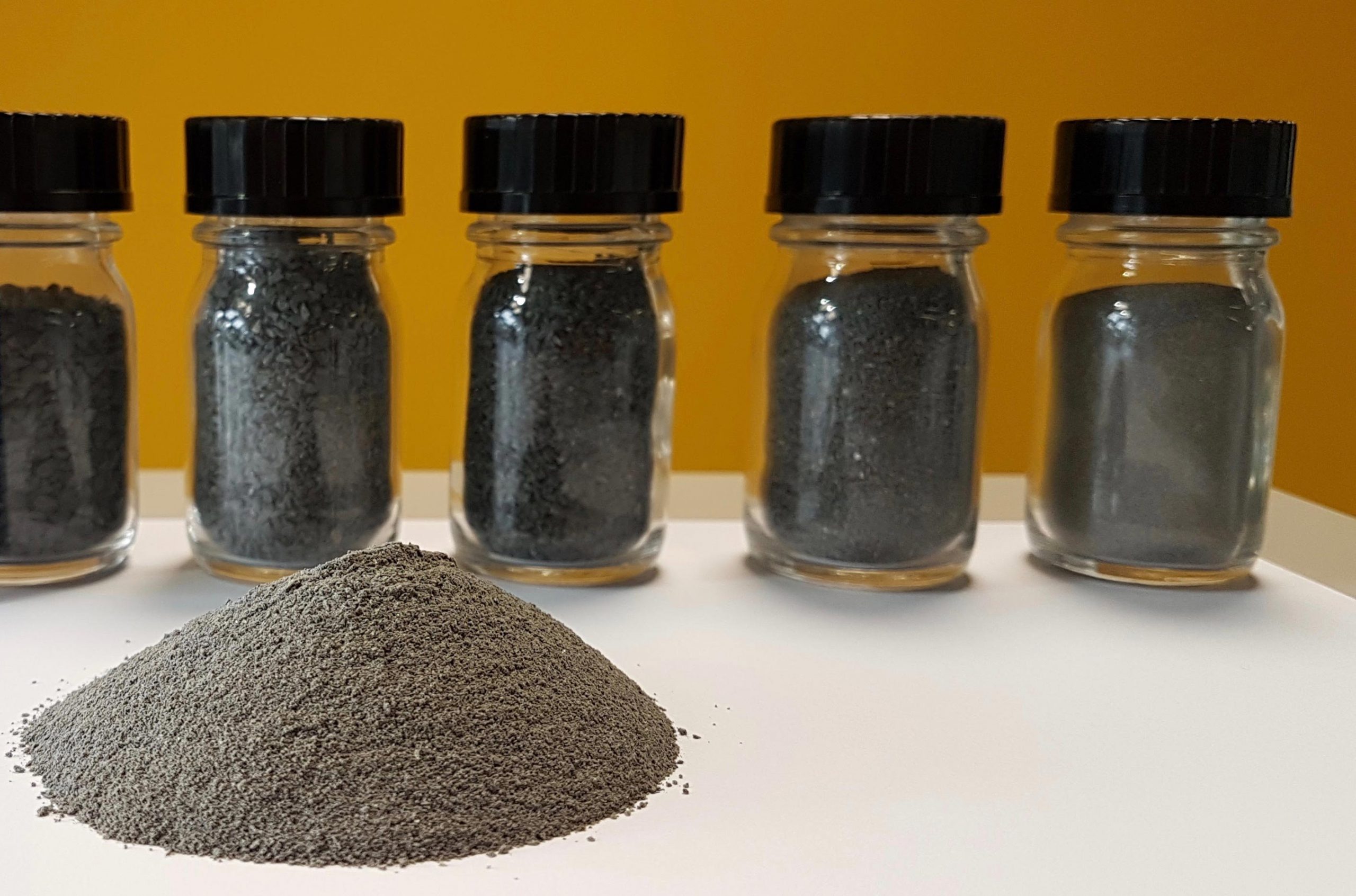
Thanks to future lunar inhabitants, the 1.5 liters of liquid waste a person generates each day could become a promising by-product for space exploration.
“Urea is cheap and readily available, but also helps making strong construction material for a Moon base,” points out Marlies.
Why urea?
After water, urea is the most abundant component of human urine. Urea can break hydrogen bonds and reduce the viscosities of fluid mixtures. Urine also contains calcium minerals that help the curing process.

On Earth, urea is produced on an industrial scale and widely used as an industrial fertilizer and a raw material by chemical and medical companies.
“The hope is that astronaut urine could be essentially used as it is on a future lunar base, with minor adjustments to the water content. This is very practical, and avoids the need to further complicate the sophisticated water recycling systems in space,” explains Marlies.
Bring it into the mix
Several tests confirmed that this type of concrete mixed with urea was capable of withstanding harsh space conditions such as vacuum and extreme temperatures. These two factors have the biggest effect on the physical and mechanical properties of construction material for the lunar surface.
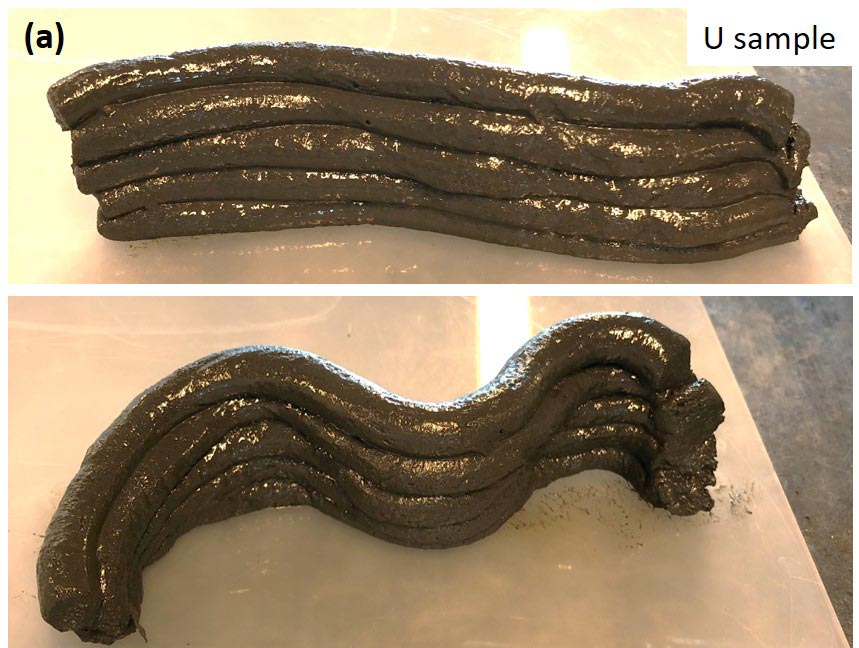
All samples were subjected to vacuum and freeze-thaw cycles to simulate the sharp temperature changes throughout lunar days and nights, which might vary from -171°C to 114°C. The samples withstood temperatures ranging from 114°C to -80°C as a good indication of how the material would behave under even lower temperatures.
Community building
A close collaboration between ESA researchers in the Netherlands and universities in Norway, Spain and Italy under the Ariadna initiative “allowed us to look into such an exploratory, somewhat risky idea that can bring valuable results not only for space exploration, but also for technology applications on Earth,” explains Shima Pilehvar, co-author of the study and associate professor at Østfold University College, in Norway.
“Industry could benefit from refined recipes for fire and heat resistant inorganic polymers suitable for additive manufacturing,” she adds.
One of the hot topics the team wants to tackle next is how basalt fibers from the Moon could reinforce the concrete and how the material could be best used to shield a lunar colony. Researchers hope that this new urea-based mortar could help protect future astronauts from harmful levels of ionizing radiation.
Never miss a breakthrough: Join the SciTechDaily newsletter.
Follow us on Google and Google News.
9 Comments
Next step: Use the poop
This should make every boy and girl dreaming of a life in the stars rethink living on an airless, lifeless, frozen, irradiated rock. I guess you could get used to the smell. Dogs and cats would be good for strengthening the walls and floors. A half baked idea like this gets exploded into a giant breakthrough opening the door to the universe. I don’t think so. What happened to all that water that is supposed to be on the moon? The liquid you can cook out of ground rocks? And what is the effect of solar wind on chemical bonds formed by an organic matrix? Not so good, I expect? But first, I think, somebody needs to justify sucking resources out of our planet to engage in pissing matches among the ignorant egomaniacs that run countries on Earth. All the science that ought to be done in space can be done more efficiently, cheaper and with better effect on our planet using robotics. But this isn’t about knowledge, is it? You know why Trump likes junk like this? Because its dumb.
The urea cement would largely be used outside the station structure to reinforce it. Lacking any atmosphere on the moons surface, you also wouldn’t smell anything. Also, i see no need to add in political commentary, sounds like you have an agenda outside the scope of the article.
Come on, guys. Don’t get pissy. It’s science.
Nice Skywalker, you beat me to it.
I can’t even imagine living in Don’s brain. I already felt the schizophrenia coming on reading these discombobulated ramblings.
I don’t understand why we keep messing around in space to the point we are using are piss i thought the ozone layer was rushing the doom of are planet earth so we just keep rushing it? What is wrong with us.
Diana you is what are problem is lol OMG!
The idea is there,it is waste,that we convert it to useful material makes sense,everything we do to prevent waste is necessary to become a spacefareing people,if we don’t become spacefareing the best we can hope for is an overcrowded nightemare,the worst is we wait til this planet wears out,runs out,or gets wiped by a outside influence,strict discipline and survival attitude.will help ,not silly childish squeamishness.these are only our first steps into the pool,we have yet to get to the deep end!
Lunar outpost, to lunar outhouse.