
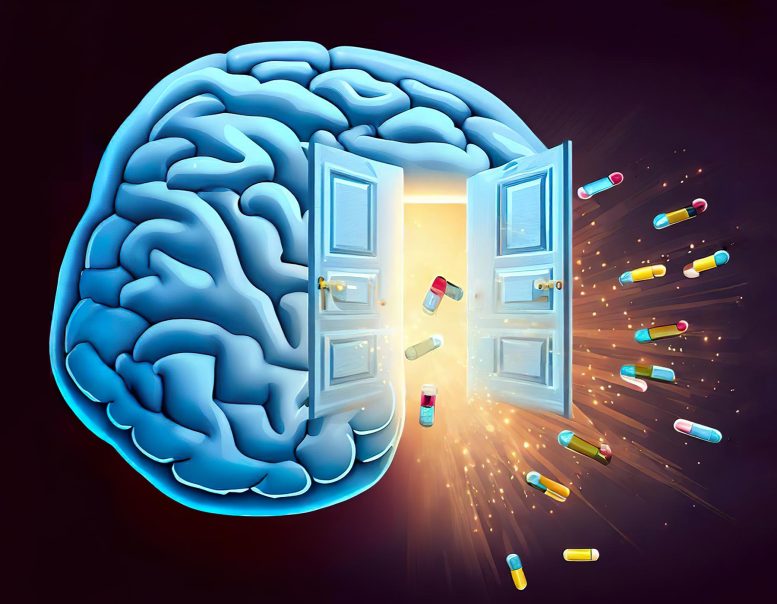
Caltech researchers discovered an enzyme that enables viral vectors to cross the blood-brain barrier, potentially aiding brain disorder drug development and research.
The blood–brain barrier (BBB) is a stringent, nearly impenetrable layer of cells that guards the brain, protecting the vital organ from hazards in the bloodstream such as toxins or bacteria and allowing only a very limited set of small molecules, such as nutrients, to pass through. This layer of protection, however, makes it difficult for researchers to study the brain and to design drugs that can treat brain disorders.
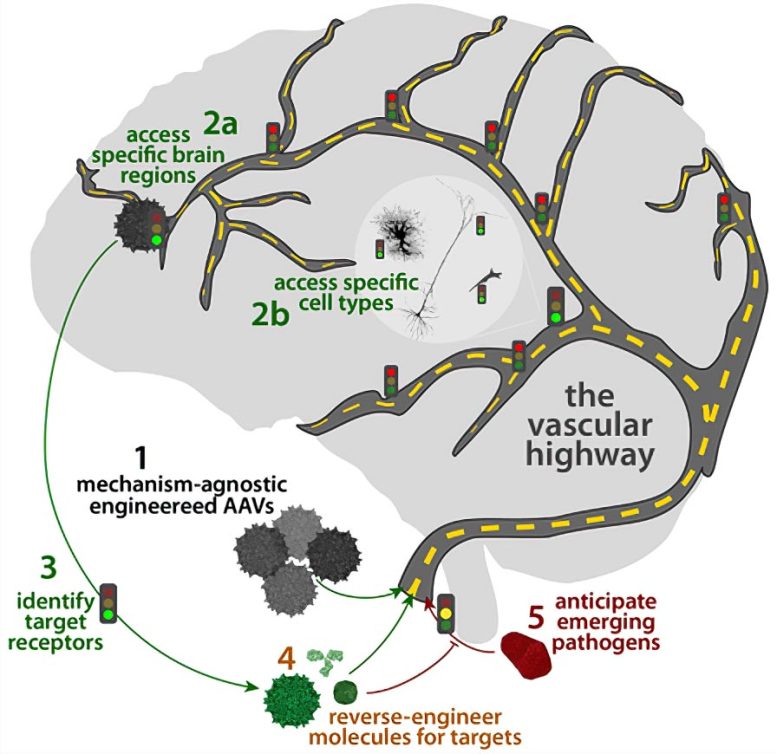
Now, a new study from Caltech has identified a previously unknown mechanism by which certain viral vectors—protein shells engineered to carry various desired cargo—can cross through the BBB. This mechanistic insight may provide a new approach to designing viral vectors for research and therapeutic applications. Understanding this and other new mechanisms could also give insight into how the brain’s defenses may be exploited by emergent pathogens, enabling researchers to prepare methods to block them.
The research was conducted in the laboratory of Viviana Gradinaru (Caltech BS ’05), the Lois and Victor Troendle Professor of Neuroscience and Biological Engineering and director of the Center for Molecular and Cellular Neuroscience, part of the Tianqiao and Chrissy Chen Institute for Neuroscience at Caltech, and appears in the journal Science Advances on April 19. The study’s first authors are Timothy Shay (PhD ’15), the scientific director of Caltech’s Beckman Institute CLOVER Center; bioengineering graduate Xiaozhe Ding (PhD ’23); and CLOVER research associate Erin Sullivan.
Trojan Horse Viral Vectors
Though the BBB serves as the brain’s formidable defense, certain viruses have naturally evolved the ability to bypass it. For decades, researchers have studied how to use these viruses as a kind of BBB-crossing Trojan Horse; to do so, researchers scrape out the original viral cargo carried by the viruses and then use their hollow shell to ferry beneficial therapeutics or tools for research. Viral vectors with the ability to cross the BBB can deliver desired genes to the brain through a simple injection into the bloodstream and thus do not need to be invasively injected into the brain. Unfortunately, most vectors derived from naturally evolved viruses are very inefficient at crossing the BBB, and so they must be administered at high doses, increasing the risk of side effects.
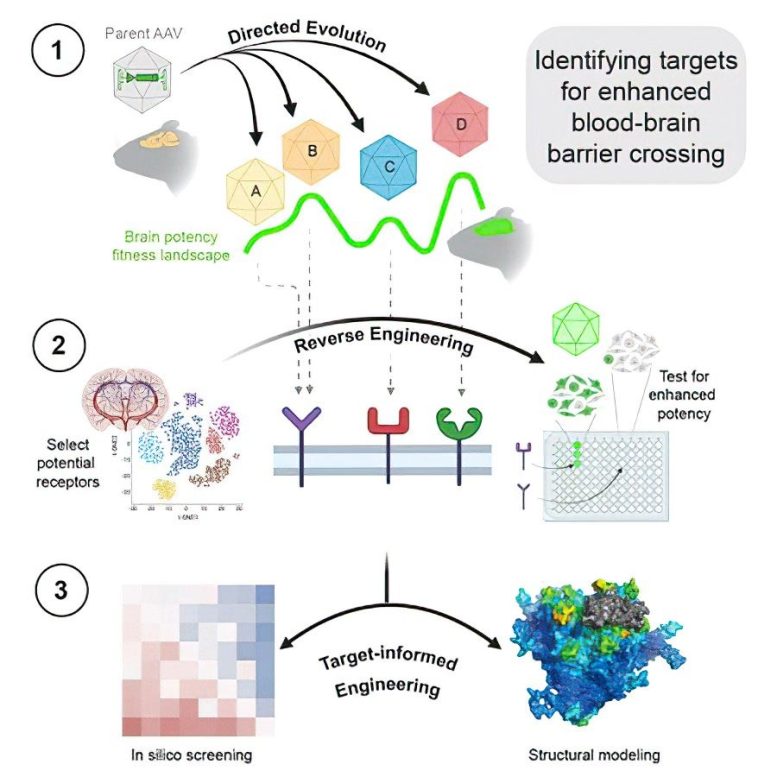
Inspired by nature, Gradinaru lab has over the past decade used the process of directed evolution—a technique pioneered at Caltech by Nobel Laureate Frances Arnold—to guide the evolution of vectors and enhance their ability to cross the BBB. Over the years, the group has generated dozens of vectors with different abilities to cross the BBB and target various tissues and cell types in a variety of species. In the process, they noticed that distinct vectors can behave differently across model organisms, suggesting that these vectors may each have identified distinct and efficient paths from the bloodstream to the brain.
However, although researchers knew that these vectors could cross, it was still unclear how they were crossing. Where are the entry points in the fortified wall of the BBB?
In this new study, the team led by Shay, Sullivan, and Ding aimed to identify these mechanisms using a multidisciplinary approach that combines the researchers’ expertise in techniques of protein chemistry, molecular biology, and data science, respectively. First, Shay and Sullivan developed a cell-culture screen to quickly test the ability of scores of diverse proteins found on the surface of the BBB to enhance the infectivity of vectors in a dish. Ding then used an advanced computational model (based on a complex artificial intelligence program called AlphaFold) to simulate how vectors interact with the different proteins, revealing the geometries of the interactions uncovered in the screen. Next, a kind of “March Madness” competition process—which is the subject of an upcoming paper—determined which vectors interacted best with which proteins, and recapitulated the experimental results of the screen.
The Role of Carbonic Anhydrase IV in BBB Crossing
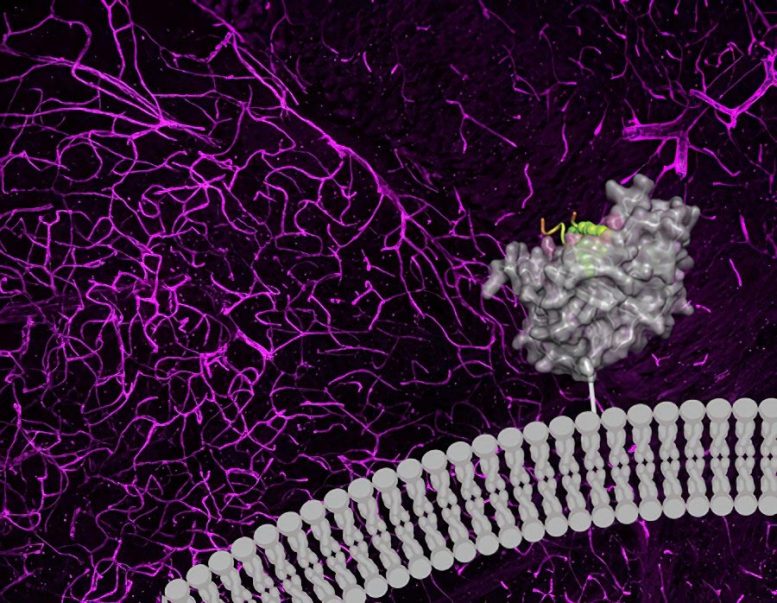
The team discovered a particular enzyme, called carbonic anhydrase IV (CA-IV), that enables a few different viral vectors to cross the BBB. Interestingly, CA-IV is an ancient enzyme that is found on the BBBs of many diverse species, including humans; it was not previously known to facilitate any kind of BBB-crossing process. In the future, this combined experimental and computational approach may accelerate the discovery of additional solutions to BBB crossing and the team is excited about the possibilities to apply these molecular gateways to the delivery of brain therapeutics.
“Blood-brain-barrier crossing is a key biological puzzle,” says Gradinaru. “To say that an enzyme that regulates blood pH and lets us taste the fizz in soda, is an unintuitive target for helping viruses through the BBB would be an understatement. Now we can leverage CA-IV, and other exciting targets that continue to emerge from our approach rooted in identifying the mechanisms of BBB-crossing viral vectors, to help us design next-generation viral and non-viral delivery vectors for the brain. And maybe, it will also help us build resilience against emergent pathogens that could hijack the same routes for brain entry.”
Understanding the range of mechanisms by which viral vectors cross into the brain is critical for enabling personalized treatments across diverse human populations. Brains, and their BBBs, vary widely across species and even among humans. In fact, an individual’s BBB can vary over their own lifetime. By revealing new BBB-crossing mechanisms, a wider range of neuropharmaceutical delivery options can be tailored to individuals with diverse biological profiles.
Reference: “Primate-conserved carbonic anhydrase IV and murine-restricted LY6C1 enable blood–brain barrier crossing by engineered viral vectors” by Timothy F. Shay, Erin E. Sullivan, Xiaozhe Ding, Xinhong Chen, Sripriya Ravindra Kumar, David Goertsen, David Brown, Anaya Crosby, Jost Vielmetter, Máté Borsos, Damien A. Wolfe, Annie W. Lam and Viviana Gradinaru, 19 April 2023, Science Advances.
DOI: 10.1126/sciadv.adg6618
Funding was provided by the National Institutes of Health and Caltech’s Beckman Institute for CLARITY, Optogenetics and Vector Engineering Research (CLOVER).
Never miss a breakthrough: Join the SciTechDaily newsletter.
Follow us on Google and Google News.
1 Comment
Christopher Walborn