
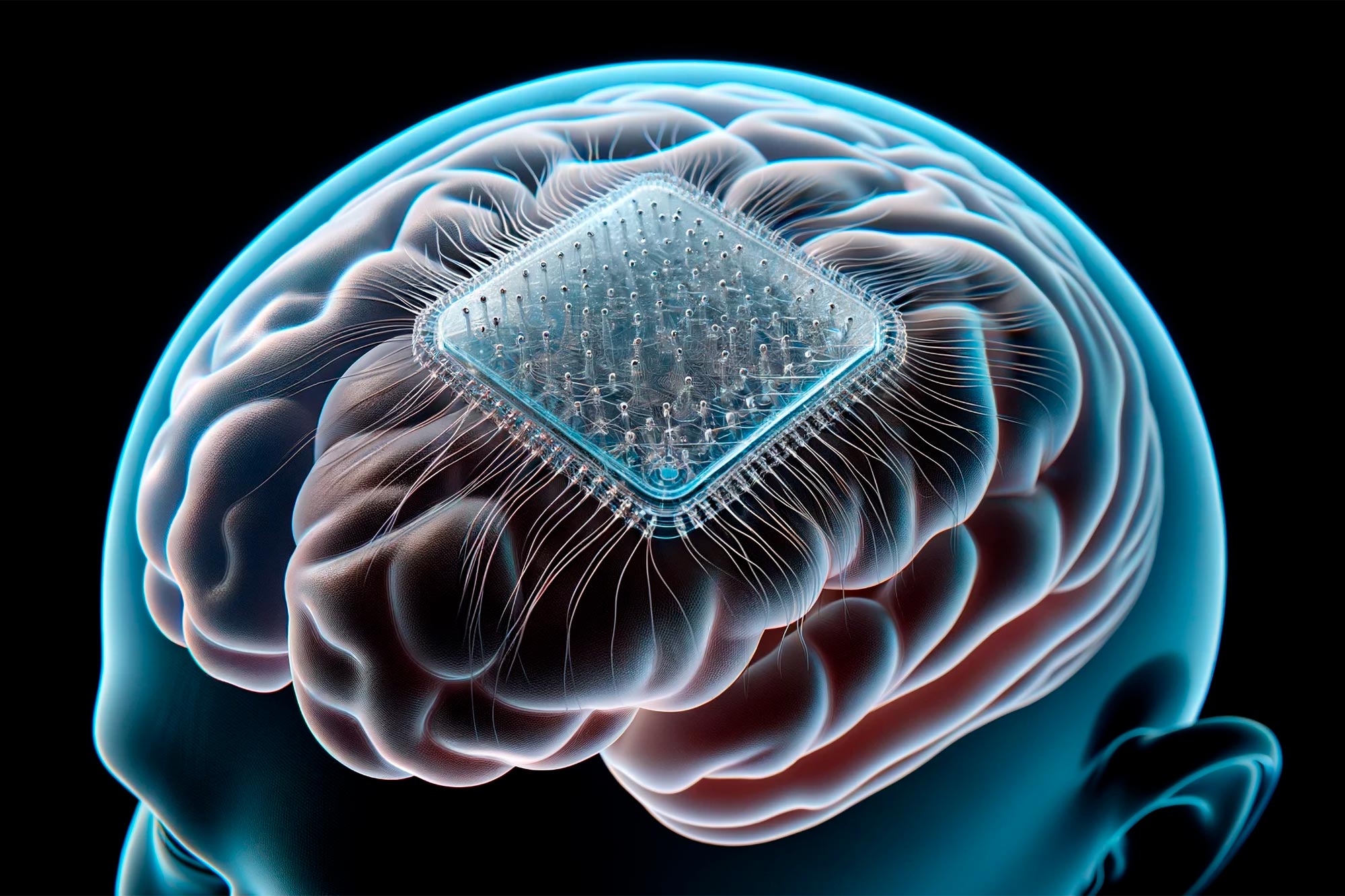
Cambridge researchers are developing implants to help repair brain pathways damaged by Parkinson’s disease.
As part of a £69 million ($85 million) funding initiative by the Advanced Research + Invention Agency (ARIA), Professor George Malliaras from Cambridge’s Department of Engineering will co-lead a pioneering project to develop a new type of brain implant. The research focuses on using midbrain organoids—small clusters of brain cells—to create advanced neural interfaces, which will be tested in animal models of Parkinson’s disease.
Malliaras will lead the project alongside Professor Roger Barker from the Department of Clinical Neurosciences, collaborating with researchers from the University of Oxford, Lund University, and BIOS Health. Their work is one of 18 projects funded under ARIA’s Precision Neurotechnologies program, which supports interdisciplinary teams across academia, non-profit R&D institutions, and startups working to advance brain-computer interface technologies.
Over the next four years, ARIA will invest £69 million to develop new methods for interfacing with the brain at the neural circuit level. This initiative aims to revolutionize treatments for complex neurological and neuropsychiatric disorders, including Alzheimer’s, epilepsy, and depression.
By addressing bottlenecks in funding and the lack of precision offered by current approaches, the outputs of this program will pave the way for addressing a much broader range of conditions than ever before, significantly reducing the social and economic impact of brain disorders across the UK.
The Challenge of Treating Parkinson’s Disease
Parkinson’s disease occurs when the brain cells that make dopamine (a chemical that helps control movement) die off, causing movement problems and other symptoms. Current treatments, like dopamine-based drugs, work well early on, but can cause serious side effects over time.
In the UK, 130,000 people have Parkinson’s disease, and it costs affected families about £16,000 per year on average – more than £2 billion in the UK annually. As more people age, the number of cases will grow, and new treatments are urgently needed.
One idea is to replace the lost dopamine cells by transplanting new ones into the brain. But these cells need to connect properly to the brain’s network to fix the problem, and current methods don’t fully achieve that.
In the ARIA-funded project, Malliaras and his colleagues are working on a new approach using small clusters of brain cells called midbrain organoids. These will be placed in the right part of the brain in an animal model of Parkinson’s disease. They’ll also use advanced materials and electrical stimulation to help the new cells connect and rebuild the damaged pathways.
Transforming Brain Disorder Treatments
“Our ultimate goal is to create precise brain therapies that can restore normal brain function in people with Parkinson’s,” said Malliaras.
“To date, there’s been little serious investment into methodologies that interface precisely with the human brain, beyond ‘brute force’ approaches or highly invasive implants,” said ARIA Programme Director Jacques Carolan. “We’re showing that it’s possible to develop elegant means of understanding, identifying, and treating many of the most complex and devastating brain disorders. Ultimately, this could deliver transformative impact for people with lived experiences of brain disorders.”
Other teams funded by the programme include one at Imperial College London who is developing an entirely new class of biohybridised technology focused on engineering transplanted neurons with bioelectric components. A Glasgow-led team will build advanced neural robots for closed-loop neuromodulation, specifically targeting epilepsy treatment, while London-based Navira will develop a technology for delivering gene therapies across the blood-brain barrier, a crucial step towards developing safer and more effective treatments.
Never miss a breakthrough: Join the SciTechDaily newsletter.
Follow us on Google and Google News.
2 Comments
at least in American English, there’s a big difference between “develop” and “will co-lead a pioneering project to develop “
Pretty sure that if YOU PEOPLE DO NOT STOP, THAT THE TRUTH WILL BE RELEASED just from me hitting the REPLY BUTTON.