
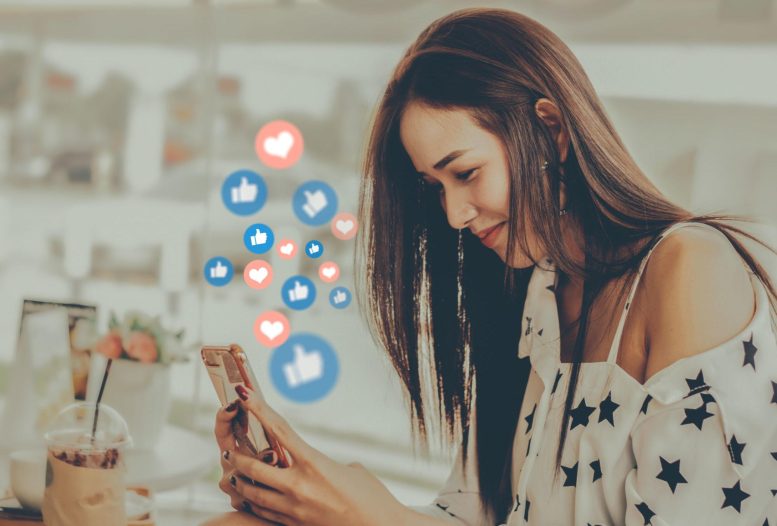
Reducing social media use improves mental health, and self-limiting is a practical and effective approach.
In July, both the American Psychological Association and the U.S. Surgeon General released health warnings. These guidelines, directed at teenagers, parents, and lawmakers, are based on a growing pool of research that indicates a connection between two concerning trends.
Youth engagement with social media is increasing, and this uptick correlates with a decline in their mental well-being.
Researchers at Iowa State University found a simple intervention could help. During a two-week experiment with 230 college students, half were asked to limit their social media usage to 30 minutes a day and received automated, daily reminders. They scored significantly lower for anxiety, depression, loneliness, and fear of missing out at the end of the experiment compared to the control group.
Psychological Benefits of Cutting Back on Social Media
They also scored higher for “positive affect,” which the researchers describe as “the tendency to experience positive emotions described with words such as ‘excited’ and ‘proud.’” Essentially, they had a brighter outlook on life.
“It surprised me to find that participants’ well-being did not only improve in one dimension but in all of them. I was excited to learn that such a simple intervention of sending a daily reminder can motivate people to change their behavior and improve their social media habits,” says Ella Faulhaber, a Ph.D. student in human-computer interaction and lead author of the paper.
The researchers found the psychological benefits of cutting back on social media extended to participants who sometimes exceeded the 30-minute time limit.
“The lesson here is, it’s not about being perfect but putting in effort, which makes a difference. I think self-limiting and paying attention are the secret ingredients, more so than the 30-minute benchmark,” Faulhaber states.
Douglas A. Gentile, co-author and distinguished professor of psychology, says their results fit with other research that’s grown out of kinesiology and health fields.
“Knowing how much time we spend on activities each day and making something countable makes it easier for people to change their behaviors,” he says, giving Fitbits and daily steps as an example.
Many of the participants in the ISU study commented that the first few days of cutting back were challenging. But after the initial push, one said they felt more productive and in tune with their lives. Others shared that they were getting better sleep or spending more time with people in person.
Self-limiting may be more practical
Gentile and Faulhaber point out that other studies have investigated the effects of limiting or abstaining from social media. However many of the interventions require heavy supervision and deleting apps or using a special application to block or limit social media. Like rehab for someone who’s addicted to drugs, external accountability can help some users. But it also carries a higher risk of backfiring.
“When a perceived freedom is taken away, we start resisting,” says Gentile. He adds that eliminating social media also means losing some of the benefits it can bring, like connecting with friends and family.
Faulhaber says their study extends the current research on social media and provides a practical way for people to limit their use. For anyone looking to cut back, she recommends:
- Create awareness. Set a timer or use a built-in wellness app to see how much time you spend on social media.
- Give yourself grace. Recognize that it’s not easy to stick to a time limit. Social media apps are designed to keep you engaged.
- Don’t give up. Limiting social media use over time has real benefits for your daily life.
The researchers say it’s also important to be mindful of how and when we use these platforms. Future research could further explore this, along with the long-term effects from limiting social media and what people do with the time they gain.
“We live in an age of anxiety. Lots of indicators show that anxiety, depression, loneliness are all getting worse, and that can make us feel helpless. But there are things we can do to manage our mental health and well-being,” says Gentile.
Paying more attention to how much time we spend on social media and setting measurable goals can help.
Reference: “The Effect of Self-Monitoring Limited Social Media Use on Psychological Well-Being” by Manuela Ellen Faulhaber, Jeong Eun Lee and Douglas A. Gentile, 31 May 2023, Technology Mind and Behavior.
DOI: 10.1037/tmb0000111
Jeong Eun Lee, assistant professor of human development and family studies, contributed to the paper.
Never miss a breakthrough: Join the SciTechDaily newsletter.
Follow us on Google and Google News.