
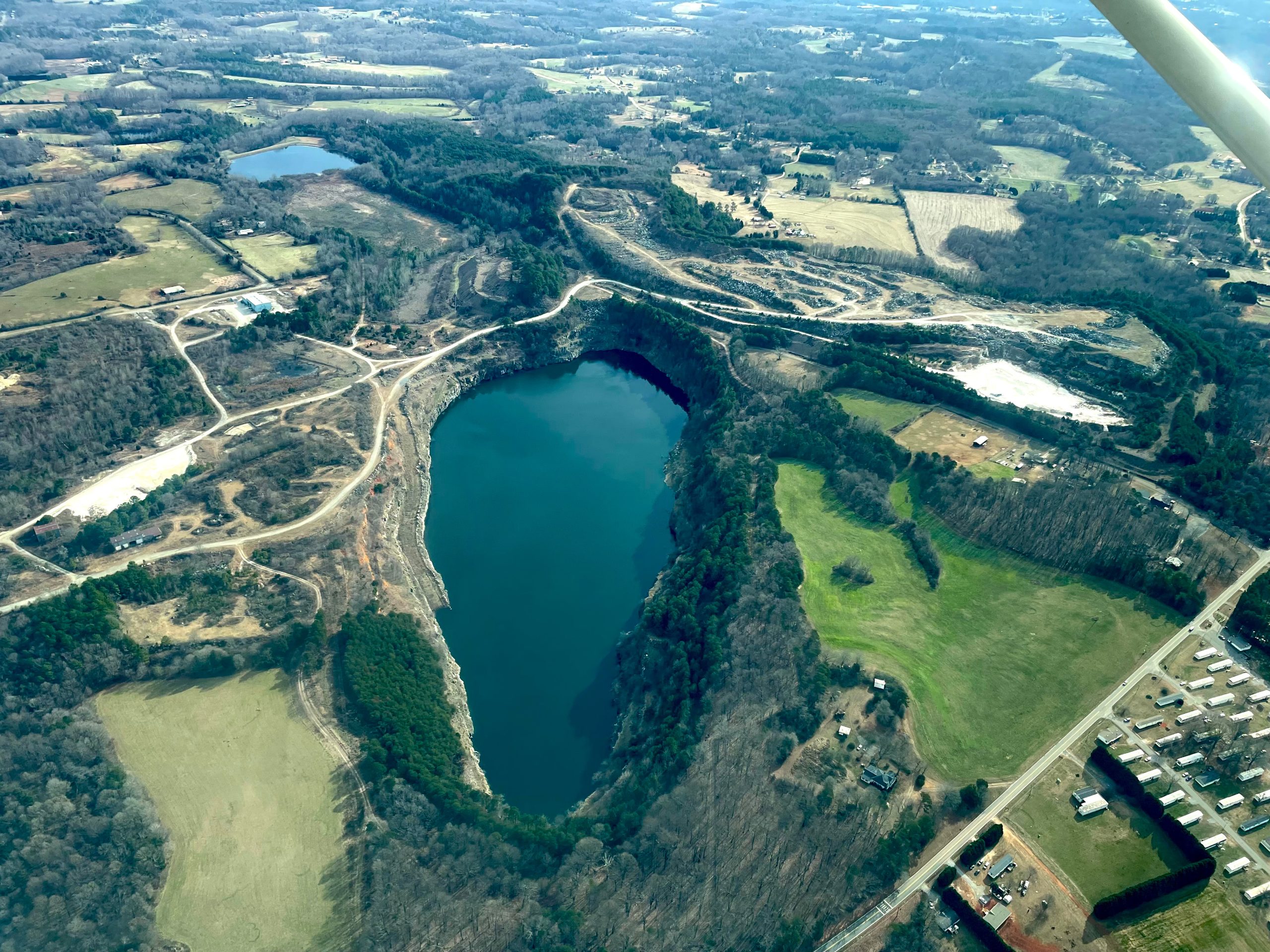
A study reveals that while levels of common contaminants are low, other elements are found in high concentrations in waters associated with an abandoned lithium mine.
A new study suggests that lithium ore and mining waste from a historic lithium mine west of Charlotte, North Carolina, are unlikely to pollute nearby waters with common contaminants like arsenic and lead.
However, high levels of other metals — namely, lithium, rubidium, and cesium — do occur in waters associated with the mine.
The new findings, from Avner Vengosh, distinguished professor of environmental quality at Duke University’s Nicholas School of the Environment, shed light on potential water quality impacts of legacy, or historic, lithium mining. They also provide baseline data for future studies exploring how reopening lithium mines in the N.C. piedmont will likely affect the water quality of drinking water resources nearby.
“The world is increasingly relying on lithium for the green-energy transition, but previous studies on the environmental effects of hard-rock lithium mining show mixed results,” Vengosh said. “This study provides new, important data to clarify the possible environmental impacts.
The area where the Kings Mountain Mine is located was once the largest lithium-producing region in the world. Situated in the wooded, rural terrain of the piedmont, the mine opened in the 1950s and was abandoned in the 1980s, when more accessible lithium deposits drew prospectors to South America. The lithium at Kings Mountain primarily exists in granite-like rock called pegmatite, bound to a green-tinged mineral called spodumene.

For their study, the researchers collected samples of pegmatite and waste rocks from in and around the mine, as well as samples of tailings — crushed rocks left over from historic spodumene extraction. They also sampled groundwater from the mine and surface water from Kings Creek, which flows from the mine. Samples from various piedmont streams provided baseline data on water quality.
The researchers pulverized rock samples and mixed them in a solution designed to test how various contaminants might enter the surrounding environment. These laboratory experiments simulate how contaminants in the rocks would leach out under natural conditions. The researchers then analyzed the solutions, as well as the surface water and groundwater samples, for a wide range of metals commonly used to evaluate water quality. The study was published online in the journal Science of the Total Environment.
Laboratory Experiments and Findings
Leaching experiments and water samples analyzed in the study showed common regulated contaminants — including arsenic, lead, copper, and nickel — at levels below drinking water and ecological standards set by the U.S. Environmental Protection Agency.
“The fact that we don’t see these toxic contaminants was, in some way, a relief, because it suggests that future lithium exploration in North Carolina would not cause major negative water quality effects with respect to these elements,” Vengosh said.
However, the team found high levels of other metals in the mine site relative to their concentrations in the piedmont water resources.
“We detected elevated concentrations of lithium, which was expected, but also found rubidium and cesium at levels you normally don’t see in natural waters, and that are not federally regulated,” said first author Gordon Williams, a Ph.D. student in Vengosh’s lab and the Division of Earth and Climate Sciences. “An outstanding question, then, is how these elements affect human and environmental health.”
Leaching experiments and evidence from water samples also indicated that the legacy lithium mine does not contribute to environmentally harmful acidic runoff commonly associated with other mining operations, like coal mining. Rather, interactions between the ore and waste rock samples and water led to temporary alkaline, or basic, conditions.
The study did not address the effects of active lithium mining and processing on water quality, the authors emphasized.
“Excavating and crushing ore is just one aspect of lithium mining. Processing — which requires a chemical treatment to separate lithium from spodumene — may include additional chemicals that could potentially affect water quality,” Williams said. “When lithium mining ramps up again in this area, processing could have impacts on local water resources that we didn’t measure,” he cautioned.
The researchers are now extending their study by assessing drinking water quality across a band of lithium-rich geological terrain in the piedmont. By sampling private wells and surface water, they can better understand the potential impacts of lithium mining on water quality in North Carolina.
Reference: “The potential water quality impacts of hard-rock lithium mining: Insights from a legacy pegmatite mine in North Carolina, USA” by Gordon D.Z. Williams, Sam Saltman, Zhen Wang, D. Morgan Warren, Robert C. Hill and Avner Vengosh, 4 November 2024, Science of The Total Environment.
DOI: 10.1016/j.scitotenv.2024.177281
The study was funded by the Duke University Climate Research Innovation Seed Program (CRISP) and the Albemarle Corporation.
Never miss a breakthrough: Join the SciTechDaily newsletter.
Follow us on Google and Google News.