
Close Menu
    Facebook X (Twitter) Instagram
    SciTechDaily
    • Biology
    • Chemistry
    • Earth
    • Health
    • Physics
    • Science
    • Space
    • Technology
    Facebook X (Twitter) Pinterest YouTube RSS
    SciTechDaily
    Home»Health»Can Neuroimaging Reveal the Roots of Psychiatric Disorders Like PTSD?
    Health

    Can Neuroimaging Reveal the Roots of Psychiatric Disorders Like PTSD?

    By Yale UniversityFebruary 5, 2023No Comments3 Mins Read
    Facebook Twitter Pinterest Telegram LinkedIn WhatsApp Email Reddit
    Share
    Facebook Twitter LinkedIn Pinterest Telegram Email Reddit
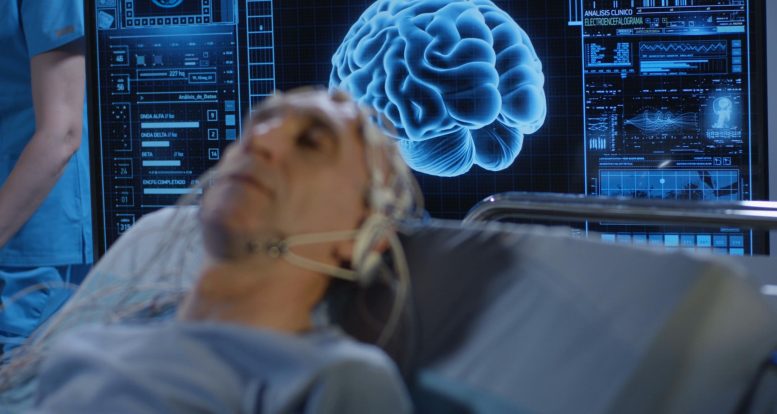
    Brain Scan Patient
    Neuroimaging is a field of medicine that uses advanced imaging techniques, such as MRI and PET scans, to study the structure and function of the brain. In the context of PTSD (Post-Traumatic Stress Disorder), neuroimaging can play a crucial role in understanding the underlying changes in brain function and structure that occur in individuals with the disorder.

    Yale Researchers Found Inconsistencies in Neuroimaging Studies Linking Brain Activity to PTSD.

    A recent study led by Yale University highlights that while neuroimaging holds great potential in connecting specific symptoms of mental health disorders to abnormal brain activity, there are still challenges to overcome before it can be reliably used to diagnose conditions like PTSD. The study underscores the need for further research and development in the field of neuroimaging to refine its applications for psychiatric diagnoses.

    Their findings were recently published in the American Journal of Psychiatry.

    A few years back, the National Institutes of Mental Health initiated a multi-billion-dollar research project aimed at identifying biomarkers of brain activity that reveal the biological basis of various mental health disorders. Currently, these disorders are mainly diagnosed through clinical evaluation based on a patient’s reported symptoms, which often overlap with each other.

    “The idea is to forget classification of disease by symptoms and find underlying biological causes,” said Yale’s Ilan Harpaz-Rotem, professor of psychiatry and psychology and senior author of the study.

    Examining PTSD and Brain Activity

    For the new study, the Yale-led team attempted to replicate the findings of an earlier nationwide neuroimaging study, in which Emory and Harvard scientists linked clusters of brain activity to a variety of outcomes among patients who had arrived at U.S. emergency departments following traumatic events. Specifically, when researchers measured patients’ brain activity during the performance of simple tasks — including ones that probe responses to threats and rewards — they detected a cluster of brain activity that showed high reactivity to both threat and reward signals and seemed to predict more severe symptoms of PTSD later on.

    However, when Yale researchers analyzed similar neuroimaging data collected from recent trauma survivors in Israel, they were not able to replicate these findings. While they did identify the different clusters of brain activity observed in the earlier study, they found no association with prospective PTSD symptoms.

    “That is not to say one set of data is right and the other is wrong, just that there is a lot of fundamental work that needs to be done to develop reliable models that could generalize across different studies,” said Yale’s Ziv Ben-Zion, a postdoctoral associate at Yale School of Medicine and the corresponding author of the study.

    Collaborative Efforts to Refine Biomarkers

    In fact, Yale researchers are currently working with the investigators of the original Emory-Harvard study to merge datasets “to search for common underlying patterns of brain activity associated with different responses to trauma,” Ben-Zion said.

    “It took about 100 years to come up with current classifications of mental illness, but we’ve only been exploring refining psychiatric diagnoses using biomarkers for the last 10 years,” said Harpaz-Rotem. “We still have a long way to go.”

    Reference: “Evaluating the Evidence for Brain-Based Biotypes of Psychiatric Vulnerability in the Acute Aftermath of Trauma” by Ziv Ben-Zion, Ph.D., Tobias R. Spiller, M.D., Jackob N. Keynan, Ph.D., Roee Admon, Ph.D., Ifat Levy, Ph.D., Israel Liberzon, M.D., Ph.D., Arieh Y. Shalev, M.D., Ph.D., Talma Hendler, M.D., Ph.D. and Ilan Harpaz-Rotem, Ph.D., 11 January 2023, American Journal of Psychiatry.
    DOI: 10.1176/appi.ajp.20220271

    Never miss a breakthrough: Join the SciTechDaily newsletter.
    Follow us on Google and Google News.

    Brain Psychiatry PTSD Yale University
    Share. Facebook Twitter Pinterest LinkedIn Email Reddit

    Related Articles

    Sound Waves That Heal: A Breakthrough for Depression and Anxiety

    New Research Reveals That Exercise Can Rewire Brains and Erase Traumatic Memories

    Neural Inhibition – Neuroscientists Unveil Potential PTSD and Alcohol Use Disorder Treatment

    Shrinking in Fear: How PTSD Physically Alters the Brain’s Cerebellum

    When These Neurons Are Activated by Chronic Stress – Behavioral Problems Like Depression and PTSD Result

    Increased Myelin in Brain’s Gray Matter Linked to Anxiety and PTSD

    Histamine Cures Tourette-Like Tics in Mice

    Researchers Discover Four Genes Associated with Developing Tourette’s Disorder

    Yale Study Links Increased Impulsivity and Hostility with Recreational Marijuana Use

    Leave A Reply Cancel Reply

    • Facebook
    • Twitter
    • Pinterest
    • YouTube

    Don't Miss a Discovery

    Subscribe for the Latest in Science & Tech!

    Trending News

    Bone-Strengthening Discovery Could Reverse Osteoporosis

    Scientists Uncover Hidden Trigger Behind Stem Cell Aging

    Scientists Find Way to Reverse Fatty Liver Disease Without Changing Diet

    Could Humans Regrow Limbs? New Study Reveals Promising Genetic Pathway

    Scientists Reveal Eating Fruits and Vegetables May Increase Your Risk of Lung Cancer

    Scientists Reverse Brain Aging With Simple Nasal Spray

    Scientists Uncover Potential Brain Risks of Popular Fish Oil Supplements

    Scientists Discover a Surprising Way To Make Bread Healthier and More Nutritious

    Follow SciTechDaily
    • Facebook
    • Twitter
    • YouTube
    • Pinterest
    • Newsletter
    • RSS
    SciTech News
    • Biology News
    • Chemistry News
    • Earth News
    • Health News
    • Physics News
    • Science News
    • Space News
    • Technology News
    Recent Posts
    • Millions Take This Popular Supplement – Scientists Discover a Concerning Link to Heart Failure
    • What Makes Rubber So Strong? Scientists Finally Solve 100-Year-Old Mystery
    • Scientists Decode Mysterious Magnetic “Maze Domains” To Boost EV Efficiency
    • Scientists Say This Fungus Could Survive the Trip to Mars
    • The Universe Is Expanding Too Fast and Scientists Can’t Explain Why
    Copyright © 1998 - 2026 SciTechDaily. All Rights Reserved.
    • Science News
    • About
    • Contact
    • Editorial Board
    • Privacy Policy
    • Terms of Use

    Type above and press Enter to search. Press Esc to cancel.