
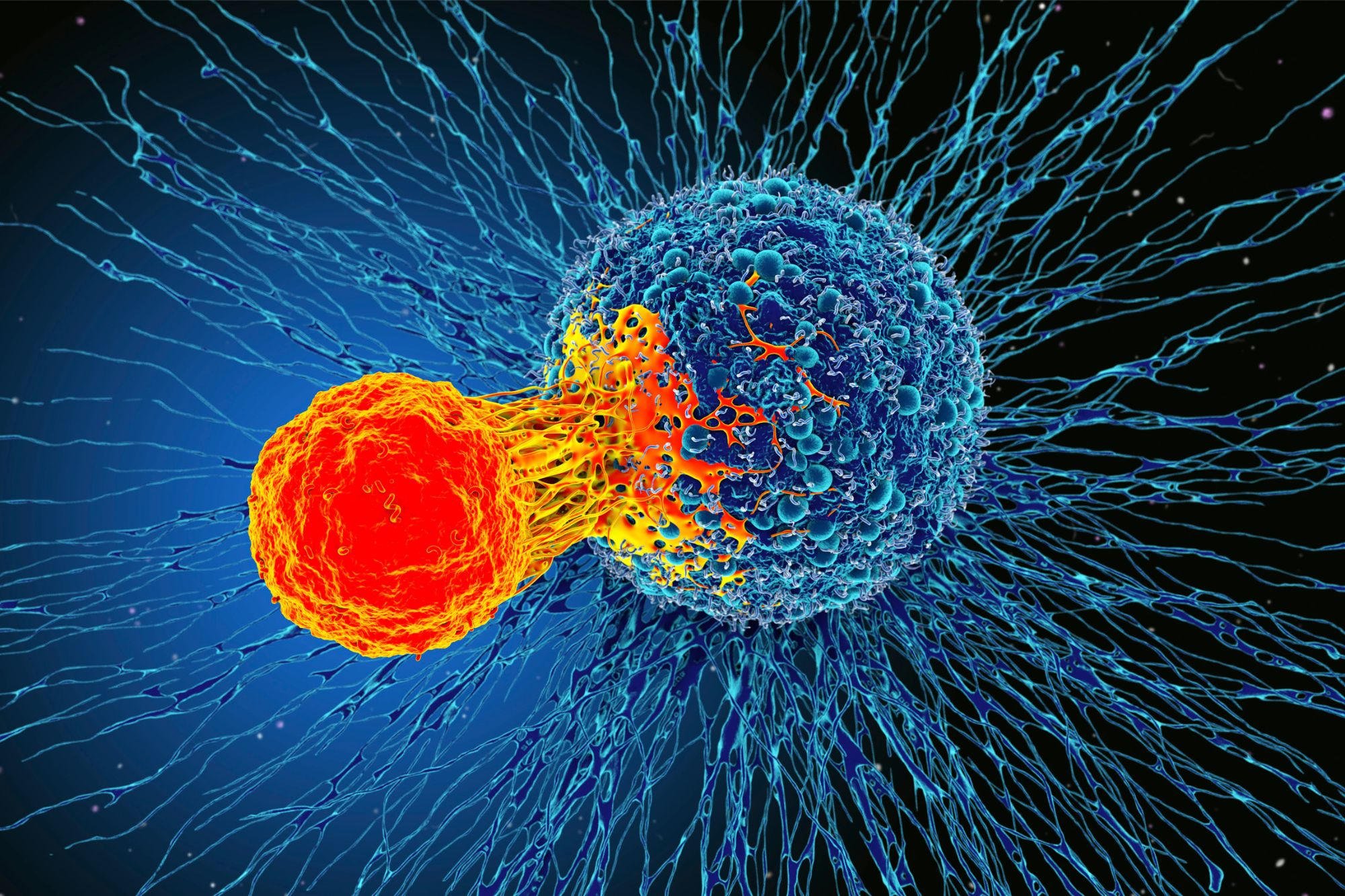
A study finds that nearby conditions and nutrients influence how cancer cells evade immune cells and how that protection might be disrupted.
Cancer cells can sometimes escape immune attack by covering themselves in a dense layer of sugar-derived molecules that makes them harder for immune cells to recognize. Research from Sanford Burnham Prebys Medical Discovery Institute and collaborators across North America now suggests that this protective coating is shaped not just by the cancer cell itself, but also by the physical and nutritional conditions surrounding the tumor.
The findings, published in Science Advances, show how the tumor microenvironment, which includes nearby immune cells, connective tissue, blood vessels, proteins, and carbohydrates, can influence this sugar-rich barrier. The researchers also identified a potential way to reduce the coating so immune cells can once again recognize and eliminate cancer cells.
Lead and corresponding author Kevin Tharp, PhD, had previously observed that physical pressure on cells can alter how their mitochondria function. Because solid tumors often subject cells to unusually stiff surroundings, he suspected those physical conditions might help explain some of the metabolic changes commonly seen in cancer.
“Primary tumors are typically stiffer than their surrounding tissue,” said Tharp, assistant professor in the Cancer Metabolism and Microenvironment Program at the Sanford Burnham Prebys NCI-Designated Cancer Center. “This led me to hypothesize that the biophysical properties of cells influence the altered metabolic programs that everyone observes in tumors.”
One prominent metabolic feature of tumors is reduced oxidative metabolism of glucose, the process cells use to extract energy from glucose with the help of oxygen. Previous research has shown that this shift can depend on which nutrients are available around the cells rather than being an unavoidable property of cancer cells themselves.
Tumor conditions reshape cancer metabolism
To separate these influences, Tharp and his colleagues grew cells under several combinations of physical and nutritional conditions. Some cells were placed in stiff environments resembling those around primary tumors, while others experienced softer conditions closer to healthy tissue.
The researchers also compared a standard laboratory culture medium with a newer medium designed to more closely reproduce the nutrient composition found in the human body. Both were tested under normal and elevated glucose conditions to model hyperglycemia.
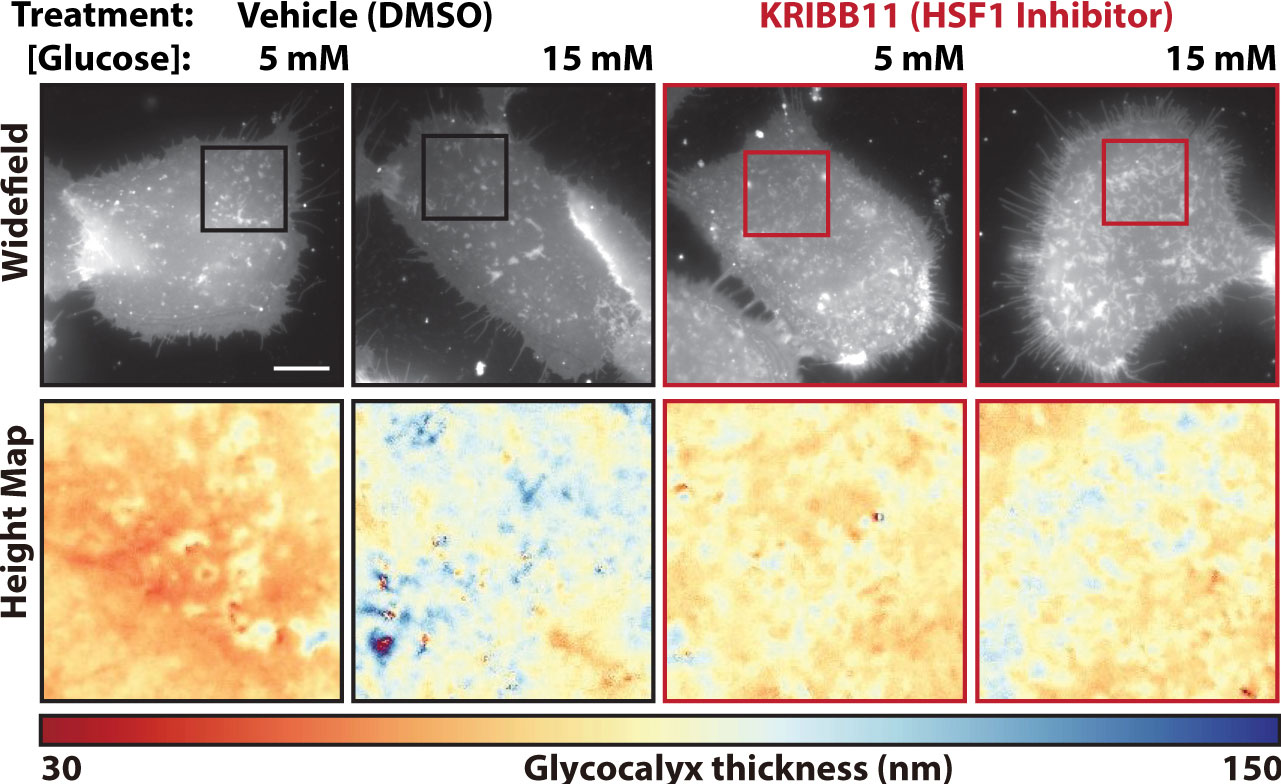
Changing these conditions altered which proteins the cells produced, the concentrations of metabolites inside them, and the thickness of the sugar-derived surface layer known as the glycocalyx. Crucially, excess glucose increased the depth of this protective coating only when cells were grown in the more physiologically realistic medium.
“We observed that changing the physiological media composition and changing the available metabolites for those tumor cells reveals distinct biology for normal and tumor cell metabolism,” said Tharp.

Excess glucose thickens the protective coating
The researchers next followed the metabolic changes into the molecular building blocks of the glycocalyx. This outer coating is composed of glycoconjugates, molecules in which carbohydrates are attached to proteins or lipids. Because glucose can supply material for constructing glycoconjugates, changes in glucose availability offered a possible explanation for why the coating became thicker.
“We found stark separation between the glycoconjugates of cells cultured in conventional medium versus those cultured in a medium that better reflects the nutrient composition of the human body,” said Tharp.
High glucose levels also changed the composition of those glycoconjugates, strengthening the connection between the surrounding nutrient environment and the properties of the cancer cell surface.
HSF1 links hyperglycemia to immune escape
To determine what was driving the response to excess glucose, the researchers examined proteins that became more abundant during hyperglycemia. Their search highlighted heat shock factor 1 (HSF1), a protein best known for helping cells cope with high temperatures and other forms of stress. HSF1 has also previously been associated with breast cancer progression and metastasis.
Experiments showed that whether HSF1 was present changed the composition of glycoconjugates on the cells. The researchers then tested how hyperglycemia, HSF1, tumor-like physical conditions, and immune activity interacted.
Hyperglycemia increased cancer cells’ ability to escape immune attack only when HSF1 was present, and the cells were grown under conditions resembling the tumor microenvironment. The result suggests that drugs capable of targeting HSF1 might reduce the glycocalyx and make cancer cells easier for the immune system to detect.
“Our findings indicate that changes in mitochondrial function lead to the synthesis of cell surface sugar-derived molecules that make it difficult for the immune system to recognize and kill cancer cells,” said Tharp. “Now that we know this, this creates an enormous drug discovery opportunity to take away the surface coating that protects them from immune surveillance.
“And we think this will be a really effective strategy to attack metastatic disease and improve immunotherapy responses.”
High blood sugar may aid immune evasion
The findings may also help explain a poorly understood connection between high blood sugar and cancer outcomes. Tharp noted that hyperglycemia is becoming an increasingly important concern for cancer patients as rates of metabolic syndrome and type 2 diabetes rise.
Previous research has linked elevated blood glucose with both a greater risk of developing cancer and worse outcomes after cancer treatment. Far fewer studies, however, have investigated the biological processes that might account for those associations.
“What we found is a plausible mechanism by which hyperglycemia directly contributes to immune evasion,” said Tharp.
“And potentially a way to take away a pro-tumor advantage from hyperglycemia caused by metabolic syndrome and modern diets.”
Reference: “The microenvironment dictates glyco-immune surveillance via HSF1-mediated metabolism” by Kevin M. Tharp, Sangwoo Park, Greg A. Timblin, Alicia L. Richards, Jordan A. Berg, Nicholas M. Twells, Nicholas M. Riley, Kyle Alvarez, Allen Lee, Egan L. Peltan, D. Judy Shon, Erica Stevenson, Kimberly Tsui, Francesco Palomba, Austin E. Y. T. Lefebvre, Ross W. Soens, Jaya L. Thangaraj, Nadia M.E. Ayad, Joseph A. Rhodenhiser, Johanna ten Hoeve, Kevin Healy, Michelle Digman, Andrew Dillin, Nevan J. Krogan, Carolyn R. Bertozzi, Dan S. Kaufman, Sanju Sinha, Danielle L. Swaney, Lara K. Mahal, Jason R. Cantor, Matthew J. Paszek and Valerie M. Weaver, 7 August 2026, Science Advances.
DOI: 10.1126/sciadv.aeb1136
The study was supported by the National Institutes of Health, National Cancer Institute, National Foundation for Cancer Research, Canada Excellence Research Chair in Glycomics and Ovarian Cancer Research Alliance.
Never miss a breakthrough: Join the SciTechDaily newsletter.
Follow us on Google and Google News.
1 Comment
“Reading the latest findings on arginine-driven MHC-I expression (Cell) alongside the tumor glycocalyx ‘sugar shield’ research (Science Advances) reveals two critical sides of the exact same immunological battleground:
The Internal Flag System (Arginine / MHC-I): For the immune system to target a rogue cell, the cell must first manufacture and display MHC-I surface markers. As the Rockefeller study showed, arginine acts as a key metabolic fuel for assembling these flags. Without sufficient arginine, the internal signal fails to reach the surface.
The External Barrier (The Glycocalyx): Even if a cell successfully projects its MHC-I flags, the sugar shield acts as a physical and electrostatic cloak. Thickened by stress and high glucose, this sugar coating creates hydrodynamic drag that prevents T-cell receptors from making physical contact.
What becomes increasingly clear when connecting these dots is that cancer evasion isn’t an isolated trick—it’s a biophysical strategy of internal signal suppression (starving the cell of arginine) and external boundary impedance (building a thick sugar shield).
More broadly, it highlights why bringing all the sciences under a shared conceptual framework is so vital. Whether we look at materials chemistry (relaxing rigid bond stress via molten salt flux), quantum optics (guiding light via internal grid anisotropy without physical walls), condensed matter (collective electron lockstep in flat bands), or cellular biophysics (glycocalyx surface drag vs. internal signal flux), the governing rule holds: structure, transport, and communication across all scales are driven by continuous background-medium interactions.
Effective next-generation immunotherapies will likely rely on this exact cross-disciplinary insight—combining metabolic support to restore internal flag production with biophysical tools to thin and relax the outer boundary barrier.”