
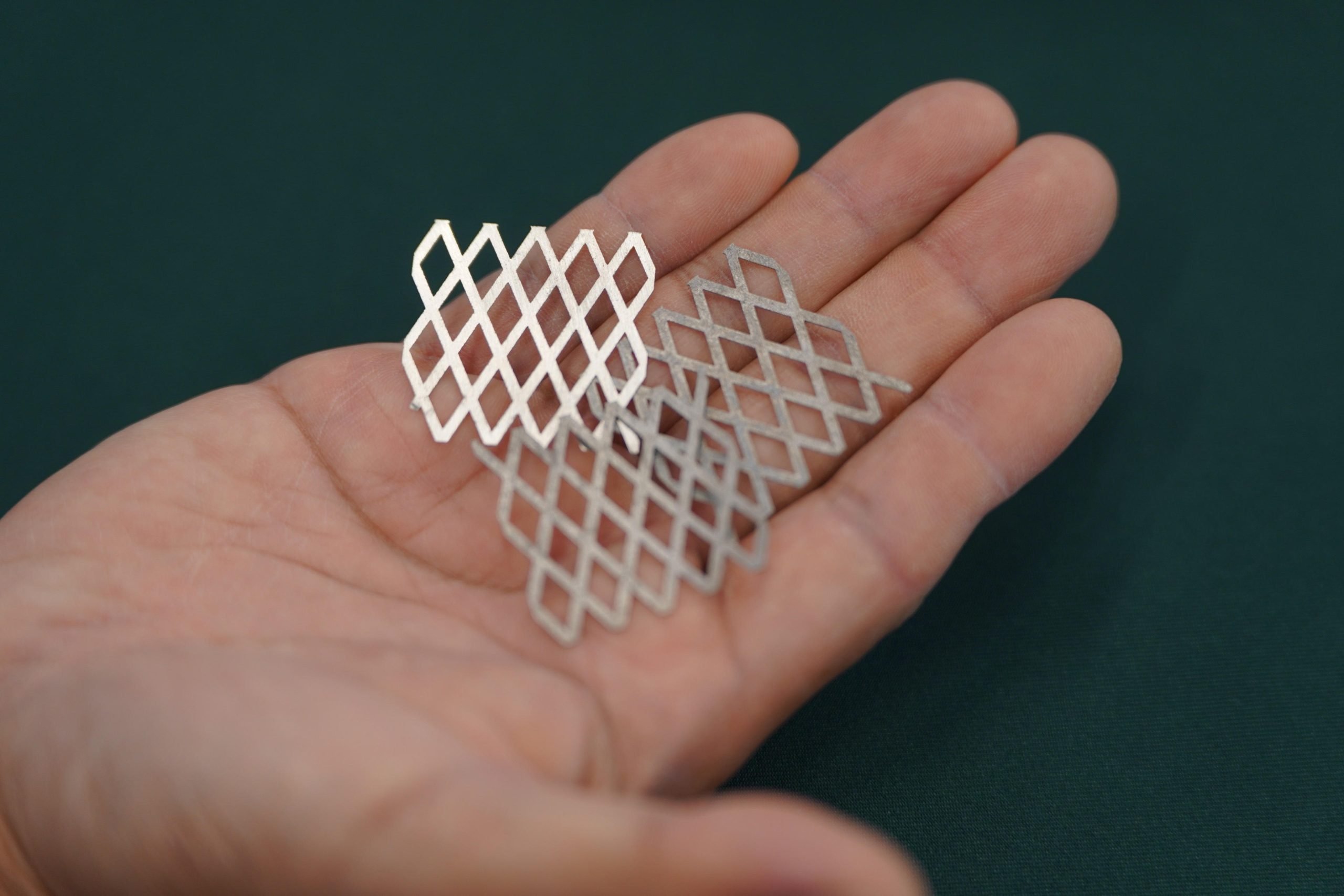
A team headed by Professor Mingxin Huang from the University of Hong Kong’s Department of Mechanical Engineering has achieved a significant advancement in the field of stainless steel. This recent innovation focuses on the development of stainless steel designed for hydrogen applications, known as SS-H2.
This accomplishment is part of Professor Huang’s ongoing ‘Super Steel’ Project, which previously achieved notable milestones with the creation of anti-COVID-19 stainless steel in 2021 and the development of ultra-strong and ultra-tough Super Steel in 2017 and 2020.
The new steel developed by the team exhibits high corrosion resistance, enabling its potential application for green hydrogen production from seawater, where a novel sustainable solution is still in the pipeline.
The performance of the new steel in salt water electrolyzer is comparable to the current industrial practice using Titanium as structural parts to produce hydrogen from desalted seawater or acid, while the cost of the new steel is much cheaper.
The discovery has been published in the journal Materials Today. The research achievements are currently applying for patents in multiple countries, and two of them has already been granted authorisation.
Revolutionizing Corrosion Resistance
Since its discovery a century ago, stainless steel has always been an important material widely used in corrosive environments. Chromium is an essential element in establishing the corrosion resistance of stainless steel. Passive film is generated through the oxidation of chromium (Cr) and protects stainless steel in natural environments. Unfortunately, this conventional single-passivation mechanism based on Cr has halted further advancement of stainless steel. Owing to the further oxidation of stable Cr2O3 into soluble Cr(VI) species, tranpassive corrosion inevitably occurs in conventional stainless steel at ~1000 mV (saturated calomel electrode, SCE), which is below the potential required for water oxidation at ~1600 mV.
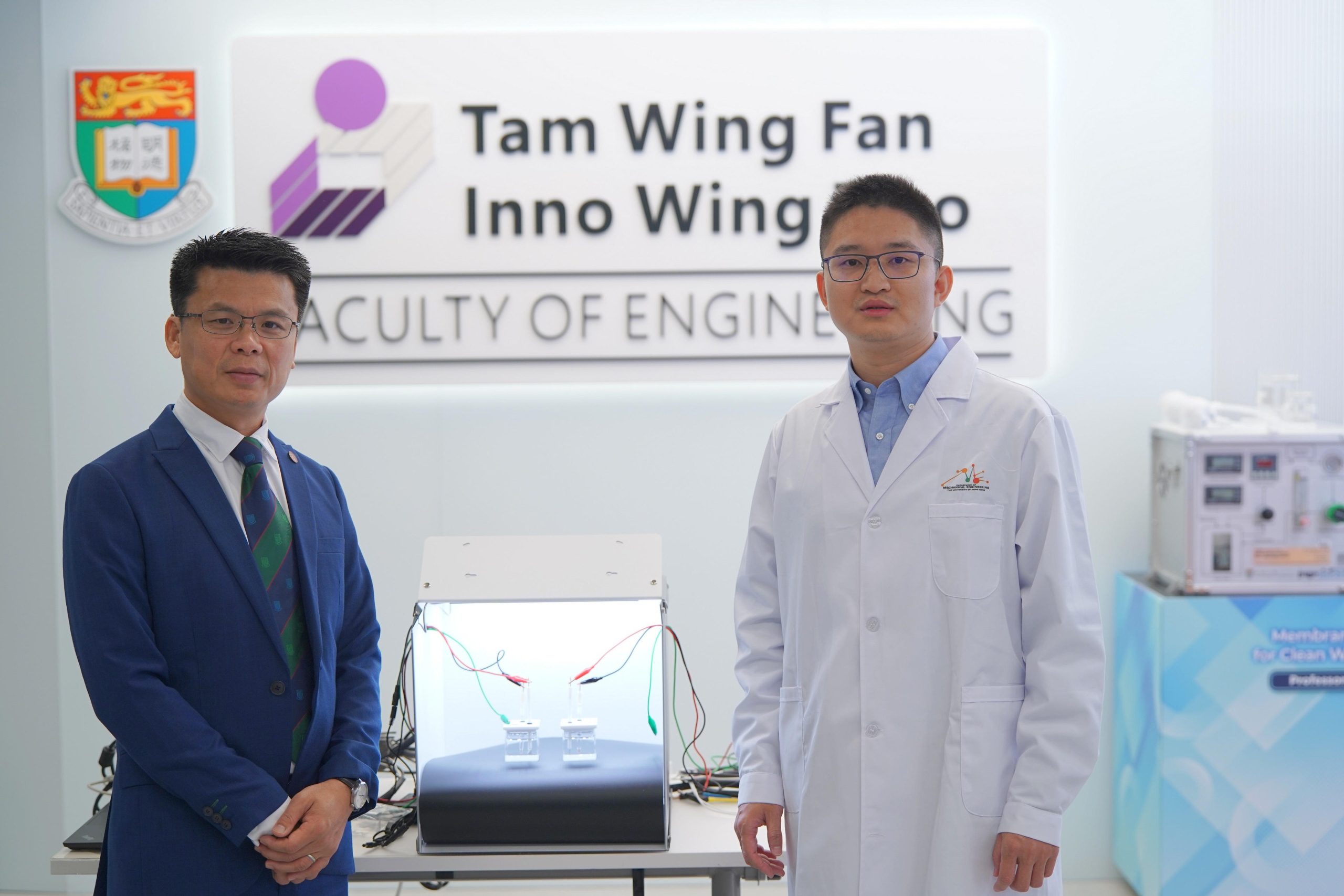
254SMO super stainless steel, for instance, is a benchmark among Cr-based anti-corrosion alloys and has superior pitting resistance in seawater; however, transpassive corrosion limits its application at higher potentials.
By using a “sequential dual-passivation” strategy, Professor Huang’s research team developed the novel SS-H2 with superior corrosion resistance. In addition to the single Cr2O3-based passive layer, a secondary Mn-based layer forms on the preceding Cr-based layer at ~720 mV. The sequential dual-passivation mechanism prevents the SS-H2 from corrosion in chloride media to an ultra-high potential of 1700 mV. The SS-H2 demonstrates a fundamental breakthrough over conventional stainless steel.
Unexpected Discovery and Potential Applications
“Initially, we did not believe it because the prevailing view is that Mn impairs the corrosion resistance of stainless steel. Mn-based passivation is a counter-intuitive discovery, that cannot be explained by current knowledge in corrosion science. However, when numerous atomic-level results were presented, we were convinced. Beyond being surprised, we cannot wait to exploit the mechanism,” said Dr Kaiping Yu, the first author of the article, whose PhD is supervised by Professor Huang.
From the initial discovery of the innovative stainless steel to achieving a breakthrough in scientific understanding, and ultimately preparing for the official publication and hopefully its industrial application, the team devoted nearly six years to the work.
“Different from the current corrosion community, which mainly focuses on the resistance at natural potentials, we specialize in developing high-potential-resistant alloys. Our strategy overcame the fundamental limitation of conventional stainless steel and established a paradigm for alloy development applicable at high potentials. This breakthrough is exciting and brings new applications.” Professor Huang said.
At present, for water electrolyzers in desalted seawater or acid solutions, expensive Au- or Pt-coated Ti are required for structural components. For instance, the total cost of a 10-megawatt PEM electrolysis tank system in its current stage is approximately HK$17.8 million, with the structural components contributing up to 53% of the overall expense. The breakthrough made by Professor Huang’s team makes it possible to replace these expensive structural components with more economical steel. As estimated, the employment of SS-H2 is expected to cut the cost of structural material by about 40 times, demonstrating a great foreground of industrial applications.
“From experimental materials to real products, such as meshes and foams, for water electrolyzers, there are still challenging tasks at hand. Currently, we have made a big step toward industrialisation. Tons of SS-H2-based wire has been produced in collaboration with a factory from the Mainland. We are moving forward in applying the more economical SS-H2 in hydrogen production from renewable sources,” added Professor Huang.
Reference: “A sequential dual-passivation strategy for designing stainless steel used above water oxidation” by Kaiping Yu, Shihui Feng, Chao Ding, Meng Gu, Peng Yu and Mingxin Huang, 19 August 2023, Materials Today.
DOI: 10.1016/j.mattod.2023.07.022
Never miss a breakthrough: Join the SciTechDaily newsletter.
Follow us on Google and Google News.
19 Comments
This discovery is actually a Canadian patent that had expired. We have already developed better materials. Japan’s institute for hydrogen energy used this for student education….
Can you please supply the Canadian Patent number that you are referencing?
Christopher Lloyd, you must have known this was coming…what you got?
Christopher lloyd… If true very funny.
https://brevets-patents.ic.gc.ca/opic-cipo/cpd/eng/patent/1198081/summary.html
Hahaha
So your joke is why bother making making a special stainless steel to make hydrogen when you can just get lots of hydrogen by plunking zinc (or any metal) into acid? Figuratively just run this patented fancy zinc electrowinning process in reverse?
I have been working with a different approach to electrolysis of water for bulk water purification processes and tested stainless steel electrodes initially, but found that at the optimal voltages they corroded rapidly contaminating the treated water with Ni and Cr. The idea of coating them was considered but has the risk that any disruption of of the coating leads to contamination from rapid corrosion of the underlying SS was too high.
Could this be used in the plumbing system of a molten salt reactor? Wonder what high temperature does to the corrosion resistance?
Other than by mechanical means, how is it possible to attach, join, bond, seal, or wet the new SS to itself or dissimular metals?
Other than by mechanical means, how is it possible to attach, join, bond, seal, or wet the new SS to itself or dissimilar metals?
https://brevets-patents.ic.gc.ca/opic-cipo/cpd/eng/patent/1198081/summary.html
https://brevets-patents.ic.gc.ca/opic-cipo/cpd/eng/patent/1198081/summary.html
In the knife world there is a steel called h1 and h2 as well as lc200n that are pretty much 100% corrosion resistant I tested the h1 steel after about 3 weeks in salt water it never rusted this don’t seem all that innovative
Mm, i think maybe you missed a key point here – during electrolysis, they run a vintage through the metal. We aren’t talking about leaving a knife in the ocean. Running a voltage through metal speeds up electron transfer and corrosion.
Screw the Mm… what is the Mn talked about in the article. Thanks.
What am I missing here? That Canadian patent is coading Zinc, not Chromium. This article states that they used Mn, not zinc.
Explain citing this ca patent.
“ground breaking” …….not
Christopher Lloyd is right this was patented I know this for a fact he speaks the truth