
Close Menu
    Facebook X (Twitter) Instagram
    SciTechDaily
    • Biology
    • Chemistry
    • Earth
    • Health
    • Physics
    • Science
    • Space
    • Technology
    Facebook X (Twitter) Pinterest YouTube RSS
    SciTechDaily
    Home»Earth»Capturing Wind on Maui – Stunning Astronaut Photo From Space Station
    Earth

    Capturing Wind on Maui – Stunning Astronaut Photo From Space Station

    By NASA Earth ObservatoryNovember 16, 2020No Comments2 Mins Read
    Facebook Twitter Pinterest Telegram LinkedIn WhatsApp Email Reddit
    Share
    Facebook Twitter LinkedIn Pinterest Telegram Email Reddit
    Kaheawa Wind Farm Maui Annotated
    July 6, 2020

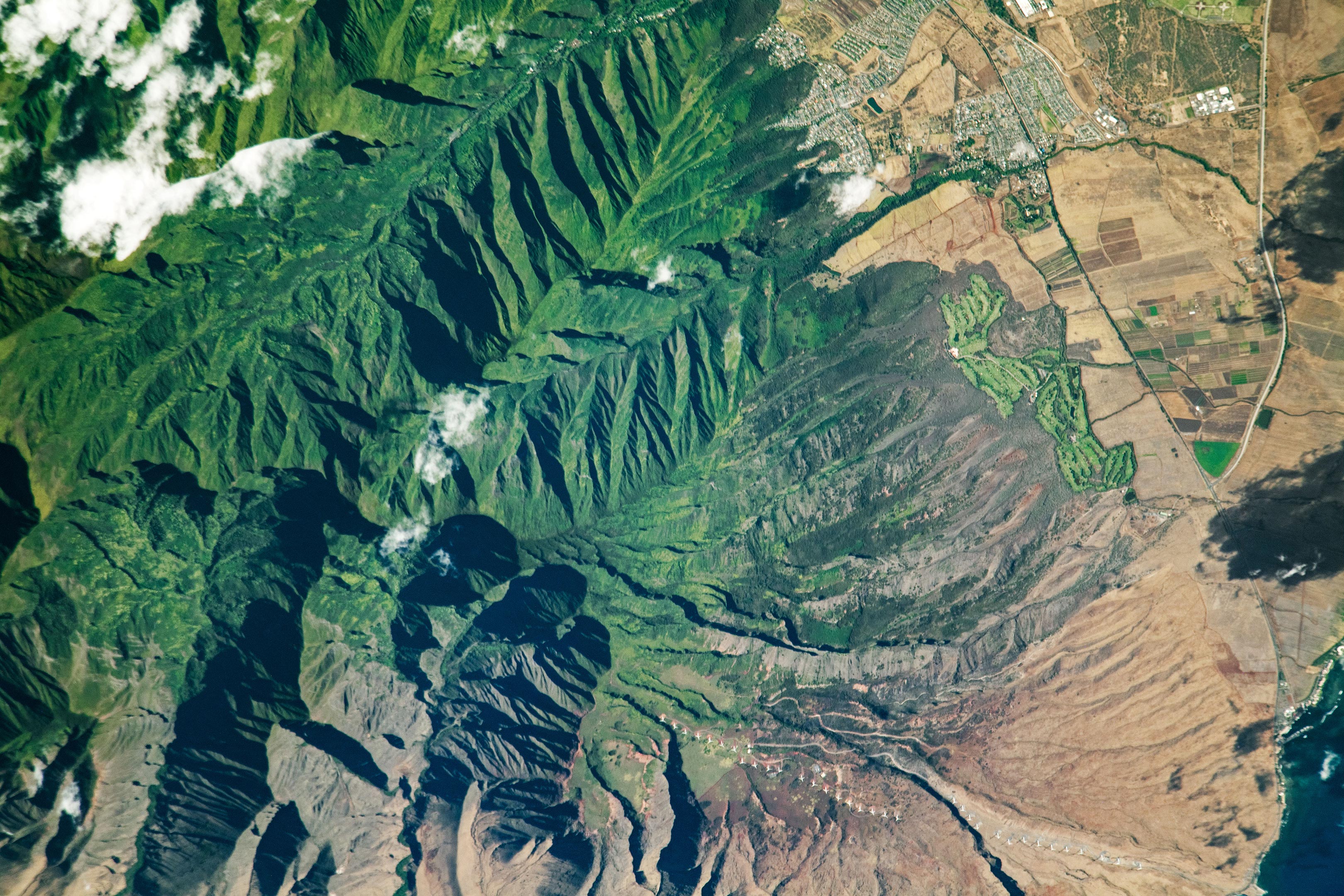
    Maui, the second largest island within the Hawaiian Island/Emperor Seamount Chain, hosts one of the largest wind farms in the state. All 34 operational wind turbines of the Kaheawa Wind Power I and II facilities are visible in this photograph taken by an astronaut from the International Space Station (ISS). The wind farm lies to the south of a golf course, agricultural fields, and the small town of Waikapu. All stand at the foot of Pu’u Kukui, a large mountain peak in the Mauna Kahalawai (West Maui Mountains) that is dense with vegetation.

    Descending a little over half a mile (1 kilometer) down the southeast side of Pu’u Kukui, the turbine field powers 10 to 15 percent of Maui’s yearly electric power usage. After solar power, wind energy is Hawaii’s second-most used renewable energy resource. Aiming to provide renewable energy while protecting local bird and bat species, Kaheawa was the first wind farm in the United States to implement a habitat conservation plan.

    Astronaut photograph ISS063-E-40313 was acquired on July 6, 2020, with a Nikon D5 digital camera using a 1600 millimeter lens and is provided by the ISS Crew Earth Observations Facility and the Earth Science and Remote Sensing Unit, Johnson Space Center. The image was taken by a member of the Expedition 63 crew. The image has been cropped and enhanced to improve contrast, and lens artifacts have been removed. The International Space Station Program supports the laboratory as part of the ISS National Lab to help astronauts take pictures of Earth that will be of the greatest value to scientists and the public, and to make those images freely available on the Internet. Additional images taken by astronauts and cosmonauts can be viewed at the NASA/JSC Gateway to Astronaut Photography of Earth. Caption by Sara Schmidt, GeoControl Systems, JETS Contract at NASA-JSC.

    Never miss a breakthrough: Join the SciTechDaily newsletter.
    Follow us on Google and Google News.

    Green Energy NASA NASA Earth Observatory
    Share. Facebook Twitter Pinterest LinkedIn Email Reddit

    Related Articles

    Windpark Fryslân: The World’s Largest Freshwater Wind Farm

    A Renewable Future for Fukushima: Solar and Wind Farms Cover Fields That Were Abandoned After Nuclear Accident

    Muddy Flooding After Catastrophic Dam Failures in Michigan Seen From Space

    Scientists Concerned As Denman Glacier Retreats Both Above and Below the Water Line

    NASA Scientists Collect Moon-Like Rocks From Site in Montana

    NASA Satellites Spot Several Wildfires Near Chernobyl Exclusion Zone

    Shocking Disappearance of Ecuador’s Tallest Waterfall

    Heading Off a Locust Invasion Using NASA Satellites

    Plankton-Fueled Agulhas Current Ocean Eddy Is 93 Miles Wide

    Leave A Reply Cancel Reply

    • Facebook
    • Twitter
    • Pinterest
    • YouTube

    Don't Miss a Discovery

    Subscribe for the Latest in Science & Tech!

    Trending News

    Monster Storms on Jupiter Unleash Lightning Beyond Anything on Earth

    Scientists Create “Liquid Gears” That Spin Without Touching

    The Simple Habit That Could Help Prevent Cancer

    Millions Take These IBS Drugs, But a New Study Finds Serious Risks

    Scientists Unlock Hidden Secrets of 2,300-Year-Old Mummies Using Cutting-Edge CT Scanner

    Bread Might Be Making You Gain Weight Even Without Eating More Calories

    Scientists Discover Massive Magma Reservoir Beneath Tuscany

    Europe’s Most Active Volcano Just Got Stranger – Here’s Why Scientists Are Rethinking It

    Follow SciTechDaily
    • Facebook
    • Twitter
    • YouTube
    • Pinterest
    • Newsletter
    • RSS
    SciTech News
    • Biology News
    • Chemistry News
    • Earth News
    • Health News
    • Physics News
    • Science News
    • Space News
    • Technology News
    Recent Posts
    • New Brain Discovery Challenges Long-Held Theory of Teenage Brain Development
    • Sharks Are Overheating as Warming Oceans Push Them to the Edge
    • Scientists Discover Plants “Scream” – We Just Couldn’t Hear Them Until Now
    • 25-Year Study Uncovers Hidden Paths and Early Warning Signs of Blood Cancer
    • Not Just Snoring – New Research Reveals Sleep Apnea May Be Damaging Your Muscles
    Copyright © 1998 - 2026 SciTechDaily. All Rights Reserved.
    • Science News
    • About
    • Contact
    • Editorial Board
    • Privacy Policy
    • Terms of Use

    Type above and press Enter to search. Press Esc to cancel.