
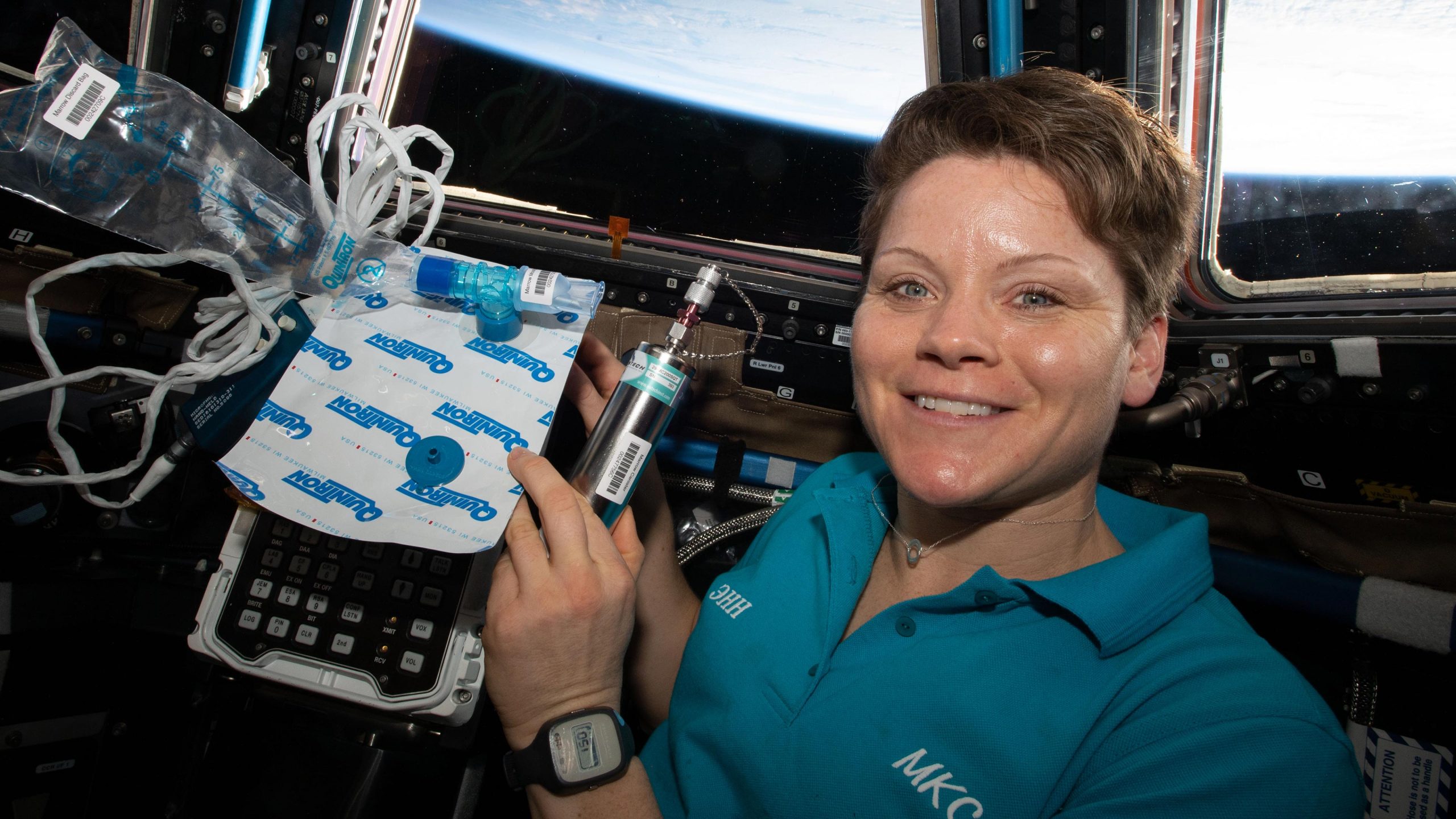
Dozens of experiments are going on at any given time aboard the International Space Station. Research conducted in 2020 is advancing our understanding in areas of study from Parkinson’s disease to combustion.
Space station research results published this year came from experiments performed and data collected during the past 20 years of continuous human habitation aboard the orbiting laboratory. Between October 1, 2019, and October 1, 2020, the station’s Program Research Office identified more than 300 scientific publications based on space station research.
Here are the highlights of what we learned this year about groundbreaking space station science:
the space station. Credit: NASA
Small-scale drug delivery
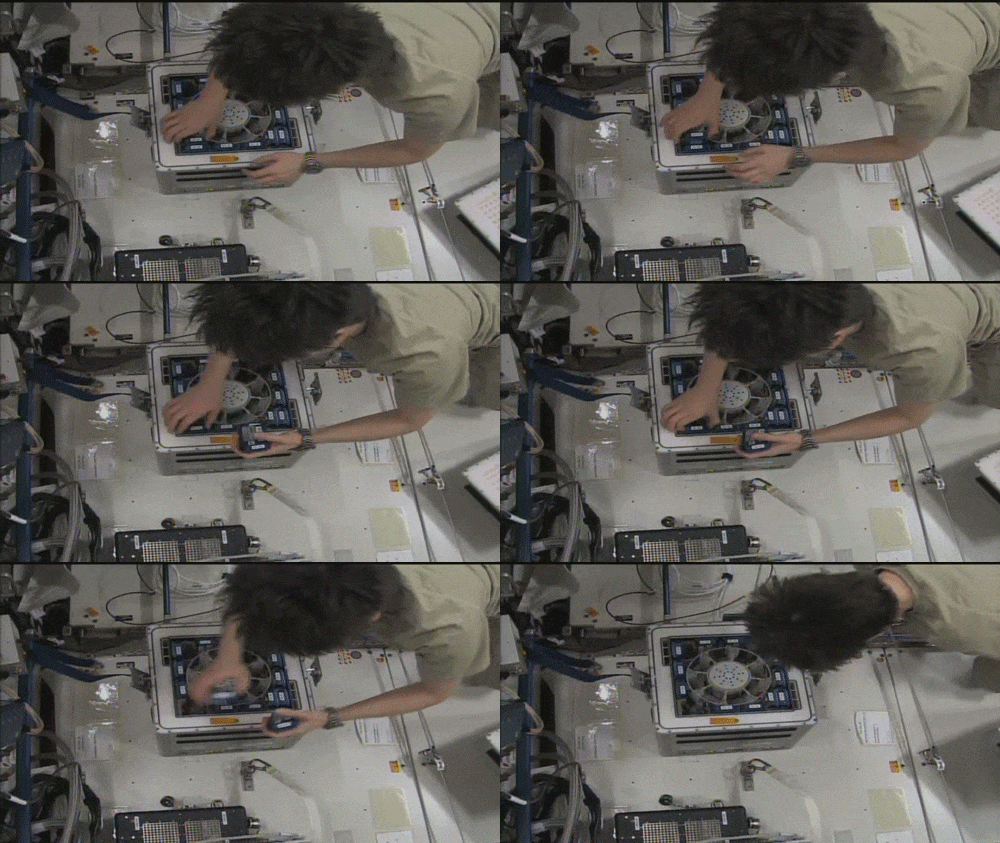
In 2015, a team led by three Italian scientists sent an experiment to the International Space Station to be performed by ESA astronaut Samantha Cristoforetti, who is Italian. Five years later, the all-woman led team has now published the results in the research journal Scientific Reports.
The Italian Space Agency’s Nanoparticles and Osteoporosis (NATO) project studied a type of nanoparticle made of minerals similar to those found in bones and teeth, which could help counteract bone density loss. The results showed that the new drug delivery system has beneficial effects on promoting stem cells to become osteoblasts – the cells responsible for bone formation. Scientists could use this research to develop treatments to combat bone degeneration during long-duration spaceflight, or even for treating osteoporosis on Earth.
measures fat changes in the bone marrow before and after exposure to microgravity. Credit: NASA
Diagnosing a long-standing spaceflight question
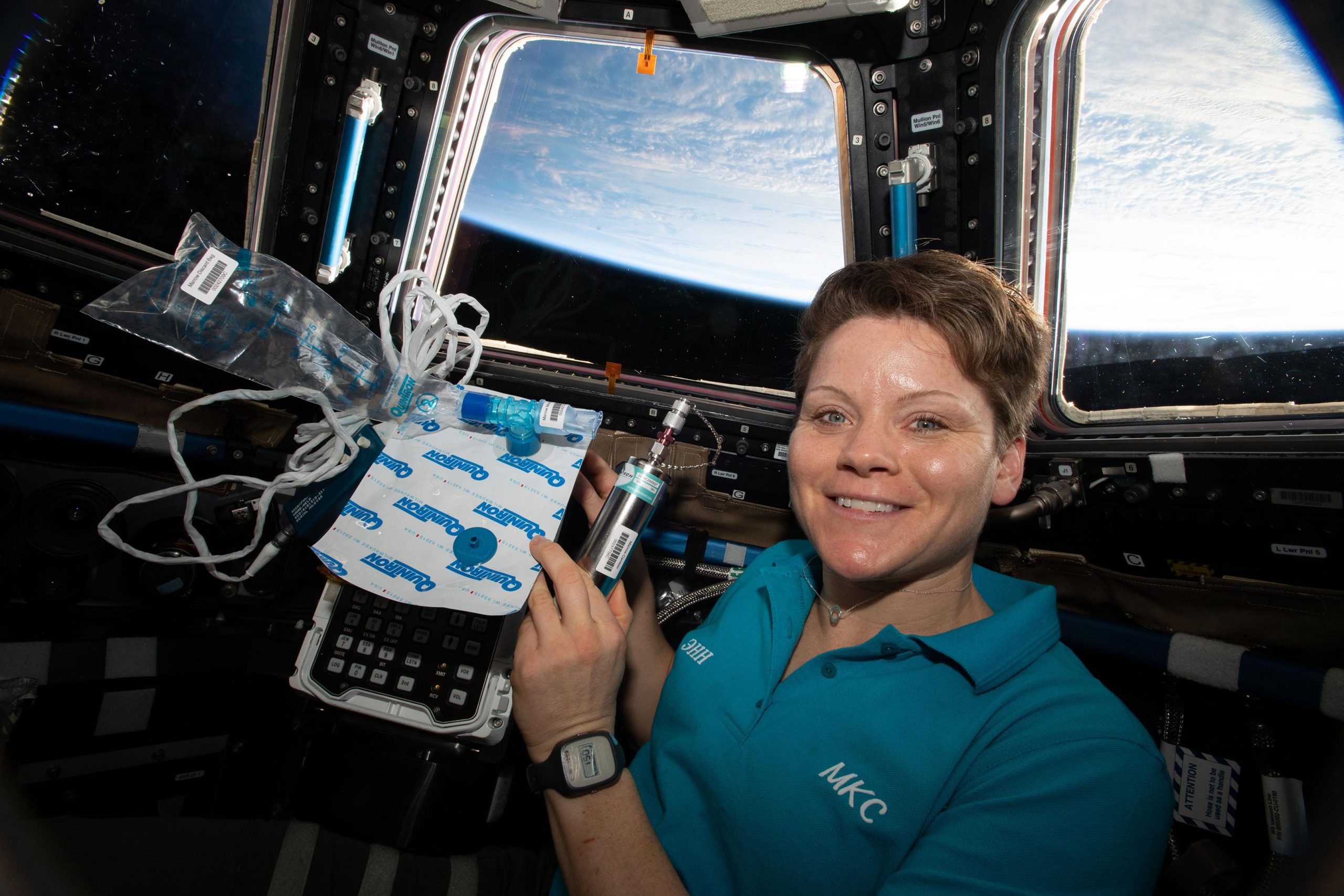
From the first return to Earth of humans who had been in space, researchers identified the astronauts experienced space anemia. Anemia is a condition that results when there are not enough red blood cells to carry needed oxygen throughout the body. Using more than five decades of astronaut data, the Canadian Space Agency MARROW investigation revealed that space anemia occurs after landing when the reverse shift of fluids related to gravity changes is completed. The study demonstrated that over the time periods observed, astronauts lose red blood cells proportional to the time spent in space, and the recovery from space anemia takes between one and three months, depending on mission duration. Additional research will need to be conducted to see if this trend continues over missions of longer duration.
Another publication from the MARROW study described methods to measure markers of human red blood cell destruction in extreme environments. The elimination of carbon monoxide produced in the body measured with a parts-per-billion precision served as a reliable marker of red blood cell destruction.
Force feedback makes a difference
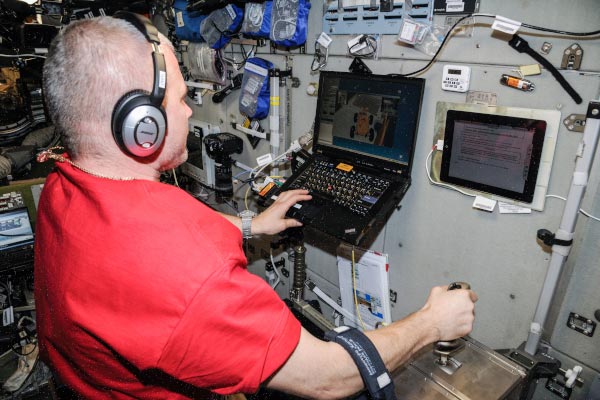
In video games, force feedback on a joystick can help you feel closer to the action in the game. Can it also make astronauts feel more in tune with the movements of a rover on another planetary body? Kontur, a Roscosmos study, used the space station as the orbiter and Earth as the location of the teleoperated robot to investigate whether equipping a joystick with force feedback is as beneficial in microgravity conditions as it is on Earth.
The study required astronauts to perform two tasks: an action requiring rapid aimed robot motions, and a task requiring minimal surface contact when moving the robot along a curved structure. Results indicated that microgravity had an impact on motion control after six weeks. Scientists emphasized that force feedback is indispensable for space teleoperation missions. Researchers recommend the continued examination of teleoperations from space using larger samples in different mission phases and with a more extensive variety of tasks.
Investigating Parkinson’s and Alzheimer’s disease
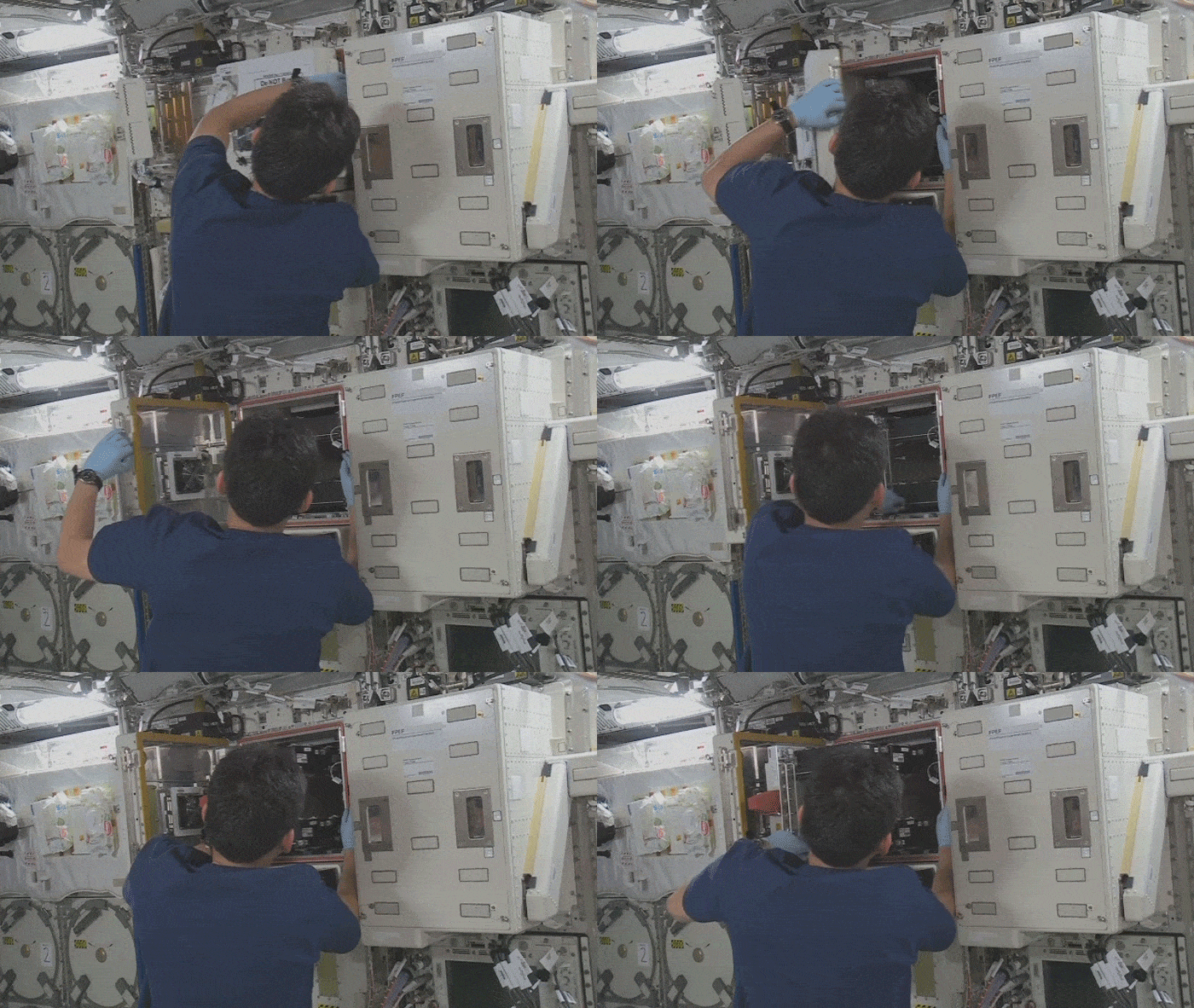
Amyloid beta fibrils are protein aggregations involved in the processes of neurodegenerative disorders. In the Japan Aerospace Exploration Agency Amyloid study, researchers compared the growth of fibrils in microgravity and Earth conditions for the development of new treatments for diseases such as Parkinson’s and Alzheimer’s. Four samples of amyloid beta solution flew to the International Space Station while researchers processed other samples on Earth.
The results published in 2020 revealed two morphologies of fibrils in microgravity were more twisted and with a higher pitch than ground control samples. This could help us learn more about how twists in neurodegenerative diseases form. The two morphologies observed in microgravity were practically indistinguishable from one another, but grew much more slowly than those on Earth. The microgravity fibrils also grew slower than fibrils on Earth, showing the space station is an ideal environment for detailed investigations examining the mechanisms of amyloid formation. These promising findings could assist the development of new pharmaceuticals aimed at inhibiting amyloid fibril formation to prevent or treat neurodegenerative conditions.
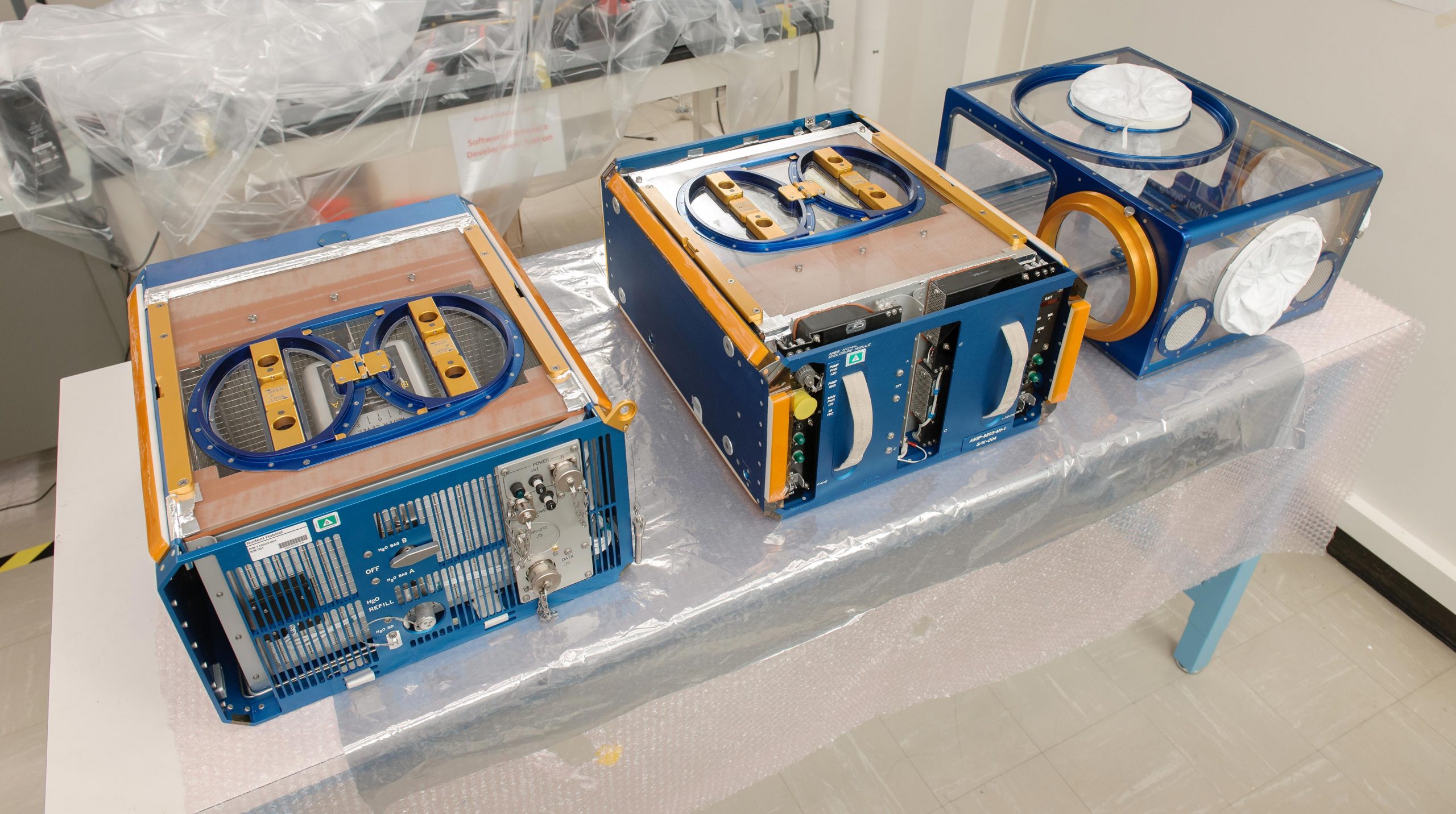
animal access unit. The Rodent Research Facility provides rodent housing aboard the space station. Credit: NASA
Testing a technique to limit muscle loss
In a recent publication from the Rodent Research-3-Eli Lilly study sponsored by pharmaceutical company Eli Lilly and Co. and ISS US. National Lab, researchers described results of their study about whether the inhibition of myostatin through the delivery of an antibody could prevent the expected loss of skeletal muscle mass in a space environment. Mice were treated with the antibody one day before launching to the space station and at two and four weeks in space. At different times, grip strength and body composition of the mice were measured. The mice were frozen in space, and then studied further back on Earth.
Findings showed the treatment with myostatin prevented almost all losses in lean mass, grip strength, and muscle weights induced by microgravity. Mice treated with the antibody also prevented heart weight loss. This research demonstrates that myostatin inhibition is an effective countermeasure to prevent muscle loss produced by the harsh environment of space. However, the myostatin inhibition did not prevent bone loss, although it also did not have a detrimental effect on bone mineral density.
Unraveling the mysteries of lightning
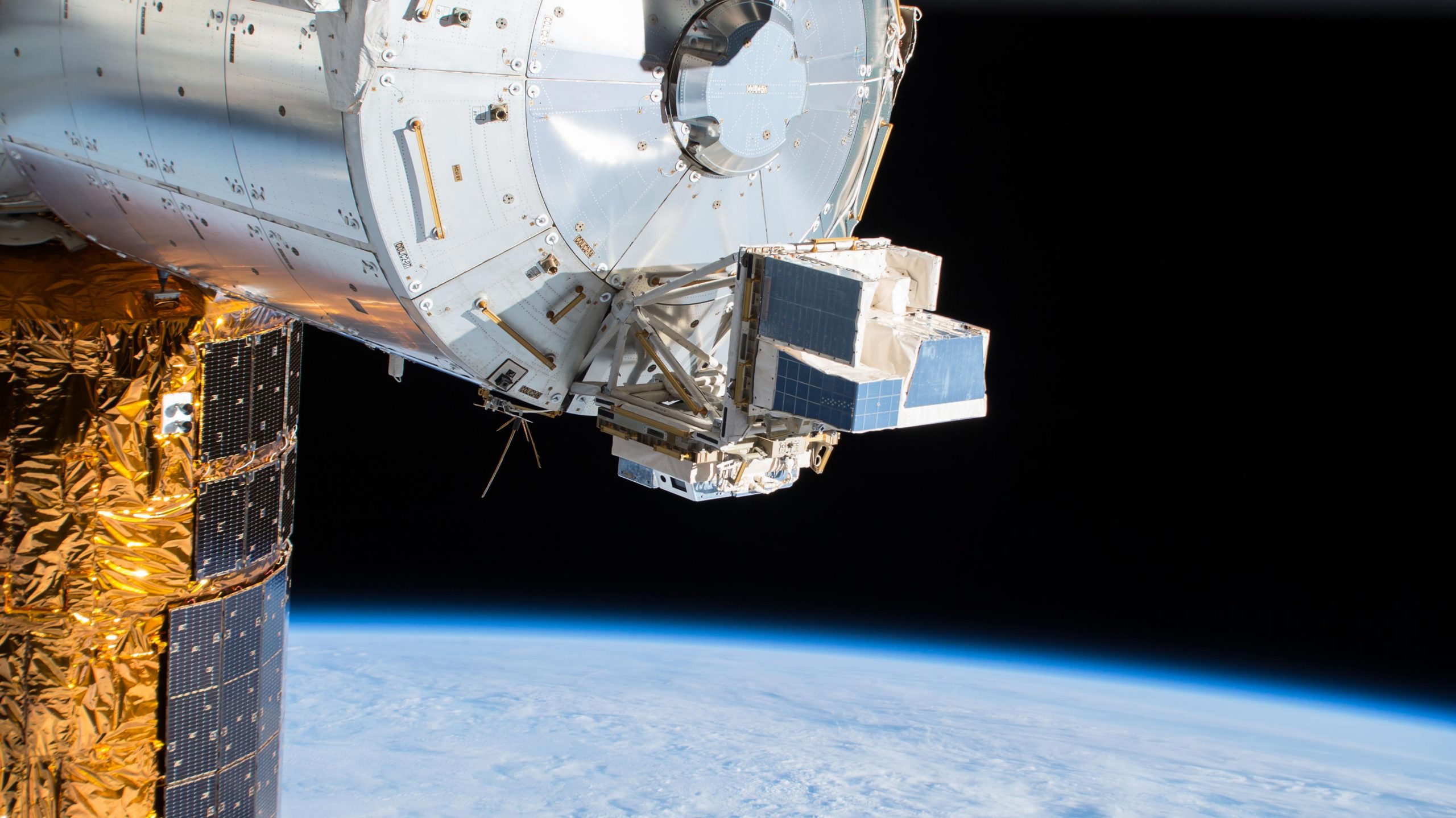
In Earth’s upper atmosphere, lightning creates brief bursts of gamma rays that are the most high-energy, naturally-produced phenomena on the planet. Researchers recently measured these high-energy terrestrial gamma-ray flashes, or TGFs, from the International Space Station. The Atmosphere-Space Interactions Monitor (ASIM), an ESA (European Space Agency) investigation, studies high-altitude electrical discharges such as transient luminous events (TLEs) and TGFs.
In a newly published study, researchers used data ASIM obtained to show that TLEs and TGFs are related. The experiment’s high-speed instruments helped researchers to determine the sequence of events that produces TGFs. These studies are helping scientists better understand how thunderstorms affect Earth’s atmosphere.

Exoplanet uncovered by a small satellite
NASA’s ASTERIA, a small satellite deployed from the space station in 2017, was designed to demonstrate new technologies for astrophysical observations and complex measurements. This testing included the detection of planets outside our solar system by identifying the variabilities in brightness of stars over time. It is responsible for the first detection of an exoplanet transit by a small satellite.
Researchers used ASTERIA for observations and data collection of an exoplanetary system called 55 Cancri. The analyses revealed the exoplanet 55 Cancri e, a known transiting super-Earth orbiting a Sun-like star. The resulting data of the transit search demonstrated that a signal can be seen in ASTERIA data, but not at a level that is significant enough to claim independent detection without prior knowledge of the planet orbit and transit. However, ASTERIA demonstrates that an inexpensive spacecraft designed with an adaptable model of science in mind can deliver groundbreaking results.
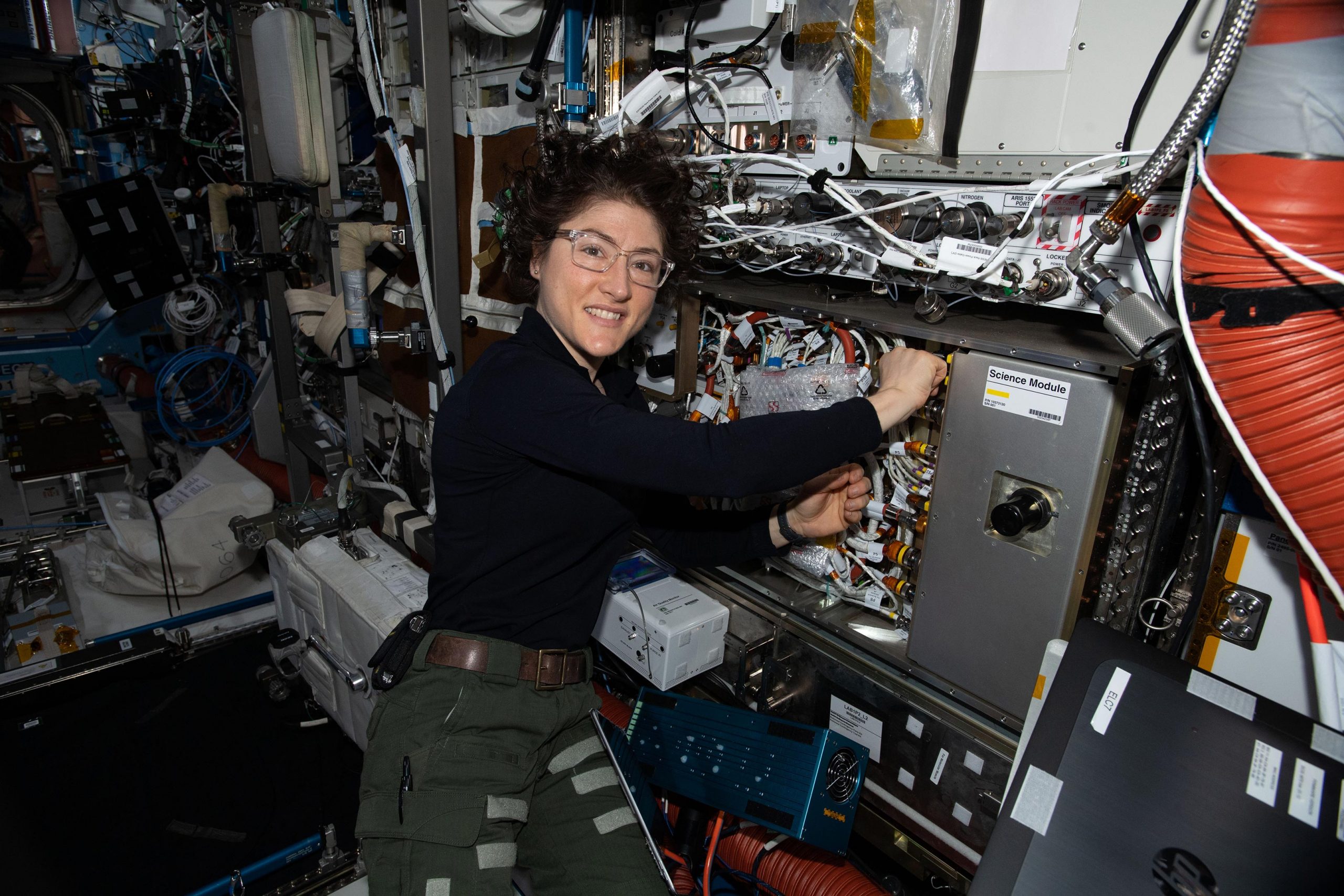
research device. The CAL enables research into the quantum effects of clouds of atoms chilled to nearly absolute zero. Credit: NASA
Keeping things chill
Twenty-five years ago, scientists on Earth first produced a fifth state of matter with properties unlike solids, liquids, gases, and plasmas. The achievement garnered a Nobel Prize for those scientists and changed the field of physics that builds on that legacy. In 2018, NASA’s Cold Atom Lab became the first facility to produce that fifth state of matter, called a Bose-Einstein Condensate (BEC), in Earth’s orbit. Chilling atoms is the only way to produce a BEC, so the Cold Atom Lab lowers atoms to ultracold temperatures to study their properties in ways not possible on Earth.
In a study published in the journal Nature this year, the research team reported on the details of getting this unique lab up and running, as well as their progress toward the long-term goal of using microgravity to illuminate new features of the quantum world. BECs serve as a valuable tool for scientists studying quantum physics. BECs collectively exhibit properties typically displayed only by individual atoms, making those microscopic characteristics visible at a much larger scale.
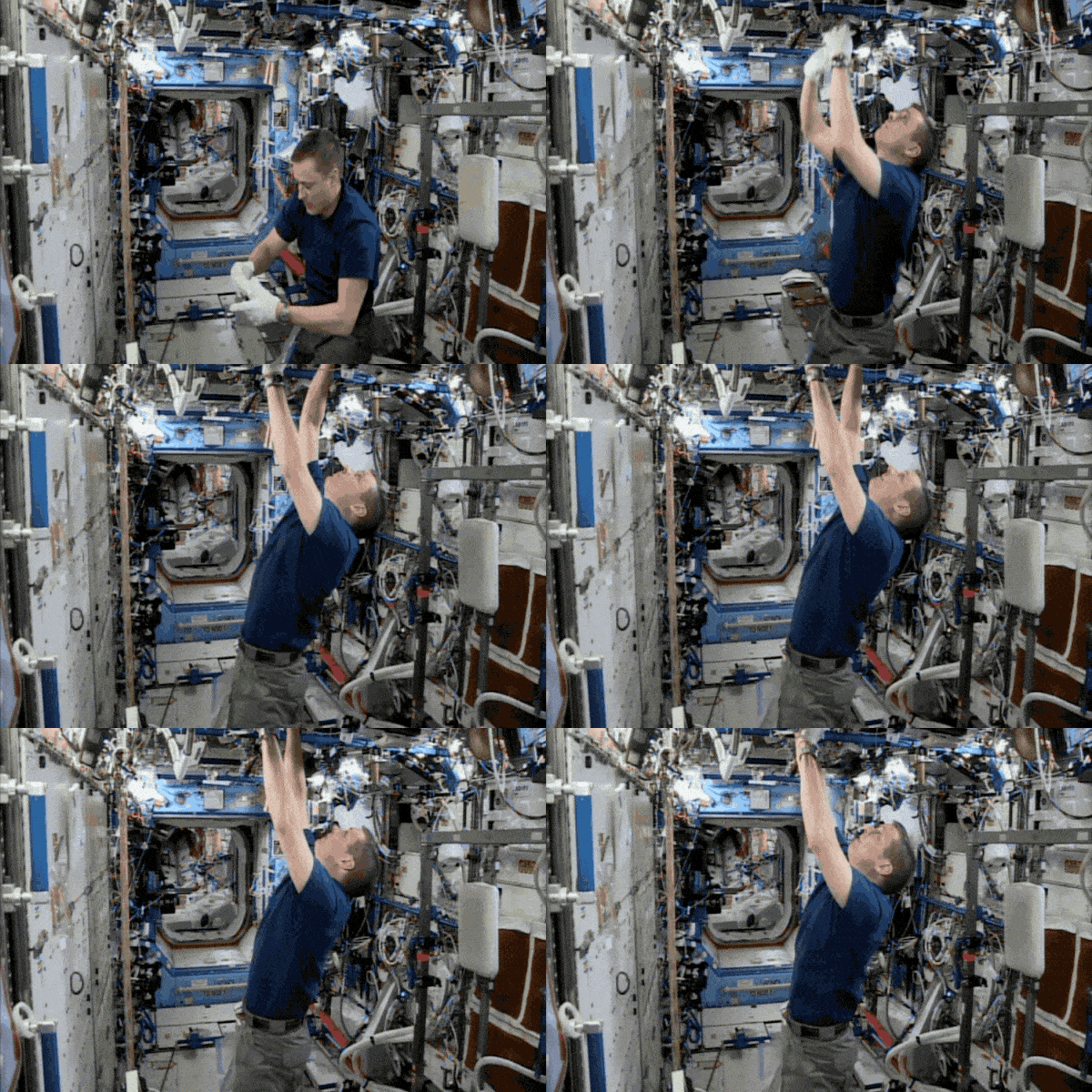
for the Microbial Tracking-2 study. Credit: NASA
A microbial fingerprint on the space station
Bacteria and fungi live all around us, in our homes, offices, industrial areas, the outdoors – even on the space station. People literally could not live without these tiny organisms, many of which are beneficial, and when astronauts arrive on the station, they bring their specific collection of microbial “hitchhikers” with them.
Results published from the NASA Microbial Tracking-2 study show that the microorganisms living on surfaces inside the space station so closely resembled those on an astronaut’s skin that scientists could tell when each new crew member arrived and departed by looking at the microbes left behind. The findings show how keeping an eye on the tiniest space station residents is important for protecting the health of astronauts and the spacecraft they occupy. It could even tell us something about relatively closed environments on Earth, like hospitals, where understanding the presence of microbes is key.
Never miss a breakthrough: Join the SciTechDaily newsletter.
Follow us on Google and Google News.