
Noya has developed low-power, modular units that can be combined to create facilities for removing millions of tons of CO2 from the atmosphere.
In order to avoid the worst effects of climate change, the United Nations has said we’ll need to not only reduce emissions but also remove carbon dioxide from the atmosphere. One method for achieving carbon removal is direct air capture and storage. Such technologies are still in their infancy, but many efforts are underway to scale them up quickly in hopes of heading off the most catastrophic effects of climate change.
Startup Innovation in Carbon Capture
The startup Noya, founded by Josh Santos ’14, is working to accelerate direct-air carbon removal with a low-power, modular system that can be mass-manufactured and deployed around the world. The company plans to power its system with renewable energy and build its facilities near injection wells to store carbon underground.
Using third-party auditors to verify the amount of carbon dioxide captured, Noya is selling carbon credits to help organizations reach net-zero emissions targets.
“Think of our systems for direct air capture like solar panels for carbon negativity,” says Santos, who formerly played a role in Tesla’s much-publicized manufacturing scale-up for its Model 3 electric sedan. “We can stack these boxes in a LEGO-like fashion to achieve scale in the field.”
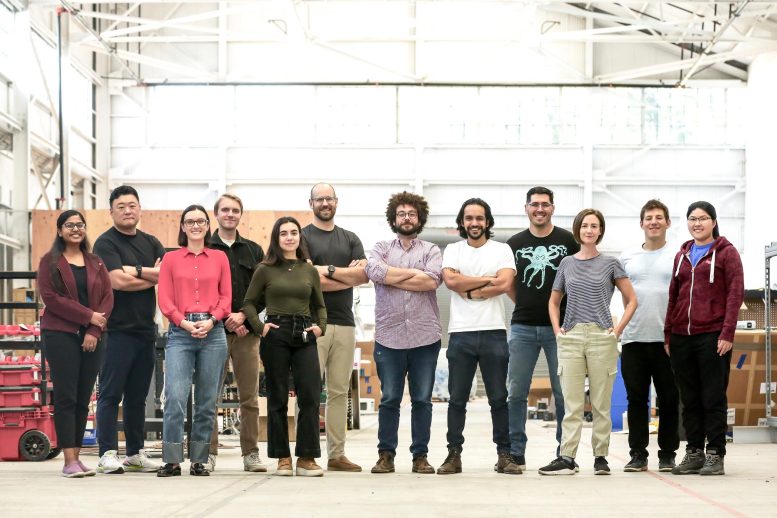
The three-year old company is currently building its first commercial pilot facility, and says its first full-scale commercial facility will have the capacity to pull millions of tons of carbon from the air each year. Noya has already secured millions of dollars in presales to help build its first facilities from organizations including Shopify, Watershed, and a university endowment.
Santos says the ambitious approach, which is driven by the urgent need to scale carbon removal solutions, was influenced by his time at MIT.
“I need to thank all of my MIT professors,” Santos says. “I don’t think any of this would be possible without the way in which MIT opened up my horizons by showing me what’s possible when you work really hard.”
Personal Motivation and Company Vision
Growing up in the southeastern U.S., Santos says he first recognized climate change as an issue by experiencing the increasing intensity of hurricanes in his neighborhood. One year a hurricane forced his family to evacuate their town. When they returned, their church was gone.
“The storm left a really big mark on me and how I thought about the world,” Santos says. “I realized how much climate change can impact people.”
When Santos came to MIT as an undergraduate, he took coursework related to climate change and energy systems, eventually majoring in chemical engineering. He also learned about startups through courses he took at the MIT Sloan School of Management and by taking part in MIT’s Undergraduate Research Opportunities Program (UROP), which exposed him to researchers in the early stages of commercializing research from MIT labs.
More than the coursework, though, Santos says MIT instilled in him a desire to make a positive impact on the world, in part through a four-day development workshop called LeaderShape that he took one January during the Institute’s Independent Activities Period (IAP).
“LeaderShape teaches students how to lead with integrity, and the core lesson is that any privilege you have you should try to leverage to improve the lives of other people,” Santos says. “That really stuck with me. Going to MIT is a huge privilege, and it makes me feel like I have a responsibility to put that privilege to work to the betterment of society. It shaped a lot of how I view my career.”
After graduation, Santos worked at Tesla, then at Harley Davidson, where he worked on electric powertrains. Eventually he decided electric vehicle technology couldn’t solve climate change on its own, so in the spring of 2020 he founded Noya with friend Daniel Cavaro.
From Concept to Market
The initial idea for Noya was to attach carbon capture devices to cooling towers to keep equipment costs low. The founders pivoted in response to the passage of the Inflation Reduction Act in 2022 because their machines weren’t big enough to qualify for the new tax credits in the law, which required each system to capture at least 1,000 tons of CO2 per year.
Noya’s new systems will combine thousands of its modular units to create massive facilities that can capture millions of tons of CO2 right next to existing injection wells.
Each of Noya’s units is about the size of a solar panel at about 6 feet wide, 4.5 feet tall, and 1 foot thick. A fan blows air through tiny channels in each unit that contain Noya’s carbon capture material. The company’s material solution consists of an activated carbon monolith and a proprietary chemical feedstock that binds to the carbon in the air. When the material becomes saturated with carbon, electricity is applied to the material and a light vacuum collects a pure stream of carbon.
The goal is for each of Noya’s modules to remove about 60 tons of CO2 from the atmosphere per year.
“Other direct air capture companies need a big hot piece of equipment — like an oven, steam generator, or kiln — that takes electricity and converts it to get heat to the material,” Santos says. “Any lost heat into the surrounding environment is excess cost. We skip the need for the excess equipment and their inefficiencies by adding the electricity directly to the material itself.”
Scaling With Urgency
From its office in Oakland, California, Noya is putting an experimental module through tests to optimize its design. Noya will launch its first testing facility, which should remove about 350 tons of CO2 per year, in 2024. It has already secured renewable energy and injection storage partners for that facility. Over the next few years Noya plans to capture and remove thousands of tons of CO2, and the company’s first commercial-scale facility will aim to remove about 3 million tons of carbon annually.
“That design is what we’ll replicate across the world to grow our planetary impact,” Santos says. “We’re trying to scale up as fast as possible.”
Noya has already sold all of the carbon credits it expects to generate in its first five years, and the founders believe the growing demand from companies and governments to purchase high-quality carbon credits will outstrip supply for at least the next 10 years in the nascent carbon removal industry, which also includes approaches like enhanced rock weathering, biomass carbon storage, and ocean alkalinity enhancement.
“We’re going to need something like 30 companies the size of Shell to achieve the scale we need,” Santos says. “I think there will be large companies in each of those verticals. We’re in the early innings here.”
Santos believes the carbon removal market can scale without government mandates, but he also sees increasing government and public support for carbon removal technologies around the world.
“Carbon removal is a waste management problem,” Santos says. “You can’t just throw trash in the middle of the street. The way we currently deal with trash is polluters pay to clean up their waste. Carbon removal should be like that. CO2 is a waste product, and we should have regulations in place that are requiring polluters, like businesses, to clean up their waste emissions. It’s a public good to provide cleaner air.”
Never miss a breakthrough: Join the SciTechDaily newsletter.
Follow us on Google and Google News.
2 Comments
To restore CO2 to preindustrial levels, about 800 Gt needs to be removed. This equates to 5 billion units operating fo 25 years. Is that realistic? No, not without ending burning fossil fuels.
Yes, millions of tons sounds impressive, but they have to increase the capacity by at least three orders of magnitudes, or 1,000X, to have a significant impact.