
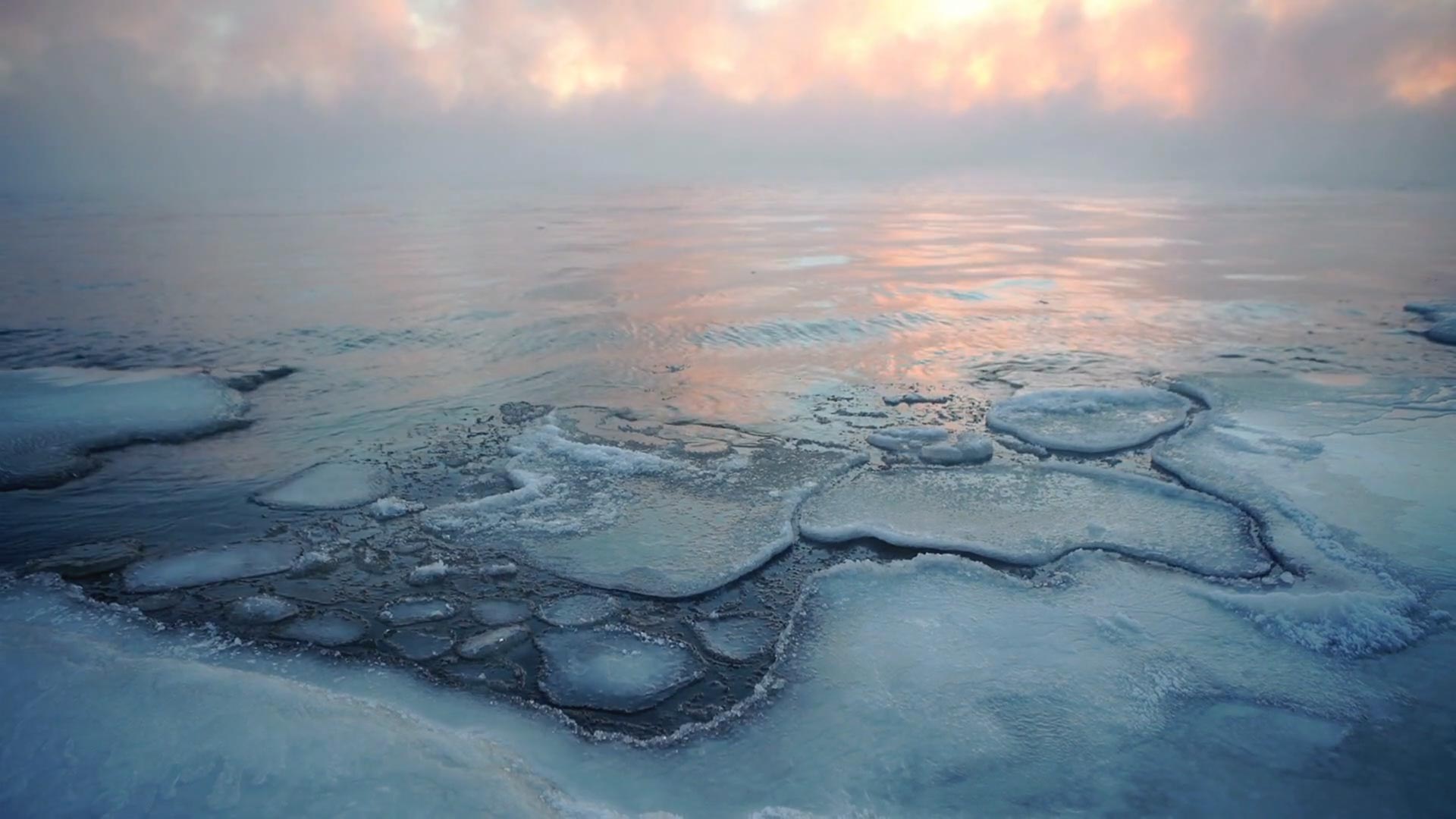
Antarctica’s ice, ocean, and ecosystems are approaching tipping points that could trigger irreversible global impacts.
Antarctica faces the growing threat of sudden and possibly irreversible transformations to its ice, oceans, and ecosystems, changes that could carry serious global consequences unless greenhouse gas emissions are rapidly reduced.
This warning comes from new research published in Nature by scientists from the Australian National University (ANU) and the University of New South Wales (UNSW), working alongside experts from Australia’s leading Antarctic research centers.
The study highlights that the sweeping changes already underway across the continent are “interlinked,” creating added stress on Earth’s climate systems, rising sea levels, and fragile ecosystems.
Researchers caution that the West Antarctic Ice Sheet (WAIS) is in particular danger as atmospheric carbon dioxide concentrations climb. If the WAIS were to collapse, global sea levels could rise by more than three meters, endangering millions who live in coastal cities and low-lying regions around the world.
According to the study’s lead author Dr. Nerilie Abram, who is the Chief Scientist at the Australian Antarctic Division (AAD), such a collapse would result in “catastrophic consequences for generations to come.”
Rapid and Interconnected Change
“Rapid change has already been detected across Antarctica’s ice, oceans and ecosystems, and this is set to worsen with every fraction of a degree of global warming,” said Dr. Abram, who carried out this work during her time as Professor of Climate Science at ANU.
“The loss of Antarctic sea ice is another abrupt change that has a whole range of knock-on effects, including making the floating ice shelves around Antarctica more susceptible to wave-driven collapse. The decline in Antarctic sea ice and the slowdown of deep circulation in the Southern Ocean are showing worrying signs of being more susceptible to a warming climate than previously thought.
“As sea ice is lost from the ocean surface, it is also changing the amount of solar heat being retained in the climate system, and that is expected to worsen warming in the Antarctic region.
“Other changes to the continent could soon become unstoppable, including the loss of Antarctic ice shelves and vulnerable parts of the Antarctic ice sheet that they hold behind them.”
Consequences for Australia
Study co-author Professor Matthew England, from UNSW and the ARC Australian Centre for Excellence in Antarctic Science (ACEAS), said abrupt changes to Antarctica’s climate and ecosystems could have severe consequences for Australia.
“Consequences for Australia include rising sea levels that will impact our coastal communities, a warmer and deoxygenated Southern Ocean being less able to remove carbon dioxide from the atmosphere, leading to more intense warming in Australia and beyond, and increased regional warming from Antarctic sea ice loss,” Professor England said.
Changes to the Antarctic environment could also have devastating consequences on the region’s wildlife and ocean ecosystems.
“The loss of Antarctic sea ice brings heightened extinction risk for emperor penguins, whose chicks depend on a stable sea ice habitat prior to growing their waterproof feathers,” Professor England said.
“The loss of entire colonies of chicks has been seen right around the Antarctic coast because of early sea ice breakout events, and some colonies have experienced multiple breeding failure events over the last decade.”
According to the researchers, the adult survival or breeding capacity of krill and a number of other penguin and seal species are also at risk, while keystone phytoplankton species are becoming increasingly affected by ocean warming and acidification.
The Collapse of Ocean Circulation
“Another potential risk is a collapse in the Antarctic overturning circulation, which would mean vital nutrients remain at the seafloor, instead of being recirculated back to the surface where biological systems, including marine animals, depend on them,” Professor England said.
Dr. Abram said it was clear existing efforts through the Antarctic Treaty System to reduce pressures on Antarctic ecosystems won’t be enough on their own.
“While critically important, these measures will not help to avoid climate-related impacts that are already beginning to unfold,” she said.
“The only way to avoid further abrupt changes and their far-reaching impacts is to reduce greenhouse gas emissions fast enough to limit global warming to as close to 1.5 degrees Celsius as possible.
“Governments, businesses and communities will need to factor in these abrupt Antarctic changes that are being observed now into future planning for climate change impacts, including in Australia.”
Reference: “Emerging evidence of abrupt changes in the Antarctic environment” by Nerilie J. Abram, Ariaan Purich, Matthew H. England, Felicity S. McCormack, Jan M. Strugnell, Dana M. Bergstrom, Tessa R. Vance, Tobias Stål, Barbara Wienecke, Petra Heil, Edward W. Doddridge, Jean-Baptiste Sallée, Thomas J. Williams, Anya M. Reading, Andrew Mackintosh, Ronja Reese, Ricarda Winkelmann, Ann Kristin Klose, Philip W. Boyd, Steven L. Chown and Sharon A. Robinson, 20 August 2025, Nature.
DOI: 10.1038/s41586-025-09349-5
Funding: Australian Research Council, International Space Science Institute, Swiss Federal Research Fellowship
Never miss a breakthrough: Join the SciTechDaily newsletter.
Follow us on Google and Google News.
24 Comments
I am deeply grateful for receiving all this vital information about our earth. We need to change peoples understanding of how important it is to our existence.
This is geoengineering.
They have been hiding this for decades. There is no if ,may ,might it’s happening right now. They have lied about this for years.
geoengineeringwatch.org
Very informative and disturbing. Why do we keep talking about global warming and it’s bad consequences but keep on doing the things that make it worse?
The assumption that the interior ice of Antarctica and Greenland is hundreds of miles away from the ocean is incorrect. At least half of all that ice rests below sea level. It’s already in the ocean.
Sorry. No one to respond to your emergency. See… everyone died back in 2010 when the glaciers melted and the seas rose and drowned everyone near the coasts of all nations. The resulting collapse of civilization makes it impossible for anyone to respond.
In other words… no one BELIEVES your “OMG! We’re all going to die'” stories anymore. We’ve listened to them for the last 40 years and lo and behold… we’re still here and you’re still telling the same stories. Amusing? Yes. Entertaining? Yes. Believable? NO.
So you think 40 years is a long time?
Probably you think you’re a smart and well educated as well?
If this happens to be true – which I personally don’t buy for a second – honestly, it’s a much better outcome than the global freeze they’ve been scaring us with in the 70s.
In other news, Algore is now worth more than $350 million
First of all STOP THE CHEMTRAILS They destroy the climat There is chemtrails everyday THEY should stop them immediatelt
Ah well; good luck H sap. You are stupid enough to dig you own grave and fight over the privilige of being the first sap to step into it.
Your cousin, H erectus was more clever, as is my cat.
Could, may and could is all you’ve got. All the rest is total bs. We’re not buying your laughable drivel.
“Antarctica’s ice, ocean, and ecosystems are approaching tipping points that COULD trigger irreversible global impacts.”
Just how close are they approaching tipping points? Surely they can tells us, if they are sure it “could” happen. How come it will be irreversible this time when Earth has had many glaciations that it has recovered from? This isn’t science, it is political propaganda in preparation for COP 30.
“Researchers caution that the West Antarctic Ice Sheet (WAIS) is in particular danger as atmospheric carbon dioxide concentrations climb.”
If the well-mixed CO2 is solely responsible for endangering the WAIS, why isn’t East Antarctica similarly endangered?
‘Cos the East Antarctic ice-cap is a tad thicker the surface is at a higher and therefore colder altitude than that in West Antarctica and sits mainly on a continent , whereas the West Antarctic ice-sheet sits on an archipelago so its endangerment is more recognisable?
I think that you are right that it is on a higher base. But, that really begs the question of why west Antarctica is still melting more rapidly than East Antarctica except along the coasts. The melting isn’t really proportional to the altitude because the melting is a step function, the step being the altitude at which ice rarely, if ever, melts. Because the seawater is above freezing, the entire coastline has seasonal melting. Even so, only the northern reaches of the archipelago are close to the ocean, as well as being at lower latitudes, therefore, receiving more sunlight. What is also true is that East Antarctica doesn’t have the elevated geothermal gradients or volcanoes under the ice, neither of which are related to carbon dioxide levels.
“If the WAIS were to collapse, global sea levels COULD rise by more than three meters, endangering millions who live in coastal cities and low-lying regions around the world.”
Endangering? I doubt that anyone will actually drown from a “collapse.” Even under the worst of situations, the ice would take many years to melt.
Much of the ice of WAIS is under the ocean. Because water expands when it freezes, it displaces a greater volume than the water it displaces. That means, should it melt, there will be less melt- water volume than the former ice volume. I have never seen a rigorous calculation of the estimated rise in sea level that takes into account the difference in volume occupied by ice and its melt-water. Certainly all this study provides is an assertion of 3 meters of sea level rise. Science is supposed to explain and predict, not just make unsupported assertions. This is another example of these ‘academics’ making scary claims without backing them up.
“The loss of Antarctic sea ice is another abrupt change that has a whole range of knock-on effects, including making the floating ice shelves around Antarctica more susceptible to wave-driven collapse.”
What does “abrupt” mean in this context? Hundred or thousands of years?
The floating sea-ice is already displacing a volume of water equal in weight to the ice. If it were to melt, it will contribute zero increase to sea level.
As to the subsequent claim that the loss of pack ice will remove a buttressing effect holding back the actual glaciers, consider that glaciers have a reputation of being the proverbial ‘irresistible force,’ and pack ice can be blown around by wind. Any buttressing that may be occurring is more likely to be the result of the ice tongue being grounded on a terminal moraine or a volcanic dike that rises above the sea floor. One sees claims about this so-called buttressing frequently. However, should it actually be happening, one would expect to see tension cracks downstream from the grounding line and compression ridges upstream. I have yet to see any quantitative measurements that support the buttressing claim. Feel free to point me in their direction should you be aware of such studies.
“Another potential risk is a collapse in the Antarctic overturning circulation, which would mean vital nutrients remain at the seafloor, instead of being recirculated back to the surface where biological systems, including marine animals, depend on them,”
This claim seems to be in direct contradiction to a different article published two days ago where they say, “Climate projections have long indicated that global warming might weaken the Southern Ocean’s capacity to absorb carbon dioxide (CO2). Yet, long-term measurements reveal that this crucial ability has remained largely unchanged in recent decades.”
[ https://scitechdaily.com/climate-models-missed-something-big-about-the-southern-ocean-the-truth-is-more-worrying/ ]
When studies published at nearly the same time come to different conclusions, I would say that the science definitely is not settled and any claims should be taken with a grain of ice. The cited study is at least based on empirical measurements instead of models of questionable veracity.
Empirical measurements means that someone has measured something, whereas models mean that someone has assumed things and made something up based on the assumptions; yes?
However, one cannot measure the future therefore all the projections are models, some of which include past measured observations and indeed the assumptions that underpin the measurements.
Which then leads to the argument that “could”, “would” and “might” are perfectly useful words to use in science.
The ‘models’ based on actual measurements, in contrast to unstated assumptions and hypotheses, should be more reliable.
If I were to claim that Earth “could” once again be impacted by a bolide with the ability to exterminate much of the life on Earth, it can’t be proven to be false. However, without predicting when in the future it will/would/could happen, or the size of the bolide, or where it will impact, I would submit that it is not really “useful” information. One can file the claim under the category “Of Academic Interest.” It has no practical value for purposes of avoidance. If, on the other hand, NASA announces that they have discovered a previously unknown asteroid the size of Mount Everest, on a course that has better than a 99% chance of colliding with Earth in the next two years, then it would be negligent to not try to deflect or destroy it. That is the difference between “could” and “will” with a timeline.
“The only way to avoid further abrupt changes and their far-reaching impacts is to reduce greenhouse gas emissions fast enough to limit global warming to as close to 1.5 degrees Celsius as possible.”
Another opinion without support! Inasmuch as lawyer words like “could” and “might” are used so frequently, it is probably appropriate to end with a lawyer phrase: “The facts are not in evidence.”
Yet, as the same time the alarmists are saying the above, it turns out Antarctica just had the coldest October since 1981. Funny how the models of CO2 and temperature don’t at all match the observations (and are well outside of established scientific p-values), indicating that CO2 sensitivity is very small, yet the research funding keeps coming … almost as if some fat-cats are trying to manipulate the public. I wonder, could fat-cats make billions by promoting research that has in fact been debunked long ago? … I’m being sarcastic … the answer is “of course they are.”
Similarly, one sees claims from researchers at NASA that Antarctica is showing signs that the so-called Ozone Hole is healing. Yet, if one goes to the NASA website that lists the annual records for ozone concentration and areal extent of the ‘hole,’ the last few years don’t look much different than the 1990s, shortly after the Montreal Protocol that phased out most practical refrigerants and increased the cost of refrigerants for A/C units in people’s homes.
Feel free to correct me as I haven’t verified the claim, but I have heard that, coincidentally, the problem with CFCs was discovered after the DuPont patents expired.
Fossil fuel companies have a lot of money to throw around creating misinformation via sanctimonious shills with an opinion for sale.