
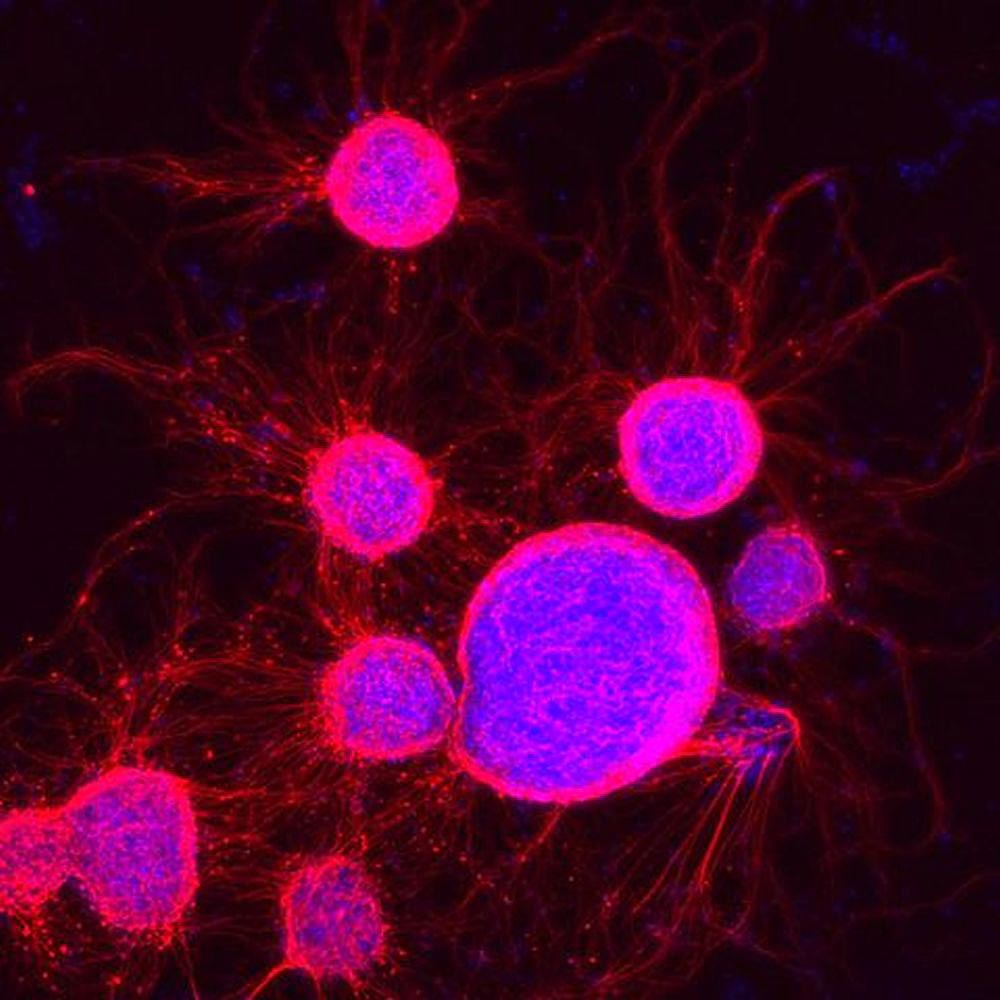
New TU Dresden research group aims to uncover how stem cells respond to mechanical forces and electrical cues during the development and maintenance of the nervous and cardiovascular system.
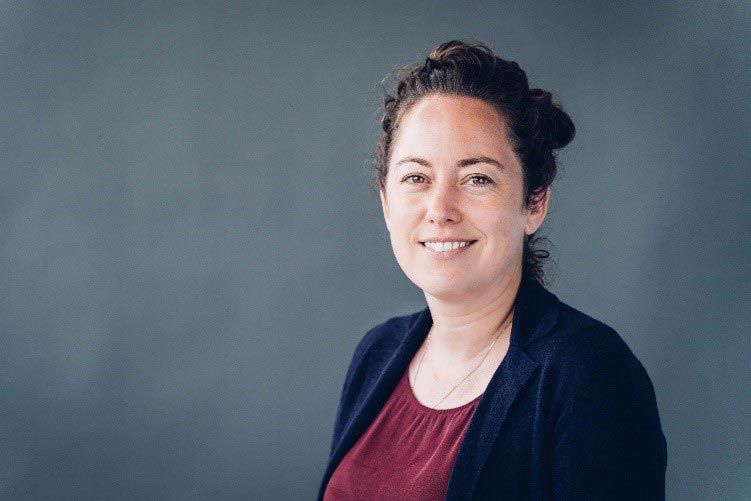
Dr. Adele Doyle, Assistant Professor at the University of California, Santa Barbara, USA, joined the Cluster of Excellence Physics of Life (PoL) in July 2021, to lead the research group Mechanobiology of Stem Cells at TU Dresden. Using approaches from engineering, biology, and computer science, her group studies how molecular circuits enable specialized mechanosignaling. The interdisciplinary team investigates how stem cells learn to respond to mechanical forces and electrical cues during the development of the nervous and cardiovascular systems, and how biophysical cues affect health or disease. The Doyle group seeks quantitative insights to help design cell and regenerative medicine therapies for neural and vascular applications. The Doyle lab is hosted at the Center for Regenerative Therapies Dresden (CRTD) at TU Dresden, and the Center for Systems Biology Dresden (CSBD).
Cells in living organisms are surrounded by physical cues, such as mechanical forces, material properties, electrical cues, and chemical signals. Depending on the function and surroundings of cells, they experience various material properties and mechanical force inputs at different magnitudes and dynamics. “The ability of cells to take reliable decisions based on local physical cues is essential during the development of an organism and to maintain health. During disease, the normal physical cues can change, or cells can lose the ability to respond appropriately to local physical cues. For example, in the case of cancer, changes in the stiffness of tissues lead to unwanted cell proliferation and movement. The way cells sense the physical properties of surroundings is called mechanosignaling, a process that is not yet well understood,” explains group leader Adele Doyle.
Translating Mechanobiology Research Into Clinical Therapies
The Doyle lab aims to help cell and regenerative medicine therapies become more standard care options for patients who suffer from debilitating, chronic diseases. The team’s expertise lies primarily in neural and cardiovascular systems, and they also focus on the needs of patients. “Ultimately, our goal is to translate our research to the clinical context, and incorporate the insights gained from basic science research into clinical therapy designs. We enjoy collaborating with many types of groups, including from academia, industry, and medicine, at different stages throughout this process,” says Dr. Doyle.
To study how mechanosignaling impacts successful embryonic development and organism homeostasis, Adele Doyle and her research group design experimental methods to take more accurate and sensitive molecular measurements in living cells and develop novel computational tools to analyze experimental data to model how cells take decisions. They also collaborate with engineering and microfabrication groups to study how controlled physical inputs affect cell behavior, such as in the case of traumatic brain injury-like impacts.
“Our research is at the interface between physical sciences, such as engineering and physics, natural sciences, like chemistry and biology, medicine, and computer science. We combine three main aspects: the technology development, the mechanobiology of stem cells and their progeny, and electrogenic signaling in the nervous and cardiovascular systems,” describes Dr. Doyle. “We aim to discover how physical cues trigger changes in cellular internal molecular circuits, and subsequently cell behavior, as well as to contribute as a bridge between disciplines. For example, we initiate collaborations to help apply tools from physics and biology to address unmet medical challenges, and use data science and computation to integrate and gain insight from a wide range of experimental data sets,” Dr. Doyle adds.
To meet these needs, a smooth transfer of knowledge and expertise within and between research groups and institutes is crucial. The Cluster of Excellence Physics of Life (PoL) forms a network between disciplines and is dedicated to this type of collaborative research. At PoL, scientists are fostering an environment that supports research from basic science to applications. The research focus of Dr. Doyle is an ideal fit for this interdisciplinary Cluster of Excellence. With its many life sciences research institutes and vibrant industry landscape, Dresden offers ideal conditions for such endeavors.
Adele Doyle accomplished her B.Sc. in Biomedical Engineering at the Washington University in St. Louis, USA. She received her Ph.D. in Biomedical Engineering at the Georgia Institute of Technology & Emory University, USA, in 2010. Afterward, she did her postdoctoral research at Harvard University, USA. Since 2013 Doyle worked as Assistant Researcher (PI) at the Neuroscience Research Institute and Lecturer at the Center for Bioengineering and since 2019 as Assistant Professor at the Department of Mechanical Engineering at the University of California Santa Barbara, USA. Since July 1, 2021, Adele Doyle leads the research group Mechanobiology of Stem Cells at the Cluster of Excellence Physics of Life at TU Dresden.
Never miss a breakthrough: Join the SciTechDaily newsletter.
Follow us on Google and Google News.