
Close Menu
    Facebook X (Twitter) Instagram
    SciTechDaily
    • Biology
    • Chemistry
    • Earth
    • Health
    • Physics
    • Science
    • Space
    • Technology
    Facebook X (Twitter) Pinterest YouTube RSS
    SciTechDaily
    Home»Technology»Century-Old Problem Finally Solved: Scientists Develop Urinal That Doesn’t Splash
    Technology

    Century-Old Problem Finally Solved: Scientists Develop Urinal That Doesn’t Splash

    By PNAS NexusApril 10, 20254 Comments2 Mins Read
    Facebook Twitter Pinterest Telegram LinkedIn WhatsApp Email Reddit
    Share
    Facebook Twitter LinkedIn Pinterest Telegram Email Reddit
    Urinal Designs
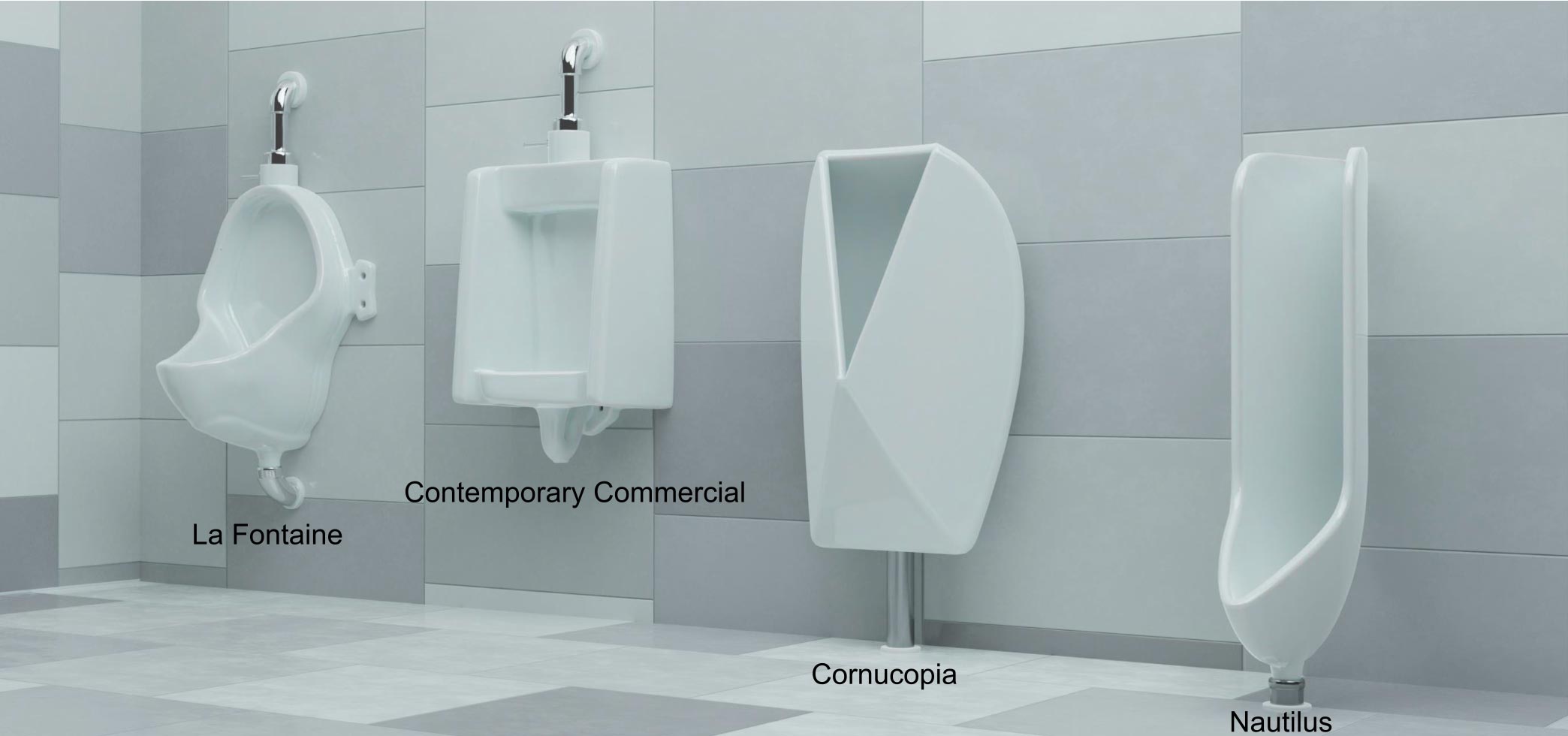
    Three-dimensional renderings of urinals. From left to right: Duchamp’s “La Fontaine,” a contemporary commercial model, Cornucopia, and Nautilus. Credit: Thurairajah et al

    New urinal designs reduce splashback by optimizing surface angles, improving hygiene, and enhancing accessibility.

    A urinal engineered to minimize urine splashback, both onto the user and the surrounding floor, would significantly enhance sanitation, maintain cleaner restroom environments, and improve the overall user experience.

    Urinal design has remained largely unchanged for over a century. The model famously reimagined as art by Marcel Duchamp in his 1917 Dada piece Fountain still closely resembles many of the fixtures found in public restrooms today.

    Traditional urinals often result in urine splashing outside the intended area, onto floors and, more unpleasantly, onto users themselves. This not only creates unsanitary conditions and increases the risk of disease transmission but also leads to higher maintenance and cleaning costs.


    A high-speed video depicting the tests used to measure the critical angle. Three impinging angles are shown (left to right: 90◦,60◦, and 30◦, respectively). Credit: Thurairajah et al.

    Engineering a Cleaner Alternative

    Zhao Pan, Kaveeshan Thurairajah, and colleagues calculated that when the flow of urine impinges on the surface of the fixture at 30◦ or less, splashback is greatly reduced.

    Experimental results confirmed this. The authors then designed urinals by solving differential equations, dubbed Cornucopia and Nautilus, which have impinging angles at or below 30◦ across their entire area. The Nautilus design has an additional advantage: it fits a range of urination heights, making it easier for children and people who use wheelchairs to use.

    According to the authors, if the 56 million urinals in public restrooms in the US were replaced with the Nautilus, it would prevent one million liters of urine from splashing onto the floor each day.

    Reference: “Splash-free urinals for global sustainability and accessibility: Design through physics and differential equations” by Kaveeshan Thurairajah, Xianyu (Mabel) Song, J D Zhu, Mia Shi, Ethan A Barlow, Randy C Hurd and Zhao Pan, 8 April 2025, PNAS Nexus.
    DOI: 10.1093/pnasnexus/pgaf087

    Never miss a breakthrough: Join the SciTechDaily newsletter.
    Follow us on Google and Google News.

    Engineering Fluid Dynamics
    Share. Facebook Twitter Pinterest LinkedIn Email Reddit

    Related Articles

    Engineers at SEAS Develop a Microelectronic Device That Mimics Functions of Real Cells

    New 3D Form of Graphene May Lead to Flexible Electronics

    Self-Assembling Polymer Increases Hard Drive Capacity Fivefold

    Ultra-Strong Artificial Muscles Made From Carbon Nanotubes

    DARPA’s New Pet-Proto Robot Navigates Obstacles

    Superhydrophobic Coating Allows Boiling Water without the Creation of Bubbles

    Remote Controlled Cockroach Biobots

    NASA to Test Jet Engine With a Helping of Cereal and Crayons

    Engineered Capsule that Buckles Under Pressure

    4 Comments

    1. Boba on April 10, 2025 4:47 pm

      Urinals don’t splash if you aim right.

      Reply
      • Clyde Spencer on April 12, 2025 9:22 am

        A few years ago I read an article about a urinal that the manufacturer determined the optimal aim point for, and then put the image of a fly there in the ceramic glaze.

        Reply
    2. Jojo on April 10, 2025 8:39 pm

      OK, an article I can get in front of!

      Reply
    3. Robin C on April 19, 2025 9:49 am

      Wow. Cornucopia looks a bit risky though especially if you’re vertically challenged like me.

      Reply
    Leave A Reply Cancel Reply

    • Facebook
    • Twitter
    • Pinterest
    • YouTube

    Don't Miss a Discovery

    Subscribe for the Latest in Science & Tech!

    Trending News

    Scientists Uncover Potential Brain Risks of Popular Fish Oil Supplements

    Scientists Discover a Surprising Way To Make Bread Healthier and More Nutritious

    After 60 Years, Scientists Uncover Unexpected Brain Effects of Popular Diabetes Drug Metformin

    New Research Uncovers Hidden Side Effects of Popular Weight-Loss Drugs

    Scientists Rethink Extreme Warming After Surprising Ocean Discovery

    Landmark Study Links Never Marrying to Significantly Higher Cancer Risk

    Researchers Discover Unknown Beetle Species Just Steps From Their Lab

    Largest-Ever Study Finds Medicinal Cannabis Ineffective for Anxiety, Depression, PTSD

    Follow SciTechDaily
    • Facebook
    • Twitter
    • YouTube
    • Pinterest
    • Newsletter
    • RSS
    SciTech News
    • Biology News
    • Chemistry News
    • Earth News
    • Health News
    • Physics News
    • Science News
    • Space News
    • Technology News
    Recent Posts
    • Scientists Discover Caffeine Can Repair Key Memory Circuits After Sleep Loss
    • Strange 65-Foot Dinosaur Discovered in Argentina
    • Researchers Uncover Source of Strange Deformation in Earth’s Largest Continental Rift
    • Scientists Solve Mystery of Where the Colorado River Vanished Millions of Years Ago
    • Not Just Alzheimer’s: Scientists Uncover Clues to a Second, Overlooked Disorder
    Copyright © 1998 - 2026 SciTechDaily. All Rights Reserved.
    • Science News
    • About
    • Contact
    • Editorial Board
    • Privacy Policy
    • Terms of Use

    Type above and press Enter to search. Press Esc to cancel.