
Close Menu
    Facebook X (Twitter) Instagram
    SciTechDaily
    • Biology
    • Chemistry
    • Earth
    • Health
    • Physics
    • Science
    • Space
    • Technology
    Facebook X (Twitter) Pinterest YouTube RSS
    SciTechDaily
    Home»Health»“Challenging the Current Paradigm” – Scientists Develop New Approach To Stop Cancer Growth
    Health

    “Challenging the Current Paradigm” – Scientists Develop New Approach To Stop Cancer Growth

    By Case Western Reserve UniversityDecember 2, 20231 Comment3 Mins Read
    Facebook Twitter Pinterest Telegram LinkedIn WhatsApp Email Reddit
    Share
    Facebook Twitter LinkedIn Pinterest Telegram Email Reddit
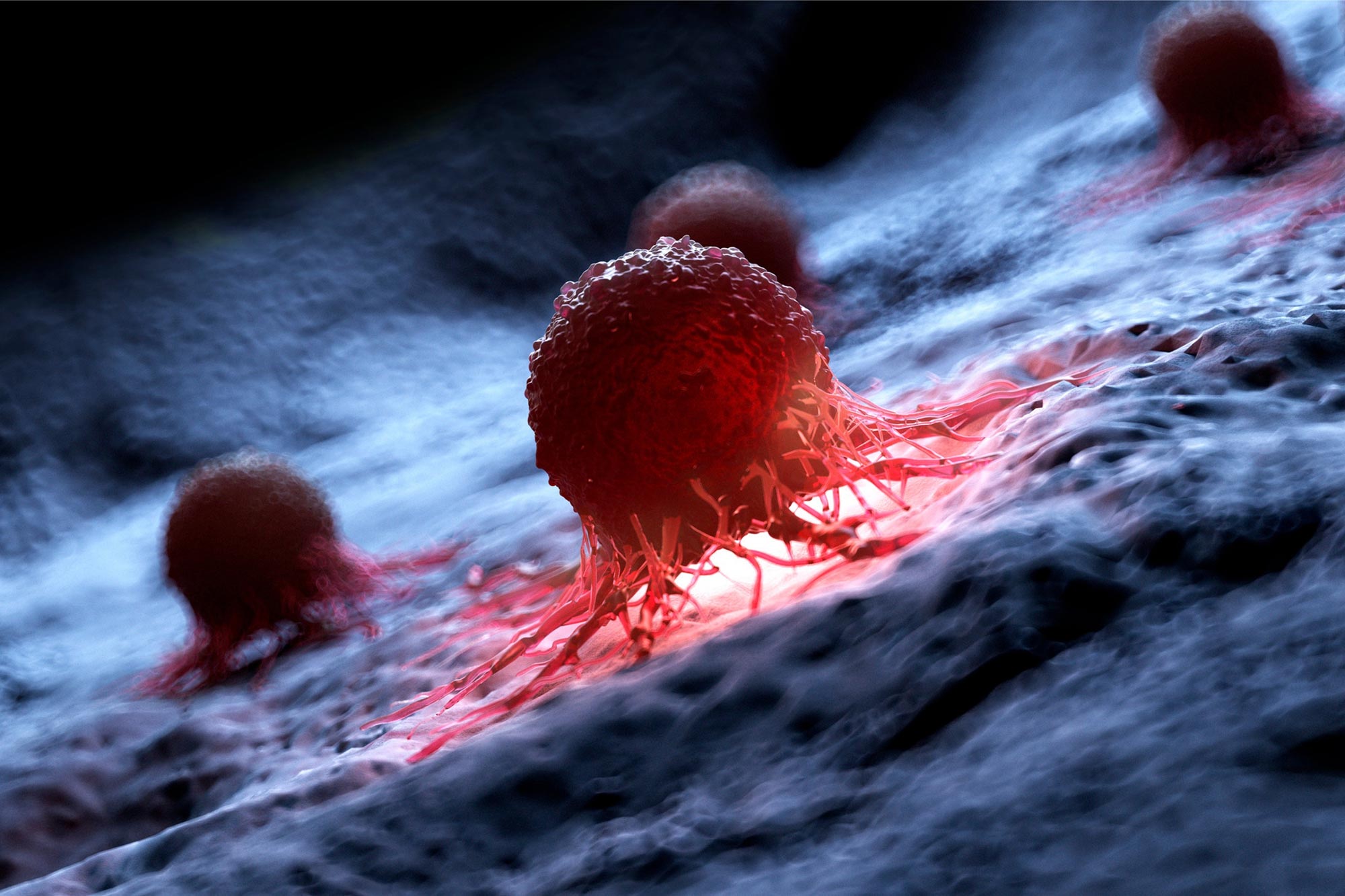
    Human Cancer Cell Illustration
    Case Western Reserve University researchers have discovered a more effective way to treat cancer by degrading the LSD1 protein, challenging traditional methods and potentially leading to more efficient cancer treatments.

    Biochemists at Case Western Reserve are concentrating on the degradation of a key protein that drives cancer; represents a major shift in research.

    Biochemical researchers at Case Western Reserve University have discovered a a new function of a key protein that leads to cancer–a finding they believe could lead to more effective treatments for a range of cancers and other diseases.

    The protein is LSD1 (lysine-specific histone demethylase 1A), which functions as a type of traffic cop inside human cells. It controls gene activity during embryonic development and regulating gene expression throughout life.

    Scientists have also identified in recent years that the overexpression of LSD1—in this instance, producing too many proteins—can drive development of cancer and heart disease.

    Cheng Zeng
    Cheng Zeng. Credit: CWRU

    A New Approach to Cancer Treatment

    And some researchers have recently looked to slow cancer growth by stopping the catalytic activity of LSDI—the chemical reaction that spurs cell growth, but also appears to lead to its overexpression.

    But Kaixiang Cao, an assistant professor of biochemistry is leading a team that challenges that assumption: The medical school researchers argue that they can achieve far greater success to slow or stop cancer growth in stem cells by instead degrading the entire LSD1 protein, not merely short-circuiting the chemical reaction that leads to its overexpression.

    Challenging Conventional Wisdom

    “Our findings really challenge the current paradigm,” Cao said.

    Their research was recently published in the journal Nature Communications.

    Emmalee Cooke
    Emmalee Cooke. Credit: CWRU

    “We need a really precise and effective way of targeting these proteins, and our research shows that stopping that catalysis might be effective (at stopping the overexpression) 15% of the time, while our approach is closer to 80%,” Cao said. “So, if we can develop a degrader of LSD1, we can help the patient go through less therapy—even if we cannot completely cure cancer.”

    Cao said he and his team were surprised LSD1 functions mainly in a catalytic-independent manner, but now that they’ve provided to the research community a “theoretical foundation that this is going to be a more effective way to treat these diseases,” they’ll begin to test further, first in cancerous tissues, then animal models and eventually human trials.

    “This is the future—you add the degrader, and it will kill the protein completely,” he said. “The technique is already there because it has been done to other proteins by other researchers—but not yet to LSD1.”

    Reference: “Demethylase-independent roles of LSD1 in regulating enhancers and cell fate transition” by Cheng Zeng, Jiwei Chen, Emmalee W. Cooke, Arijita Subuddhi, Eliana T. Roodman, Fei Xavier Chen and Kaixiang Cao, 22 August 2023, Nature Communications.
    DOI: 10.1038/s41467-023-40606-1

    Never miss a breakthrough: Join the SciTechDaily newsletter.
    Follow us on Google and Google News.

    Biochemistry Cancer Case Western Reserve University Protein
    Share. Facebook Twitter Pinterest LinkedIn Email Reddit

    Related Articles

    Popular Vitamin B3 Supplements May Help Cancer Cells Survive, Scientists Warn

    Scientists Discover New Protein Shield That Protects Broken DNA

    Researchers Discover a New Compound That Makes Cancer Cells Self-Destruct

    Researchers Pinpoint Molecular Mechanism Behind Breast Cancer Risk

    Scientists Discover Protein That Can Accelerate Recovery

    Researchers Find a New Target to Treat a Wide Spectrum of Cancers

    New Drug Candidate Kills Cancer Cells Better Than Cisplatin

    New Antibody Drug Boosts the Immune System’s Capacity to Fight Cancer

    Protein NLRP12 Protects Against Colon Cancer

    1 Comment

    1. Jesse Vazquez on April 7, 2026 2:06 pm

      Everything I read in the relevant literature is about research on drugs that treat but not cure, sounds like a good way to hang on to “customers” reminds me of the Hep C “Cure” that eliminated customers and potential customers by curing the disease the number of new cases dropped as the supply of infected people that infected others caused a drop off of new cases that in turn caused earning to drop and not enough return on investment. in conclusion that particular (hep C) situation was a bad business practice?

      Reply
    Leave A Reply Cancel Reply

    • Facebook
    • Twitter
    • Pinterest
    • YouTube

    Don't Miss a Discovery

    Subscribe for the Latest in Science & Tech!

    Trending News

    New “Nanozyme Hypothesis” Could Rewrite the Story of Life’s Origins

    Anatomy Isn’t Finished: The Human Body Still Holds Secrets

    “Pretty Close to Home”: The Hidden Earthquake Threat Beneath Seattle

    The Surprising Reason You Might Want To Sleep Without a Pillow

    Scientists Say This Natural Hormone Reverses Obesity by Targeting the Brain

    35-Million-Year-Old Mystery: Strange Arachnid Discovered Preserved in Amber

    Is AI Really Just a Tool? It Could Be Altering How You See Reality

    JWST Reveals a “Forbidden” Planet With a Baffling Composition

    Follow SciTechDaily
    • Facebook
    • Twitter
    • YouTube
    • Pinterest
    • Newsletter
    • RSS
    SciTech News
    • Biology News
    • Chemistry News
    • Earth News
    • Health News
    • Physics News
    • Science News
    • Space News
    • Technology News
    Recent Posts
    • Saturn’s Magnetic Shield Isn’t What Scientists Expected
    • Hidden Oceans of Magma Could Be Protecting Alien Life
    • After Decades of Searching, Astronomers Finally Track Down the Universe’s Missing Hydrogen
    • Scientists Capture Hidden Electron Patterns Inside Quantum Materials
    • New Study Challenges Alzheimer’s Theories: It’s Not Just About Plaques
    Copyright © 1998 - 2026 SciTechDaily. All Rights Reserved.
    • Science News
    • About
    • Contact
    • Editorial Board
    • Privacy Policy
    • Terms of Use

    Type above and press Enter to search. Press Esc to cancel.