
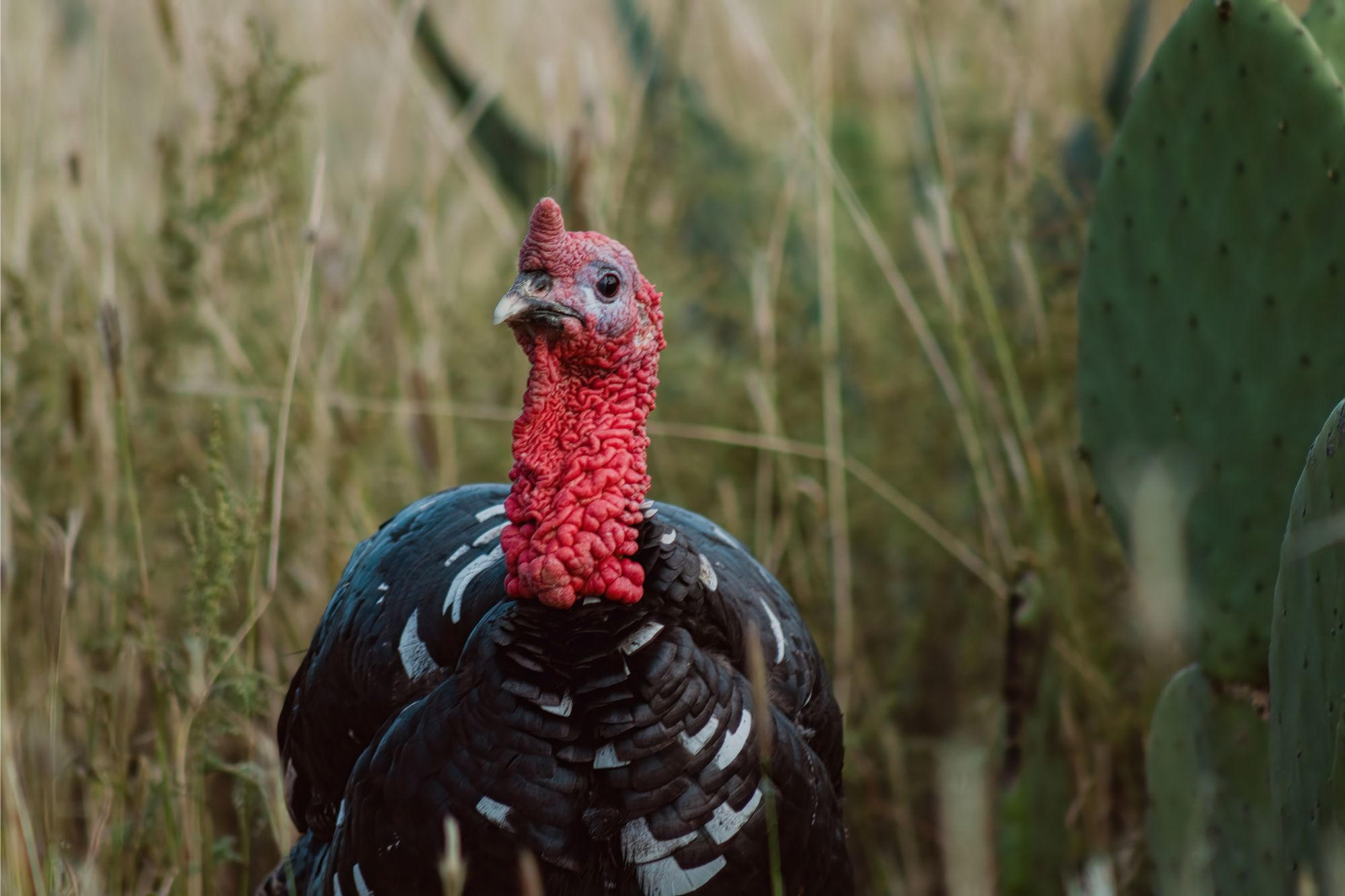
A recent research study has discovered that rainfall during the nesting season does not impact the breeding success of wild turkeys, challenging the commonly held belief about the importance of precipitation for wild turkey nesting success. This revelation provides fresh insights into the potential effects of climate change on wild turkey populations.
“We wanted to know how weather influences nesting success right now, and then use that data to assess how climate change may influence wild turkey populations in the future,” says Wesley Boone, corresponding author of a paper on the work and a postdoctoral researcher at North Carolina State University.
“Wild turkeys are fairly tolerant of a wide range of conditions, but there are a host of factors that can affect their reproductive success,” says Chris Moorman, co-author of the study and a professor of forestry and environmental resources at NC State. “This work focused on two of those conditions, precipitation and temperature, and how they may influence nest survival during the incubation period.”
For the study, researchers focused on daily nest survival, which is whether the eggs in the nest survive any given 24-hour period. Over the course of eight years, researchers monitored 715 turkey nests and collected daily precipitation and temperature data for each nest during the entire incubation period. For temperature, the researchers looked specifically at the extent to which temperatures at each nest varied from historical averages.
The researchers analyzed all of this data to determine the extent to which precipitation and temperature were associated with daily nest survival.
Findings on Precipitation and Temperature
“The most surprising finding was that precipitation during nesting was not a good predictor of daily nest survival,” Moorman says. “It had been widely believed that particularly rainy weather made it more likely that eggs wouldn’t survive.”
“We also found that temperatures which were higher than historical averages were associated with higher rates of daily nest survival during incubation,” says Boone. “Peak nesting season is generally in April, so we’re talking about warmer than average spring weather.”
“Taken by itself, this might suggest that climate change could benefit turkey reproductive success and, by extension, turkey populations,” Moorman says. “However, we also looked at precipitation and temperature data for the months leading up to nesting season, and at the overall likelihood that a turkey nest will successfully hatch at least one egg. And when we looked at both of those datasets, things get a lot less clear.”
“For example, the data suggest that more precipitation in January – long before nesting season – is associated with greater nest survival,” Boone says. “The data also suggest that higher temperatures in January are associated with worse nesting survival. But there is so much uncertainty related to those findings that it’s not clear whether there’s a real relationship there, or if it’s an anomaly. However, it does temper any enthusiasm we might have about the likelihood that climate change will benefit turkey populations.”
Reference: “Robust assessment of associations between weather and eastern wild turkey nest success” by Wesley W. Boone, Christopher E. Moorman, David J. Moscicki, Bret A. Collier, Michael J. Chamberlain, Adam J. Terando and Krishna Pacifici, 15 November 2023, The Journal of Wildlife Management.
DOI: 10.1002/jwmg.22524
The paper was co-authored by David Moscicki, a Ph.D. student at NC State; Krishna Pacifici, an associate professor of forestry and environmental resources; Adam Terando, a research ecologist with the U.S. Geological Survey; Bret Collier, a professor of wildlife ecology at Louisiana State University; and Michael Chamberlain, the Terrell Professor of Wildlife Ecology and Management at the University of Georgia.
The research was done with support from the U.S. Geological Survey’s Southeast Climate Adaptation Science Center, which is headquartered at NC State; and from the National Institute of Food and Agriculture, under McIntire Stennis Project Number 7001494. Additional support was provided by the Georgia Department of Natural Resources-Wildlife Resources Division, the Louisiana Department of Wildlife and Fisheries, the South Carolina Department of Natural Resources, the North Carolina Wildlife Resources Commission, the National Wild Turkey Federation, the United States Department of Agriculture’s Forest Service, the Warnell School of Forestry and Natural Resources at the University of Georgia and the School of Renewable Natural Resources at Louisiana State University.
Never miss a breakthrough: Join the SciTechDaily newsletter.
Follow us on Google and Google News.