

A groundbreaking initiative by the Department of Energy and Microsoft is set to transform scientific computing through cloud technology, offering faster, more versatile tools for computational chemistry and environmental research.
Some computing challenges are so massive that they require an all-in approach. A diverse team of scientists and computing experts, led by the Department of Energy’s Pacific Northwest National Laboratory (PNNL), along with Microsoft and other national labs and universities, is working to make cutting-edge cloud computing resources more accessible to a broader audience.
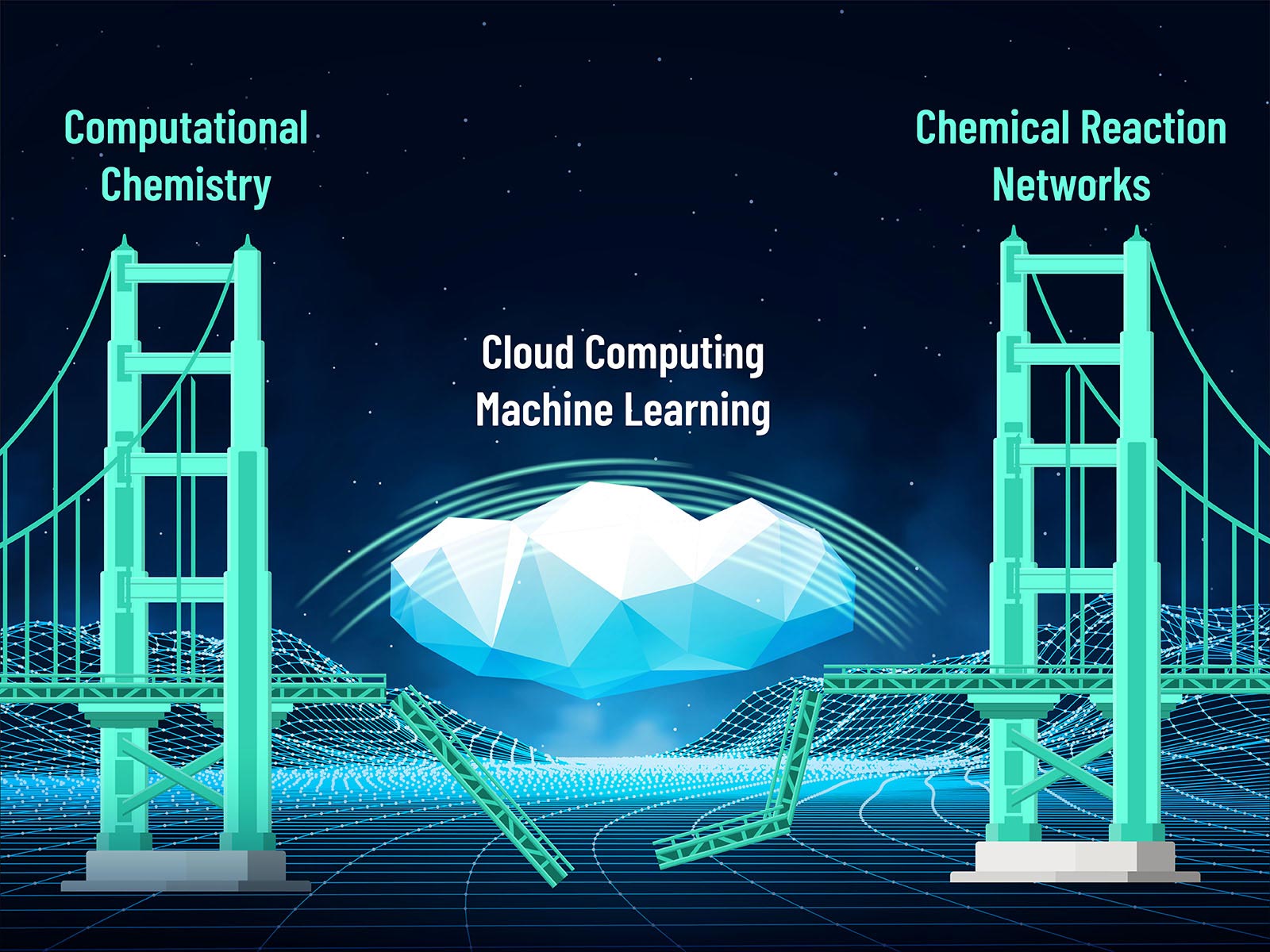
The effort, outlined in a paper published today (October 21) in the peer-reviewed journal The Journal of Chemical Physics, provides a road map to moving scientific computing resources into a sustainable ecosystem that evolves as technology advances. This research shows that cloud computing offers a flexible and efficient complement to the powerful high-performance computing facilities that have long been essential for scientific research.
“This is an entirely new paradigm for scientific computing,” said PNNL computational chemist Karol Kowalski, who led the cross-disciplinary effort. “We have shown that it’s possible to bundle software as a service with cloud computing resources. This initial proof-of-concept shows that cloud computing can provide a menu of options to complement and supplement high-performance computing for solving complex scientific problems.”
Revolutionizing Chemistry With Cloud Technology
The cloud has moved well beyond a place to park an archive of photos and documents. The computing industry has moved to providing compute as a service to financial and pharmaceutical companies, among other industries. In this initiative, the research team focused on porting to the cloud computationally intensive algorithms used to determine the feasibility of proposed new chemicals for industry, advanced polymers, surface coatings and a host of other applications.
The initiative, called Transferring Exascale Computational Chemistry to Cloud Computing Environment and Emerging Hardware Technologies (TEC4), builds on momentum from within the computational chemistry community to port computing resources to users, recognizing the need for continued adaptation of software to meet both scientific needs and hardware evolution.
In their latest perspective article, the team provides information and technical data on the performance of both legacy computing algorithms, such as the popular NWChem software developed originally at PNNL, and the latest software designed to exploit the most advanced graphics processing unit (GPU) architectures. Their results showed that the speed and agility of cloud computing opens doors to completing advanced computational chemistry workflows in days instead of months.
Collaborative Efforts for Rapid Discovery
“Microsoft’s goal is to empower the scientific community to accelerate scientific discovery,” said Nathan Baker, product leader for Microsoft’s Azure Quantum Elements. “This collaboration with PNNL is a great example of how modern AI [artificial intelligence] and HPC tools can advance computational chemistry.”
Over the past decade, computational chemistry has shown its ability to not only solve complex science challenges but also to guide and interpret experiments, and ultimately to enable predictions. The most complex of these challenges are best served by the resources available at DOE’s leadership computing facilities, particularly exascale computing capabilities.
As the tools and techniques have advanced, so has the time and cost of arriving at a solution. The leadership team at TEC4 recognized that cloud computing and industry collaboration afforded an opportunity to access computing resources for a wider variety of problem-solving.
Building a Sustainable Computational Ecosystem
For example, the team used Microsoft Azure and sophisticated workflows to investigate molecular dynamics of complex chemistry problems. These simulations are useful for studying complex reactions that are difficult to observe experimentally. This powerful tool, used to investigate molecular interactions at the atomic level, requires significant computational resources because of its complexity. Here, the research team demonstrated a pathway toward breaking down the persistent environmental pollutant perfluorooctanoic acid. It’s an example of how computational chemistry can be used to design real-world strategies in environmental remediation.
“We envision an ecosystem of use cases from low-tier to high-tier jobs that take advantage of GPU-based computing now being used extensively for artificial intelligence and machine learning applications,” said Kowalski. “We want to allow users to take advantage of different layers of compute, paying only for what’s needed and bundling software with compute access. This is the first step toward that future state.”
The team is actively recruiting new collaborators both on the developer side and the user side to build a user base to test the new cloud ecosystem.
“We are building a family of codes,” Kowalski added. “The goal is to build a community around this effort.”
Along those lines, the team outlines its plan to train a cadre of students who are proficient in using these tools and will help fill the need for scientists capable of moving computational techniques into the future. The collaboration has led to a new course offered at the University of Texas at El Paso, with Central Michigan University and PNNL as collaborators starting in autumn 2024.
Reference: “Electronic structure simulations in the cloud computing environment” by Eric J. Bylaska, Ajay Panyala, Nicholas P. Bauman, Bo Peng, Himadri Pathak, Daniel Mejia-Rodriguez, Niranjan Govind, David B. Williams-Young, Edoardo Aprà, Abhishek Bagusetty, Erdal Mutlu, Koblar A. Jackson, Tunna Baruah, Yoh Yamamoto, Mark R. Pederson, Kushantha P. K. Withanage, Jesús N. Pedroza-Montero, Jenna A. Bilbrey, Sutanay Choudhury, Jesun Firoz, Kristina M. Herman, Sotiris S. Xantheas, Paul Rigor, Fernando D. Vila, John J. Rehr, Mimi Fung, Adam Grofe, Conrad Johnston, Nathan Baker, Ken Kaneko, Hongbin Liu and Karol Kowalski, 21 October 2024, The Journal of Chemical Physics.
DOI: 10.1063/5.0226437
The research was primarily supported by TEC4, which is funded by the DOE Office of Science, Basic Energy Sciences program, Division of Chemical Sciences, Geosciences, and Biosciences. Additional support was provided by the Department of Defense Strategic Environmental Research and Development Program and internal PNNL investments. The development of NWChem, NWChemEx, and Arrows also used resources of the Environmental Molecular Sciences Laboratory, a DOE user facility located at PNNL, and the National Energy Research Scientific Computing Center, a DOE user facility located at Lawrence Berkeley National Laboratory.
Several PNNL contributors are members of the PNNL Computational and Theoretical Chemistry Institute (CTCI), which is accelerating chemistry software and methods development to solve critical challenges in mission areas such as scientific discovery for sustainable energy. By expediting the integration of chemistry software development with computer science efforts, quantum computing, novel datasets and data science tools like artificial intelligence and machine learning, the CTCI is advancing the development of next-generation molecular modeling capabilities.
Never miss a breakthrough: Join the SciTechDaily newsletter.
Follow us on Google and Google News.