
Close Menu
    Facebook X (Twitter) Instagram
    SciTechDaily
    • Biology
    • Chemistry
    • Earth
    • Health
    • Physics
    • Science
    • Space
    • Technology
    Facebook X (Twitter) Pinterest YouTube RSS
    SciTechDaily
    Home»Space»Comet Geyser Biosignature Bonanza: NASA Perseverance Mars Rover’s 21st Rock Core
    Space

    Comet Geyser Biosignature Bonanza: NASA Perseverance Mars Rover’s 21st Rock Core

    By Adrian Broz, Purdue University/University of OregonApril 25, 2024No Comments3 Mins Read
    Facebook Twitter Pinterest Telegram LinkedIn WhatsApp Email Reddit
    Share
    Facebook Twitter LinkedIn Pinterest Telegram Email Reddit
    NASA Perseverance Comet Geyser Core
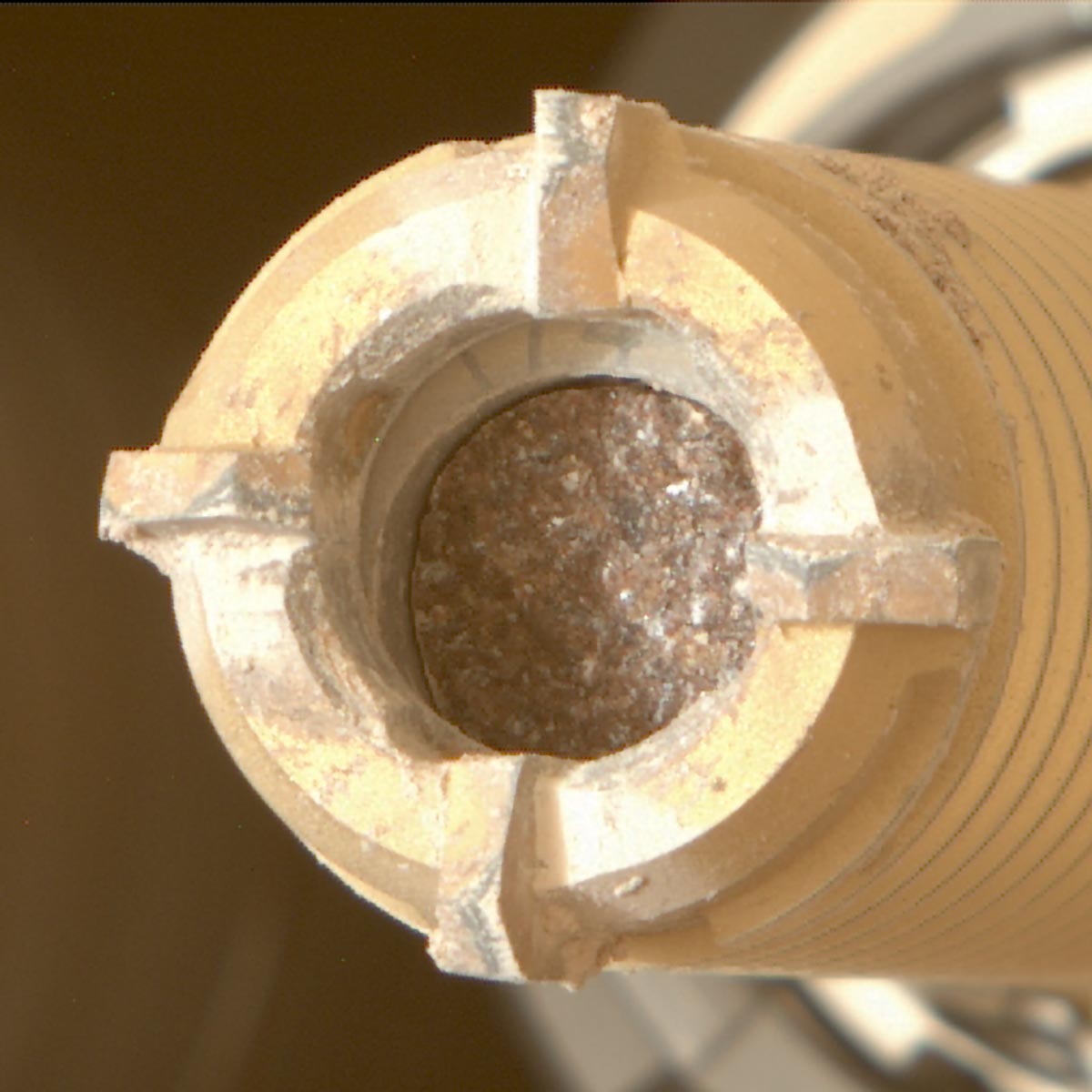
    Mastcam-Z image (Sol 1088, zcam05068) of the Comet Geyser core. The partially illuminated core is visible in this image of Perseverance’s coring bit. The diameter of the core is 1.3 cm. Credit: NASA/JPL-Caltech/ASU

    The recent acquisition of Perseverance’s 21st core sample, Comet Geyser, from Bunsen Peak reveals significant geological interest due to its composition of carbonate and silica—key minerals for preserving biosignatures.

    After investigating the high-standing bedrock at the Bunsen Peak workspace deep within the Margin Unit, the unique nature and composition of this rock was deemed worthy for collection of Perseverance’s 21th rock core sample, Comet Geyser!

    Bunsen Peak is named after a prominent peak in Yellowstone National Park, Wyoming, USA, and the namesake for Comet Geyser is the silica-sintered cone geyser also in Yellowstone National Park.

    Although this rock’s origin remains under investigation and the rover team continues to explore different hypotheses, this core is particularly exciting because it appears to be composed primarily of two minerals: carbonate and silica. Carbonate and silica are both excellent minerals for preserving biosignatures (ancient signs of life). These minerals also have the potential to record the environmental conditions in which they formed, making them important minerals for understanding the habitability of Jezero crater billions of years ago.
    NASA’s Mars 2020 Perseverance Rover Robotic Arm
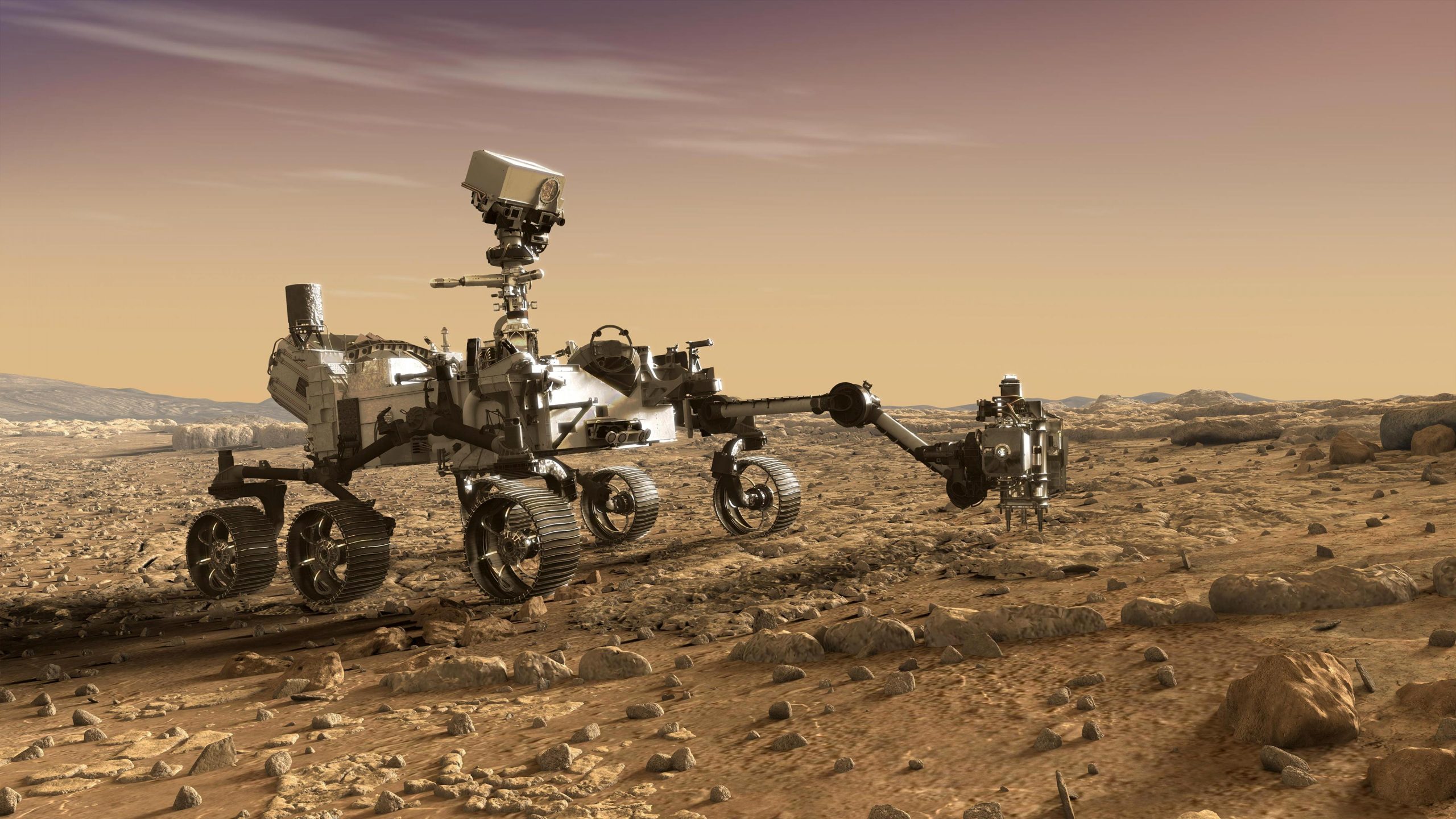
    This illustration depicts NASA’s Perseverance rover studying rocks with its robotic arm. Credit: NASA/JPL-Caltech

    The presence of carbonate within the Comet Geyser sample suggests that water, carbon dioxide, and chemical elements derived from rocks or sediments in and around the ancient Jezero crater once reacted here to form carbonate. Carbonate minerals from Earth’s rock record are often used to reconstruct ancient climate—including conditions like temperature, precipitation, and aridity—and the history of life. Similarly, silica phases form when water interacts with rocks or sediments. The composition and crystallinity of silica can reveal the extent of the interaction with water, such as the intensity or duration of weathering and the pressure/temperature conditions during formation.

    On Earth, biosignatures can be preserved in carbonate and silica for millions of years, or even billions of years in the case of silica. Some of the oldest evidence we have of life on Earth is from rocks that contain fragments of microbial cells that were “permineralized” by silica, a fossilization process that entombs the residues of ancient life and protects them from degradation. Thus, rocks containing these materials are considered among the highest priority samples for investigating whether Jezero crater was once host to microbial life.

    Perseverance’s 21th core sample at Bunsen Peak represents a significant milestone toward a collection of a scientifically diverse set of samples for eventual return to Earth as part of the Mars Sample Return mission.

    With rock core #21 now onboard, Perseverance presses forward toward its next strategic objective of investigating a location called Bright Angel, which is a light-toned outcrop exposed in the ancient channel wall of Neretva Vallis. Challenges may arise on this journey, as the terrain ahead is littered with sharp boulders and sand that are proving difficult for the rover’s auto-navigation system. The mission’s rover planners are working hard to manually navigate this tricky terrain. In the meantime, the science team is eagerly anticipating the secrets the rocks of Bright Angel may hold!

    Never miss a breakthrough: Join the SciTechDaily newsletter.
    Follow us on Google and Google News.

    Astrobiology Mars Mars 2020 Perseverance Rover NASA
    Share. Facebook Twitter Pinterest LinkedIn Email Reddit

    Related Articles

    NASA’s Perseverance Rover Reveals Mars’ Watery Past and Clues to Ancient Life

    Strange Mars Rocks Could Hold Clues to Ancient Life

    Strange Mars Mudstones May Hold the Strongest Clues Yet of Ancient Life

    NASA Perseverance Rover’s Stunning Find May Be Mars’ First Sign of Life

    Inside Krokodillen: NASA Hunts Signs of Life in Mars’ Oldest Rocks

    NASA’s Perseverance Mars Rover To Begin Epic Climb up Steep Martian Crater Rim

    Potential Evidence of Life Discovered on Mars by NASA’s Perseverance Rover

    Perseverance Triumphs: How SHERLOC Was Brought Back to Life on Mars

    Mineral That Could Preserve Signs of Past Life Spotted at Future Mars Landing Spot

    Leave A Reply Cancel Reply

    • Facebook
    • Twitter
    • Pinterest
    • YouTube

    Don't Miss a Discovery

    Subscribe for the Latest in Science & Tech!

    Trending News

    Scientists Discover 132-Million-Year-Old Dinosaur Tracks on South Africa’s Coast

    Scientists Uncover the Secret Ingredient Behind the Spark That May Have Started Life on Earth

    Physicists Observe Matter in Two Places at Once in Mind-Bending Quantum Experiment

    Stanford Scientists Discover Hidden Brain Circuit That Fuels Chronic Pain

    New Study Reveals Why Ozempic Works Better for Some People Than Others

    Climate Change Is Altering a Key Greenhouse Gas in a Way Scientists Didn’t Expect

    New Study Suggests Gravitational Waves May Have Created Dark Matter

    Scientists Discover Why the Brain Gets Stuck in Schizophrenia

    Follow SciTechDaily
    • Facebook
    • Twitter
    • YouTube
    • Pinterest
    • Newsletter
    • RSS
    SciTech News
    • Biology News
    • Chemistry News
    • Earth News
    • Health News
    • Physics News
    • Science News
    • Space News
    • Technology News
    Recent Posts
    • Groundbreaking Enzyme Atlas Rewrites Decades of Biology Research
    • New “Nanozyme Hypothesis” Could Rewrite the Story of Life’s Origins
    • Anatomy Isn’t Finished: The Human Body Still Holds Secrets
    • Researchers Discover Long-Lost Words of Ancient Greek Philosopher After 2,000 Years
    • New Study Warns: Asia’s Lifeline Water Source Is Rapidly Draining
    Copyright © 1998 - 2026 SciTechDaily. All Rights Reserved.
    • Science News
    • About
    • Contact
    • Editorial Board
    • Privacy Policy
    • Terms of Use

    Type above and press Enter to search. Press Esc to cancel.