

Sodium nitrite-related suicides are increasing in the UK, especially among young people, prompting calls for regulation and better safeguards.
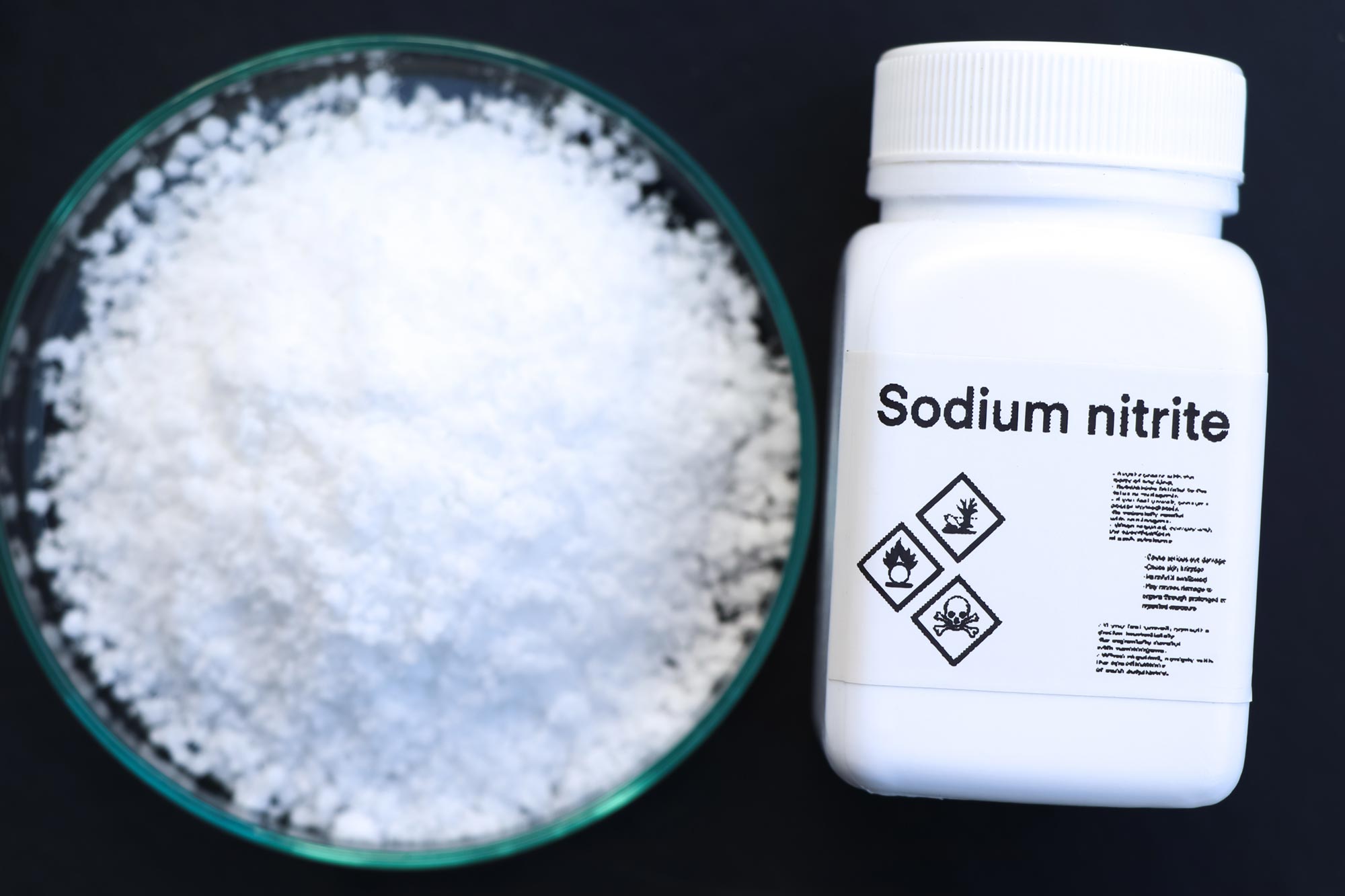
A widely available food preservative is emerging as a disturbing factor in a growing number of suicide deaths in the UK — particularly among young people. Researchers analyzing cases from the past five years have identified a sharp rise in incidents involving sodium nitrite, a common curing agent, raising urgent questions about how easily it can be accessed and misused.
The trend is especially pronounced among boys and young men, who account for the majority of cases. The findings, published in BMJ Public Health, suggest that what was once considered a routine household or industrial chemical is now playing a troubling role in preventable deaths.
Researchers say there is an urgent need for public health officials to reassess the unrestricted availability of this substance to prevent further avoidable deaths.
Although suicide rates in the UK have generally declined since the early 1990s, recent data suggest a reversal of this trend. This increase appears to coincide with growing reports worldwide of suicides involving sodium nitrite poisoning.
Investigating Sodium Nitrite Poisoning Cases
To examine whether sodium nitrite is contributing to suicide deaths in the UK, researchers reviewed case records submitted by coroners, forensic pathologists, and police between March 2019 and August 2024. These cases were analyzed by the main UK laboratory responsible for measuring nitrite and its oxidized form, nitrate, in postmortem samples.
During this period, the lab processed 274 samples linked to 201 suspected cases of intentional or accidental poisoning across the UK, Ireland, and Gibraltar.
Most cases were reported in Greater London, South East England, Ireland, and the Midlands. However, the researchers caution that this distribution may reflect differences in reporting awareness rather than actual regional rates.
Increase in Cases and Data Scope
Case numbers rose sharply after 2019, which was the first year testing for nitrite and nitrate became available.
The final dataset included only cases approved by coroners, representing 82% (164) of all cases received during the study period.
The average age of individuals was 28. Ages ranged from 14 to 74 among males and 17 to 82 among females. Nearly three-quarters (71%) of cases involved younger groups, including Gen Z (33%; born 1981-96) and Millennials (38%; born 1997-2012, though counted only up to 2005 to separate minors, who made up 4% of cases).
Demographics and Gender Patterns
Men accounted for the majority of cases, with 109 compared to 52 women. In nearly every age group, more than half of the cases involved men. The only exception was the oldest group (Silent generation, born 1928-45), which included a single case involving a woman.
In 87% of cases, blood levels of nitrite and nitrate were about 100 times higher than normal physiological levels, strongly suggesting intentional ingestion.
The researchers also note important limitations. Testing for nitrite and nitrate is not routinely required in all suspected suicide cases, making it difficult to determine the true number of deaths linked to this substance.
Limitations and Underreporting Concerns
“It is therefore likely that the cases included here represent a substantial underestimate of the actual incidence. Secondly, the interval between death and sample receipt varied considerably, introducing the possibility that delays may have affected the accuracy of the biochemical measurements,” they say.
Despite these limitations, the increase in cases among younger individuals, who are often highly familiar with digital tools, is troubling.
“Intentional poisoning has contributed to these recent increases, and at least in the USA, this rise has been partly attributed to the use (and availability) of sodium nitrite,” they point out.
Online Access and Emerging Risks
“This trend has emerged alongside freely accessible online information detailing how sodium nitrite can be obtained and used, disseminated both under the guise of providing mental health support and for more explicitly harmful purposes,” they explain.
The findings point to the need for immediate action. “Collectively, these findings establish unequivocally that use of sodium nitrite in the UK as a method of suicide is both substantial and concerning,” they write.
“Our data provide strong support for the suggestion that the improved digital literacy of younger people enables access to illicit online material promoting suicide practices and lends further support for calls for tighter legislation to prevent availability of such information in online forums,” they add.
Prevention Measures and Policy Recommendations
Meanwhile, the researchers suggest practical steps to reduce harm. Providing an antidote (methylthioninium chloride kits) in ambulances could offer “a simple and cost-effective timely method to prevent the devastating consequences of ingestion,” they point out.
Lead researcher Professor Amrita Ahluwalia adds, “This is an extremely difficult subject to talk about, and we appreciate the impact that this might have on all those affected by suicide.
“What our research shows is deeply upsetting. But it makes clear why urgent steps are needed to regulate access to this chemical and to reduce the spread of harmful information about it online.”
Reference: “Retrospective cohort analysis of nitrite and nitrate levels in postmortem biological samples after suspected suicide, 2019-24” by Jonathan W Ho, Rohan Hobbs, Nigel Brown, Paul Dargan, Laura J Hikin, Alexander Lawson, Sean Mcgovern, Robert Moore, Paul Smith, Jessica Winfield, Rebecca Wood and Amrita Ahluwalia, 20 April 2026, BMJ Public Health.
DOI: 10.1136/bmjph-2025-004215
This study was externally funded by the William Harvey Foundation.
Never miss a breakthrough: Join the SciTechDaily newsletter.
Follow us on Google and Google News.
2 Comments
Or maybe they’re just British – which is depressive in itself
People are killing themselves in England with Sodium Nitrate and the government worries about how to restrict access to the chemical instead of the obvious area the focus should be in like “Why are young people killing themselves?”. What else is new. I just wish everyone could see the world through the same lens where actions speak louder then words ever will.. Then it would be obvious but that lens is only available to those who struggle.