
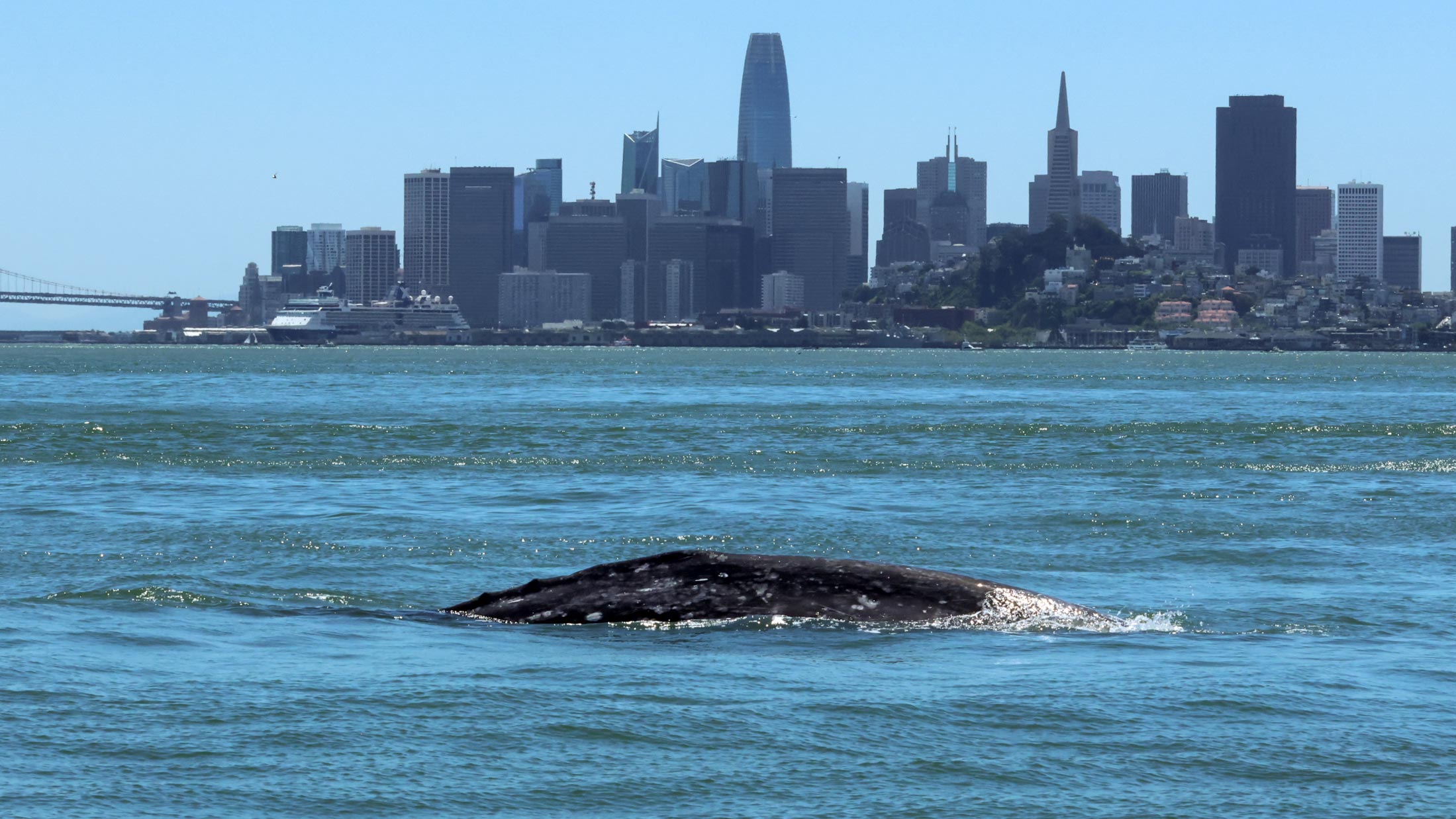
Gray whales are turning to San Francisco Bay for survival, but for many, it’s a fatal detour.
Gray whales are famous for their long migration between Arctic feeding grounds and the warm lagoons of Baja Mexico. But as climate change reshapes ocean ecosystems, these whales are beginning to behave in unexpected ways. Some have recently been spotted feeding in unusual locations, including the busy and hazardous waters of San Francisco Bay. Scientists studying a surge in whale deaths have found that nearly 20% of gray whales seen entering the Bay later died there, often after being struck by boats.
“Gray whales have a low profile to the water when they surface, and this makes them difficult to see in conditions like fog, which are common to San Francisco Bay,” explained Josephine Slaathaug of Sonoma State University, lead author of the article in Frontiers in Marine Science. “Additionally, San Francisco Bay is a highly trafficked waterway, and the Golden Gate Strait serves as a bottleneck through which all traffic and whales must enter and exit.”
Climate Change and Changing Migration Patterns
It is unusual for gray whales to feed during their long journeys to and from tropical breeding areas. Instead, they rely heavily on rich food supplies in the Arctic. However, warming conditions are disrupting those feeding grounds, leaving whales more vulnerable. According to the National Oceanic and Atmospheric Administration (NOAA), gray whale numbers have dropped by more than 50% since 2016, and sightings of calves have become rare.
San Francisco Bay was not historically part of the gray whale migration route. That began to change in 2018, when whales started appearing there more frequently, along with a troubling number of deaths. Researchers set out to understand what was happening to these so-called ‘Bay Grays’ and whether they were returning year after year.
Tracking Gray Whales in San Francisco Bay
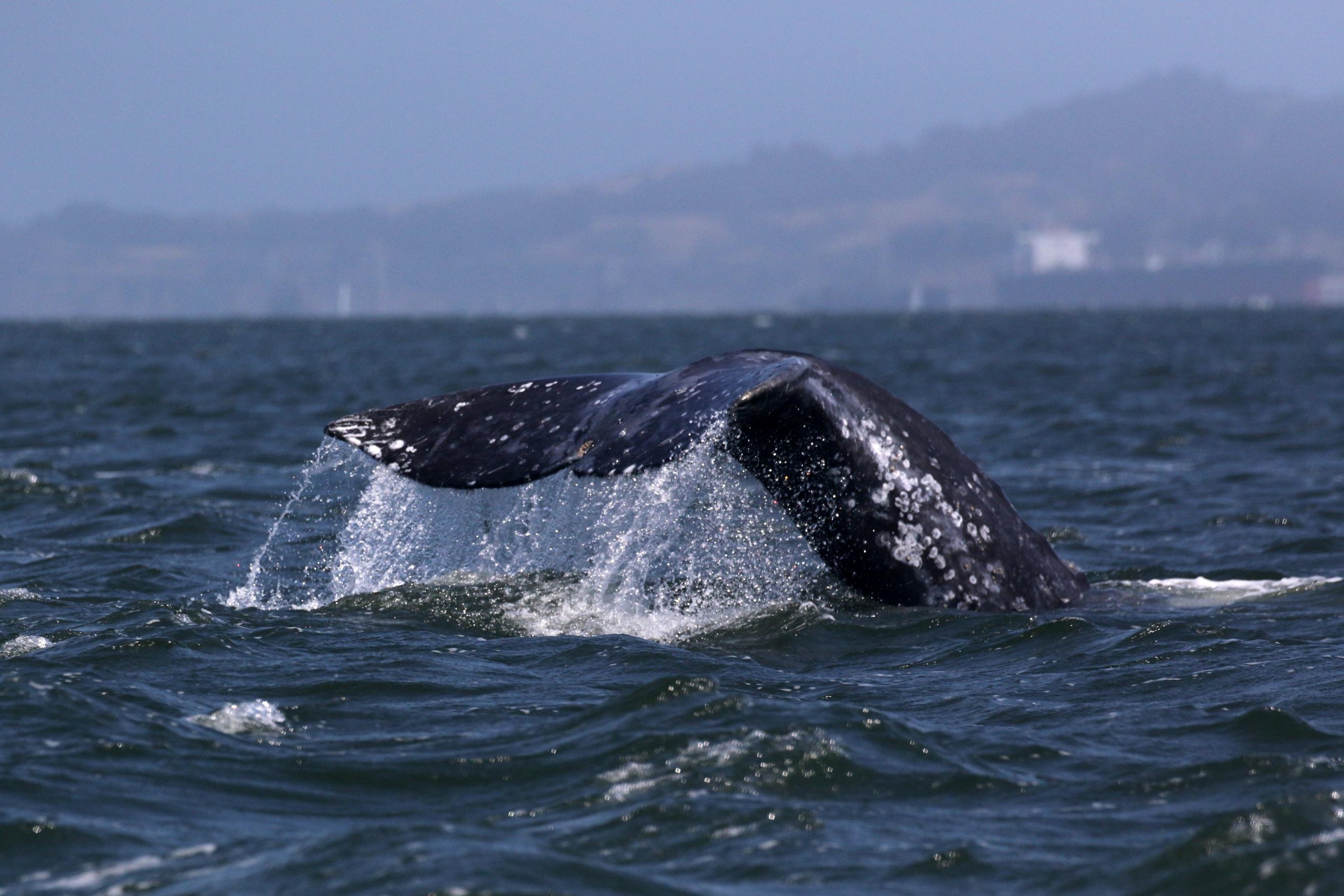
To investigate, scientists created a catalog of individual whales using opportunistic sightings and photos from the public collected between 2018-2023, along with more structured surveys conducted from 2023-2025. They compared these records with necropsy data from stranded whales. Identification relied on distinctive markings on each whale’s skin, though these markings fade quickly after death, meaning some individuals may not have been matched.
In total, 114 individual whales were recorded in the Bay between 2018 and 2025. Only four were seen in more than one year, suggesting that most do not return. Researchers think the Bay may serve as an emergency feeding stop for whales in poor condition, since very thin whales have been observed feeding in other unusual habitats as well.
High Mortality Linked to Ship Strikes and Starvation
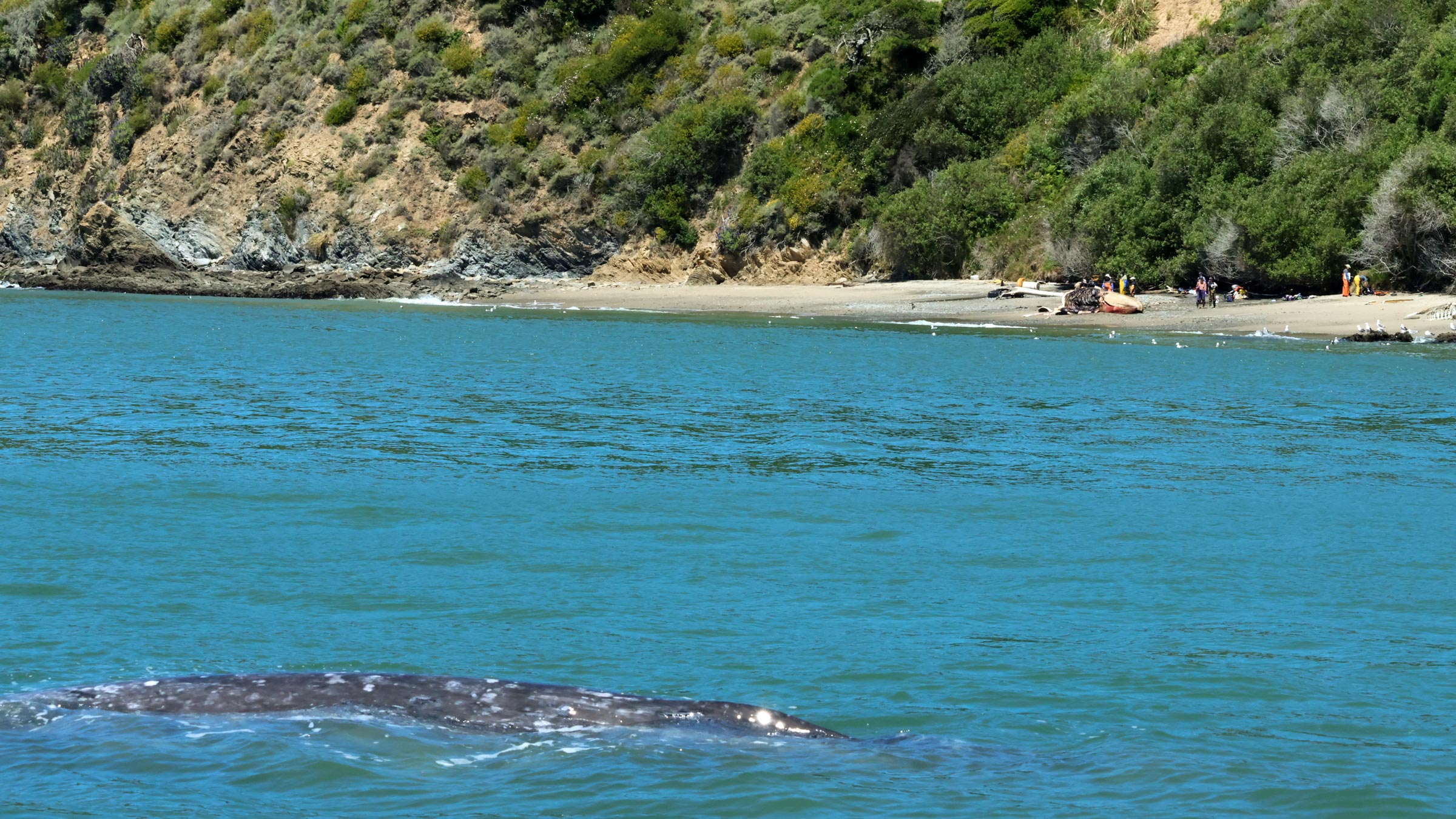
Despite possibly using the Bay as a temporary refuge, many whales do not survive. From 2018 to 2025, 70 gray whales were found dead in the surrounding region. Thirty had been struck by vessels, while many others with a known cause of death showed signs of malnutrition. Of 45 dead whales that could potentially be identified, 21 were matched to individuals in the catalog.
“At least 18% of the individuals identified in San Francisco Bay later died in the area,” said Bekah Lane of the Center for Coastal Studies, co-author. “Our broader analysis of local strandings both inside and outside San Francisco Bay found that over 40% of these whales died of trauma from vessels.”
Growing Risks and Need for Protection
Researchers say more work is needed to understand how whales are using the Bay and how to reduce the risks they face. In 2025 alone, 36 whales entered the Bay, sometimes in groups of more than 10. Further surveys and necropsies could help determine whether the low number of returning whales is due to high mortality, and whether deaths are mainly caused by starvation, vessel strikes, or a combination of both. It is possible that weakened whales are less able to avoid ships.
Efforts to reduce these risks could include education programs for commercial vessel operators or changes to ferry routes.
“In San Francisco Bay, the biggest threat to these whales is vessel traffic,” said Lane. “Continued monitoring will help illuminate their distribution patterns and behaviors while within the Bay, which can impact risk. Route changes and speed restrictions have been found to significantly reduce vessel strike mortality to large whales, and an assessment of risk can help identify the most effective strategies to protect these animals.”
A Population Under Pressure
Scientists caution that there are still important gaps in understanding how individual whales move and behave on a daily basis. Even so, the findings provide valuable insight into how gray whales are responding to rapidly changing environmental conditions.
“This study is our best analysis of the data we collected, but it’s important to consider that we do not have the full picture of each whale’s movements on a daily timescale,” said Slaathaug. “These results are an important piece of the larger puzzle of what is going on in the overall population as they attempt to adapt to climate change in real time.”
Reference: “Gray whales (Eschrichtius robustus) in San Francisco Bay experience high mortality and have limited affiliation to known foraging groups” by Josephine M. Slaathaug, Rebekah S. Lane, William Keener, Alie Pérez, Moe Flannery, Marc A. Webber, Aalea Grimes, Adelle M. Wilkin, Julia E. O’Hern, Pádraig J. Duignan, John Calambokidis and Daniel E. Crocker, 19 February 2026, Frontiers in Marine Science.
DOI: 10.3389/fmars.2026.1775666
Never miss a breakthrough: Join the SciTechDaily newsletter.
Follow us on Google and Google News.