
Close Menu
    Facebook X (Twitter) Instagram
    SciTechDaily
    • Biology
    • Chemistry
    • Earth
    • Health
    • Physics
    • Science
    • Space
    • Technology
    Facebook X (Twitter) Pinterest YouTube RSS
    SciTechDaily
    Home»Earth»Toxic Algal Blooms Could be Boosted by Climate Change
    Earth

    Toxic Algal Blooms Could be Boosted by Climate Change

    By SciTechDailyDecember 24, 2012No Comments3 Mins Read
    Facebook Twitter Pinterest Telegram LinkedIn WhatsApp Email Reddit
    Share
    Facebook Twitter LinkedIn Pinterest Telegram Email Reddit
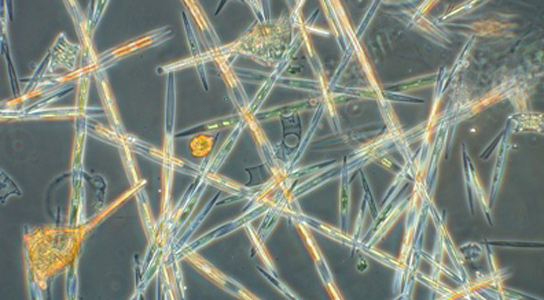
    Pseudo-nitzschia is among the species that produce toxins and cause harmful algal blooms. Credit: Courtesy of Raphael Kudela, UCSC
    Pseudo-nitzschia is among the species that produce toxins and cause harmful algal blooms. Credit: Courtesy of Raphael Kudela, UCSC

    Physical and chemical conditions in the oceans cause populations of algae to wax and wane in cycles. Harmful algae consist of only a few species of diatoms, dinoflagellates, and cyanobacteria. Researchers are wondering what the role of climate change is in the algal blooms that have been seen in the last years.

    Some harmful algae create domoic acid, which causes vomiting, cramping, headaches, and even seizures, and memory loss. Others produce saxitoxin, which causes numbness, staggering, and respiratory failure.

    Toxic blooms occur naturally when deep, nutrient-rich water swells up in the coasts. They can be amplified by land runoff of fertilizers and other chemicals that provide nutrients, like phosphorous. Algal blooms have been increasing in frequency in coastal waters almost everywhere.

    According to the NOAA, in the USA alone, algal blooms have caused $82 million in health costs and economic damages to fisheries as well as tourism. As atmospheric carbon dioxide increases, the greenhouse gas is being absorbed into ocean water, making it more acidic. Marine organisms, like clams and snails, can’t build their calcium carbonate shells or find that they are harder to maintain. This acidification can cause toxic algae to become more nastier and more abundant. Conversely, the organisms might simply adapt without becoming more poisonous; their numbers could even be reduced.

    Scientists don’t fully understand the relationship between growth rates, toxin production, and ocean conditions for these algae. Some species will ramp up toxin production as a defense against predators, while others respond to low supplies of crucial nutrients. Toxins could also be a way for these species to store extra nutrients.

    Researchers took the diatom Pseudo-nitzschia fraudulenta from southern California waters. This species produces domoic acid. The scientists varied the amount of dissolved CO2 and the availability of silicate the diatoms use to make their shells. They presented their findings at the Third International Symposium on the Ocean in a High CO2 World. They reported that the more CO2 and the less silicate there was, the higher the diatom’s toxin production. It more than doubled at the level of dissolved CO2 scientists expect the oceans to reach by the year 2100.

    Water temperature could also be an underlying factor that influences algal blooms. Alexandrium ostenfeldii grew at different rates under increased acidity and higher temperatures. The composition of the toxic compounds changed consistently as temperature and acidity increased.

    Never miss a breakthrough: Join the SciTechDaily newsletter.
    Follow us on Google and Google News.

    Algae Climate Change Cyanobacteria Marine Biology Microbial Ecology
    Share. Facebook Twitter Pinterest LinkedIn Email Reddit

    Related Articles

    The Mysterious Algae That Melts Ice: Microscopic Life Fueling Glacier Loss

    Scientists Just Uncovered a Hidden Force Behind Faster Ice Melt

    Global Cooling Breakthrough: Scientists Discover Ocean Algae’s Crucial Climate Impact

    Scientists Discover a Teeming World of Life at the Ice Cap

    Climate Change Likely To Abruptly Impact Algae in the Global Ocean

    Harmful Algal Blooms in Arabian Sea Fueled by Shrinking Snowcaps

    Swirling Green Algae Blooms in Baltic Sea Viewed From Space [Video]

    South Korean Rivers Hit By Algal Blooms, Dam Project Blamed

    Global Warming Impacts Lake Water

    Leave A Reply Cancel Reply

    • Facebook
    • Twitter
    • Pinterest
    • YouTube

    Don't Miss a Discovery

    Subscribe for the Latest in Science & Tech!

    Trending News

    AI Could Detect Early Signs of Alzheimer’s in Under a Minute – Far Before Traditional Tests

    What if Dark Matter Has Two Forms? Bold New Hypothesis Could Explain a Cosmic Mystery

    This Metal Melts in Your Hand – and Scientists Just Discovered Something Strange

    Beef vs. Chicken: Surprising Results From New Prediabetes Study

    Alzheimer’s Breakthrough: Scientists Discover Key Protein May Prevent Toxic Protein Clumps in the Brain

    Quantum Reality Gets Stranger: Physicists Put a Lump of Metal in Two Places at Once

    Scientists May Have Found the Key to Jupiter and Saturn’s Moon Mystery

    Scientists Uncover Brain Changes That Link Pain to Depression

    Follow SciTechDaily
    • Facebook
    • Twitter
    • YouTube
    • Pinterest
    • Newsletter
    • RSS
    SciTech News
    • Biology News
    • Chemistry News
    • Earth News
    • Health News
    • Physics News
    • Science News
    • Space News
    • Technology News
    Recent Posts
    • Asthma and Depression Don’t Mix the Way Scientists Expected
    • Why Promising Cancer Drugs Failed: Scientists Uncover the Missing Piece
    • Popular Sweetener Linked to DNA Damage – “It’s Something You Should Not Be Eating”
    • Ancient “Rock” Microbes May Reveal How Complex Life Began
    • Hidden “Trade Winds” Inside Cells Could Explain Cancer Spread
    Copyright © 1998 - 2026 SciTechDaily. All Rights Reserved.
    • Science News
    • About
    • Contact
    • Editorial Board
    • Privacy Policy
    • Terms of Use

    Type above and press Enter to search. Press Esc to cancel.