

Close Menu
    Facebook X (Twitter) Instagram
    SciTechDaily
    • Biology
    • Chemistry
    • Earth
    • Health
    • Physics
    • Science
    • Space
    • Technology
    Facebook X (Twitter) Pinterest YouTube RSS
    SciTechDaily
    Home»Health»Fluid Dynamics Expert Explains How to Reduce the Risk of COVID-19 Airborne Transmission Inside a Car
    Health

    Fluid Dynamics Expert Explains How to Reduce the Risk of COVID-19 Airborne Transmission Inside a Car

    By Varghese Mathai, University of Massachusetts AmherstFebruary 1, 20211 Comment4 Mins Read
    Facebook Twitter Pinterest Telegram LinkedIn WhatsApp Email Reddit
    Share
    Facebook Twitter LinkedIn Pinterest Telegram Email Reddit
    COVID Mask Car
    Opening all windows, or one front and one rear window, increases the amount of airflow in the car, reducing the risk of airborne transmission.

    Editor’s note: Varghese Mathai is a physicist at the University of Massachusetts Amherst who studies the flow of fluids and gases. He conducted a study using computational fluid dynamics simulations to understand how air flows inside a car and its implications for COVID-19 airborne transmission. In this interview, he explains the optimal ways to ensure maximum airflow inside a car.


    Varghese Mathai of the University of Massachusetts Amherst explains and shows how air flows inside cars and how to lower the risk of COVID-19 airborne transmission.

    What can be done to reduce the risk of airborne transmission inside a car?

    It’s important to have good ventilation. This means you get as much outside air as possible to mix with the air inside the cabin and then flush it out.

    You can do this in a couple of ways. One is by turning on the heating system, which takes in fresh air from outside, and opening windows through which it can be flushed out. Another way is to just have the windows open. The benefit of having windows open is that if you are riding at 20 miles an hour or faster, a lot of air is flushed out just by the speed of the car.

    Having windows open allows more air to be flushed out than by just having the heating or air conditioning turned on.

    Which windows should be kept open and closed to ensure optimal airflow?

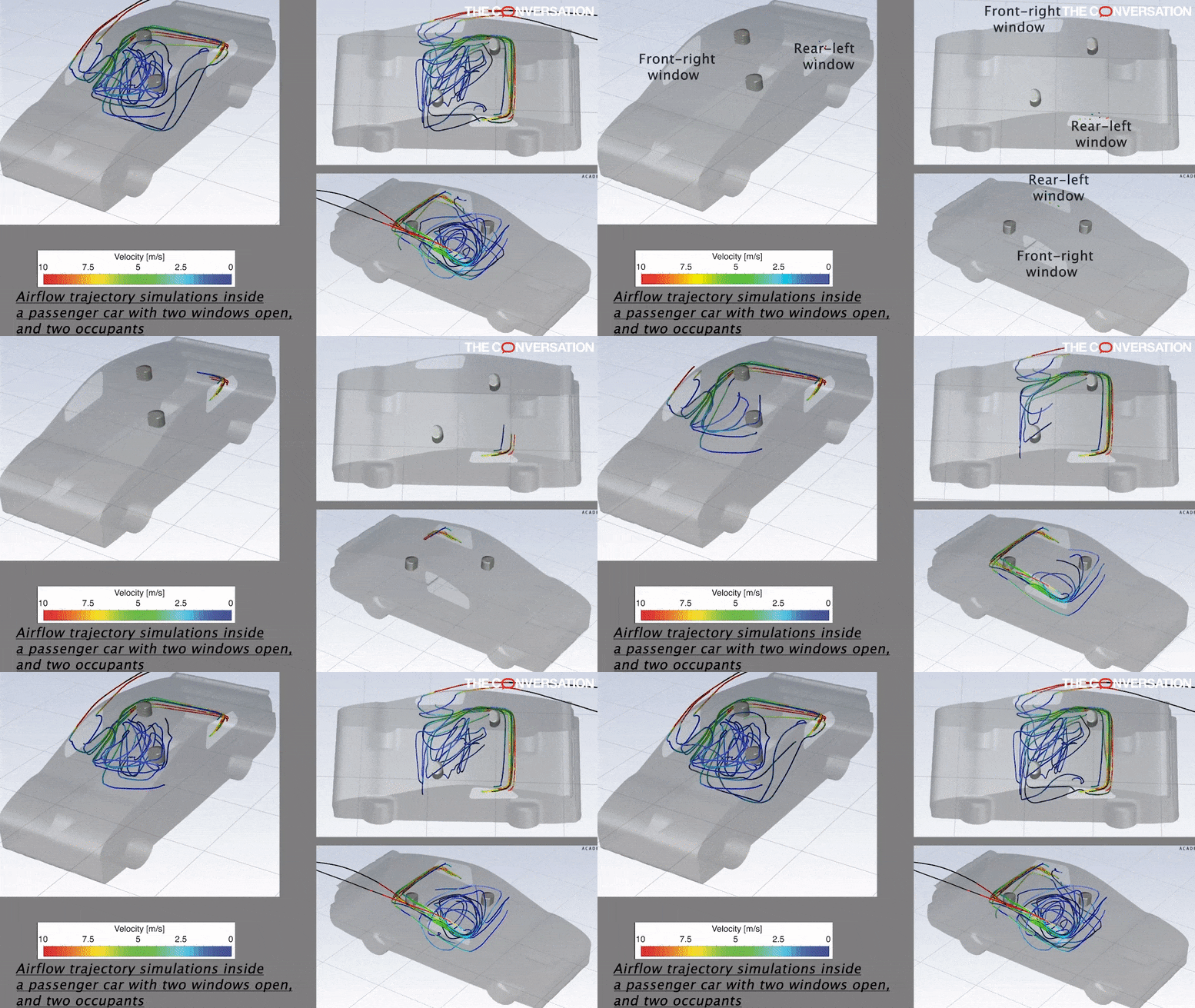
    We think the best configuration is to have all windows open, and if possible fully open. If this is not practical, then it would be good to have two windows open. Preferably one in the rear and one in the front.
    COVID Fluid Dynamics Simulation of Airflow in Cars
    Computational fluid dynamics simulation of airflow in cars with two windows, one rear, one front, open. Credit: Varghese Mathai CC-BY-ND

    What we found out from computer simulations is that the air enters through the rear window, turns around behind the rear passenger and exits through the front window. This way, many of these aerosol particles inside the cabin can be flushed out.

    What about barriers and screens between the passenger and the driver?

    Many taxis and ride-share services like Uber and Lyft have been using a barrier or a screen between the front and rear areas of the cabin. These help in reducing transmission through larger droplets. These are the kinds of droplets that are released through coughing, sneezing or talking loudly. Decontaminating surfaces helps against the fomite transmission. But airborne transmission would not be reduced much by these barriers because there are always gaps and holes in barriers through which air can pass through.

    How did you conduct this study?

    For this study we used computer simulations, specifically computational fluid dynamics simulations, which are widely used for studying flows around cars and airplanes. We used it because of its quick turnaround time, so that we could compare different open and closed window configurations and qualitatively predict which might be better in terms of removing these airborne particles.

    After this publication was out we did go in and do a number of field tests to get some kind of validation of the airflows that were simulated. We released smoke at different locations inside the car and looked at the pathways of the smoke as it was released inside the car. It was more or less the same as what we found from the computer simulations.

    Written by Varghese Mathai an Assistant Professor of Physics at University of Massachusetts Amherst.

    Adapted from an article originally published on The Conversation.The Conversation

    Never miss a breakthrough: Join the SciTechDaily newsletter.
    Follow us on Google and Google News.

    COVID-19 Fluid Dynamics Fluid Mechanics Infectious Diseases Popular Public Health The Conversation University of Massachusetts Amherst
    Share. Facebook Twitter Pinterest LinkedIn Email Reddit

    Related Articles

    Fluid Dynamics Shows Why You Should Wear Masks Outdoors To Prevent Coronavirus Exposure

    Droplets Loaded With Coronaviruses Last Far Longer Than Previously Thought

    Disposable Helmet Designed to Retain Cough Droplets, Minimize COVID-19 Transmission

    Some Masks Can Be Worse Than Not Wearing One at All: Physics of How Masks Affect Airflow and COVID-19 Protection

    Social Distancing Isn’t Enough to Prevent Infection – How to Detect COVID-19 Super-Spreaders

    Aerodynamics of Infectious Disease: Airflow Studies Reveal Strategies to Reduce Indoor Transmission of COVID-19

    COVID-19 Researchers Identify Features of a Virus Super-Spreader

    Scientists Compare How COVID-19 Cough Clouds Travel With and Without Face Masks

    Visualization Shows How Face Shields (and Some N95 Masks) Fail to Stop the Spread of COVID-19

    1 Comment

    1. Frank Wood on February 1, 2021 7:23 am

      REALLY!!! We really needed a scientist to do a study, too tell us simple minded Neanderthals which windows to open in a car to get best airflow??? All you had to do was ask any smoker ….. or really any 4 year old…. or just about anybody who’s had a friend fart in the car. Dumbest report….. on the dumbest story…. on the dumbest study.
      IDIOT’S!

      Reply
    Leave A Reply Cancel Reply

    • Facebook
    • Twitter
    • Pinterest
    • YouTube

    Don't Miss a Discovery

    Subscribe for the Latest in Science & Tech!

    Trending News

    The Universe Is Expanding Too Fast and Scientists Can’t Explain Why

    “Like Liquid Metal”: Scientists Create Strange Shape-Shifting Material

    Early Warning Signals of Esophageal Cancer May Be Hiding in Plain Sight

    Common Blood Pressure Drug Shows Surprising Power Against Deadly Antibiotic-Resistant Superbug

    Scientists Uncover Dangerous Connection Between Serotonin and Heart Valve Disease

    Scientists Discover a “Protector” Protein That Could Help Reverse Hair Loss

    Bone-Strengthening Discovery Could Reverse Osteoporosis

    Scientists Uncover Hidden Trigger Behind Stem Cell Aging

    Follow SciTechDaily
    • Facebook
    • Twitter
    • YouTube
    • Pinterest
    • Newsletter
    • RSS
    SciTech News
    • Biology News
    • Chemistry News
    • Earth News
    • Health News
    • Physics News
    • Science News
    • Space News
    • Technology News
    Recent Posts
    • 5 Common Myths About Learning a New Language, Debunked
    • The Neanderthal “Love Story” Isn’t What It Seems
    • Scientists Unlock Hidden Secrets of 2,300-Year-Old Mummies Using Cutting-Edge CT Scanner
    • Men vs. Women: Scientists Uncover Dramatic Differences in How the Immune System Ages
    • Eating Chili Peppers Linked to Longer Life
    Copyright © 1998 - 2026 SciTechDaily. All Rights Reserved.
    • Science News
    • About
    • Contact
    • Editorial Board
    • Privacy Policy
    • Terms of Use

    Type above and press Enter to search. Press Esc to cancel.