
Close Menu
    Facebook X (Twitter) Instagram
    SciTechDaily
    • Biology
    • Chemistry
    • Earth
    • Health
    • Physics
    • Science
    • Space
    • Technology
    Facebook X (Twitter) Pinterest YouTube RSS
    SciTechDaily
    Home»Earth»Killer Whale Populations Are Invading the Arctic – Unlocking Secrets From Their Blubber
    Earth

    Killer Whale Populations Are Invading the Arctic – Unlocking Secrets From Their Blubber

    By McGill UniversityMay 28, 2022No Comments2 Mins Read
    Facebook Twitter Pinterest Telegram LinkedIn WhatsApp Email Reddit
    Share
    Facebook Twitter LinkedIn Pinterest Telegram Email Reddit
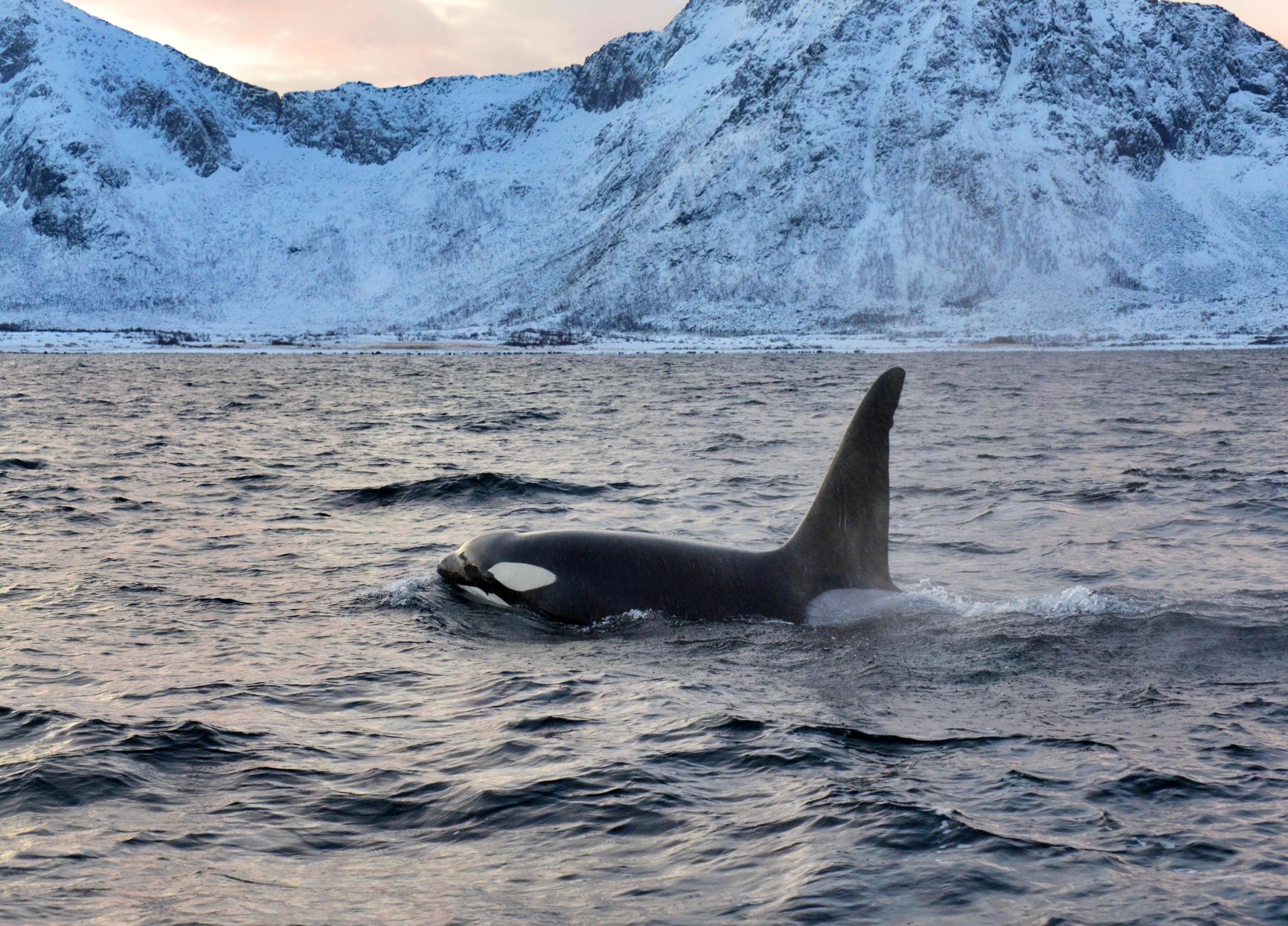
    Killer Whale Arctic
    Researchers can now accurately predict the diets of remote killer whale populations using their blubber fatty acids. Credit: Dr. Rune Dietz from Aarhus University

    Unlocking the Secrets of Killer Whale Diets and Their Role in Climate Change

    Killer whale populations are invading the Arctic, creating major disruptions to an ecosystem already severely impacted by climate change. A team of researchers from McGill University has discovered new clues to understand how killer whales impact their environment – by reconstructing their diets using the lipids in their blubber.

    “Using this analysis, we will better understand how their diets change and how they may potentially disrupt Arctic food webs,” said Anaïs Remili, a PhD candidate at McGill’s Department of Natural Resource Sciences and lead author on the study.

    To reconstruct the whales’ diets, the researchers used a model called Quantitative Fatty Acid Signature Analysis (QFASA) using samples from captive killer whales. Then they measured the fatty acid composition of the wild Greenland killer whales and potential prey species the whales may feed on. Finally, they applied the modeling approach to estimate that the whales mainly feed on harp and hooded seals, species that researchers found in some of the whales’ stomachs.

    This new tool has the potential to increase understanding of the diets of killer whales around the world, and how killer whales may impact Arctic food webs in the future.

    Reference: “Validation of quantitative fatty acid signature analysis for estimating the diet composition of free-ranging killer whales” by Anaïs Remili, Rune Dietz, Christian Sonne, Sara J. Iverson, Denis Roy, Aqqalu Rosing-Asvid, Haley Land-Miller, Adam F. Pedersen and Melissa A. McKinney, 13 May 2022, Scientific Reports.
    DOI: 10.1038/s41598-022-11660-4

    Never miss a breakthrough: Join the SciTechDaily newsletter.
    Follow us on Google and Google News.

    Climate Change Killer Whales Marine Biology McGill University Whales
    Share. Facebook Twitter Pinterest LinkedIn Email Reddit

    Related Articles

    Nearly 1 in 5 Gray Whales That Enter San Francisco Bay Die There

    Arctic Changes Triggered Significant Gray Whale Die-Offs Since the 1980s

    Harmful Algal Blooms in Arabian Sea Fueled by Shrinking Snowcaps

    Decades of Knowledge of Marine Protected Areas Ruined by Climate Change

    Increasingly Mobile Sea Ice Risks Polluting Arctic Neighbors With Oil and Microplastics

    Proof in an Ancient Shell: Earth Turned Faster 70 Million Years Ago

    100 Years of Microscopic Shells Reveal a “Double Whammy” for Waters off California

    Unraveling the Mystery of How Early Animals Survived Most Severe Ice Age

    Toxic Algal Blooms Could be Boosted by Climate Change

    Leave A Reply Cancel Reply

    • Facebook
    • Twitter
    • Pinterest
    • YouTube

    Don't Miss a Discovery

    Subscribe for the Latest in Science & Tech!

    Trending News

    Your Blood Pressure Reading Could Be Wrong Because of One Simple Mistake

    Astronomers Stunned by Ancient Galaxy With No Spin

    Physicists May Be on the Verge of Discovering “New Physics” at CERN

    Scientists Solve 320-Million-Year Mystery of Reptile Skin Armor

    Scientists Say This Daily Walking Habit May Be the Secret to Keeping Weight Off After Dieting

    New Therapy Rewires the Brain To Restore Joy in Depression Patients

    Giant Squid Detected off Western Australia in Stunning Deep-Sea Discovery

    Popular Sugar-Free Sweetener Linked to Liver Disease, Study Warns

    Follow SciTechDaily
    • Facebook
    • Twitter
    • YouTube
    • Pinterest
    • Newsletter
    • RSS
    SciTech News
    • Biology News
    • Chemistry News
    • Earth News
    • Health News
    • Physics News
    • Science News
    • Space News
    • Technology News
    Recent Posts
    • Hidden Warm Water Beneath Antarctica Could Rapidly Raise Global Sea Levels
    • Scientists Revive Ancient Chemistry Trick To Engineer Next-Generation Glass
    • Scientists Use AI To Supercharge Ultrafast Laser Simulations by More Than 250x
    • Scientists Just Found a Surprising Way To Destroy “Forever Chemicals”
    • Popular Supplement Ingredient Linked to Shorter Lifespan in Men
    Copyright © 1998 - 2026 SciTechDaily. All Rights Reserved.
    • Science News
    • About
    • Contact
    • Editorial Board
    • Privacy Policy
    • Terms of Use

    Type above and press Enter to search. Press Esc to cancel.