
A major global review of recreational hunting reveals both benefits and harms to biodiversity and communities.
Recreational hunting — especially hunting of charismatic species for their trophies — raises ethical and moral concerns. Yet recreational hunting is frequently suggested as a way to conserve nature and support local people’s livelihoods.
In a new article published in the journal One Earth, scientists from the University of Helsinki in Finland and Flinders University in Australia have reviewed more than 1,000 studies on recreational hunting — the first such attempt to summarize the scientific literature examining the biodiversity and social effects of recreational hunting globally.
Co-lead author University of Helsinki Associate Professor Enrico Di Minin says while it might seem counterintuitive, there is evidence to suggest some recreational hunting can deliver environmental and social benefits.
University of Helsinki colleague and co-lead author Dr. Hayley Clements says more analysis is needed to understand how and why recreational hunting can work for good, and those areas where it can be detrimental.
Exploring the Conservation Paradox
Flinders University Professor Corey Bradshaw says it’s a paradox that goes to the heart of the pros and cons of recreational hunting.
“We determined the geographic spread and diversity of species hunted around the globe, and investigated and summarized the main topics surrounding recreational hunting to consider both the positive and negative implications of recreational hunting for nature conservation and the livelihoods and well-being of people,” says Professor Bradshaw, who leads Flinders’ Global Ecology Lab.
“On the one hand, recreational hunting can reduce the number of individual animals in a population, whereas on the other, diverting land from agricultural or other types of development to priority hunting areas can in fact benefit entire ecosystems,” he says.
Hunting research has focused mainly on the behavior and population dynamics of large mammals in North America, Europe, and Africa.
Dr. Clements says evidence is still lacking, however, to answer the pressing questions of why hunting contributes to sustainable conservation of biodiversity in some places and not others.
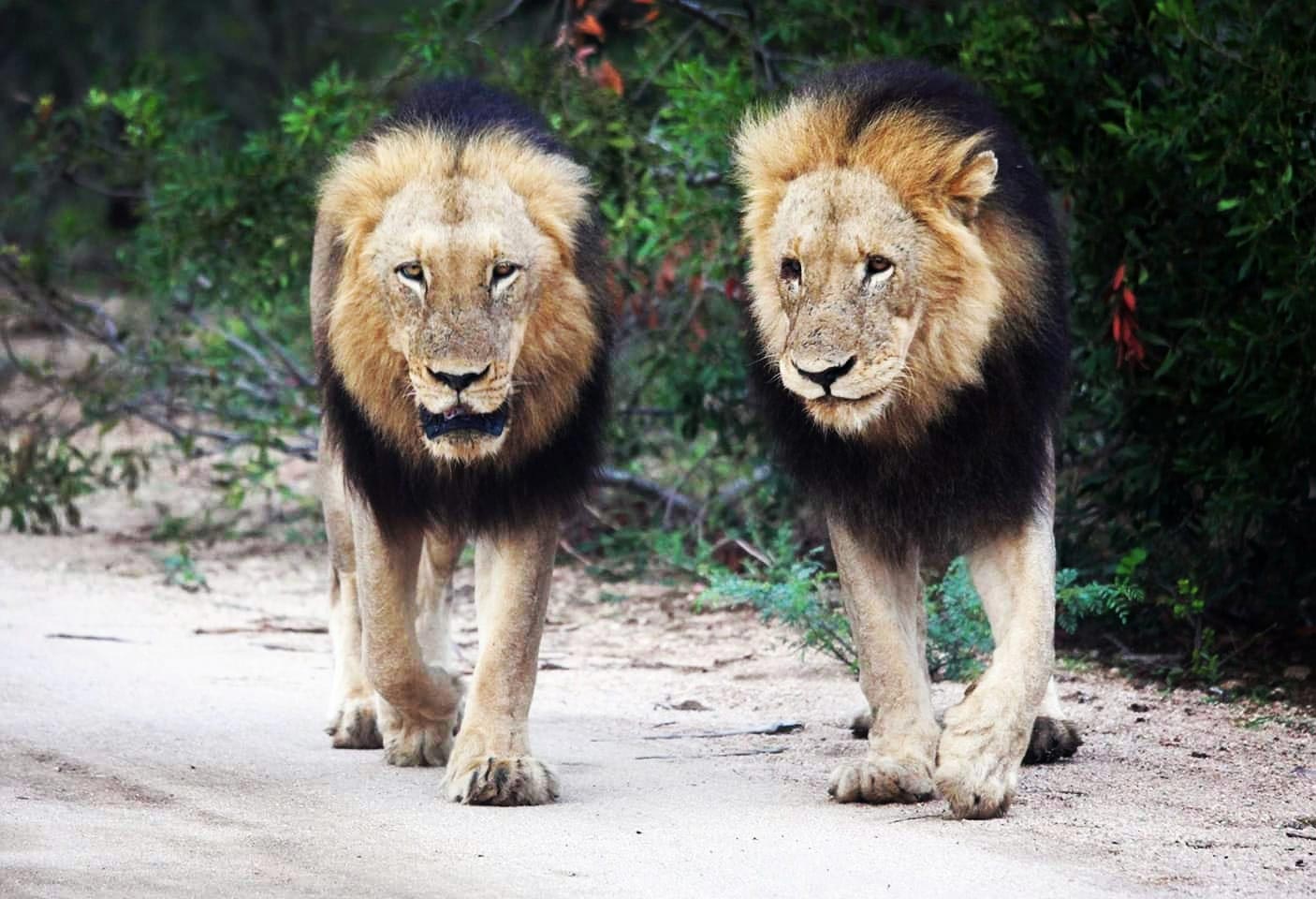
“Two-thirds of the hunting research is focussed on mammals. Red deer, white-tailed deer, wild boar, moose, and lion are the most well-studied. Of these species, only the lion is of conservation concern, with many recommendations on how hunting can be made sustainable through quotas or seasonal limits,” says Dr. Clements.
Gaps in Understanding Local Impacts
“Far less research has tried to examine the broader impacts of hunting on ecosystem integrity and function, and how it affects the livelihoods of local people, or to document local people’s perceptions about hunting,” she continues.
For example, approximately 1,394,000 km² (548,000 mi²) of land is dedicated for trophy hunting in sub-Saharan Africa, yet there is little research on how effective these areas are in conserving ecosystems, and how local communities benefit from hunting.
Associate Professor Di Minin, who leads the Helsinki Lab of Interdisciplinary Conservation Science contends future research should focus on the contribution of recreational hunting towards meeting both biodiversity and social objectives.
“We have outlined a research agenda to assess the role of recreational hunting in diverse social-ecological systems, and to consider local people’s values and needs.
The need for such evidence is urgent given declining numbers of recreational hunters in some regions and increasing opposition to trophy hunting in others,” says Associate Professor Di Minin.
“We should also expand research beyond charismatic and common species to assess the impact of recreational hunting on threatened and less charismatic species,” he concludes.
Reference: “Consequences of recreational hunting for biodiversity conservation and livelihoods” by Enrico Di Minin, Hayley S. Clements, Ricardo A. Correia, Gonzalo Cortés-Capano, Christoph Fink, Anna Haukka and Anna Hausmann, 19 February 2021, One Earth.
DOI: 10.1016/j.oneear.2021.01.014
Never miss a breakthrough: Join the SciTechDaily newsletter.
Follow us on Google and Google News.
2 Comments
Where landowners and traditional occupiers are given ownership of wildlife and hunting is both legal and monitored as in Southern Africa, wildlife, and more importantly, the natural habitat (and thus all the non-hunted animals and plants), flourishes with the exception of large predators. Trophy hunting is merely another form of hunting; invariably the quarry is eaten or used afterwards, however, high value trophy hunting by visitors is especially beneficial to remote communities, since trophy hunters pay and leave the meat behind.
Since more than a million animals are shot for meat/trophies in South Africa annually, you cannot separate charismatic from mundane animals – charisma is a social meme driven by non-hunters, as is opposition to trophy hunting, and these things are not scientifically relevant. However, the biggest danger that African wildlife faces is the fact that trophy hunting is becoming less socially acceptable for emotional reasons and there are not enough eco-tourists to replace the income over the 1.3M km2 mentioned in the article.
Much of the existing research is polluted by animal rights theory and Marxist economic theory, both of which are functionally fairy tales, but skew the results.
Research should make allowance for the differences between, say, the USA, wildlife fortress Africa and wildlife hunting Africa. It should also take into consideration the problem of obtaining useable data from an industry that is defensive and relies on a large proportion of cash.
Well the animals should have a chance to fight back, otherwise the hunters are just cowards. When I hear of ivory poachers being killed by wild animals, even eaten by them, I say to myself, karma, I have no sympathy for these poachers what so ever when the ivory is headed to China.
And I would’nt care an iota if rich kids like little Donny got taken out by their prey too.
But I recognize my own hypocracy in this when I eat meat, so yea..