
Close Menu
    Facebook X (Twitter) Instagram
    SciTechDaily
    • Biology
    • Chemistry
    • Earth
    • Health
    • Physics
    • Science
    • Space
    • Technology
    Facebook X (Twitter) Pinterest YouTube RSS
    SciTechDaily
    Home»Biology»Controlling Appetite Before It Starts: Scientists Identify Group of Neurons Linked to Feeling Full
    Biology

    Controlling Appetite Before It Starts: Scientists Identify Group of Neurons Linked to Feeling Full

    By American Association for the Advancement of ScienceJuly 6, 2024No Comments3 Mins Read
    Facebook Twitter Pinterest Telegram LinkedIn WhatsApp Email Reddit
    Share
    Facebook Twitter LinkedIn Pinterest Telegram Email Reddit
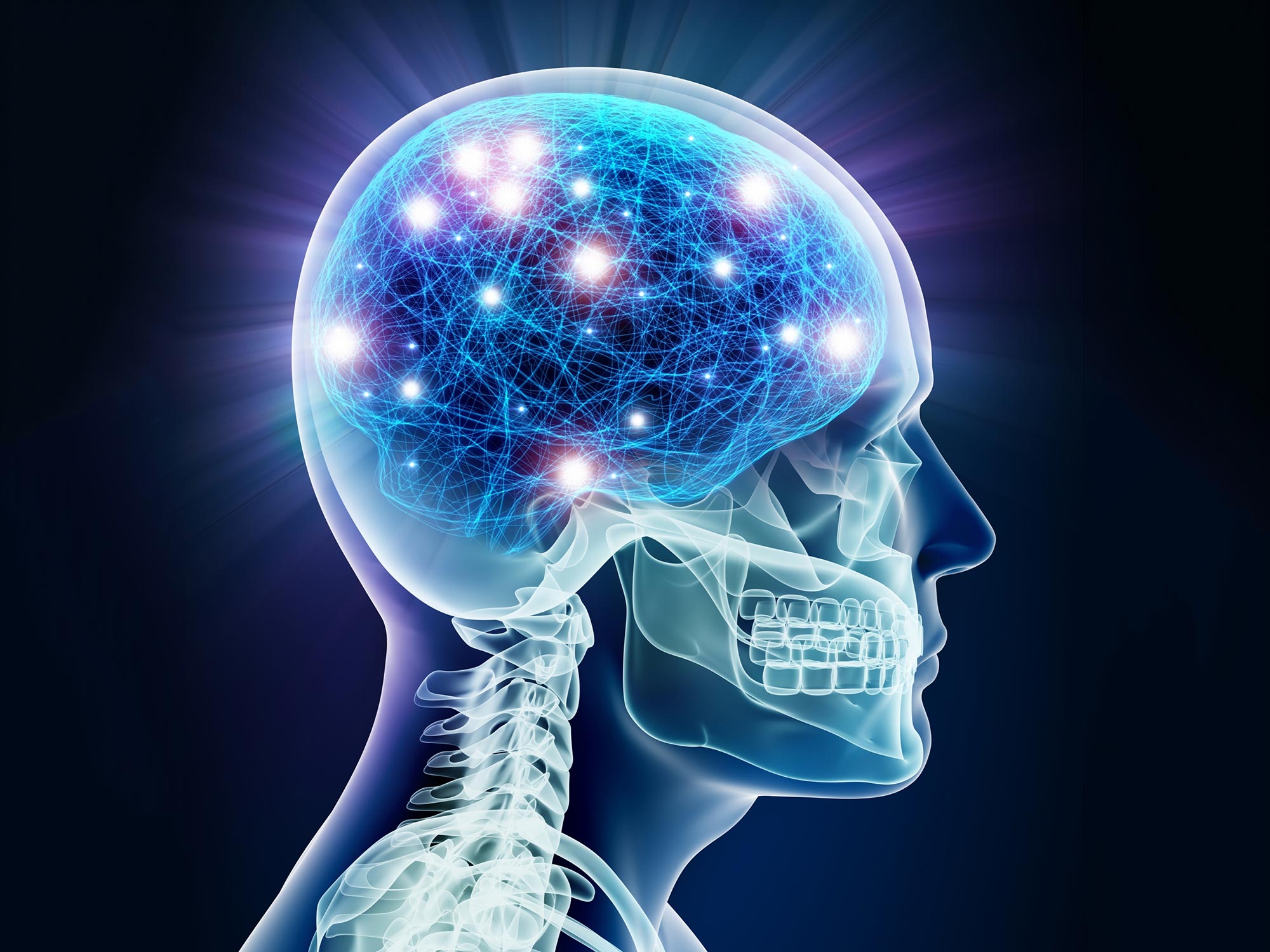
    Neurons Brain Activity X ray
    Recent research demonstrates that GLP-1 receptor agonists, which are medications that mimic the gut hormone glucagon-like peptide-1 to stimulate insulin release, help increase feelings of fullness before eating by influencing neural pathways in the hypothalamus, potentially aiding in obesity management by modifying responses to food cues and perceptions.

    A new study reveals that GLP-1 receptor agonists enhance the feeling of fullness before eating by affecting neurons in the dorsomedial hypothalamus, offering insights into their role in preventing overeating and treating obesity.

    A new study has found that GLP-1 receptor agonists trigger sensations of fullness prior to eating by acting on neurons in the dorsomedial hypothalamus. This research sheds light on the neural mechanisms through which these agonists enhance satiety and help prevent excessive food intake, playing a crucial role in addressing obesity.

    Glucagon-like-peptide-1 (GLP-1) plays an important role in signaling the feeling of fullness after eating. Preingestive satiation is a phenomenon that occurs before actual food intake, allowing animals to regulate internal status and prepare for changes. Recently, GLP-1 receptor agonists (GLP-1RAs) have proven effective in treating obesity by affecting food cognition, diminishing hypothalamic responses to food cues, and altering food palatability perception. GLP-1 receptor agonists are synthetic drugs that mimic the hormone GLP-1, which is produced in response to food intake.

    Research Findings and Methodology

    These findings suggest that GLP-1RAs may play a role in preingestive satiation to control food intake. However, the central mechanisms underlying these effects are poorly understood, and the targets of GLP-1RAs remain controversial. Here, Kyu Sik Kim and colleagues present the results of a phase-specific clinical trial involving obese individuals.

    The research team conducted satiation surveys at baseline, pre-ingestive, and ingestive phases, with or without GLP-1RA treatment. The results showed that GLP-1RA treatment consistently increased the satiation index (overall feeling of fullness) across all phases, while the control group showed a decline from baseline to pre-ingestive phase. In the pre-ingestive phase, GLP-1RA significantly increased the satiation index compared to baseline, enhancing prospective food ingestion, food reward, and motivation satiation indices.

    Through analysis of human and mouse brain samples, Kim et al. identified neural circuits in the dorsomedial hypothalamus that interact with these agonists to induce dampening of the desire for food. Optogenetic manipulation of these neurons caused satiation and calcium imaging demonstrated their active involvement in encoding preingestive satiation.

    Reference: “GLP-1 increases preingestive satiation via hypothalamic circuits in mice and humans” by Kyu Sik Kim, Joon Seok Park, Eunsang Hwang, Min Jung Park, Hwa Yun Shin, Young Hee Lee, Kyung Min Kim, Laurent Gautron, Elizabeth Godschall, Bryan Portillo, Kyle Grose, Sang-Ho Jung, So Lin Baek, Young Hyun Yun, Doyeon Lee, Eunseong Kim, Jason Ajwani, Seong Ho Yoo, Ali D. Güler, Kevin W. Williams and Hyung Jin Choi, 27 June 2024, Science.
    DOI: 10.1126/science.adj2537

    Never miss a breakthrough: Join the SciTechDaily newsletter.
    Follow us on Google and Google News.

    American Association for the Advancement of Science Brain Diet Neuroscience Popular
    Share. Facebook Twitter Pinterest LinkedIn Email Reddit

    Related Articles

    Aging Rewrites the Brain’s Protein Code – and Scientists Just Found the Switch

    Scientists Reveal Why We Can’t Remember Our Earliest Years

    Unveiling Vitamin D’s Hidden Power Against Cancer

    Brain Stimulation From Ultrasonic Waves Used to Control Monkeys’ Behavior

    Scientists Use Modified Version Rabies to Trace Neural Pathways in the Brain

    Reactivation of the Hippocampus Causes Memory Recall

    “Area X” of Zebra Finch May Provide Insights to Human Speech Disorders

    Researchers Use FDDNP–PET Scanning to Predict Cognitive Decline

    Neuroscientists Decode Correlation Between Sound and Brain Activity

    Leave A Reply Cancel Reply

    • Facebook
    • Twitter
    • Pinterest
    • YouTube

    Don't Miss a Discovery

    Subscribe for the Latest in Science & Tech!

    Trending News

    Bone-Strengthening Discovery Could Reverse Osteoporosis

    Scientists Uncover Hidden Trigger Behind Stem Cell Aging

    Scientists Find Way to Reverse Fatty Liver Disease Without Changing Diet

    Could Humans Regrow Limbs? New Study Reveals Promising Genetic Pathway

    Scientists Reveal Eating Fruits and Vegetables May Increase Your Risk of Lung Cancer

    Scientists Reverse Brain Aging With Simple Nasal Spray

    Scientists Uncover Potential Brain Risks of Popular Fish Oil Supplements

    Scientists Discover a Surprising Way To Make Bread Healthier and More Nutritious

    Follow SciTechDaily
    • Facebook
    • Twitter
    • YouTube
    • Pinterest
    • Newsletter
    • RSS
    SciTech News
    • Biology News
    • Chemistry News
    • Earth News
    • Health News
    • Physics News
    • Science News
    • Space News
    • Technology News
    Recent Posts
    • Revolutionary Technique Sends Healthy Mitochondria Exactly Where They’re Needed
    • This Student Recreated the Universe in a Bottle. What She Discovered Could Help Reveal How Life Started on Earth
    • Alzheimer’s Symptoms May Start Outside the Brain, Study Finds
    • Cancer’s Secret Weapon? Scientists Reveal How Tumors “Learn” To Survive Treatment
    • Millions Take This Popular Supplement – Scientists Discover a Concerning Link to Heart Failure
    Copyright © 1998 - 2026 SciTechDaily. All Rights Reserved.
    • Science News
    • About
    • Contact
    • Editorial Board
    • Privacy Policy
    • Terms of Use

    Type above and press Enter to search. Press Esc to cancel.