
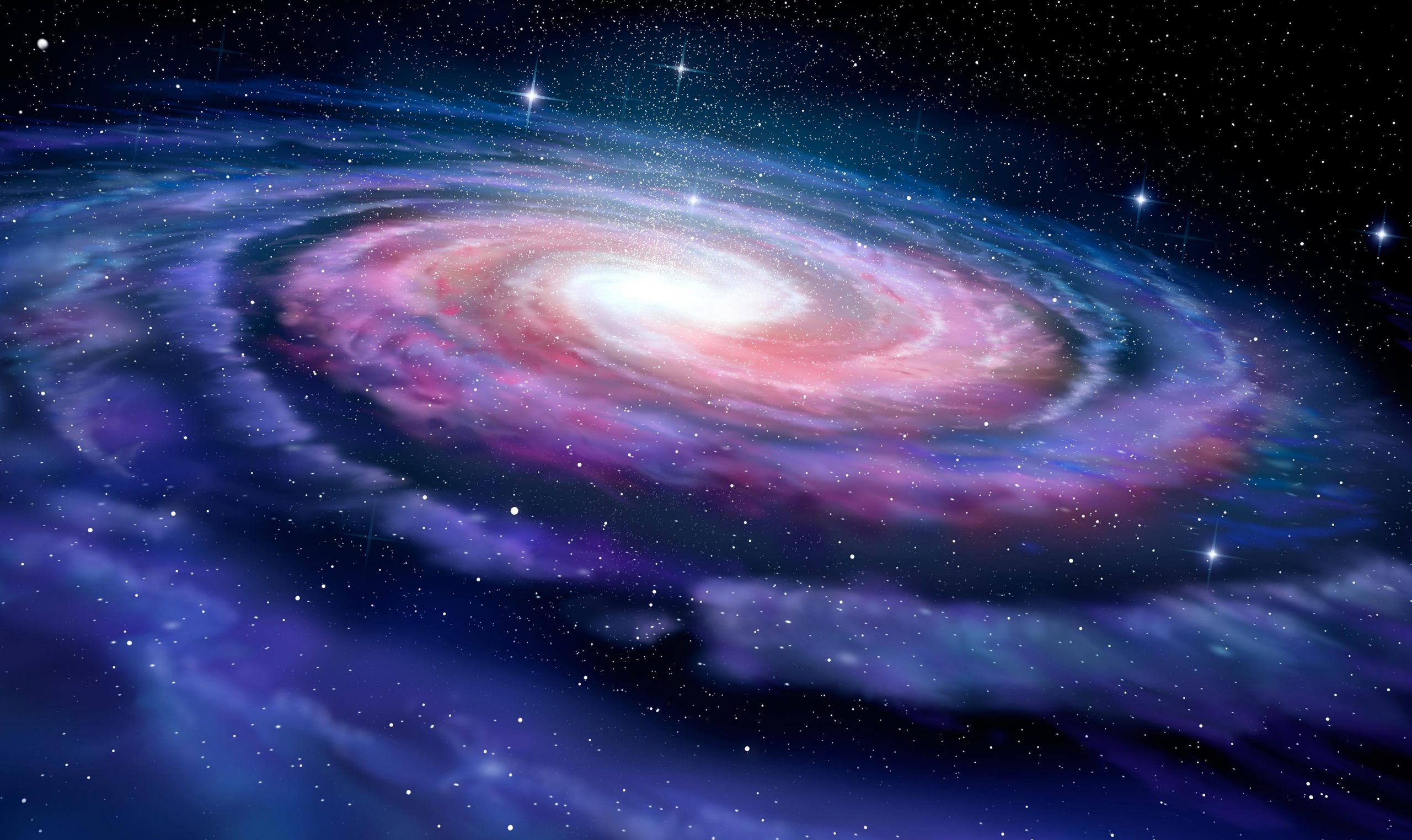
New hints about the origins of the universe’s elements have been revealed by stars from the Large Magellanic Cloud.
The universe was forever changed by the first generation of stars. Within their cores, basic hydrogen and helium fused into a diverse array of elements. When these stars met their end, they exploded, scattering these new elements throughout the cosmos. The iron in your veins, the calcium in your teeth, and the sodium powering your thoughts were all born in the heart of a long-dead star.
No one has been able to find one of those first generation of stars, but scientists have announced a unique finding: a star from the second generation that originally formed in a different galaxy from ours.
“This star provides a unique window into the very early element-forming process in galaxies other than our own,” said Anirudh Chiti, a University of Chicago postdoctoral fellow and first author on a paper announcing the findings. “We have built up an idea of the how these stars that were chemically enriched by the first stars look like in the Milky Way, but we don’t yet know if some of these signatures are unique, or if things happened similarly across other galaxies.”
The paper was recently published in Nature Astronomy.
‘Fishing needles out of haystacks’
Chiti specializes in what is called stellar archaeology: Reconstructing how the earliest generations of stars changed the universe. “We want to understand what the properties of those first stars were and what were the elements they produced,” said Chiti.
But no one has yet managed to directly see these first-generation stars, if any remain in the universe. Instead, Chiti and his colleagues look for stars that formed from the ashes of that first generation.
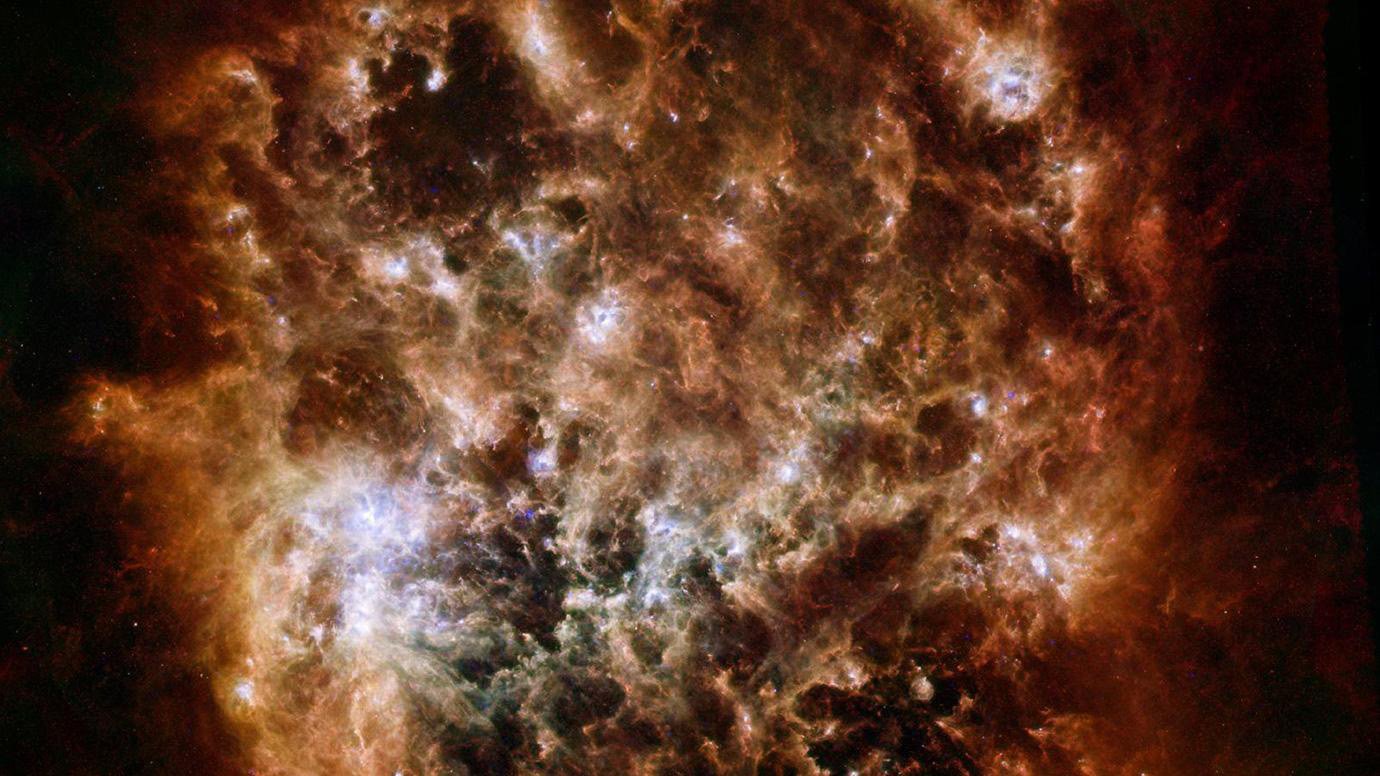
It’s hard work, because even the second generation of stars is now incredibly ancient and rare. Most stars in the universe, including our own sun, are the result of tens to thousands of generations, building up more and more heavy elements each time. “Maybe fewer than 1 in 100,000 stars in the Milky Way is one of these second-gen stars,” he said. “You really are fishing needles out of haystacks.”
But it’s worth it to get snapshots of what the universe looked like back in time. “In their outer layers, these stars preserve the elements near where they formed,” he explained. “If you can find a very old star and get its chemical composition, you can understand what the chemical composition of the universe was like where that star formed, billions of years ago.”
An intriguing oddity
For this study, Chiti and his colleagues aimed their telescopes at an unusual target: the stars that make up the Large Magellanic Cloud.
The Large Magellanic Cloud is a bright swath of stars visible to the naked eye in the Southern Hemisphere. We now think it was once a separate galaxy that was captured by the Milky Way’s gravity just a few billion years ago. This makes it particularly interesting because its oldest stars were formed outside the Milky Way—giving astronomers a chance to learn about whether conditions in the early universe all looked the same, or were different in other places.
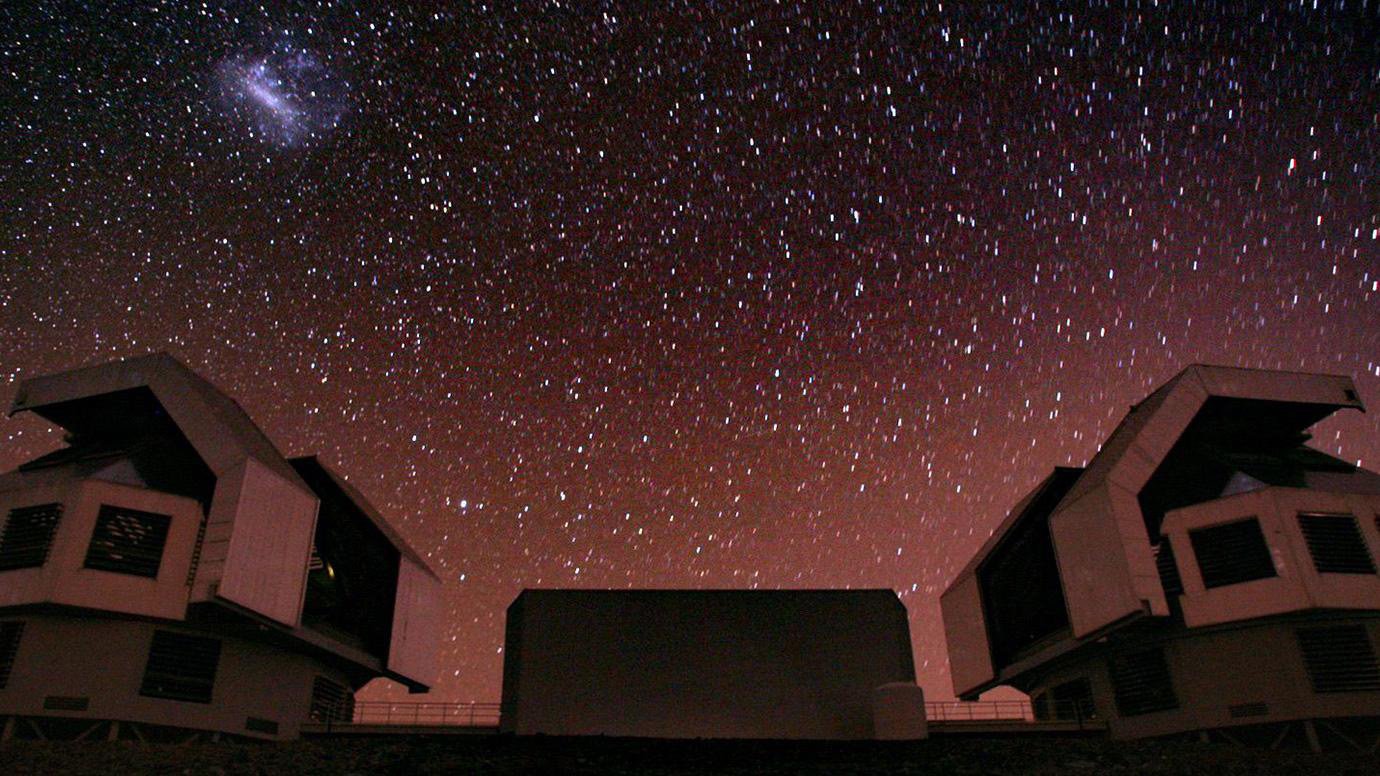
The scientists searched for evidence of these particularly ancient stars in the Large Magellanic Cloud and cataloged ten of them, first with the European Space Agency’s Gaia satellite and then with the Magellan Telescope in Chile.
One of these stars immediately jumped out as an oddity. It had much, much less of the heavier elements in it than any other star yet seen in the Large Magellanic Cloud. This means it was probably formed in the wake of the first generation of stars—so it had not yet built up heavier elements over the course of repeated star births and deaths.
Mapping out its elements, the scientists were surprised to see that it had a lot less carbon than iron compared to what we see in Milky Way stars.
“That was very intriguing, and it suggests that perhaps carbon enhancement of the earliest generation, as we see in the Milky Way, was not universal,” Chiti said. “We’ll have to do further studies, but it suggests there are differences from place to place.
“I think we’re filling out the picture of what the early element enrichment process looked like in different environments,” he said.
Their findings also corroborated other studies that have suggested that the Large Magellanic Cloud made much fewer stars early on compared to the Milky Way.
Chiti is currently leading an imaging program to map out a large portion of the southern sky to find the earliest stars possible. “This discovery suggests there should be many of these stars in the Large Magellanic Cloud if we look closely,” he said. “It’s really exciting to be opening up stellar archeology of the Large Magellanic Cloud, and to be able to map out in such detail how the first stars chemically enriched the universe in different regions.”
Reference: “Enrichment by extragalactic first stars in the Large Magellanic Cloud” by Anirudh Chiti, Mohammad Mardini, Guilherme Limberg, Anna Frebel, Alexander P. Ji, Henrique Reggiani, Peter Ferguson, Hillary Diane Andales, Kaley Brauer, Ting S. Li and Joshua D. Simon, 20 March 2024, Nature Astronomy.
DOI: 10.1038/s41550-024-02223-w
Never miss a breakthrough: Join the SciTechDaily newsletter.
Follow us on Google and Google News.
1 Comment
In the context of a second generation star, did you State to the observations that a C to Fe comparisons would be a ratio to consider?