
Close Menu
    Facebook X (Twitter) Instagram
    SciTechDaily
    • Biology
    • Chemistry
    • Earth
    • Health
    • Physics
    • Science
    • Space
    • Technology
    Facebook X (Twitter) Pinterest YouTube RSS
    SciTechDaily
    Home»Health»COVID-19: An Analysis of Coronavirus Mutations in More Than 1,000 People
    Health

    COVID-19: An Analysis of Coronavirus Mutations in More Than 1,000 People

    By American Association for the Advancement of ScienceMarch 9, 2021No Comments3 Mins Read
    Facebook Twitter Pinterest Telegram LinkedIn WhatsApp Email Reddit
    Share
    Facebook Twitter LinkedIn Pinterest Telegram Email Reddit
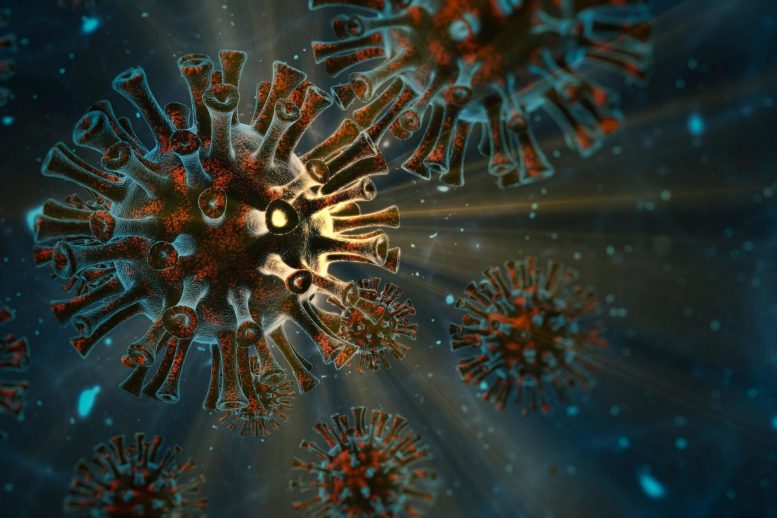
    Coronavirus Genetic Mutation Concept
    Analysis of over 1,000 individuals in the UK suggests that, while viral mutations can be transmitted, they rarely persist in subsequent transmissions for SARS-CoV-2.

    Most SARS-CoV-2 mutations don’t persist or spread, but therapy-resistant variants may emerge under vaccine pressure.

    An analysis of SARS-CoV-2 genome diversity in more than 1,000 people in the United Kingdom suggests that if viral mutations do arise, they can be transmitted in some cases but they rarely persist in subsequent transmissions.

    “Our observations indicate the within-host emergence of vaccine- and therapeutic-escape mutations is likely to be relatively rare,” say the authors, “at least during early infection when viral loads are high.”

    However, because mutations that can escape therapies like antibodies were identified, including in higher viral load samples, the authors encourage continued monitoring and vigilance, particularly as vaccines and therapeutics that put “pressure” on viruses to adapt are rolled out more widely.

    Most analyses of mutations in SARS-CoV-2, the virus that causes COVID-19, to date have been focused on mutations observed in individuals that represent the dominant variants. However, new mutations are emerging in infected individuals, too, and knowledge of the full underlying diversity of viruses in human hosts — how frequently they emerge, and whether they are transmitted — is important for understanding viral adaption and patterns of spread.

    Genome Sequencing Reveals In-Host Viral Variation

    To better characterize diversity in single human hosts, Katrina Lythgoe and colleagues used an RNA sequencing approach to analyze 1,390 SARS-CoV-2 genomes from 1,313 nasopharyngeal swabs sampled mostly from symptomatic patients in the UK who had gotten sick between March and June 2020 (the first global wave of infection).

    The authors observed only one or two variants in most individuals, but a few patients carried many variants. Most of these were lost at the point of transmission, though a small number initiated ongoing transmission and wider dissemination. Too, there were very few cases of virus transmission between households in the studied genomes.

    These results suggest that during early infection, mutations that can increase the virus’s chances of escaping therapies rarely emerge and transmit. Even so, the authors did identify variants that can give the virus an advantage, including in high viral load samples. This indicates that naturally occurring variants would have the opportunity to spread as population selection pressure from vaccine rollout increases. The findings underline the need for continued monitoring, they say.

    Reference: “SARS-CoV-2 within-host diversity and transmission” by Katrina A. Lythgoe, Matthew Hall, Luca Ferretti, Mariateresa de Cesare, George MacIntyre-Cockett, Amy Trebes, Monique Andersson, Newton Otecko, Emma L. Wise, Nathan Moore, Jessica Lynch, Stephen Kidd, Nicholas Cortes, Matilde Mori, Rebecca Williams, Gabrielle Vernet, Anita Justice, Angie Green, Samuel M. Nicholls, M. Azim Ansari, Lucie Abeler-Dörner, Catrin E. Moore, Timothy E. A. Peto, David W. Eyre, Robert Shaw, Peter Simmonds, David Buck, John A. Todd, on behalf of the Oxford Virus Sequencing Analysis Group (OVSG), Thomas R. Connor, Shirin Ashraf, Ana da Silva Filipe, James Shepherd, Emma C. Thomson, The COVID- Genomics UK (COG-UK) Consortium§, David Bonsall, Christophe Fraser and Tanya Golubchik, 9 March 2021, Science.
    DOI: 10.1126/science.abg0821

    Never miss a breakthrough: Join the SciTechDaily newsletter.
    Follow us on Google and Google News.

    American Association for the Advancement of Science COVID-19 Infectious Diseases Public Health Virology
    Share. Facebook Twitter Pinterest LinkedIn Email Reddit

    Related Articles

    New Study Shows Third Dose of Pfizer-BioNTech COVID Vaccine May Protect Against Omicron

    COVID Variant P.1 Is More Transmissible and More Lethal

    New Genetic Identification of COVID-19 Susceptibility Will Aid Treatment

    FDA Approved Drug May Help Calm Cytokine Storm in COVID-19

    Antibody Neutralizes SARS and COVID-19 Coronaviruses – On Accelerated Path Toward Clinical Trials

    Experts Dire Warning: 250,000,000 People in Africa Will Catch Coronavirus and Up to 190,000 Will Likely Die

    Team of Biochemists and Virologists Discover Potential Targets for COVID-19 Therapy

    How COVID-19 Kills: New Study Explains the Mechanisms of the New Coronavirus

    Vitamin D Linked to Low Coronavirus Death Rate

    Leave A Reply Cancel Reply

    • Facebook
    • Twitter
    • Pinterest
    • YouTube

    Don't Miss a Discovery

    Subscribe for the Latest in Science & Tech!

    Trending News

    NASA’s Voyager 1 Is About to Become the First Spacecraft One Light-Day From Earth

    A Woman Who Lived 30,000 Years Ago Is Changing What We Know About Ice Age Europe

    A Rare Radioactive Element Reveals a Hidden Secret About the Heaviest Atoms

    Breakthrough Cancer Treatment Wipes Out Deadly Brain Tumors in Every Mouse Tested

    Something Remarkable Is Happening to Dogs Living Near Chernobyl’s Nuclear Plant

    Hubble Uncovers a Mysterious 93-Billion-Mile Structure Hiding in a Nearby Star System

    Earth’s Oceans Were Slowly Suffocating Millions of Years Before a Devastating Mass Extinction

    Why Are Men Twice As Likely To Develop Parkinson’s? Scientists Discover a Hidden Clue in the Brain

    Follow SciTechDaily
    • Facebook
    • Twitter
    • YouTube
    • Pinterest
    • Newsletter
    • RSS
    SciTech News
    • Biology News
    • Chemistry News
    • Earth News
    • Health News
    • Physics News
    • Science News
    • Space News
    • Technology News
    Recent Posts
    • Scientists Finally Crack a 1,600-Year-Old Roman Glass Mystery
    • Scientists Discover Something Unexpected 90 Kilometers Beneath Earth
    • Popular Dairy Alternatives Could Be Leaving You Short of Essential Nutrients
    • A Healthier Form of Salt Could Prevent Nearly 3 Million Deaths Every Year, Scientists Say
    • Scientists Engineer Rice That Fights Back Against a Devastating Crop Disease
    Copyright © 1998 - 2026 SciTechDaily. All Rights Reserved.
    • Science News
    • About
    • Contact
    • Editorial Board
    • Privacy Policy
    • Terms of Use

    Type above and press Enter to search. Press Esc to cancel.