
Close Menu
    Facebook X (Twitter) Instagram
    SciTechDaily
    • Biology
    • Chemistry
    • Earth
    • Health
    • Physics
    • Science
    • Space
    • Technology
    Facebook X (Twitter) Pinterest YouTube RSS
    SciTechDaily
    Home»Health»COVID-19 Can Cause Brain Cells To Fuse – Leading to Chronic “Long COVID” Neurological Symptoms
    Health

    COVID-19 Can Cause Brain Cells To Fuse – Leading to Chronic “Long COVID” Neurological Symptoms

    By University of QueenslandJune 10, 20231 Comment3 Mins Read
    Facebook Twitter Pinterest Telegram LinkedIn WhatsApp Email Reddit
    Share
    Facebook Twitter LinkedIn Pinterest Telegram Email Reddit
    Neuronal Fusion
    Scientists discovered that viruses like SARS-CoV-2 can cause brain cells to fuse, leading to chronic neurological symptoms. This process, where neurons either start firing together or stop working entirely, provides a new perspective on the long-term effects of viral infections on the brain and may apply to other viruses that infect the nervous system. Credit: The Authors

    Researchers have discovered viruses such as SARS-CoV-2 can cause brain cells to fuse, initiating malfunctions that lead to chronic neurological symptoms.

    Scientists at The University of Queensland have discovered viruses such as SARS-CoV-2 can cause brain cells to fuse, initiating malfunctions that lead to chronic neurological symptoms.

    Professor Massimo Hilliard and Dr. Ramon Martinez-Marmol from the Queensland Brain Institute have explored how viruses alter the function of the nervous system.

    SARS-CoV-2, the virus that causes COVID-19, has been detected in the brains of people with ‘long COVID’ months after their initial infection.
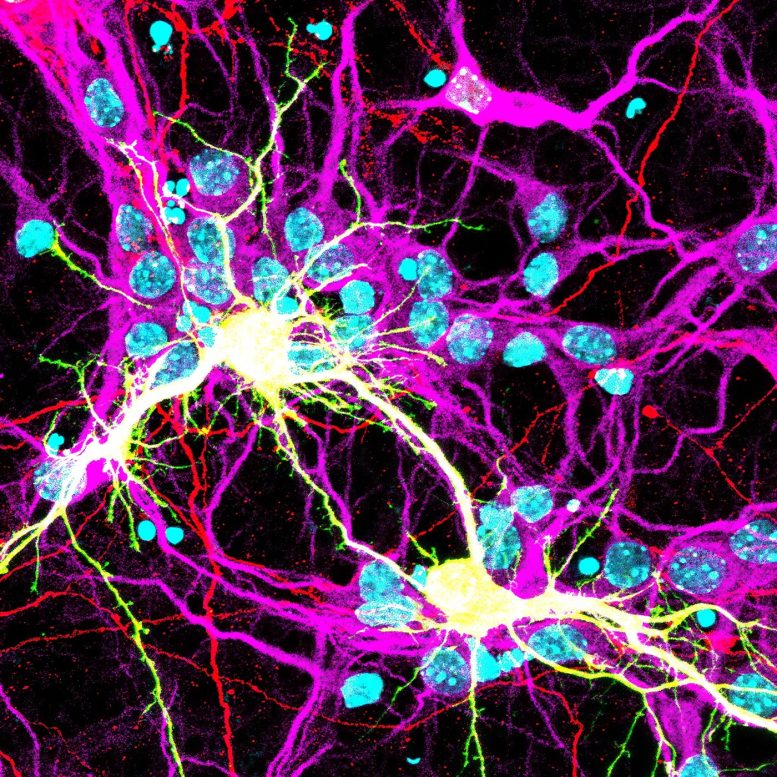
    Fused Neurons Expressing the COVID-19 Spike Protein
    Image of fused neurons (yellow) expressing Spike S fusogen from the SARS-CoV-2 virus and the human receptor hACE2. Credit: The Authors

    “We discovered COVID-19 causes neurons to undergo a cell fusion process, which has not been seen before,” Professor Hilliard said.

    “After neuronal infection with SARS-CoV-2, the spike S protein becomes present in neurons, and once neurons fuse, they don’t die. They either start firing synchronously, or they stop functioning altogether.”

    As an analogy, Professor Hilliard likened the role of neurons to that of wires connecting switches to the lights in a kitchen and a bathroom.

    “Once fusion takes place, each switch either turns on both the kitchen and bathroom lights at the same time, or neither of them,” he said.

    “It’s bad news for the two independent circuits.”


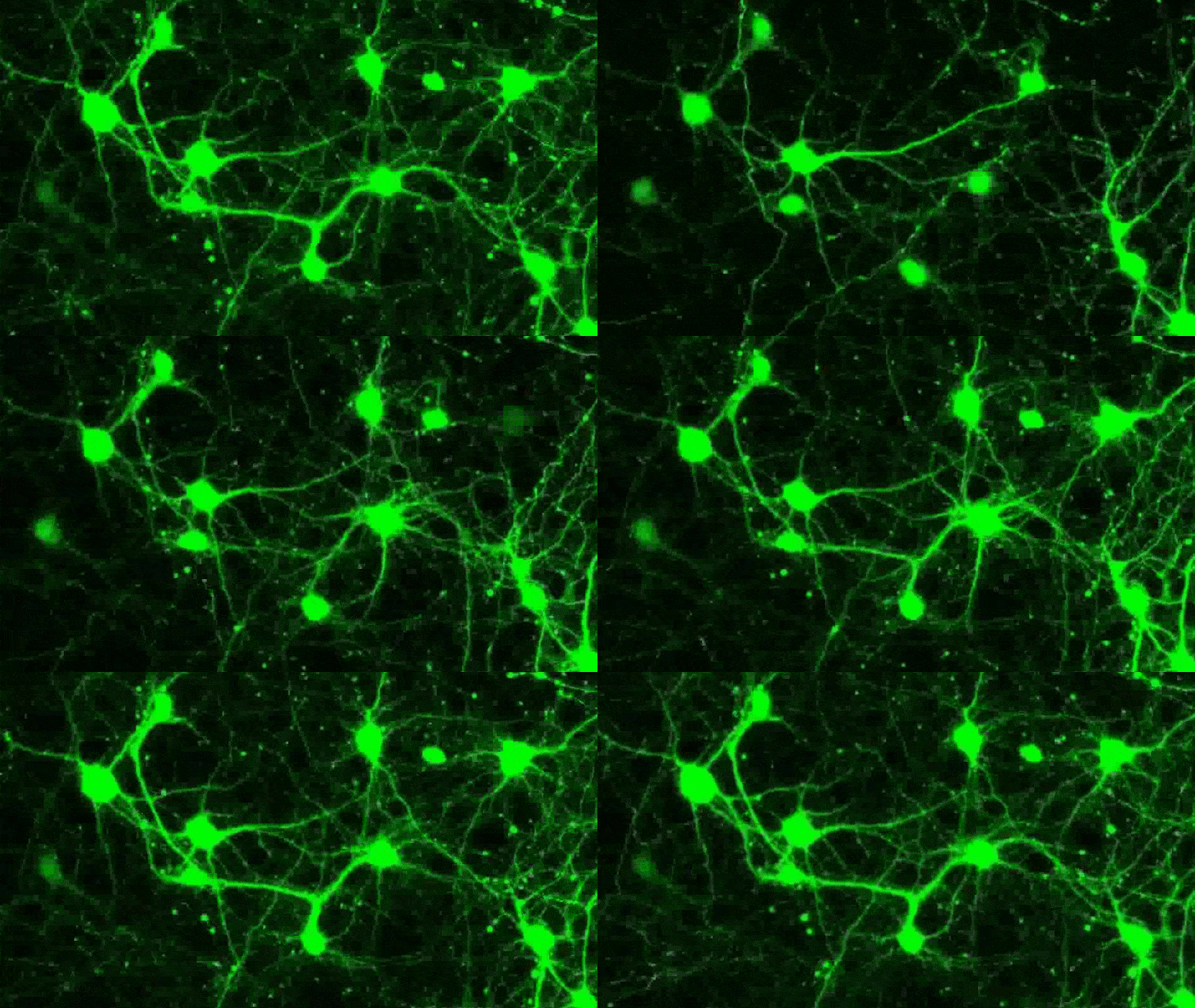
    Movie at 10 fps, with frames being acquired every 30 min. Images were recorded 24 h after transfecting hippocampal neurons with p15 and GFP. Each frame represents the maximum intensity projection, with GFP intensity adjusted to facilitate the visualization of newly appearing GFP-positive neurons. Credit: The Authors

    The discovery offers a potential explanation for persistent neurological effects after a viral infection.

    “In the current understanding of what happens when a virus enters the brain, there are two outcomes – either cell death or inflammation,” Dr. Martinez-Marmol said.

    “But we’ve shown a third possible outcome, which is neuronal fusion.”

    Dr. Martinez-Marmol said numerous viruses cause cell fusion in other tissues, but also infect the nervous system and could be causing the same problem there.

    “These viruses include HIV, rabies, Japanese encephalitis, measles, herpes simplex virus, and Zika virus,” he said.

    “Our research reveals a new mechanism for the neurological events that happen during a viral infection.

    “This is potentially a major cause of neurological diseases and clinical symptoms that is still unexplored.”

    The researchers acknowledge the collaborative efforts of Professor Lars Ittner and Associate Professor Yazi Ke from Macquarie University, Associate Professor Giuseppe Balistreri from University of Helsinki, and Associate Professor Kirsty Short and Professor Frederic Meunier from The University of Queensland.

    The research was published in Sciences Advances.

    Reference: “SARS-CoV-2 infection and viral fusogens cause neuronal and glial fusion that compromises neuronal activity” by Ramón Martínez-Mármol, Rosina Giordano-Santini, Eva Kaulich, Ann-Na Cho, Magdalena Przybyla, Md Asrafuzzaman Riyadh, Emilija Robinson, Keng Yih Chew, Rumelo Amor, Frédéric A. Meunier, Giuseppe Balistreri, Kirsty R. Short, Yazi D. Ke, Lars M. Ittner and Massimo A. Hilliard, 7 June 2023, Sciences Advances.
    DOI: 10.1126/sciadv.adg2248

    Never miss a breakthrough: Join the SciTechDaily newsletter.
    Follow us on Google and Google News.

    Brain COVID-19 Neuroscience Popular University of Queensland Virology
    Share. Facebook Twitter Pinterest LinkedIn Email Reddit

    Related Articles

    New Research Shows COVID-19 Alters Gray Matter Volume in the Brain

    How COVID-19 Worms Its Way Into the Brain – Explaining Baffling Neurological Symptoms

    UK, South African, Brazilian: A Virologist Explains Each COVID Variant

    Coronavirus Does Not Infect the Brain, but Still Inflicts Significant Neurological Damage

    Century of Data Shows COVID-19 Likely to Impact the Brain Long-Term

    NIH Researchers Uncover Brain Damage in COVID-19 Patients, Despite No Infection of the Brain

    “You Do Not Want to Mess With This Virus” – Research Strongly Suggests COVID-19 Virus Enters the Brain

    Researchers Discover How SARS-CoV-2 Reaches the Brain of COVID-19 Patients

    Specialized Scanning Reveals Brain Damage in COVID-19 Patients

    1 Comment

    1. Chingchong on June 10, 2023 8:39 pm

      Vaccine*

      FTFY

      Reply
    Leave A Reply Cancel Reply

    • Facebook
    • Twitter
    • Pinterest
    • YouTube

    Don't Miss a Discovery

    Subscribe for the Latest in Science & Tech!

    Trending News

    The Universe Is Expanding Too Fast and Scientists Can’t Explain Why

    “Like Liquid Metal”: Scientists Create Strange Shape-Shifting Material

    Early Warning Signals of Esophageal Cancer May Be Hiding in Plain Sight

    Common Blood Pressure Drug Shows Surprising Power Against Deadly Antibiotic-Resistant Superbug

    Scientists Uncover Dangerous Connection Between Serotonin and Heart Valve Disease

    Scientists Discover a “Protector” Protein That Could Help Reverse Hair Loss

    Bone-Strengthening Discovery Could Reverse Osteoporosis

    Scientists Uncover Hidden Trigger Behind Stem Cell Aging

    Follow SciTechDaily
    • Facebook
    • Twitter
    • YouTube
    • Pinterest
    • Newsletter
    • RSS
    SciTech News
    • Biology News
    • Chemistry News
    • Earth News
    • Health News
    • Physics News
    • Science News
    • Space News
    • Technology News
    Recent Posts
    • The Simple Habit That Could Help Prevent Cancer
    • Forgotten Medicinal Plant Shows Promise in Fighting Dangerous Superbugs
    • Millions Take These IBS Drugs, But a New Study Finds Serious Risks
    • 5 Common Myths About Learning a New Language, Debunked
    • The Neanderthal “Love Story” Isn’t What It Seems
    Copyright © 1998 - 2026 SciTechDaily. All Rights Reserved.
    • Science News
    • About
    • Contact
    • Editorial Board
    • Privacy Policy
    • Terms of Use

    Type above and press Enter to search. Press Esc to cancel.