
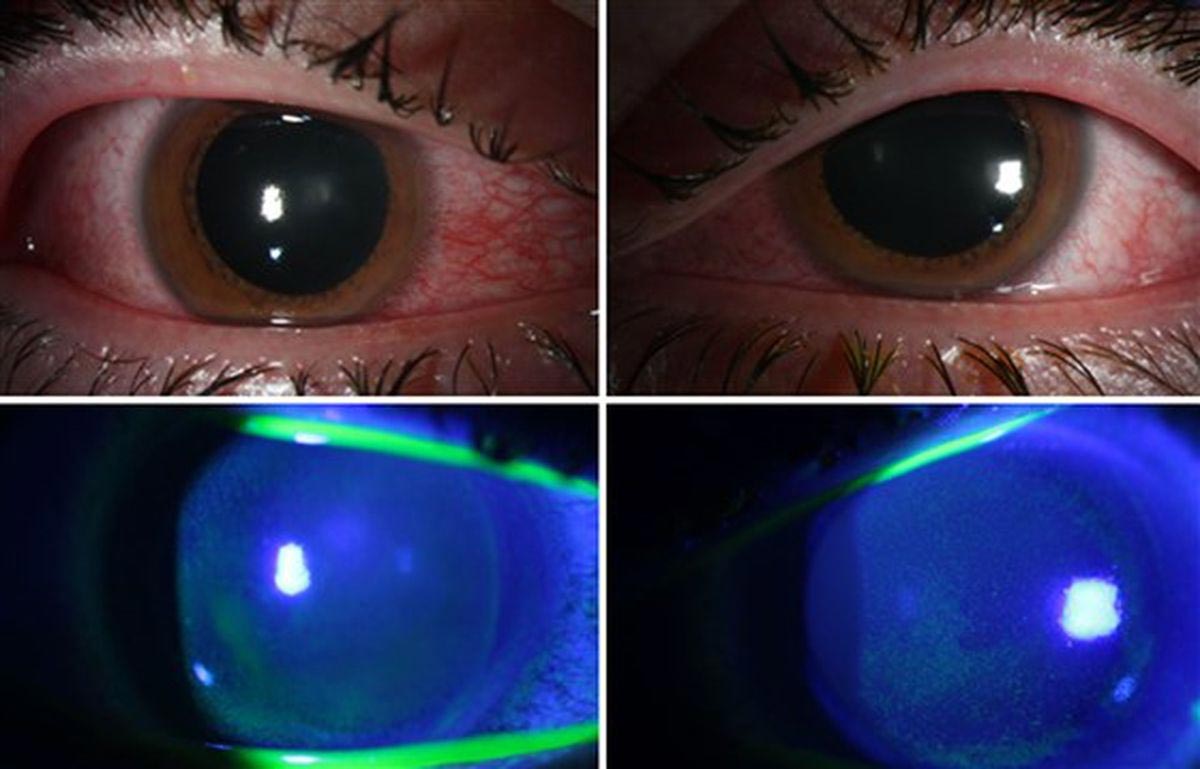
While UV light may kill bacteria and viruses, improper use is dangerous.
In a paper published in the journal of Ocular Immunology and Inflammation, physicians from the Bascom Palmer Eye Institute at the University of Miami Miller School of Medicine reported that several patients using germicidal lamps in an attempt to sanitize against the coronavirus, developed painful inflammation of the cornea, a condition called photokeratitis. These consumer-available ultraviolet (UV) emitting devices were being used in an attempt to eliminate coronavirus from homes and offices.
Rise in Painful Eye Condition Linked to UV-C Exposure
“During the height of the pandemic, we noticed an increased number of patients coming in with irritation, pain and sensitivity to light,” said first author and Bascom Palmer resident Jesse Sengillo, M.D. “We realized this was after direct exposure to germicidal lamps that emit UV light in the C range to kill bacteria and viruses. This can be quite a painful experience for the patient, but with prompt topical lubrication and antibiotics to prevent infection, patients often do very well.”
UV photokeratitis occurs when the cornea is overexposed to ultraviolet radiation. This can happen at high elevation, where less UV rays are absorbed by the atmosphere, or near water, snow or other reflective surfaces in the environment. A few hours after exposure, patients experience burning in their eyes and sometimes intense light sensitivity.
Numerous germicidal lamps are on the market, and while they may be safe for at-home use, customers need to pay close attention to manufacturer recommendations to prevent damage to the eyes and skin.
Unintended Exposure at Work and Home
“The patients we met were not aware of these recommendations, and many were unknowingly exposed at work,” said co-author and fellow resident Anne Kunkler, M.D., B.S. “For UV-C emitting devices, it is best to leave the room while the device is on. Our patients were directly exposed to the light for various lengths of time. A few hours later, they felt discomfort and sought medical attention.”
Dr. Sengillo and colleagues encourage anyone feeling eye discomfort after exposure to one of these devices to promptly seek medical attention a medical professional from an ophthalmologist.
While germicidal lamps are being purchased to protect people during the pandemic, this study did not attempt to address whether they are effective in destroying coronaviruses. “There are many COVID-19 related publications recently. It is important that we disseminate information accurately and responsibly to avoid public confusion,” Dr. Sengillo and colleagues note that some UV-C emitting germicidal devices are proven to be effective in killing various microbes and viruses, but to the authors’ knowledge, they have not been tested against COVID-19 specifically yet. “Our study was not designed to answer that question. If you choose to use these lamps, just make sure to follow manufacturer recommendations closely to avoid unnecessary injury,” said Dr. Sengillo.
Reference: “UV-Photokeratitis Associated with Germicidal Lamps Purchased during the COVID-19 Pandemic” by Jesse D. Sengillo, MD, Anne L. Kunkler, MD, Charles Medert, MD, Benjamin Fowler, MD, PhD, Marissa Shoji, MD, Nathan Pirakitikulr, MD, PhD, Nimesh Patel, MD, Nicolas A. Yannuzzi, MD, Angela J. Verkade, MD, Darlene Miller, DHSc, MPH, David H Sliney, PhD, Jean-Marie Parel, PhD and Guillermo Amescua, 20 November 2020, Ocular Immunology and Inflammation.
DOI: 10.1080/09273948.2020.1834587
Never miss a breakthrough: Join the SciTechDaily newsletter.
Follow us on Google and Google News.
2 Comments
And UV lights can generate ozone, which is poisonous and lung damaging below your ability to smell it.
Couple of comments:
1. @Eric – Yes “SOME” UV lights (Bulbs) can generate ozone, Not ALL. As example LEDs do not.
2. To the author: I think responsible journalism would be to speak to the “Dose” required to cause the irritation. Also the fact that UVC does not penetrate Glass, etc.
When attempting to educate the public, please provide all the facts