
From mini-brains and spider-inspired gloves to edible wolf apple coatings and microplastic-filled retinas, scientists are transforming creepy concepts into life-improving innovations. Lab-grown brain organoids could replace animal testing, web-slinging gloves can spin instant wound dressings, and wolf apple starch may keep veggies fresh longer. Meanwhile, the discovery of microplastics in human eyes reveals a haunting truth about our environment’s reach inside us.
Lab-Grown “Mini-Brains” Offer New Insight into the Human Mind
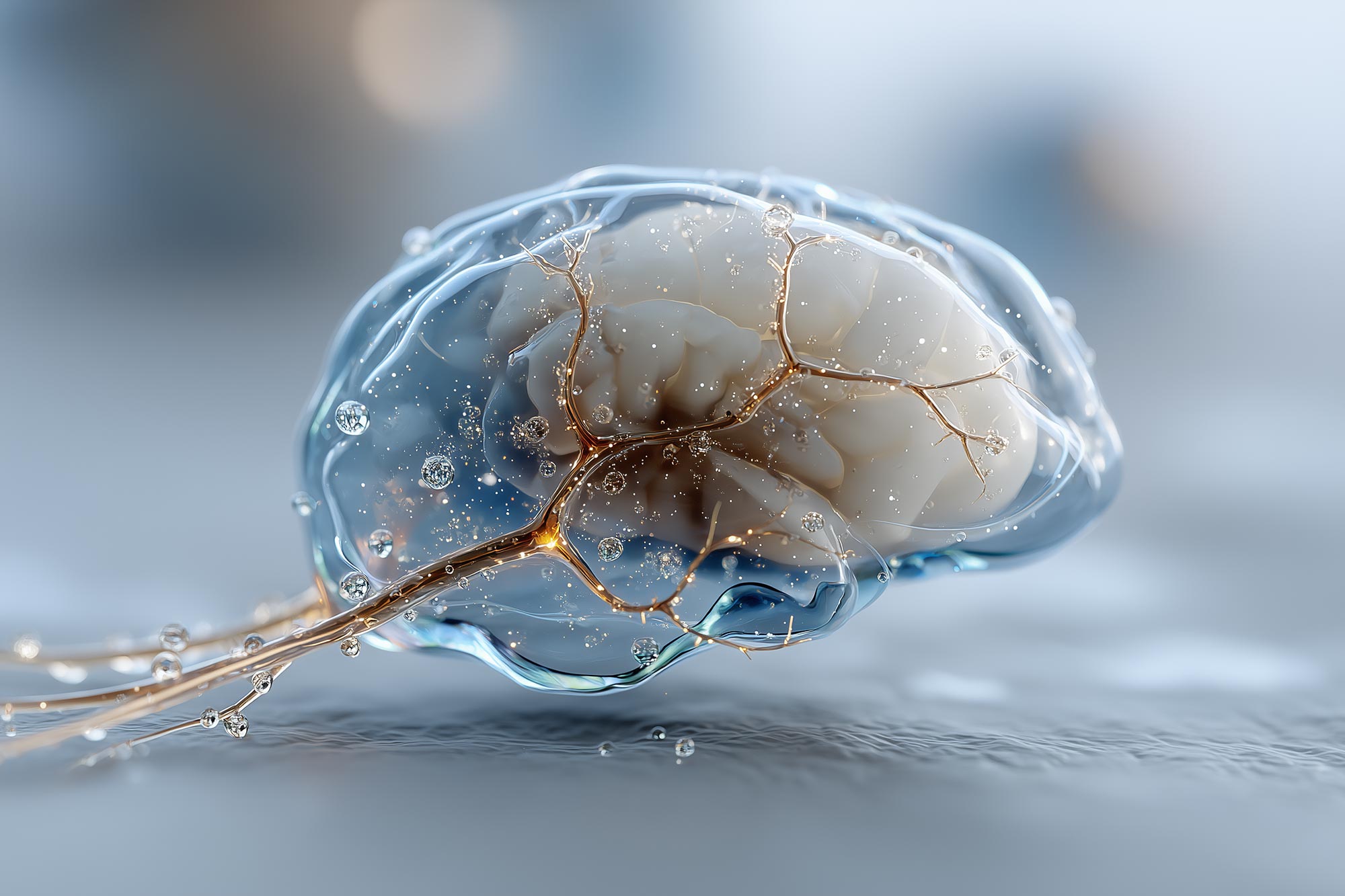
Scientists writing in ACS Sensors have successfully grown a small brain organoid in a petri dish, creating a powerful new tool for studying how nerve cells interact without the use of animal testing. Over two years, human nerve cells multiplied and organized themselves into a three-dimensional “mini-brain” that displayed electrical activity similar to real brain tissue. Researchers say this breakthrough could help scientists better understand how the human brain communicates and functions—or, as they joke, provide “a lab-grown lunch option for zombies.”
Spider-Inspired Glove Spins Instant Wound Dressings
Taking inspiration from spiders, scientists designed a glove equipped with tiny spinneret-like devices that can shoot out fine polymer fibers. The glove, described in ACS Applied Materials & Interfaces, allows users to create custom wound dressings directly in the air. This portable system could be used by medical teams in hospitals, sports arenas, or military settings to apply quick, sterile coverings for injuries (pun intended, no radioactive spiders involved).
Wolf Apple Coating Keeps Produce Fresh Longer
In ACS Food Science & Technology, researchers report that starch extracted from the wolf apple—a resilient Brazilian fruit and favorite snack of the maned wolf—can be used to create a natural, edible coating that helps food stay fresh. When applied to baby carrots, the coating preserved their color and quality for up to 15 days at room temperature. The wolf apple-based material could offer an inexpensive and food-safe alternative to synthetic preservatives, whether or not the moon is full.
Microplastics Discovered in Human Retinas
A study published in ACS Environmental Science & Technology Letters found that microplastics have made their way into one of the body’s most delicate structures: the retina. Researchers examined 12 post-mortem human eyes (no eye of newt required) and found various types and amounts of plastic particles in every sample. These findings provide an important starting point for future studies exploring how microplastics might affect eye health and vision.
References:
“Inkjet-Printed 3D Sensor Arrays with FIB-Induced Electrode Refinement for Low-Noise Amperometric Recordings in hiPSC-Derived Brain Organoids” by Inola Kopic, Hu Peng, Sebastian Schmidt, Oleksandr Berezin, Senyao Wang, Gil G. Westmeyer and Bernhard Wolfrum, 21 August 2025, ACS Sensors.
DOI: 10.1021/acssensors.4c03740
“Wearable, Ultralow Power, and Needleless Electrospinning Equipment for Cannabidiol-Loaded Patch Fabrication” by Omar Blandon Cruz, Lihua Lou, Sohail Mazher Ali Khan Mohammed, Rony Thomas Murickan, Luiza Benedetti, Yih-Mei Lin, Tyler Dolmetsch and Arvind Agarwal, 14 August 2025, ACS Applied Materials & Interfaces.
DOI: 10.1021/acsami.5c14853
“Characterization of Solanum lycocarpum Starch and Its Application as Edible Coating in Minimally Processed Baby Carrots” by Lohana M. C. Carvalho, Albert Lennon L. Martins, Fernanda M. A. Leal Zimmer, Aroldo A. Pinedo and Claudia Cristina A. do A. Santos, 26 August 2025, ACS Food Science & Technology.
DOI: 10.1021/acsfoodscitech.5c00182
“Detection and Characterization of Multiple Microplastics in the Human Retina” by Menghui Zhang, Sisi Liu, Yuchen Wang, Yanni Ge, Xiuyi Li, Xiawei Wang, Shulin Zhuang and Hongguang Cui, 6 October 2025, Environmental Science & Technology Letters.
DOI: 10.1021/acs.estlett.5c00903
Never miss a breakthrough: Join the SciTechDaily newsletter.
Follow us on Google and Google News.
1 Comment
Note
Amplitude 7 (.minimum)(tertiary)
Over