
Close Menu
    Facebook X (Twitter) Instagram
    SciTechDaily
    • Biology
    • Chemistry
    • Earth
    • Health
    • Physics
    • Science
    • Space
    • Technology
    Facebook X (Twitter) Pinterest YouTube RSS
    SciTechDaily
    Home»Space»Cygnus Space Freighter Departs International Space Station – On Its Way to Destructive Re-Entry
    Space

    Cygnus Space Freighter Departs International Space Station – On Its Way to Destructive Re-Entry

    By NASANovember 21, 2021No Comments2 Mins Read
    Facebook Twitter Pinterest Telegram LinkedIn WhatsApp Email Reddit
    Share
    Facebook Twitter LinkedIn Pinterest Telegram Email Reddit
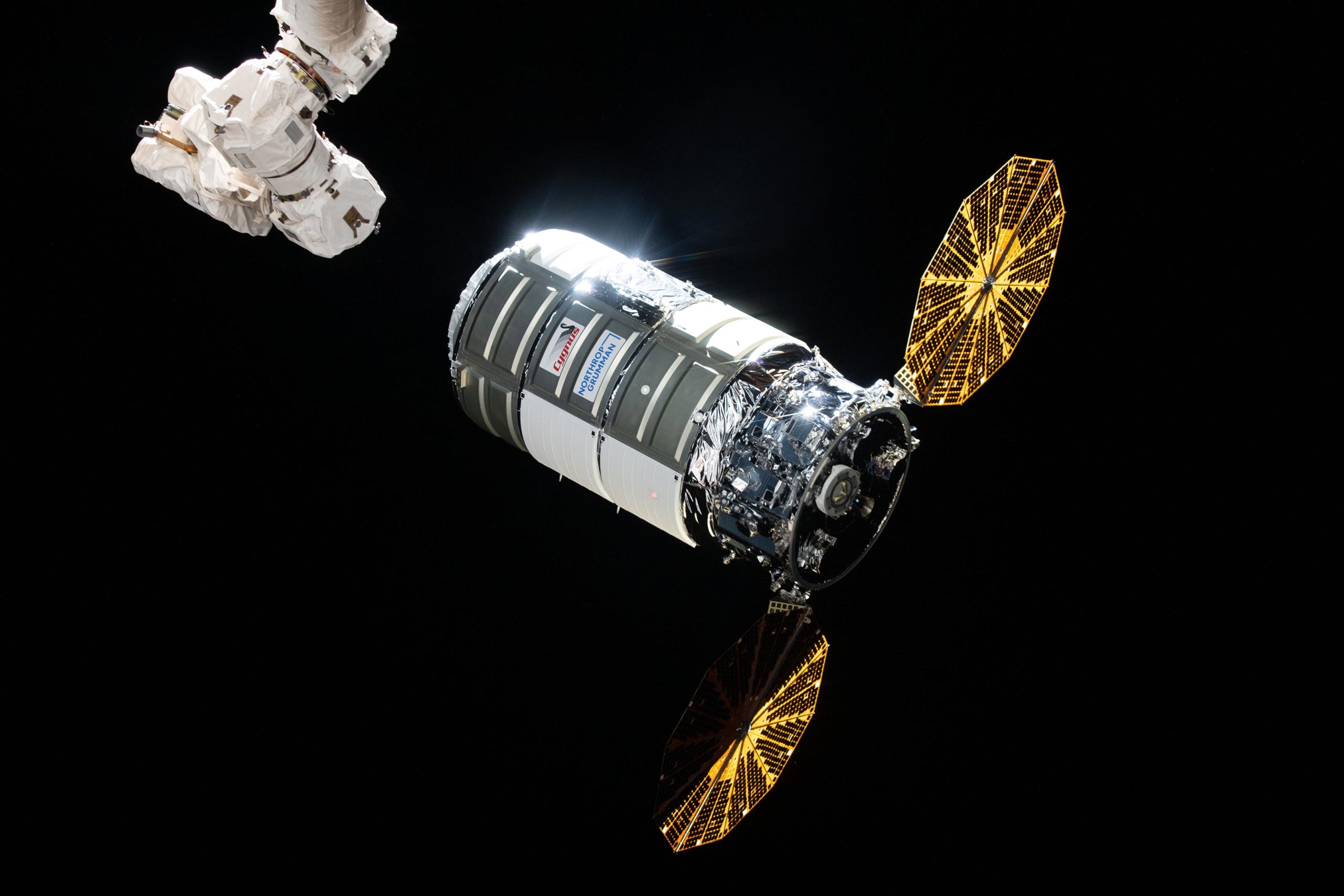
    Northrop Grumman’s Cygnus Resupply Spacecraft
    Northrop Grumman’s Cygnus resupply spacecraft. Credit: NASA

    At 11:01 a.m. EST on November 20, 2021, flight controllers on the ground sent commands to release the Northrop Grumman Cygnus spacecraft from the Canadarm2 robotic arm after earlier detaching Cygnus from the Earth-facing port of the Unity module. At the time of release, the station was flying about 260 miles (420 kilometers) over the South Pacific Ocean.

    The Cygnus spacecraft successfully departed the International Space Station more than three months after arriving at the space station to deliver about 8,000 pounds (3,600 kilograms) of scientific investigations and supplies to the orbiting laboratory.
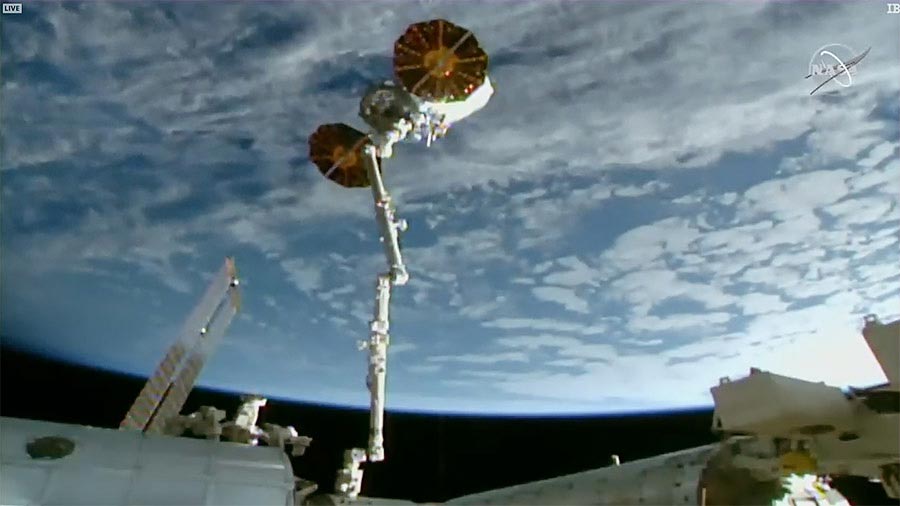
    Canadarm2 Robotic Arm Releasing Northrop Grumman Cygnus Space Freighter
    The Northrop Grumman Cygnus space freighter is in the grip of the Canadarm2 robotic arm moments before its release above the South Pacific Ocean. Credit: NASA TV

    After departure, the Kentucky Re-Entry Probe Experiment (KREPE) stowed inside Cygnus will take measurements to demonstrate a thermal protection system for spacecraft and their contents during re-entry in Earth’s atmosphere, which can be difficult to replicate in ground simulations.

    Cygnus will deorbit on Wednesday, December 15, following a deorbit engine firing to set up a destructive re-entry in which the spacecraft, filled with waste the space station crew packed in the spacecraft, will burn up in Earth’s atmosphere.

    Cygnus arrived at the space station on August 12, following a launch two days prior on Northrop Grumman’s Antares rocket from NASA’s Wallops Flight Facility on Wallops Island, Virginia. It was the company’s 16th commercial resupply services mission to the space station for NASA. Northrop Grumman named the spacecraft after NASA astronaut Ellison Onizuka, the first Asian American astronaut.

    Never miss a breakthrough: Join the SciTechDaily newsletter.
    Follow us on Google and Google News.

    International Space Station NASA Northrop Grumman
    Share. Facebook Twitter Pinterest LinkedIn Email Reddit

    Related Articles

    Cygnus’ Fiery Farewell: Space Freighter To Burn Up in Earth’s Atmosphere

    Cygnus Space Freighter Arrives at ISS With Only One Working Solar Array

    Cygnus Spacecraft Prepares for Rendezvous With International Space Station

    NASA Orders Additional Cargo Flights to Space Station From Northrop Grumman and SpaceX

    Cygnus Spacecraft Installed to Space Station for Cargo Transfers

    Northrop Grumman Cygnus Spacecraft Launches NASA Science, Cargo to International Space Station

    Intriguing NASA Science Experiments on Next Northrop Grumman Space Station Mission

    NASA Science and Cargo Launches on Northrop Grumman Resupply Mission to Space Station

    Cygnus Space Freighter Departs International Space Station

    Leave A Reply Cancel Reply

    • Facebook
    • Twitter
    • Pinterest
    • YouTube

    Don't Miss a Discovery

    Subscribe for the Latest in Science & Tech!

    Trending News

    Doctors May Need To Rethink Calcium and Vitamin D Recommendations After Major Review

    Scientists Discover a Hidden Cause of Cellular Aging That Can Be Reversed

    Archaeologists Have Found Something Unexpected Inside a 1,600-Year-Old Egyptian Mummy

    Scientists May Have Found a Completely New Way To Treat Depression

    New 7-Dimensional Theory May Finally Solve the Black Hole Information Paradox

    Scientists Made Older Mice Biologically Younger Using Gut Microbes

    Scientists Finally Uncover Why Ozempic Stops Working for Some People

    Wasp Colonies Explode Into Violence After Losing Their Queen

    Follow SciTechDaily
    • Facebook
    • Twitter
    • YouTube
    • Pinterest
    • Newsletter
    • RSS
    SciTech News
    • Biology News
    • Chemistry News
    • Earth News
    • Health News
    • Physics News
    • Science News
    • Space News
    • Technology News
    Recent Posts
    • Scientists Finally Uncover How a “Forever Chemical” Causes Birth Defects
    • Scientists Uncover the Earliest Brain Changes That May Predict Alzheimer’s Decades Before Symptoms
    • Mystery Solved: The Decades-Old Secret Lurking Beneath North Carolina’s Blueberry Farms
    • Surprising New Study Challenges a Century-Old Theory of Habit Formation
    • Scientists Turn Seawater Into Drinking Water Without Toxic Brine
    Copyright © 1998 - 2026 SciTechDaily. All Rights Reserved.
    • Science News
    • About
    • Contact
    • Editorial Board
    • Privacy Policy
    • Terms of Use

    Type above and press Enter to search. Press Esc to cancel.