
Close Menu
    Facebook X (Twitter) Instagram
    SciTechDaily
    • Biology
    • Chemistry
    • Earth
    • Health
    • Physics
    • Science
    • Space
    • Technology
    Facebook X (Twitter) Pinterest YouTube RSS
    SciTechDaily
    Home»Earth»Daintree: A Rainforest Like No Other – With a Vast Range of Unique Species
    Earth

    Daintree: A Rainforest Like No Other – With a Vast Range of Unique Species

    By Adam Voiland, NASA Earth ObservatoryNovember 23, 2021No Comments3 Mins Read
    Facebook Twitter Pinterest Telegram LinkedIn WhatsApp Email Reddit
    Share
    Facebook Twitter LinkedIn Pinterest Telegram Email Reddit
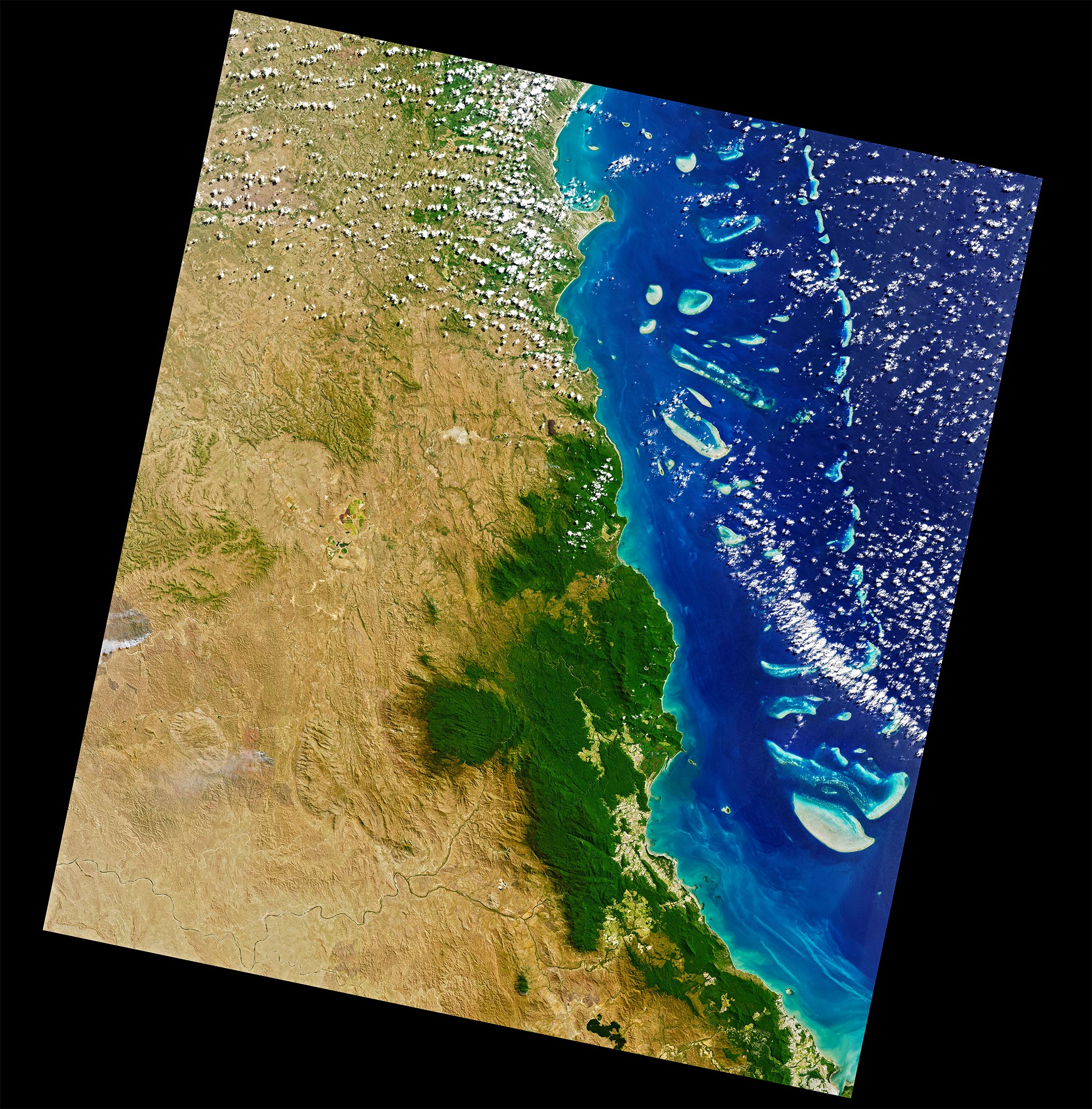
    Daintree Rainforest 2019 Annotated
    Daintree Rainforest Australia, September 5, 2019

    The Daintree region of Queensland, Australia, is home to one of the world’s oldest forests and hosts a vast range of unique species.

    There are few other places like Daintree rainforest in far north Queensland. Thought to be among the most ancient forests in the world, Daintree has many plants with lineages that scientists have traced back hundreds of millions of years to a time when several continents were joined together as Gondwana. All seven of the world’s oldest surviving fern species can still be found in Daintree, as well as 12 of the world’s 19 most primitive flowering plants.

    On September 5, 2019, the Operational Land Imager (OLI) on Landsat 8 captured this natural-color image of part of the rainforest. The steep escarpments and peaks of the Great Dividing Range play a key role in fueling the rain in Daintree. As moisture-laden winds blow in from the Coral Sea, orographic lifting pushes air up and over the mountains. In the process, water vapor cools, forms clouds, and produces rain. On average, higher-elevation parts of the rainforest receive more rain, especially on the eastern slopes of mountains.

    Many of the species found in Daintree are exclusive to the area. For the 40 million years since Australia broke from the Gondwana, evolutionary processes have hummed along in geographic isolation, yielding unusual types of animals such as marsupials and monotremes. That long period of isolation, along with northern Queensland’s stable and mild climate and rugged topography, has resulted in remarkable biodiversity. This one ecosystem provides habitat for 65 percent of Australia’s fern species, 60 percent of its butterflies, and 50 percent of its birds.

    Among the birds is the endangered southern cassowary—a large, flightless ratite with a blue head, two red wattles, and a distinctive dinosaur-like bony casque on its head. Cassowaries, the third largest type of bird in the world, have the helpful habit of distributing and seeding at least 70 different types of trees as they forage for fallen fruit.

    In September 2021, the Queensland government returned ownership of Daintree National Park to the Eastern Kuku Yalanji, an indigenous group that has had a presence in Australia’s rainforests for at least 50,000 years. Daintree, Ngalba-bulal, Kalkajaka and the Hope Islands national parks are managed jointly by the Eastern Kuku Yalanji people and the Queensland Government since the handover.

    NASA Earth Observatory image by Joshua Stevens, using Landsat data from the U.S. Geological Survey.

    Never miss a breakthrough: Join the SciTechDaily newsletter.
    Follow us on Google and Google News.

    Geography NASA NASA Earth Observatory Popular Rainforest
    Share. Facebook Twitter Pinterest LinkedIn Email Reddit

    Related Articles

    From Russia With Questions: Distinctive Striping Pattern in Siberia Puzzles Researchers

    A Geologist’s Dream: A Short Journey to the Center of the Earth

    Spied by Satellite: Phytoplankton Factory in the Argentine Sea

    Elephant Island: The Incredible Survival Story of Ernest Shackleton and the Crew of HMS Endurance

    Robinson Crusoe Island Captured by Landsat 8 Satellite

    Huacachina: The Only Natural Oasis in South America

    NASA Picturing Earth: Astronaut Photography In Focus [Video]

    NASA Scientists Map Beirut Blast Damage – Devastating Explosion Rocked Port Area

    NASA Advanced Rapid Imaging Satellite Maps Blast Damage: Beirut Explosion Aftermath

    Leave A Reply Cancel Reply

    • Facebook
    • Twitter
    • Pinterest
    • YouTube

    Don't Miss a Discovery

    Subscribe for the Latest in Science & Tech!

    Trending News

    Popular Sugar-Free Sweetener Linked to Liver Disease, Study Warns

    What Is Hantavirus? The Deadly Disease Raising Alarm Worldwide

    Scientists Just Discovered How the Universe Builds Monster Black Holes

    Scientists Unveil New Treatment Strategy That Could Outsmart Cancer

    A Simple Vitamin May Hold the Key to Treating Rare Genetic Diseases

    Scientists Think the Real Fountain of Youth May Be Hiding in Your Gut

    Ravens Don’t Follow Wolves, They Predict Them

    This Common Knee Surgery May Be Doing More Harm Than Good

    Follow SciTechDaily
    • Facebook
    • Twitter
    • YouTube
    • Pinterest
    • Newsletter
    • RSS
    SciTech News
    • Biology News
    • Chemistry News
    • Earth News
    • Health News
    • Physics News
    • Science News
    • Space News
    • Technology News
    Recent Posts
    • Scientists Build a Living AI Device Using Real Brain Cells
    • Why Are So Many New Fathers Dying? Scientists Say the U.S. Has a Dangerous Blind Spot
    • Scientists Identify Simple Supplement That Greatly Reduces Alzheimer’s Damage
    • You May Have a Dangerous Type of Cholesterol Even if Your Tests Look Normal
    • Study Reveals Dangerous Flaw in AI Symptom Checkers
    Copyright © 1998 - 2026 SciTechDaily. All Rights Reserved.
    • Science News
    • About
    • Contact
    • Editorial Board
    • Privacy Policy
    • Terms of Use

    Type above and press Enter to search. Press Esc to cancel.