
Close Menu
    Facebook X (Twitter) Instagram
    SciTechDaily
    • Biology
    • Chemistry
    • Earth
    • Health
    • Physics
    • Science
    • Space
    • Technology
    Facebook X (Twitter) Pinterest YouTube RSS
    SciTechDaily
    Home»Science»DARPA Researchers Use Electricity to Suppress Fire
    Science

    DARPA Researchers Use Electricity to Suppress Fire

    By DARPAJanuary 20, 2012No Comments2 Mins Read
    Facebook Twitter Pinterest Telegram LinkedIn WhatsApp Email Reddit
    Share
    Facebook Twitter LinkedIn Pinterest Telegram Email Reddit
    Researchers focus on electricity as means to fight fire
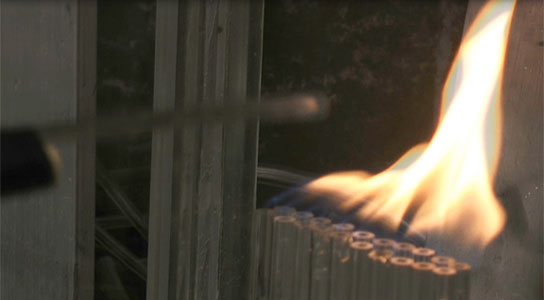
    Harvard’s DARPA team is researching an electricity-based firefighting method, using electromagnetic fields and acoustics to destabilize flame plasma and improve effectiveness in confined spaces or behind obstacles. Credit: DARPA

    DARPA’s research team at Harvard University is focusing on electricity as a means to fight fire. By using a flame-suppression system based on destabilization of flame plasma with electromagnetic fields and acoustics techniques, they hope to limit collateral damage and environmental toxicity while increasing the effectiveness of fighting fires in confined spaces or behind obstacles.

    Fire in a combat vehicle, aboard a ship or other confined space such as an airplane cockpit puts warfighters at risk. Today’s fire suppression technologies are many decades old and focus largely on disrupting the chemical reactions involved in combustion by spraying water, foams, or other chemicals on the flames. The key to transformative firefighting approaches may lie in the fundamentals of fire itself.

    While water primarily cools a flame, carbon dioxide suffocates it by diluting the surrounding oxygen. Chemical suppressants such as halons work to disrupt the combustion process. These technologies suffer from limitations such as collateral damage to valuable property, environmental toxicity, and limited effectiveness in different types of fire. All existing suppressants are composed of matter and must be physically delivered and dispersed throughout the fire. This limits the rate at which fires can be extinguished and the ability to combat fires in confined spaces or behind obstacles.

    According to Matthew Goodman, DARPA program manager, “We successfully suppressed small flames and limited re-ignition of those flames, as well as exhibited the ability to bend flames. These effects, to date are very local—scaling is a challenge that remains to be overcome.”

    DARPA’s Instant Fire Suppression (IFS) program, which ended recently, sought to establish the feasibility of a novel flame-suppression system based on destabilization of flame plasma with electromagnetic fields and acoustics techniques. The DARPA research team at Harvard University has demonstrated suppression of small methane and related fuel fires by using a hand-held electrode, or wand.

    “We’ve made scientific breakthroughs in our understanding and quantification of the interaction between electromagnetic and acoustic waves with flame plasma,” said Goodman. “Our goal was to advance understanding of this interaction and its applicability to flame plasma for suppressing flames.”

    Never miss a breakthrough: Join the SciTechDaily newsletter.
    Follow us on Google and Google News.

    DARPA Electricity Fire Harvard University Popular Sound
    Share. Facebook Twitter Pinterest LinkedIn Email Reddit

    Related Articles

    Scientists Use Acoustic Forces to Print Like Never Before

    Study Shows Digital Books Can Adversely Impact Overall Health

    Scientists Establish Functional Brain-to-Brain Interface between Human and Animal

    Helium Reveals Gibbons’ Developed & Far Ranging Vocalizations

    DARPA & Harvard’s Soft, Self-Camouflaging Robot

    DARPA Uses Cold Plasma to Suppress and Extinguish Fire

    Million-Year-Old Ash in South African Cave Yields Evidence of Cooking

    DARPA Researchers Treat Previously Lethal Doses of Radiation Successfully

    Lightning Foundry: World’s Largest Tesla Coils To Research Lightning

    Leave A Reply Cancel Reply

    • Facebook
    • Twitter
    • Pinterest
    • YouTube

    Don't Miss a Discovery

    Subscribe for the Latest in Science & Tech!

    Trending News

    Scientists May Have Found the Key to Jupiter and Saturn’s Moon Mystery

    Scientists Uncover Brain Changes That Link Pain to Depression

    Saunas May Do More Than Raise Body Temperature – They Activate Your Immune System

    Exercise in a Pill? Metformin Shows Surprising Effects in Cancer Patients

    Hidden Oceans of Magma Could Be Protecting Alien Life

    New Study Challenges Alzheimer’s Theories: It’s Not Just About Plaques

    Artificial Sweeteners May Harm Future Generations, Study Suggests

    Splashdown! NASA Artemis II Returns From Record-Breaking Moon Mission

    Follow SciTechDaily
    • Facebook
    • Twitter
    • YouTube
    • Pinterest
    • Newsletter
    • RSS
    SciTech News
    • Biology News
    • Chemistry News
    • Earth News
    • Health News
    • Physics News
    • Science News
    • Space News
    • Technology News
    Recent Posts
    • Humans Owe Their Eyes to a Tiny One-Eyed “Cyclops”
    • Researchers Capture Quantum Interference in One of Nature’s Rarest Atoms
    • Ancient DNA Reveals Irish Goats Have a 3,000-Year-Old Lineage Still Alive Today
    • Historians Reveal Secrets of the Strange Hat Wars That Shook Early Modern England
    • “A Plague Is Upon Us”: The Mass Death That Changed an Ancient City Forever
    Copyright © 1998 - 2026 SciTechDaily. All Rights Reserved.
    • Science News
    • About
    • Contact
    • Editorial Board
    • Privacy Policy
    • Terms of Use

    Type above and press Enter to search. Press Esc to cancel.