
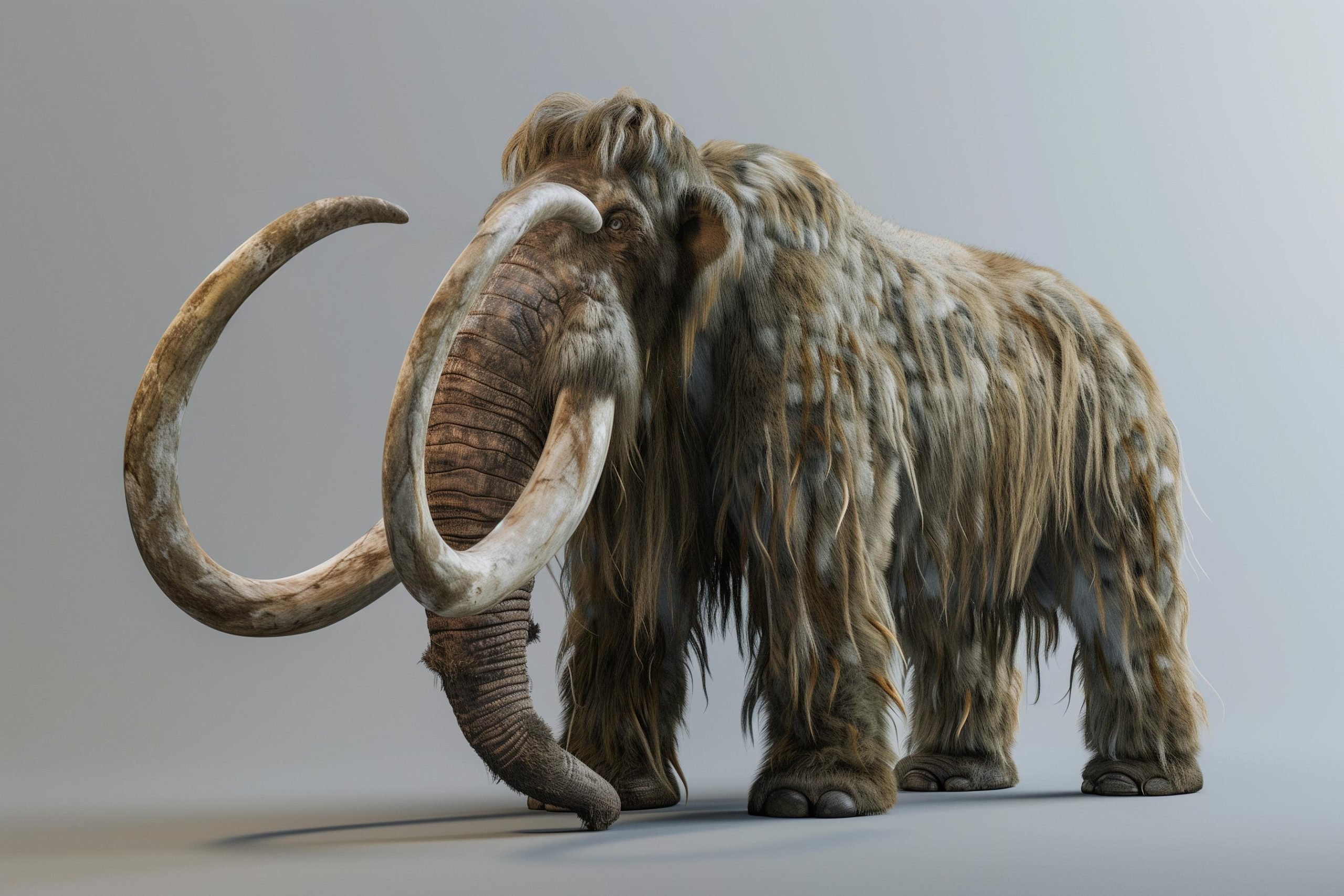
A groundbreaking study has mapped the genome and 3D chromosomal architecture of a 52,000-year-old woolly mammoth, uncovering details of its genetic activity and offering new prospects for de-extinction research.
An international team of researchers has assembled the genome and 3D chromosomal structures of a 52,000-year-old woolly mammoth. This is the first time such a feat has been achieved for any ancient DNA sample.
The fossilized chromosomes, which are around a million times longer than most ancient DNA fragments, provide insight into how the mammoth’s genome was organized within its living cells and which genes were active within the skin tissue from which the DNA was extracted. This unprecedented level of structural detail was retained because the mammoth underwent freeze-drying shortly after it died, which meant that its DNA was preserved in a glass-like state.
The results are presented today (July 11) in the journal Cell.
Advancements in Genomic Architecture
“This is a new type of fossil, and its scale dwarfs that of individual ancient DNA fragments—a million times more sequence,” says corresponding author Erez Lieberman Aiden, Director of the Center for Genome Architecture at Baylor College of Medicine. “It is also the first time a karyotype of any sort has been determined for an ancient sample.”
Knowing the three-dimensional architecture of a genome provides a lot of additional information beyond its sequence, but most ancient DNA specimens consist of very small, scrambled DNA fragments. Building off work mapping the 3D structure of the human genome, Aiden thought that if the right ancient DNA sample could be found—one with the 3D organization of the fragments still intact—it would be possible to use the same strategies to assemble ancient genomes.
Unprecedented DNA Preservation
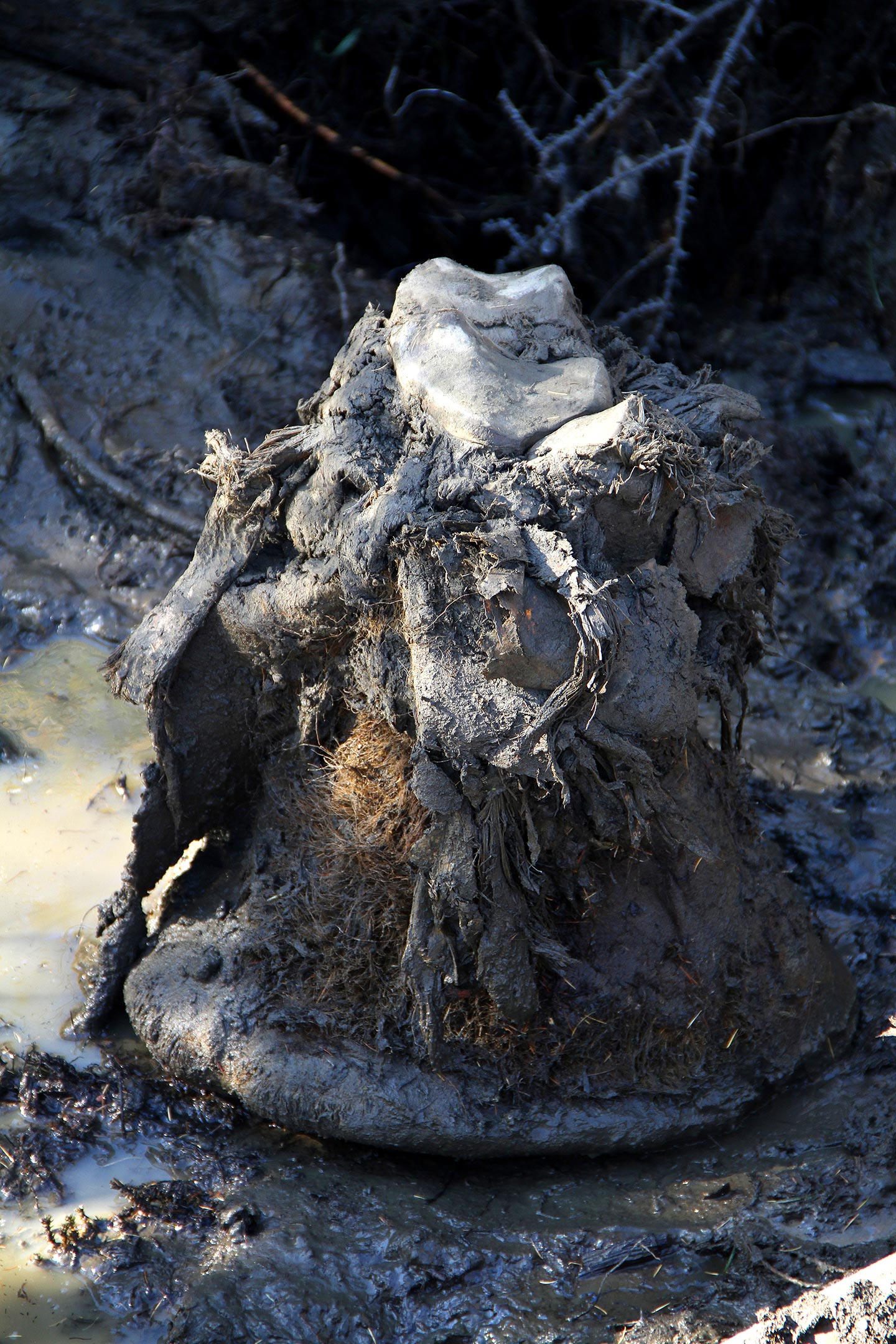
The researchers tested dozens of samples over the course of five years before landing on an unusually well-preserved woolly mammoth that was excavated in northeastern Siberia in 2018. “We think it spontaneously freeze-dried shortly after its death,” says corresponding author Olga Dudchenko of the Center for Genome Architecture at Baylor College of Medicine. “The nuclear architecture in a dehydrated sample can survive for an incredibly long period of time.”
To reconstruct the mammoth’s genomic architecture, the researchers extracted DNA from a skin sample taken behind the mammoth’s ear. They used a method called Hi-C that allows them to detect which sections of DNA are likely to be in close spatial proximity and interact with each other in their natural state in the nucleus.
Insights Into Woolly Mammoth Genetics
“Imagine you have a puzzle that has three billion pieces, but you don’t have the picture of the final puzzle to work from,” says corresponding author Marc A. Marti-Renom, an ICREA research professor and structural genomicist at the Centre Nacional d’Anàlisi Genòmica (CNAG) and the Centre for Genomic Regulation (CRG) in Barcelona. “Hi-C allows you to have an approximation of that picture before you start putting the puzzle pieces together.”
Then, they combined the physical information from the Hi-C analysis with DNA sequencing to identify the interacting DNA sections and create an ordered map of the mammoth’s genome, using the genomes of present-day elephants as a template. The analysis revealed that woolly mammoths had 28 chromosomes—the same number as present-day Asian and African elephants. Remarkably, the fossilized mammoth chromosomes also retained a huge amount of physical integrity and detail, including the nanoscale loops that bring transcription factors in contact with the genes they control.
By examining the compartmentalization of genes within the nucleus, the researchers were able to identify genes that were active and inactive within the mammoth’s skin cells—a proxy for epigenetics or transcriptomics. The mammoth skin cells had distinct gene activation patterns compared to the skin cells of its closest relative, the Asian elephant, including for genes potentially related to its woolly-ness and cold tolerance.
Implications for De-Extinction Efforts
“For the first time, we have a woolly mammoth tissue for which we know roughly which genes were switched on and which genes were off,” says Marti-Renom. “This is an extraordinary new type of data, and it’s the first measure of cell-specific gene activity of the genes in any ancient DNA sample.”
Although the method used in this study hinges on unusually well-preserved fossils, the researchers are optimistic that it could be used to study other ancient DNA specimens—from mammoths to Egyptian mummies—as well as more recently preserved museum specimens.
For mammoths, the next steps would include examining the epigenetic patterns of other tissues. “These results have obvious consequences for contemporary efforts aimed at woolly mammoth de-extinction,” says corresponding author M. Thomas Gilbert, a paleo-genomicist at the University of Copenhagen and the Norwegian University of Science and Technology.
Reference: “Three-dimensional genome architecture persists in a 52,000-year-old woolly mammoth skin sample” by Marcela Sandoval-Velasco, Olga Dudchenko, Juan Antonio Rodríguez, Cynthia Pérez Estrada, Marianne Dehasque, Claudia Fontsere, Sarah S.T. Mak, Ruqayya Khan, Vinícius G. Contessoto, Antonio B. Oliveira Junior, Achyuth Kalluchi, Bernardo J. Zubillaga Herrera, Jiyun Jeong, Renata P. Roy, Ishawnia Christopher, David Weisz, Arina D. Omer, Sanjit S. Batra, Muhammad S. Shamim, Neva C. Durand, Brendan O’Connell, Alfred L. Roca, Maksim V. Plikus, Mariya A. Kusliy, Svetlana A. Romanenko, Natalya A. Lemskaya, Natalya A. Serdyukova, Svetlana A. Modina, Polina L. Perelman, Elena A. Kizilova, Sergei I. Baiborodin, Nikolai B. Rubtsov, Gur Machol, Krisha Rath, Ragini Mahajan, Parwinder Kaur, Andreas Gnirke, Isabel Garcia-Treviño, Rob Coke, Joseph P. Flanagan, Kelcie Pletch, Aurora Ruiz-Herrera, Valerii Plotnikov, Innokentiy S. Pavlov, Naryya I. Pavlova, Albert V. Protopopov, Michele Di Pierro, Alexander S. Graphodatsky, Eric S. Lander, M. Jordan Rowley, Peter G. Wolynes, José N. Onuchic, Love Dalén, Marc A. Marti-Renom, M. Thomas P. Gilbert and Erez Lieberman Aiden, 11 July 2024, Cell.
DOI: 10.1016/j.cell.2024.06.002
This research was supported by the National Institutes of Health, the National Science Foundation, the Welch Foundation, McNair Medical Institute, US-Israel Binational Science Foundation, Spanish Ministerio de Ciencia e Innovación, the European Research Council, Swedish Research Council, and the European Union.
Never miss a breakthrough: Join the SciTechDaily newsletter.
Follow us on Google and Google News.
2 Comments
I don’t think it’s right to bring back an extinct animal. It’s gone for a reason and the poor animal will just be put in a fenced area and not have a roam free life. Or it will be held by a scientist to preform lab test on it. It’s cruel and inhumane to have an animal live in that type of world. Leave them be.
Nature gets rid of some species for a reason. Bringing back this poor animal to be hunted, poked at, and eventually destroyed because it was a mistake is unconscionable. Have we learned nothing?