
A new approach using the hyoid bone uncovered distinct growth patterns.
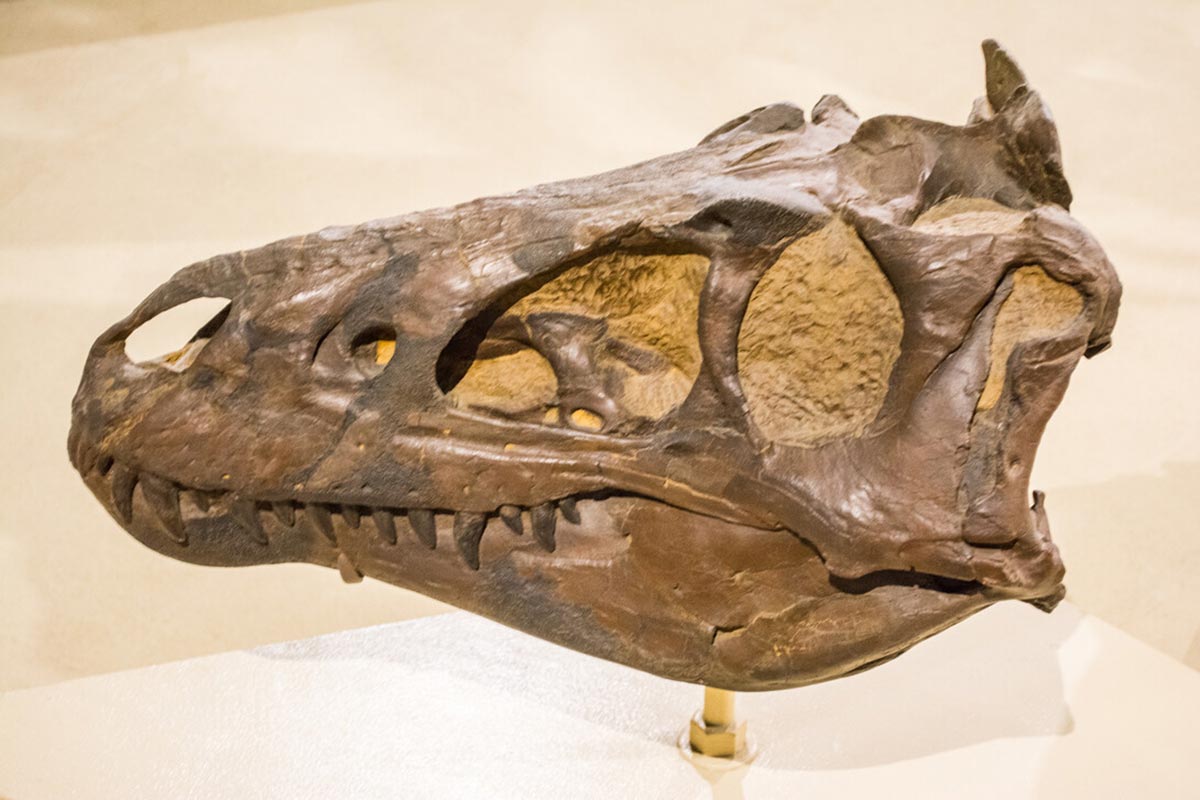
A new study has brought clarity to a long-running debate in dinosaur research by strengthening the case that Nanotyrannus was a small, separate species rather than a young Tyrannosaurus rex. The research adds weight to the idea that this smaller predator, often described as a miniature relative of T. rex, truly existed as its own distinct dinosaur.
The work was carried out by a team that included Ashley Poust of the University of Nebraska State Museum and was led by Christopher Griffin of Princeton University. The researchers applied a new method to assess the age of the Nanotyrannus holotype, a fossil skull housed at the Cleveland Museum of Natural History.
Their analysis focused on the ceratobranchial, also known as the hyoid bone, which was preserved alongside the skull. By studying the microscopic structure of the fossilized bone, a technique known as bone histology, the team determined that the animal had reached adulthood when it died and was not a juvenile Tyrannosaurus rex. The results were published on Dec. 4 in Science.
“This small-bodied — in relation to the T. rex — meat-eater’s hyoid bone showed growth patterns that suggest maturity or approaching maturity,” said Poust, Voorhies Endowed Curator of Vertebrate Paleontology. “This lets us be confident in keeping the name Nanotyrannus, because this animal is clearly not on a growth path to becoming a Tyrannosaurus rex.”
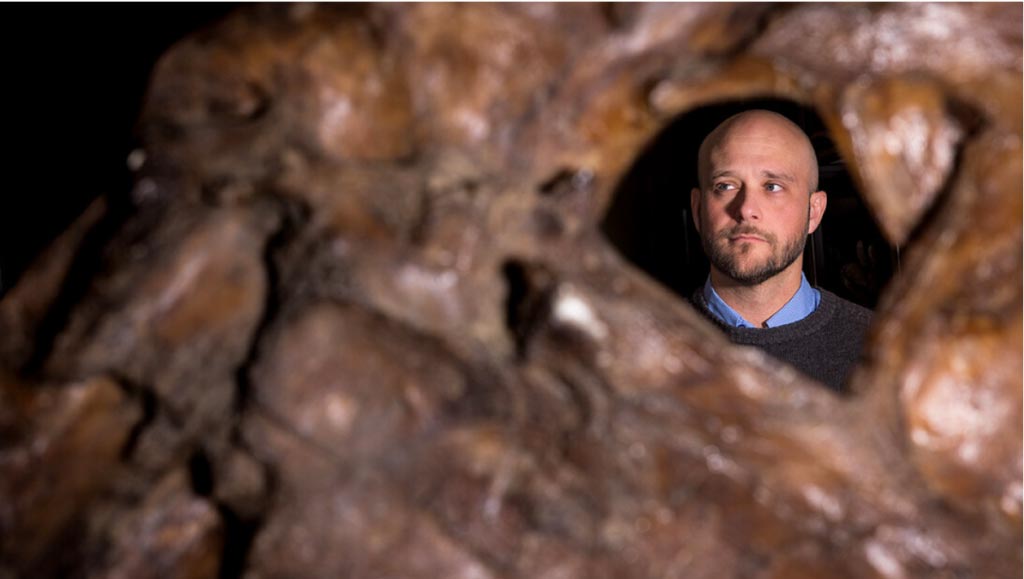
Based on skeletal evidence, researchers estimate that Nanotyrannus reached a height of about 18 feet. This is far smaller than the more than 40-foot length typically associated with a fully grown T. rex.
Revisiting a fossil with new tools
The Nanotyrannus holotype skull was first discovered in 1942 and initially assigned to the genus Gorgosaurus. After additional study, it was reclassified in 1988 as Nanotyrannus lancensis. The new findings further support its status as a distinct species, a conclusion that surprised the researchers given the long-standing assumption that the fossil represented a young Tyrannosaurus rex.
“At the time, the prevailing consensus was that the Nanotyrannus holotype skull represented an immature Tyrannosaurus rex, and was not a separate species,” said Griffin, assistant professor of geosciences at Princeton. “Our expectations were simply following along with that consensus, but once we sampled the hyoid and saw features that strongly indicated maturity, we knew that we had to examine that idea more skeptically.
A new method for aging dinosaurs
To confirm their findings, Poust leaned on his expertise in bone histology to examine hyoids from additional species, including modern-day relatives of dinosaurs (ostriches, alligators, and lizards) and additional dinosaur fossils. The methodology, previously untested on dinosaur fossils, may open new doors of inquiry, Poust said, especially for more limited specimens.
“It’s expanding, in a small way, the ability to learn about animals’ past lives,” Poust said. “It was exciting to show that the growth signal is so conserved across the body. Maybe this is a tiny wedge to start investigating that in some different ways.”
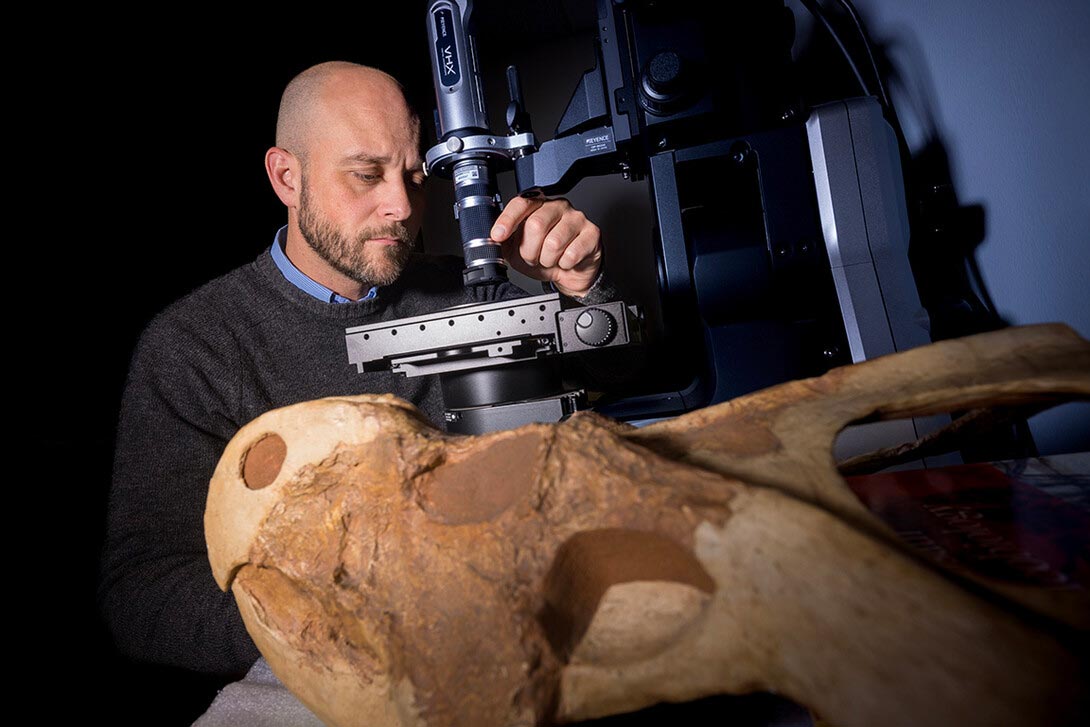
Poust was surprised that the hyoid could be a reliable way to determine a fossil’s approximate age at death, adding that it seems to be as useful as a rib or femur bone, which are more traditionally used for fossil research.
Independent studies converge on the same answer
The scientific debate regarding whether Nanotyrannus existed is likely concluded, as these findings quickly followed a recent paper in Nature that also examined a suspected Nanotyrannus fossil found in Montana, now kept at the North Carolina Museum of Natural Sciences.
“We investigated the holotype specimen because it is the one fossil that formally defines the species — any other specimens that are called Nanotyrannus lancensis are being referred to this one specimen, which holds the species name,” Griffin said. “Since this specimen is mature, this definitively shows that Nanotyrannus is distinct from Tyrannosaurus.”
The conclusion of one debate, though, raises new questions about predator diversity and ecosystem dynamics.
“You’re left with at least two different-sized meat eaters in the same environment, which has some big implications for ecology and the extinction of dinosaurs,” Poust said. “Knowing more about what existed gives us a sense of how big the fossil record is and how species change through time. And understanding the complexities of an ecosystem is important.”
Reference: “A diminutive tyrannosaur lived alongside Tyrannosaurus rex” by Christopher T. Griffin, Jeb Bugos, Ashley W. Poust, Zachary S. Morris, Riley S. Sombathy, Michael D. D’Emic, Patrick M. O’Connor, Holger Petermann, Matteo Fabbri and Caitlin Colleary, 4 December 2025, Science.
DOI: 10.1126/science.adx8706
Never miss a breakthrough: Join the SciTechDaily newsletter.
Follow us on Google and Google News.