
Close Menu
    Facebook X (Twitter) Instagram
    SciTechDaily
    • Biology
    • Chemistry
    • Earth
    • Health
    • Physics
    • Science
    • Space
    • Technology
    Facebook X (Twitter) Pinterest YouTube RSS
    SciTechDaily
    Home»Health»Decoding Dementia: How a Brain Protein Could Lead to New Treatments
    Health

    Decoding Dementia: How a Brain Protein Could Lead to New Treatments

    By Indiana University School of MedicineDecember 28, 2023No Comments3 Mins Read
    Facebook Twitter Pinterest Telegram LinkedIn WhatsApp Email Reddit
    Share
    Facebook Twitter LinkedIn Pinterest Telegram Email Reddit
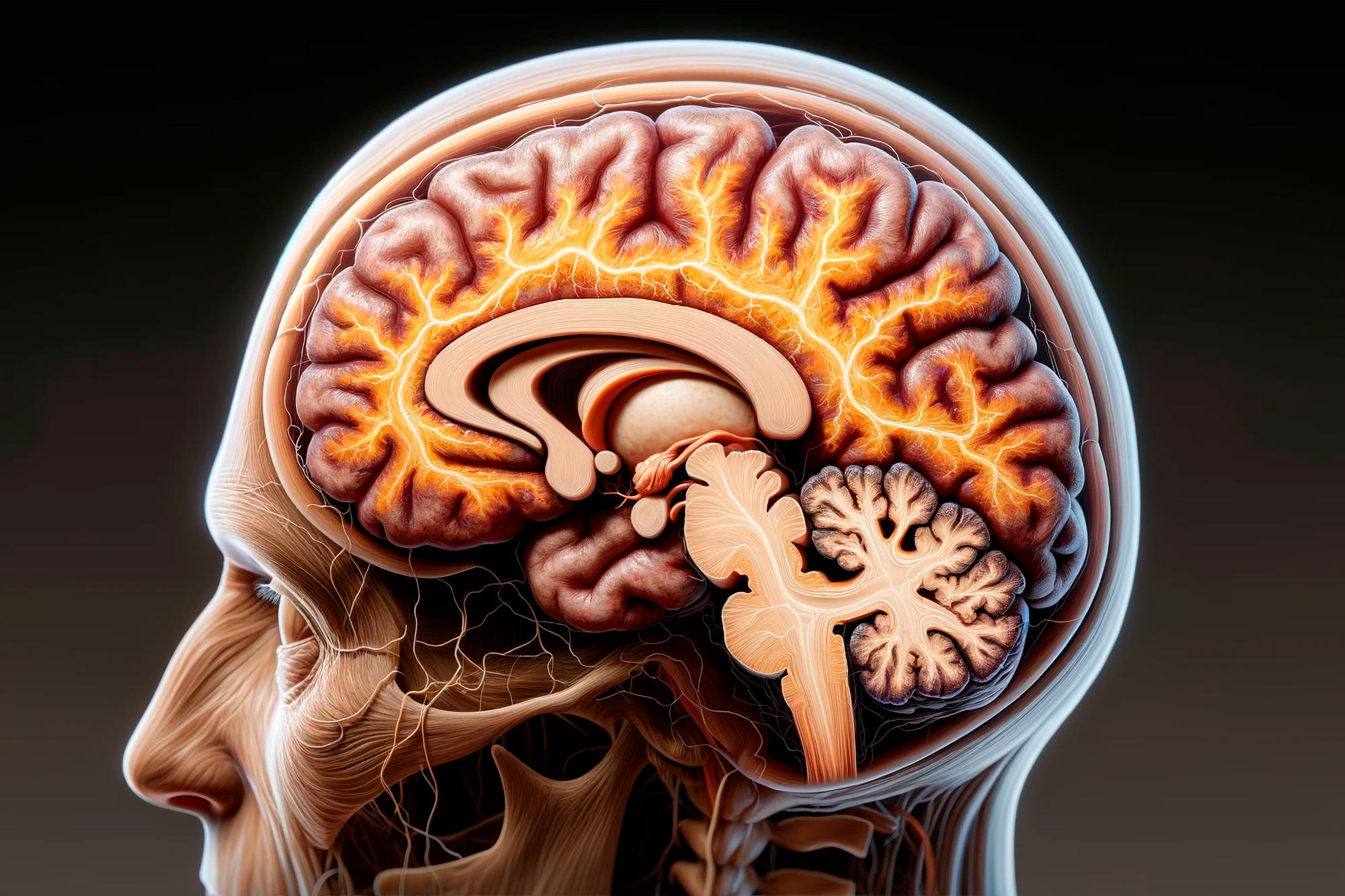
    Brain Neuroscience Dementia Art Concept Illustration
    Researchers discovered a crucial protein, TAF15, in frontotemporal dementia (FTD) cases. This finding, offering new treatment avenues, was achieved using advanced neuropathologic and molecular techniques, marking a breakthrough in understanding and potentially treating this form of dementia.

    Discovery could lead to new, targeted therapeutics for frontotemporal dementia.

    An international team of researchers including experts at the Indiana University School of Medicine has identified a protein found in the brains of people with frontotemporal dementia (FTD), discovering a new target for potential treatments for the disease.

    Understanding Frontotemporal Dementia

    According to the National Institutes of Health, FTD results from damage to neurons in the frontal and temporal lobes of the brain. People with this type of dementia typically present symptoms, including unusual behaviors, emotional problems, trouble communicating, difficulty with work, or in some cases difficulty with walking, between the ages of 25 and 65.

    Research Breakthrough in Neurodegenerative Disorders

    Neurodegenerative disorders, including dementias and Amyotrophic Lateral Sclerosis (ALS), occur when specific proteins form amyloid filaments in the nerve cells of the brain and spinal cord. The multidisciplinary team of researchers—including members from the Medical Research Council (MRC) Laboratory of Molecular Biology, the IU School of Medicine and the University College London Queen Square Institute of Neurology—found that in cases of FTD, a protein called TAF15 forms these amyloid filaments in the cells of the brain and the spinal cord. On December 6, they published their findings in the journal Nature.

    Cryo-EM Structure of TAF15 Amyloid Filaments
    Cryo-EM structure of TAF15 amyloid filaments as discovered in patients with frontotemporal dementia. Credit: Indiana University

    Bernardino Ghetti, MD is a Distinguished Professor at the IU School of Medicine and has been studying neurodegenerative dementias for 50 years. As a lead neuropathologist on the project, Ghetti and his team studied the protein aggregates from brains donated by four people who had frontotemporal dementia and motor weakness. Together with their colleagues in the UK, IU researchers used neuropathologic and molecular techniques and cutting-edge cryo-electron microscopy (cryo-EM) at atomic resolution to discover the presence of the amyloid filaments made of TAF15 protein in multiple brain areas. However, it is important to note that TAF15 amyloid affects also nerve cells of the motor system.

    Important Breakthrough

    “This discovery represents an important breakthrough that recognizes TAF15 as a potential target for the development of diagnostic and therapeutic strategies toward a lesser-known form of frontotemporal lobar degeneration associated with frontotemporal dementia,” Ghetti said.

    Reference: “TAF15 amyloid filaments in frontotemporal lobar degeneration” by Stephan Tetter, Diana Arseni, Alexey G. Murzin, Yazead Buhidma, Sew Y. Peak-Chew, Holly J. Garringer, Kathy L. Newell, Ruben Vidal, Liana G. Apostolova, Tammaryn Lashley, Bernardino Ghetti and Benjamin Ryskeldi-Falcon, 6 December 2023, Nature.
    DOI: 10.1038/s41586-023-06801-2

    Additional authors on the study are the MRC Laboratory of Molecular Biology’s Stephan Tetter, Diana Arseni, Alexey G. Murzin, Sew Y. Peak-Chew and Benjamin Ryskeldi-Falcon; the University College London’s Yazead Buhidma and Tammaryn Lashley; and the IU School of Medicine’s Holly J. Garringer, Kathy L. Newell, Ruben Vidal and Liana G. Apostolova.

    The study was in part funded by the NIH’s National Institute on Aging and National Institute of Neurological Disorders and Stroke.

    Never miss a breakthrough: Join the SciTechDaily newsletter.
    Follow us on Google and Google News.

    Dementia Indiana University Neuroscience Protein
    Share. Facebook Twitter Pinterest LinkedIn Email Reddit

    Related Articles

    Scientists Uncover New Alzheimer’s Drug Target That Slashes Brain Plaques

    Alzheimer’s Iceberg: 200+ Hidden Proteins That May Be Quietly Destroying Memory

    Could These Proteins Be Behind Dementia in Your 40s or 50s?

    How the Reduction of a Gene Variant Found in the Brain’s Immune Cells Could Diminish the Risk of Alzheimer’s Disease

    New Study Finds That a Certain Protein Helps Protect Against Dementia

    Pulse Pressure: A Game Changer in the Fight Against Dementia

    The Combination of Foods You Eat Together May Raise Dementia Risk

    An Aspirin a Day Does Not Keep Dementia at Bay – No Difference Than Placebo

    Alzheimer’s Spreads Throughout the Brain by Jumping From Neuron to Neuron

    Leave A Reply Cancel Reply

    • Facebook
    • Twitter
    • Pinterest
    • YouTube

    Don't Miss a Discovery

    Subscribe for the Latest in Science & Tech!

    Trending News

    Breakthrough Bowel Cancer Trial Leaves Patients Cancer-Free for Nearly 3 Years

    Natural Compound Shows Powerful Potential Against Rheumatoid Arthritis

    100,000-Year-Old Neanderthal Fossils in Poland Reveal Unexpected Genetic Connections

    Simple “Gut Reset” May Prevent Weight Gain After Ozempic or Wegovy

    2.8 Days to Disaster: Scientists Warn Low Earth Orbit Could Suddenly Collapse

    Common Food Compound Shows Surprising Power Against Superbugs

    5 Simple Ways To Remember More and Forget Less

    The Atomic Gap That Could Cost the Semiconductor Industry Billions

    Follow SciTechDaily
    • Facebook
    • Twitter
    • YouTube
    • Pinterest
    • Newsletter
    • RSS
    SciTech News
    • Biology News
    • Chemistry News
    • Earth News
    • Health News
    • Physics News
    • Science News
    • Space News
    • Technology News
    Recent Posts
    • Scientists Uncover “Astonishing” Hidden Property of Light
    • Scientists Discover Stem Cells That Could Regrow Teeth and Bone
    • Scientists Discover Natural Molecule That Stops Alzheimer’s Protein Clumps From Forming
    • Early Cannabis Use May Stall Key Brain Skills in Teens
    • Popular Vitamin D Supplement Has “Previously Unknown” Negative Effect, Study Finds
    Copyright © 1998 - 2026 SciTechDaily. All Rights Reserved.
    • Science News
    • About
    • Contact
    • Editorial Board
    • Privacy Policy
    • Terms of Use

    Type above and press Enter to search. Press Esc to cancel.