
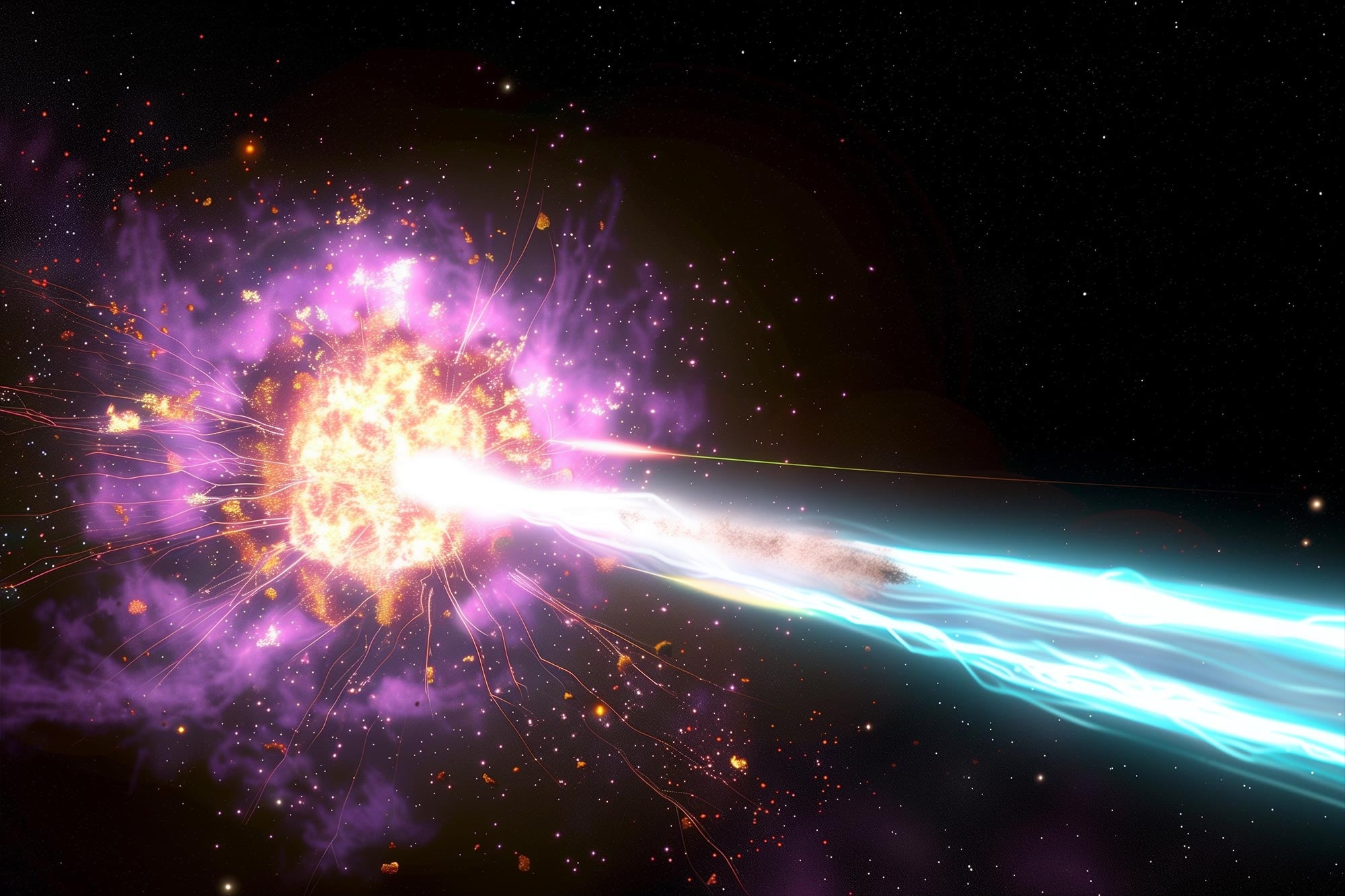
Accurate new mass measurements of two rare isotopes reshape our understanding of a crucial reaction in X-ray bursts.
A research team at the Institute of Modern Physics (IMP) under the Chinese Academy of Sciences (CAS) has successfully carried out direct mass measurements of two extremely short-lived atomic nuclei, phosphorus-26 and sulfur-27. Achieving this level of precision offers important new data for calculating nuclear reaction rates that occur during X-ray bursts, which helps scientists better understand how elements form in such intense environments.
The results were reported in The Astrophysical Journal.
Type I X-ray bursts occur often in the galaxy and involve powerful thermonuclear eruptions. They are typically seen in low-mass X-ray binary systems where a neutron star pulls in material from a companion star.
During these bursts, hydrogen and helium on the neutron star’s surface undergo unstable thermonuclear burning. This activity drives a series of rapid proton capture events known as the rp-process. In this sequence of reactions, atomic nuclei absorb protons at high speed to create heavier elements. The efficiency and direction of these reactions rely heavily on having accurate mass measurements for the nuclei involved.
Challenges Near the Proton Drip Line
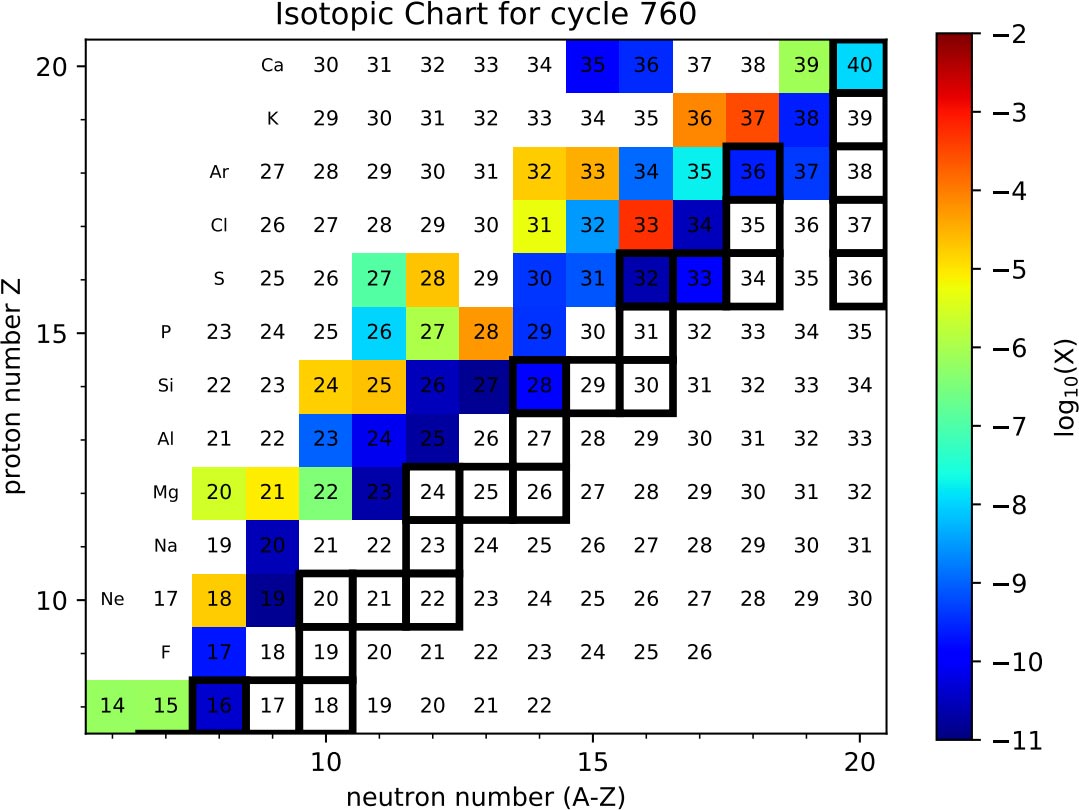
However, the rp-process involves many nuclei close to the proton drip line, which typically have short lifetimes and unknown masses. As a result, accurately calculating the nuclear reaction pathways is very challenging.
According to Dr. Xinliang Yan of IMP, one of the corresponding authors of the study, the significance of a potential reaction branch involving phosphorus-26 and sulfur-27 in the rp-process has been debated for years due to the lack of precise mass data for these nuclei.
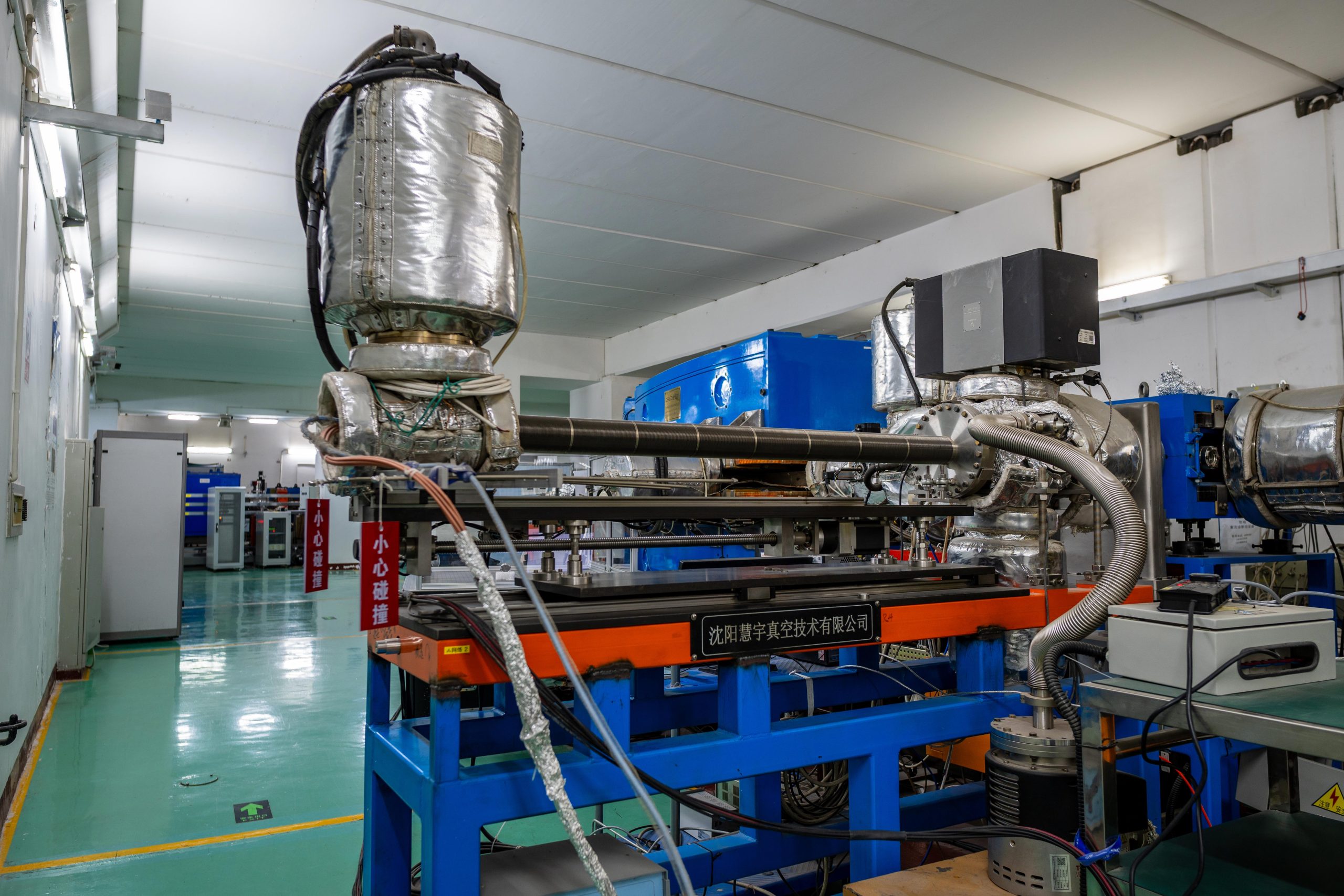
To acquire accurate mass data for phosphorus-26 and sulfur-27, the researchers made direct measurements using magnetic-rigidity-defined isochronous mass spectrometry at the Cooling Storage Ring of the Heavy Ion Research Facility in Lanzhou (HIRFL-CSR). They found that the proton separation energy of sulfur-27 is 129–267 keV higher than previously thought, with its precision showing an eightfold improvement over previous measurements.
Impact on Reaction Rates in X-Ray Bursts
With the new mass data, the researchers discovered that under X-ray burst conditions, the updated reaction rate of 26P(p,γ)27S is significantly enhanced within the temperature range of 0.4–2 Gigakelvin (GK), reaching up to five times the previously estimated rate at 1 GK. The uncertainty of the reverse reaction rate has been greatly reduced. The new reaction rate was found to increase the abundance ratio of sulfur-27 to phosphorus-26, indicating a more efficient reaction flow toward sulfur-27.
“Our high-precision mass results and the corresponding new reaction rate provide more reliable input for astrophysical reaction networks, resolving the uncertainties in the nucleosynthesis pathways within the phosphorus-sulfur region of X-ray bursts,” said Dr. Suqing Hou from IMP, another corresponding author of the study.
Reference: “Precision Mass Measurement of 26P and 27S and Their Impact on the 26P(p,γ)27S Reaction in Stellar X-Ray Bursts” by Z. Y. Chen, X. L. Yan, S. Q. Hou, J. B. Liu, J. Y. Shi, X. H. Zhou, Y. H. Zhang, M. Wang, X. Zhou, M. Zhang, H. F. Li, M. Z. Sun, Y. M. Xing, P. Shuai, X. Xu, W. J. Huang, Q. Wang, Y. N. Song, H. Y. Deng, H. Y. Jiao, Y. F. Luo, Yu. A. Litvinov, K. Blaum and T. Yamaguchi, 31 November 2025, The Astrophysical Journal.
DOI: 10.3847/1538-4357/ae1470
The study was conducted in collaboration with researchers from Germany’s GSI Helmholtz Centre for Heavy Ion Research and the Max Planck Institute for Nuclear Physics, as well as Japan’s Saitama University.
This work was supported by the National Key Research and Development Program of China, the Youth Innovation Promotion Association of CAS, and the Regional Development Young Scholars Project of CAS.
Never miss a breakthrough: Join the SciTechDaily newsletter.
Follow us on Google and Google News.