
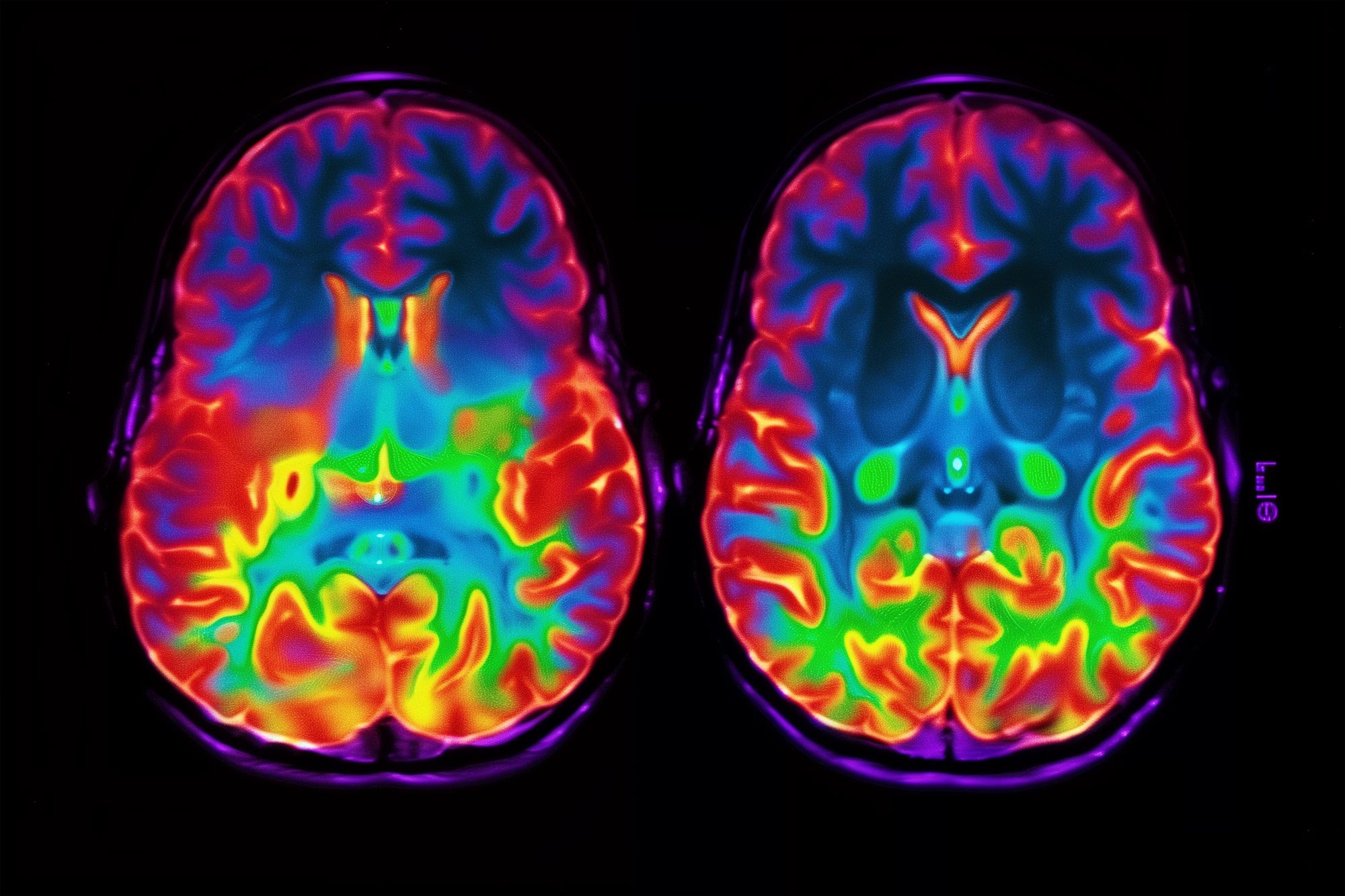
Researchers have discovered how low doses of ketamine target specific sites on NMDA receptors to rapidly alleviate depression.
This binding explains ketamine’s fast-acting and long-lasting antidepressant effects, different from its anesthetic uses at higher doses. The study, involving detailed molecular simulations, paves the way for developing new, potentially non-addictive antidepressants.
Groundbreaking Ketamine Research
Neuroscientists at the University at Buffalo have pinpointed the binding site of low-dose ketamine, shedding light on how this “wonder drug” can relieve major depression symptoms within hours, with effects that last for days.
This discovery, published recently in the journal Molecular Psychiatry, not only provides a deeper understanding of how depression operates in the brain but also paves the way for developing ketamine-like treatments for other brain disorders.
Lifesaving Antidepressant Effects of Ketamine
Ketamine has been used since the 1960s as an anesthetic, but in 2000, the first trial of far lower doses of ketamine proved its rapid efficacy in treating major depression and suicidal ideation.
“Due to its fast and long-lasting effects, low-dose ketamine proved to be literally a lifesaving medicine,” says Gabriela K. Popescu, PhD, senior author on the research and professor of biochemistry in the Jacobs School of Medicine and Biomedical Sciences at UB.
Traditional antidepressants take months to kick in, which increases the risk for some patients to act on suicidal thoughts during the initial period of treatment. Ketamine provides almost instant relief from depressive symptoms and remains effective for several days and up to a week after administration. Since this observation was published in the early 2000s, ketamine clinics, where the drug is administered intravenously to treat depression, have been established in cities nationwide.
But just how ketamine achieves such a dramatic antidepressive effect so quickly has been poorly understood at the molecular level. This information is critical to understanding not only how best to use ketamine, but also to developing similar drugs.
Selective Effects on NMDA Receptors
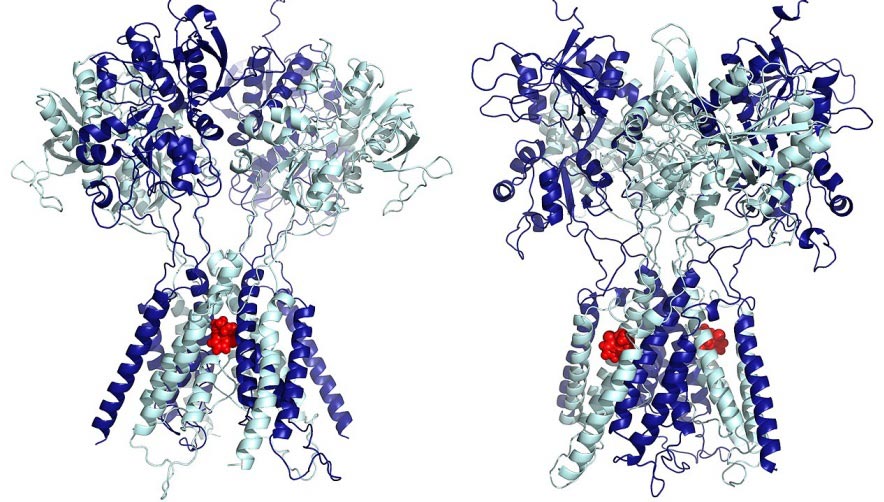
Ketamine binds to a class of neurotransmitter receptors called N-methyl-D-aspartate (NMDA) receptors. Popescu is an expert on how these receptors produce electrical signals that are essential for cognition, learning and memory, and how these signals, when dysregulated, result in psychiatric symptoms.
“We demonstrate in this article how ketamine at very low concentrations can affect the activity of only select populations of NMDA receptors,” says Popescu.
NMDA receptors are present throughout the brain and are essential for maintaining consciousness. For this reason, she explains, drugs that act indiscriminately on all NMDA receptors have unacceptable psychiatric side effects. “We believe that the selectivity we uncovered in our research explains how low-dose ketamine can treat major depression and prevent suicides in people with depression,” Popescu says.
Innovative Research Leads to Discovery
The research was sparked by an observation in her lab by co-author Sheila Gupta, then a UB undergraduate. “Sheila noticed that when applied onto NMDA receptors that were chronically active, ketamine had a stronger inhibitory effect than expected based on the literature,” Popescu explains. “We were curious about this discrepancy.”
Back when ketamine’s antidepressant effects first became known, researchers tried to find out how it worked by applying it onto synaptic currents produced by NMDA receptors, but the drug produced little or no effect.
“This observation caused many experts to turn their attention to receptors located outside synapses, which might be mediating ketamine’s antidepressive effects,” Popescu says. “Sheila’s observation that ketamine is a stronger inhibitor of receptors that are active for longer durations inspired us to look for mechanisms other than the direct current block, which was assumed to be the only effect of ketamine on NMDA receptors.”
Pioneering Techniques Reveal Ketamine’s Mechanisms
Popescu’s lab is among a handful in the world with the expertise to quantify the process by which NMDA receptors become active. This allowed Popescu and her colleagues to identify and measure what exactly changed during the NMDA activations when ketamine was present at very low doses versus when it was present at high (anesthetic) doses.
“Because we track activity from a single receptor molecule over an extended period of time, we can chart the entire behavioral repertoire of each receptor and can identify which part of the process is altered when the receptor binds a drug or when it harbors a mutation,” Popescu explains.
“The mechanism we uncovered suggests that at low doses, ketamine will only affect the current carried by receptors that had been active in the background for a while, but not by synaptic receptors, which experience only brief, intermittent activations,” she continues. “This results in an immediate increase in excitatory transmission, which in turn lifts depressive symptoms. Moreover, the increase in excitation initiates the formation of new or stronger synapses, which serve to maintain higher excitatory levels even after ketamine has cleared from the body, thus accounting for the long-term relief observed in patients.”
Potential for New Depression Treatments
The UB research helps explain why such low doses of ketamine are effective.
“Our results show that very low levels of ketamine, on the nanoscale, are sufficient to fill two lateral grooves of the NMDA receptors to selectively slow down extra-synaptic receptors, alleviating depression. Increasing the dose causes ketamine to spill over from the grooves into the pore and begin to block synaptic currents, initiating the anesthetic effect.” says Popescu.
Popescu’s co-authors in the Department of Physics in the College of Arts and Sciences simulated the three-dimensional structure of the NMDA receptor and predicted the exact residues to which ketamine binds in the lateral sites. “These interactions are strong and account for the high affinity of the receptor for low doses of ketamine,” she says.
“The simulations show that at high concentrations, which is how it is used as an anesthetic, ketamine indeed lodges itself in the central ion-conducting pore of the receptors, where it stops ionic current from flowing through the receptor,” says Popescu.
In contrast, at low concentrations, ketamine functions very differently, attaching to two symmetrical sites on the sides of the pore, such that instead of stopping the current, ketamine makes receptors slower to open, reducing the current only a little bit. “Finding the exact binding site on the receptor offers the perfect template for developing ketamine-like drugs that could be administered orally and may lack the addictive potential of ketamine,” says Popescu.
Future Directions in Ketamine Research
The natural next step is to screen existing drugs that can fit in the lateral grooves of NMDA receptors, first computationally and then experimentally.
Reference: “Allosteric inhibition of NMDA receptors by low dose ketamine” by Jamie A. Abbott, Han Wen, Beiying Liu, Sheila S. Gupta, Gary J. Iacobucci, Wenjun Zheng and Gabriela K. Popescu, 5 September 2024, Molecular Psychiatry.
DOI: 10.1038/s41380-024-02729-9
Lead authors are Jamie A. Abbott, PhD, in the Department of Biochemistry, and Han Wen in the Department of Physics. Other co-authors are Gupta, Wenjun Zheng Beiying Liu and Gary J. Iacobucci. The research was funded by the National Institutes of Health.
Never miss a breakthrough: Join the SciTechDaily newsletter.
Follow us on Google and Google News.