

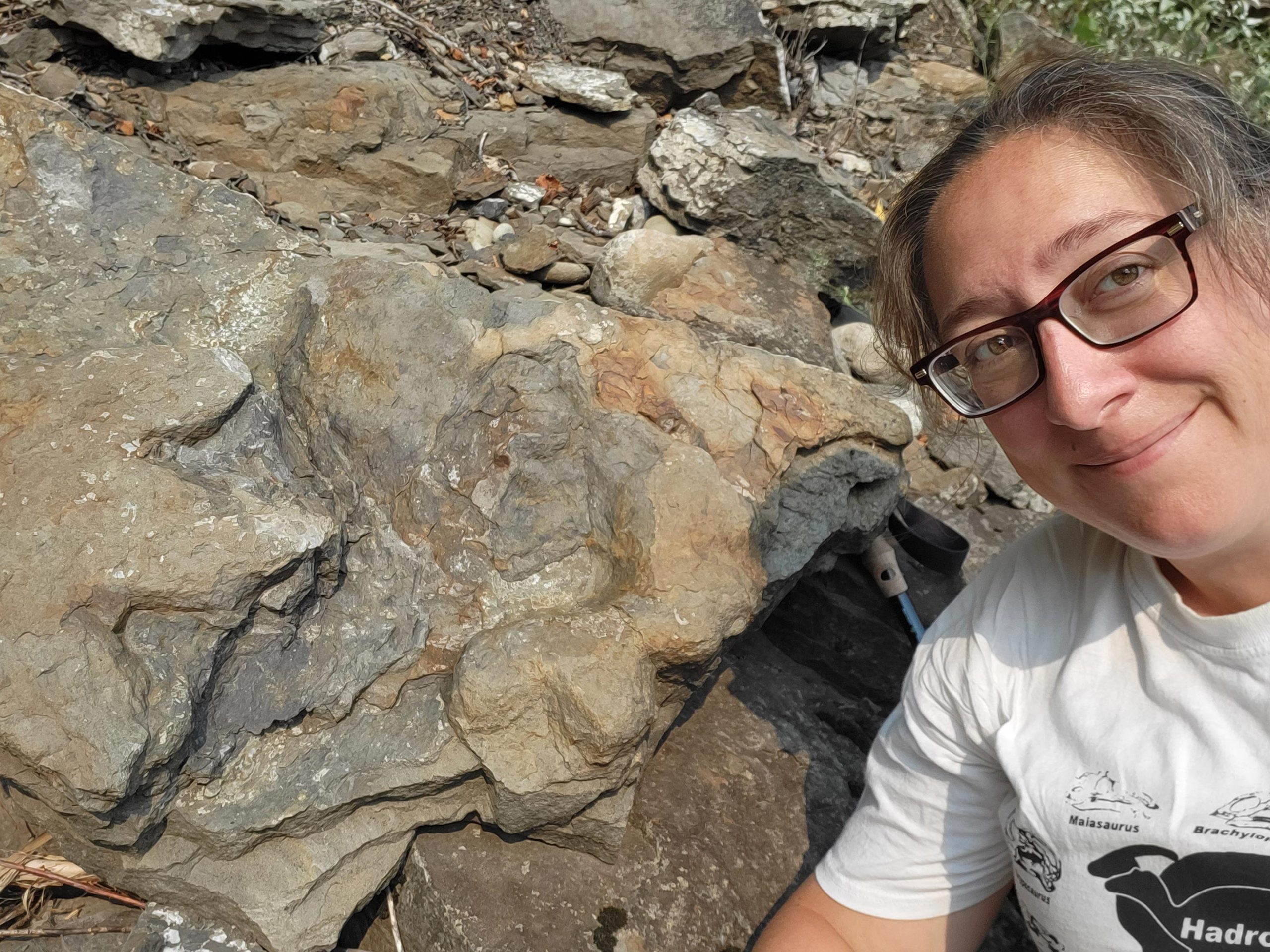
Footprints of tail-clubbed armored dinosaurs, ankylosaurids, have been discovered for the first time, thanks to fossil trackways found in the Canadian Rockies.
These rare, three-toed prints belong to a newly identified species, Ruopodosaurus clava, shedding light on a mysterious gap in the fossil record. This breakthrough not only proves that these dinosaurs roamed North America during the mid-Cretaceous period, but also reveals they shared the region with their four-toed nodosaurid cousins.
Ancient Footprints Unearthed in the Canadian Rockies
For the first time, scientists have identified fossilized footprints belonging to armored dinosaurs with tail clubs. These 100-million-year-old tracks were discovered in the Canadian Rockies, at sites near Tumbler Ridge, British Columbia, and in northwestern Alberta.
Ankylosaurs, the group of dinosaurs these tracks belong to, are divided into two main types. Nodosaurids had flexible tails and four toes, while ankylosaurids had heavy, club-like tails and only three toes.
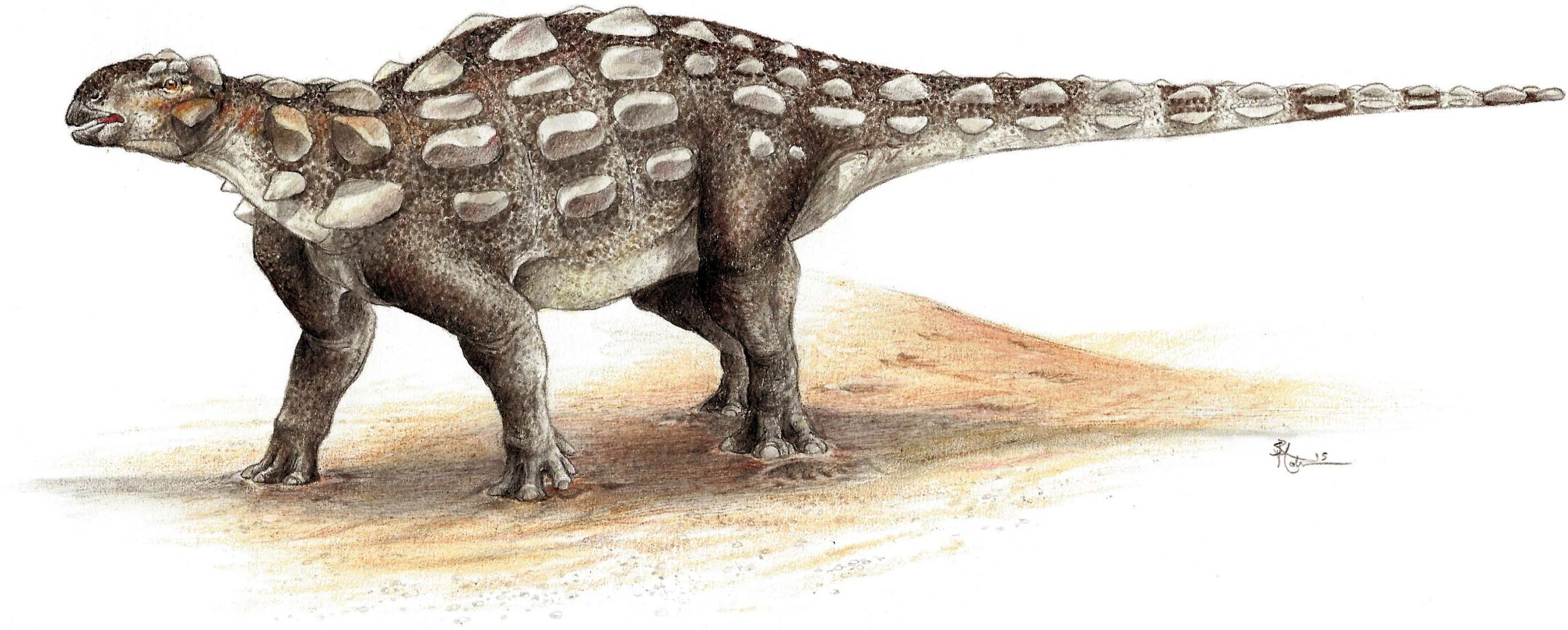
A New Dinosaur Species: Ruopodosaurus Clava
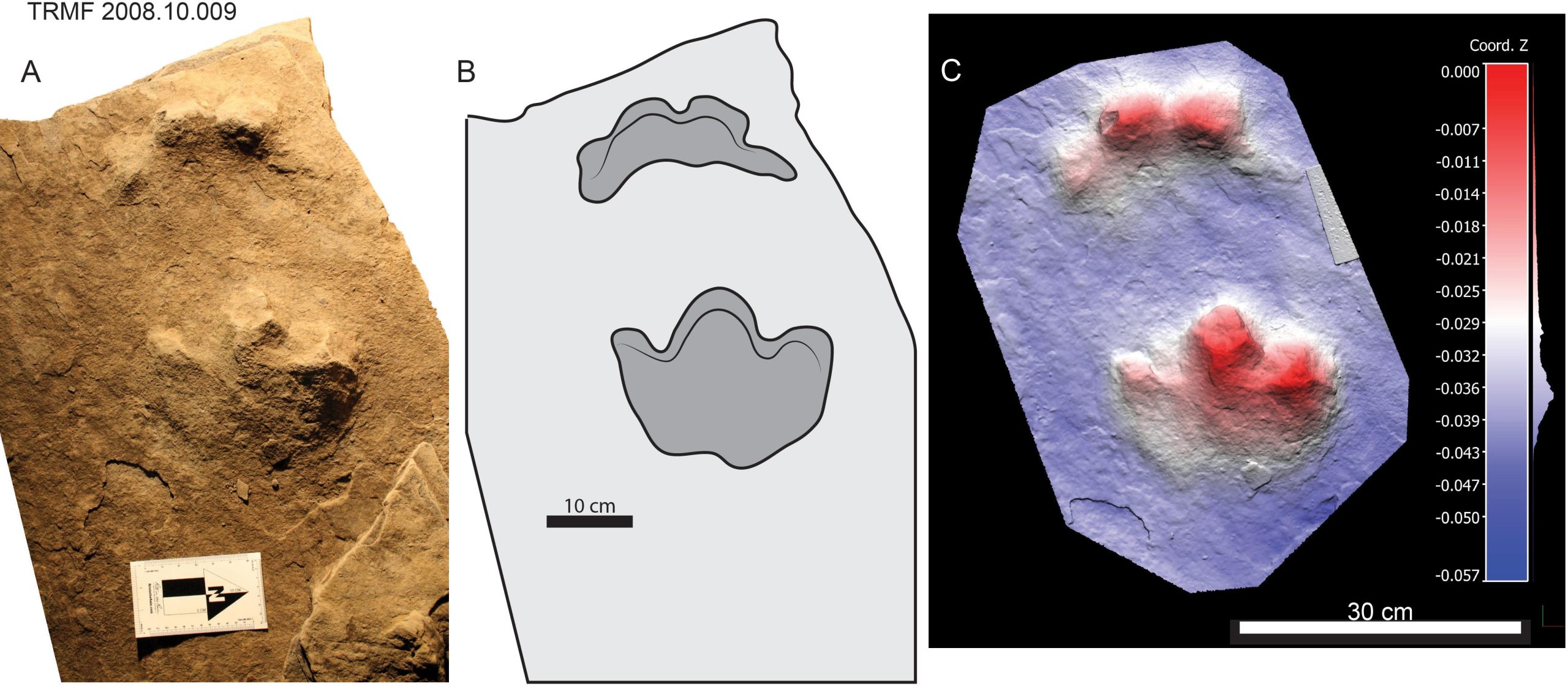
The newly discovered footprints have just three toes, unlike the well-known four-toed ankylosaur tracks called Tetrapodosaurus borealis found across North America. This makes them the first confirmed footprints ever found from an ankylosaurid. The research team named this newly identified species Ruopodosaurus clava, meaning “the tumbled-down lizard with a club/mace.” The name honors both the rugged mountain terrain where the tracks were found and the dinosaur’s distinctive tail weapon.
A research team including Dr. Victoria Arbour, the curator of paleontology at the Royal BC Museum, alongside researchers from the Tumbler Ridge Museum and the Tumbler Ridge UNESCO Global Geopark, report their findings in the peer-reviewed Journal of Vertebrate Paleontology.
Meet the Mystery Dinosaur with a Tail Club
“While we don’t know exactly what the dinosaur that made Ruopodosaurus footprints looked like, we know that it would have been about 5-6 meters long, spiky and armored, and with a stiff tail or a full tail club,” says Arbour, an evolutionary biologist, and vertebrate paleontologist who specializes in the study on ankylosaurs. “Ankylosaurs are my favorite group of dinosaurs to work on, so being able to identify new examples of these dinosaurs in British Columbia is really exciting for me.”
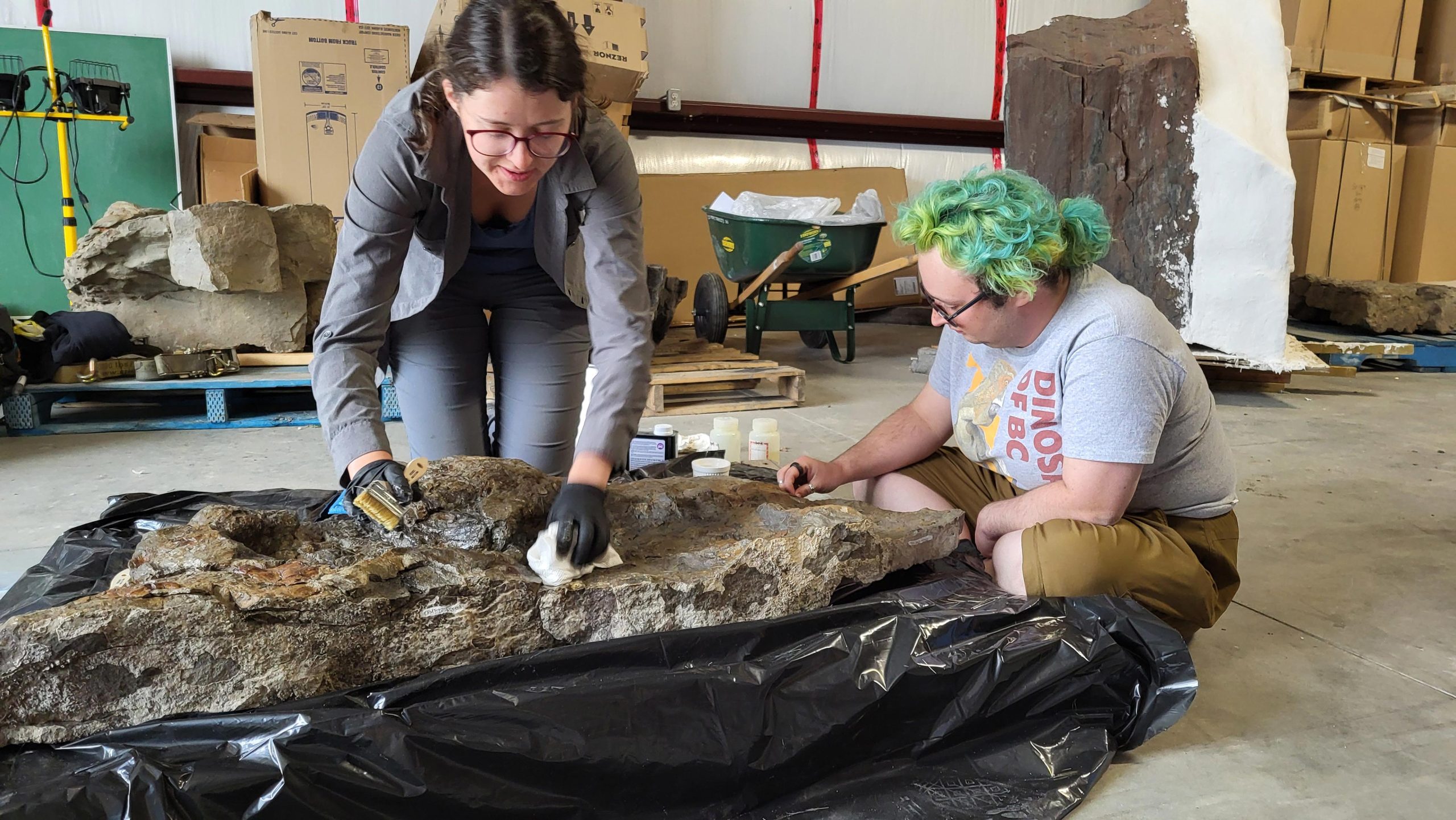
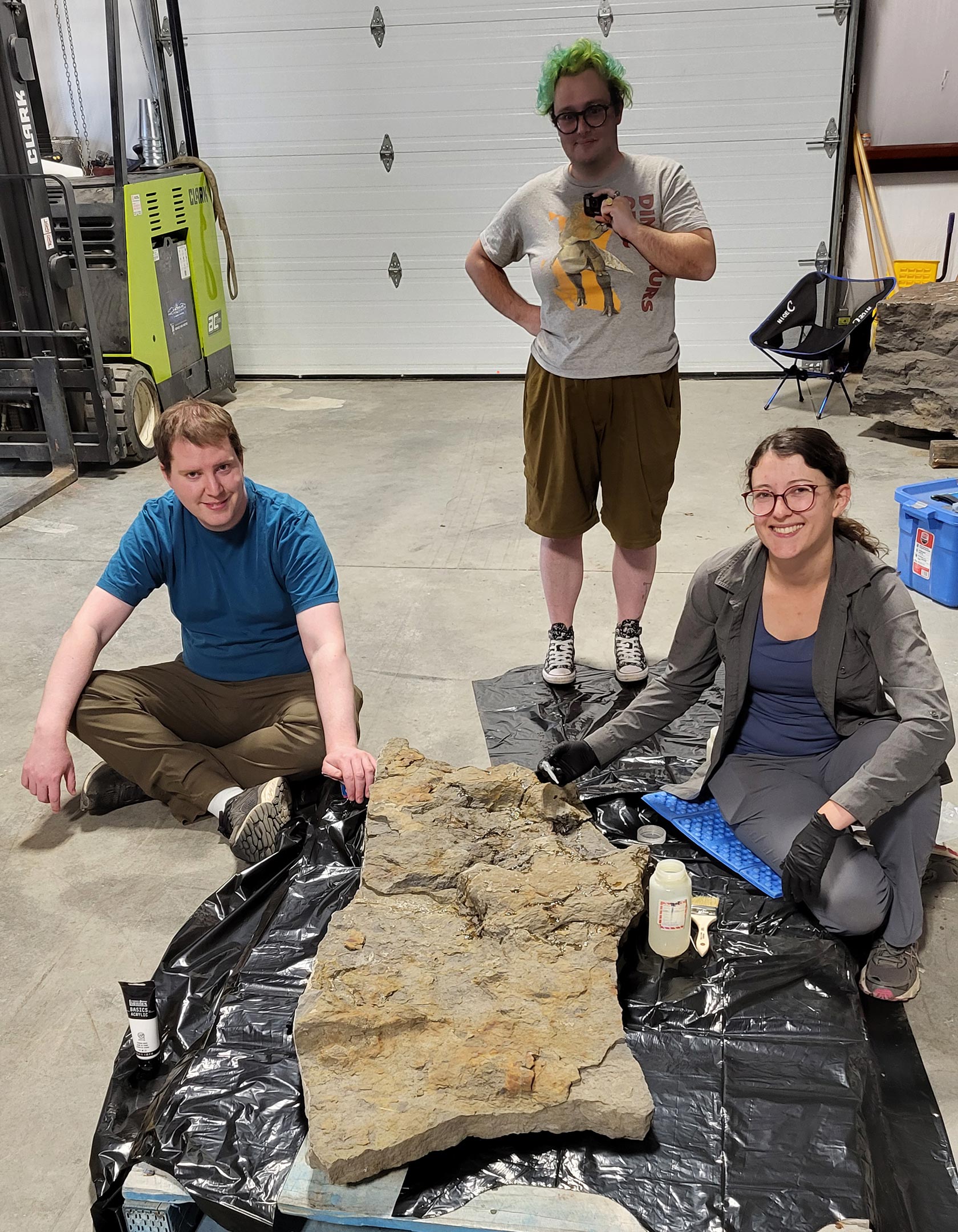
Dr. Charles Helm, scientific advisor at the Tumbler Ridge Museum, had noted the presence of several of these three-toed ankylosaur trackways around Tumbler Ridge for several years, and invited Arbour to work together to identify and interpret them during a visit in 2023. Eamon Drysdale, curator at the Tumbler Ridge Museum, Roy Rule, geoscientist at the Tumbler Ridge UNESCO Global Geopark, and the late Martin Lockley, formerly of the University of Colorado, contributed to the study.
A Time Gap Filled in the Fossil Record
The tracks date back to the middle of the Cretaceous period, about 100 to 94 million years ago. No bones from ankylosaurids have been found in North America from about 100 to 84 million years ago, leading to some speculation that ankylosaurids had disappeared from North America during this time. These footprints show that tail-clubbed ankylosaurs were alive and well in North America during this gap in the skeletal fossil record.
The discovery also shows that the two main types of ankylosaurs—nodosaurids and ankylosaurids, including this new three-toed species—coexisted in the same region during this time.
Two Ankylosaurs, One Ancient Habitat
“Ever since two young boys discovered an ankylosaur trackway close to Tumbler Ridge in the year 2000, ankylosaurs and Tumbler Ridge have been synonymous. It is really exciting to now know through this research that there are two types of ankylosaurs that called this region home, and that Ruopodosaurus has only been identified in this part of Canada,” says Helm.
“This study also highlights how important the Peace Region of northeastern BC is for understanding the evolution of dinosaurs in North America – there’s still lots more to be discovered,” says Arbour.
New Puzzle Piece in Dinosaur Evolution
This find gives us a new piece of the puzzle about the ancient creatures that once roamed what is now Canada.
Reference: “A new thyreophoran ichnotaxon from British Columbia, Canada confirms the presence of ankylosaurid dinosaurs in the mid Cretaceous of North America” by Victoria M. Arbour, Martin G. Lockley, Eamon Drysdale, Roy Rule and Charles W. Helm, 14 April 2025, Journal of Vertebrate Paleontology.
DOI: 10.1080/02724634.2025.2451319
Never miss a breakthrough: Join the SciTechDaily newsletter.
Follow us on Google and Google News.
5 Comments
Hopefully we can deextinct them as well.
Modern crocodilian won the dinosaur war so no deextinction is need .spinosauridae is the superior dinosaur that why it’s alive
Scitech daily old report on shartegosuchus was wrong turtle do not have close fully secondary bony palate it is almost close like mammal type reptile .turtle and mammal spinosaurus gator have occified palate it fuse in midline of bone two maxillary bone by cartilage the cartilage turn into bone in shartegosuchus they can not trace palate orgin it’s like some mammal because what they eat shartegosuchus was a plant eater allso found predator mesoeucrocodylia a land mesoeucrocodylia because mainly eat land animal no fish why the change of palate .as they say it is still full this was the reason they cliam shartegosuchus was not a mesoeucrocodylia fuse frontal and craniopassage canal clearly it is mesoeucrocodylia .bird have secondary bony palate but not a full palate and not a occified palate I was reading about t.rex palate its fully bony secondary palate has different origin this mite be because the premaxillary are not fuse this future is for beak animal like beak dinosaur the beak is not a good predator feature
Gator has premaxilllary fusion it is convergent with beak animal and the gator is a great predator .mesoeucrocodylia is only reptile with a full palate I here no other reptile has it. I guest alive wons they say t.rex has full palate I believe that it is not possible to eat to the side without a fully palate the skull will break that why gator and t.rex share unique teeth most thecodont eat the same not a lot of aquatic thecodont were you need a full palate .not many thecodont eat to side that why thecodont eat like dinosaur these primitive type.all modern crocodilian have a fully secondary bony palate a feature of death roll that why spinosauridae has it .spinosauridae is a mesoeucrocodylia that why the premaxillary is fuse
Thecodont mean crocodilian teeth this means dinosaur gator so calling dinosaur a crocodilian you are right .they are different kind of crocodilian advance and primitive the gator is the most advance thecodont the last living dinosaur as Darwin says the strong will survive